

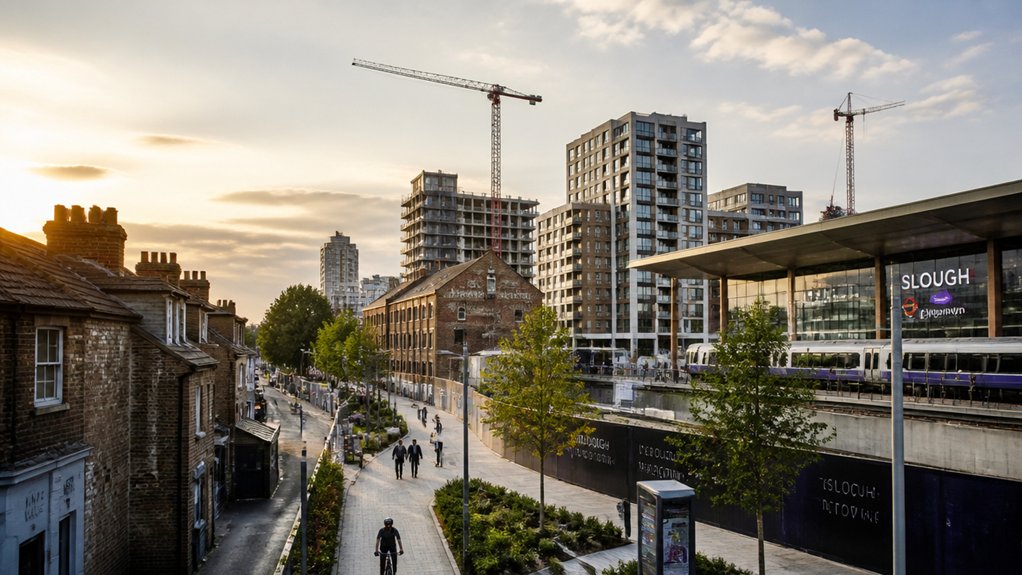
You may not realise that Slough’s Elizabeth Line advantage extends beyond faster journeys, shaping rental demand and pricing within walkable station catchments. As regeneration redirects town-centre land toward higher-density, mixed-use housing, you’ll need to weigh transport access against scheme delivery, local supply and family appeal. The strongest opportunities may sit outside the most obvious postcodes—and the numbers show why.
Key Takeaways
- The Elizabeth line has improved Slough’s appeal, offering faster journeys to Paddington, Heathrow, the City and Canary Wharf for commuters and renters.
- Homes within walking distance of Slough or Langley stations generally attract stronger buyer demand, rents and resale liquidity.
- Central Slough suits professionals and investors seeking apartments, while Langley offers larger family homes, parking and greener residential streets.
- Town-centre regeneration is replacing retail-led land with mixed-use housing, public-realm improvements and amenities around key transport connections.
- Buyers should assess service charges, lease length, build quality, construction disruption and local supply before investing in regeneration-area apartments.
How the Elizabeth Line Is Changing Slough Housing
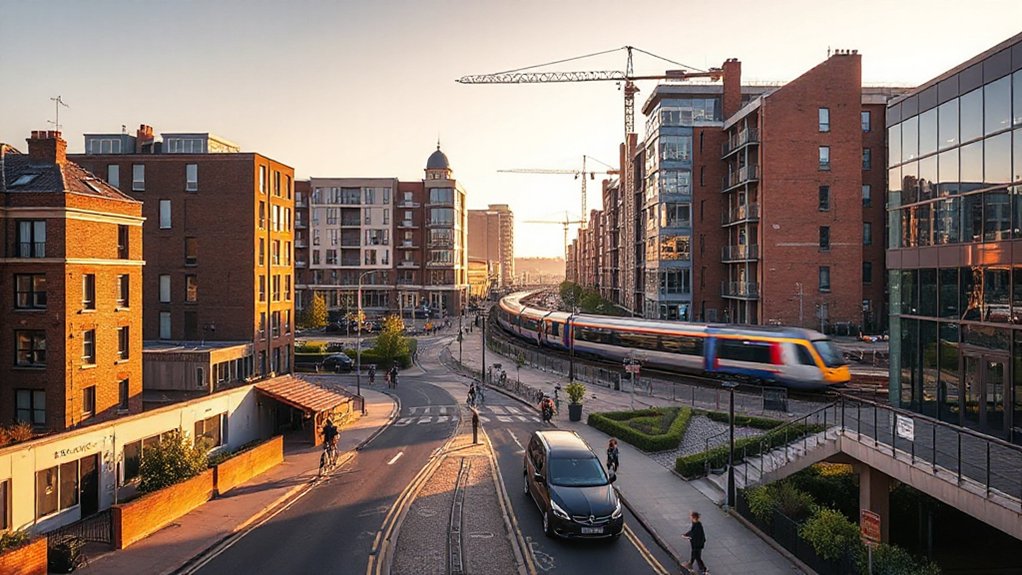
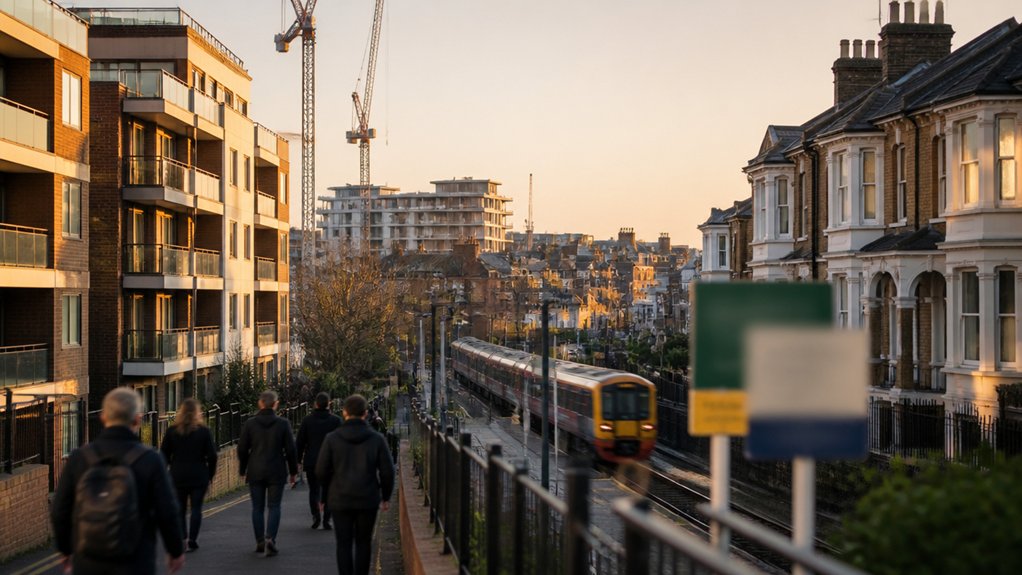
Since the Elizabeth Line began serving Slough in 2022, it has strengthened the town’s appeal for commuters seeking faster, simpler access to central London and Heathrow. You can reach Paddington in roughly 30 minutes, widening Slough’s buyer and renter catchment beyond local employment hubs.
The Elizabeth line also improves connectivity to Canary Wharf and the City without a central-London interchange, supporting demand from hybrid workers who prioritise reliable journeys.
For you, the key market effect is choice: Slough competes more directly with west London while retaining stronger property affordability than many stations closer to the capital. This transport advantage supports interest in homes near Slough station, particularly apartments suited to first-time buyers, investors and professionals.
Demand is increasingly linked to commuting convenience, rental liquidity and access to Heathrow’s employment base, rather than solely to local amenities.
Slough Property Prices Since the Elizabeth Line
The Elizabeth Line has supported Slough’s housing market, but it hasn’t produced a uniform price surge across every property type or neighbourhood. You’ll see its clearest effect in buyer demand for well-presented flats and family houses that offer quicker London access without London-level pricing.
Since the line’s opening, transaction activity and asking-price resilience have generally strengthened near the station, although higher mortgage rates have limited headline growth and widened the gap between realistic and aspirational listings.
If you’re buying, compare achieved prices rather than portal asking figures. New-build schemes marketed as Affordable luxury can command premiums, but service charges may reduce value.
Older homes with usable space, parking and nearby Green spaces often hold broader appeal, supporting resale demand.
Investors should also assess rental yields against rising financing and management costs.
Best Slough Areas for Elizabeth Line Commuters
For maximum rail convenience, you can target Central Slough, where homes near the station put Elizabeth line services within a short walk and support strong renter demand.
Langley offers a quieter alternative with direct Elizabeth line access, appealing if you prioritise Heathrow connectivity and a more suburban setting.
Your choice typically comes down to Central Slough’s urban regeneration potential versus Langley’s access-led residential appeal.
Central Slough Station Living
Central Slough suits commuters who prioritise fast Elizabeth line access over larger homes: properties within walking distance of Slough station place you roughly 15–20 minutes from Paddington and provide direct links towards Bond Street, Tottenham Court Road and Canary Wharf.
You’ll typically find a denser mix of apartments, converted stock and new-build schemes than in Slough’s outer neighbourhoods, with pricing reflecting convenience and rental demand. This location can suit investors targeting professionals who value predictable journey times and employers across west London and the City.
Check service charges, lease length and planned developments carefully, as these materially affect net yields and resale liquidity.
Regeneration around the town centre supports retail, workspace and public-realm investment, while nearby urban green spaces and local community hubs improve day-to-day liveability.
You trade private outdoor space for connectivity, amenities and a more liquid commuter-led market.
Langley Elizabeth Line Access
Langley offers a practical Elizabeth line alternative for commuters who want faster access to central London without paying central Slough’s typical convenience premium. You can reach Paddington in roughly 25 minutes, while direct services improve access to the West End, City and Canary Wharf.
This Elizabeth Line accessibility supports demand from London-based buyers seeking larger homes, parking and family-oriented streets.
Langley station development has strengthened the area’s commuter profile, with step-free access, upgraded facilities and better interchange capacity.
For investors, properties within a short walk of the station typically command stronger tenant interest than comparable homes farther south or west.
You’ll find a broader mix of period houses, post-war stock and newer apartments than around central Slough, helping match budgets.
However, compare walking distances carefully: station proximity remains the key pricing differentiator.
Slough Regeneration Zones to Watch
You’ll find Slough Town Centre renewal central to the borough’s investment case, with new homes, retail and public-realm upgrades reshaping demand.
Transport-led areas around the Elizabeth line and key stations can offer stronger rental appeal where connectivity supports pricing.
Track future housing growth zones for planning approvals, delivery timelines and the supply that could affect local values.
Slough Town Centre Renewal
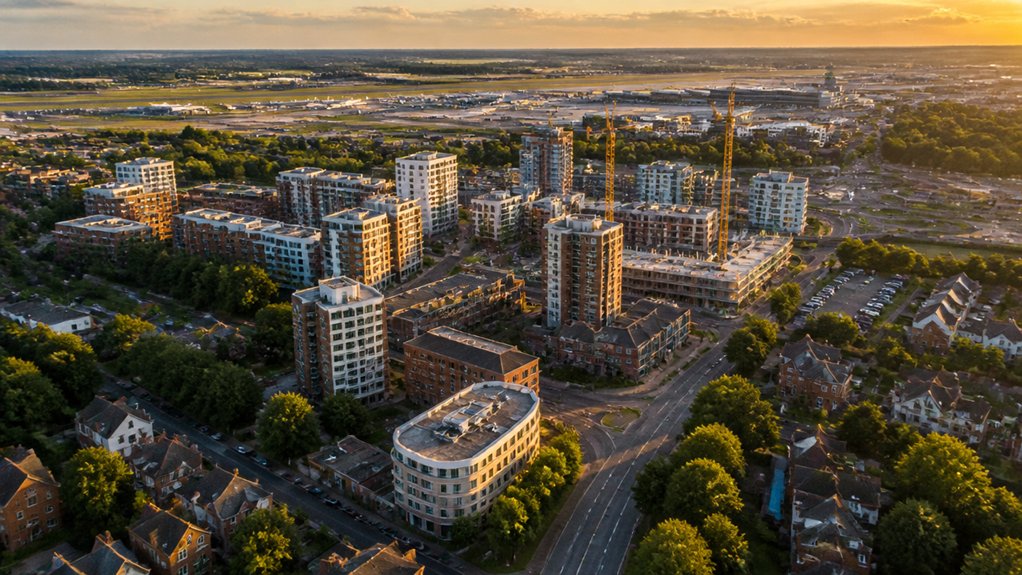
Slough town centre is the borough’s most significant regeneration focus, with major redevelopment plans targeting underused retail land, new homes, public space upgrades and stronger links to the Elizabeth line at Slough station.
For buyers and investors, the opportunity lies in a planned shift from low-performing commercial floorspace toward higher-density mixed-use schemes that can widen the local housing offer.
You should assess individual proposals by delivery timetable, tenure mix, retail demand and developer track record, rather than headline unit totals.
New apartments may improve supply, but pricing will depend on service charges, build quality and local rental absorption.
Community engagement can influence public-realm design and amenity provision, while historic preservation matters where redevelopment meets Slough’s established civic assets.
The strongest schemes should create active streets, support everyday services and improve values across adjacent neighbourhoods over time.
Transport-Led Development Areas
Beyond the town centre, transport-led development concentrates around stations that combine fast rail access with available redevelopment land. For you, Slough and Langley stations remain the clearest indicators of demand: Elizabeth line services shorten journeys to Paddington, the West End and Canary Wharf, widening the tenant and buyer pool.
Properties within walkable catchments can command stronger rents where station access offsets Slough’s lower entry prices versus inner London.
You should assess schemes by their delivery of Local transportation improvements, including safer walking routes, cycling links and bus interchange capacity. These features improve catchment appeal and reduce reliance on car travel.
Urban green spaces also matter: developments that integrate landscaped public areas can strengthen family demand, support placemaking and protect resale liquidity.
Focus on completed connectivity, not proposed infrastructure, when comparing values and rental prospects.
Future Housing Growth Zones
As regeneration moves from planning to delivery, you should watch the town-centre and station-adjacent corridors where higher-density housing can align with Elizabeth line access, retail renewal and public-realm investment. These locations could capture strongest demand from commuters seeking faster London connections while benefiting from Slough’s employment base.
Assess schemes by delivery timing, tenure mix and planning certainty, rather than headline unit counts alone. Developments around the station, Queensmere and Observatory areas may reshape rental supply and support values if retail, workspace and pedestrian improvements progress together.
You should also track whether affordable housing obligations remain viable as construction costs and financing conditions change. Projects that protect or create usable green spaces may command a stronger premium, particularly among families and longer-term renters.
Infrastructure capacity, including schools and healthcare, will determine whether growth translates into sustained market performance.
Town Centre Homes After Slough Regeneration
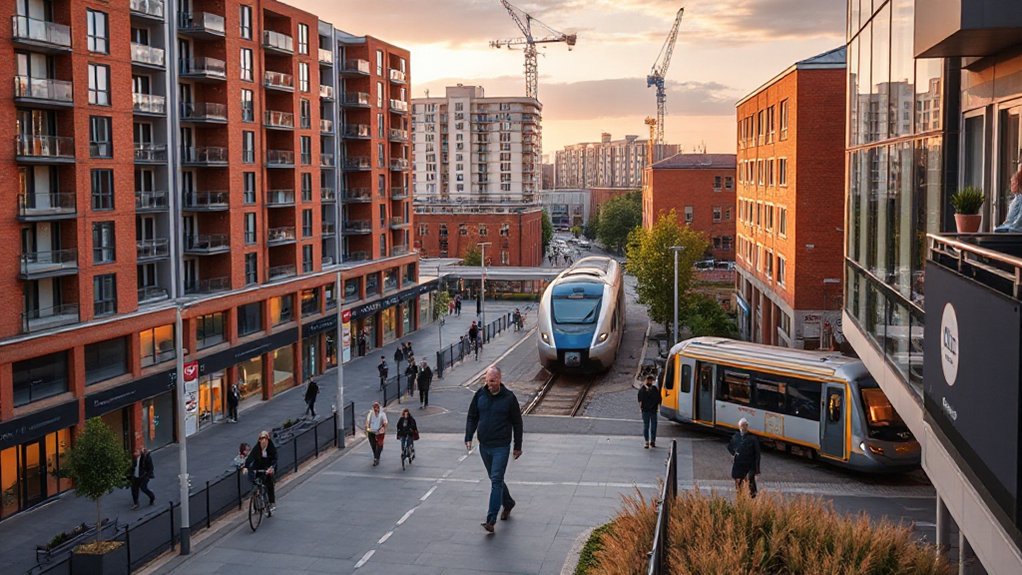
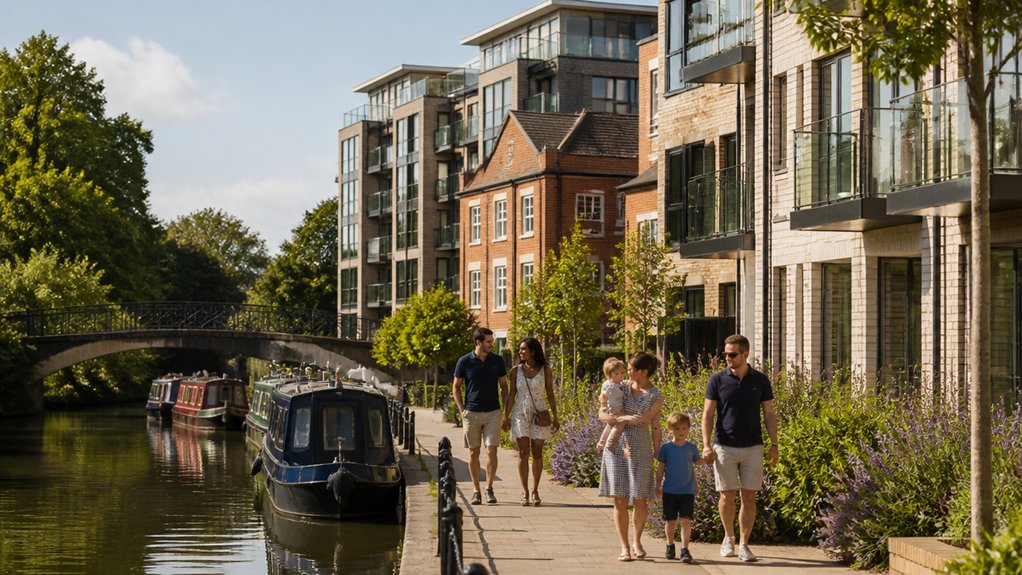
While regeneration reshapes central Slough, new-build apartments and upgraded mixed-use schemes are expanding the town centre’s appeal to buyers and renters who prioritise rail access, walkable amenities and lower entry prices than many west London markets.
You’ll typically find the strongest demand around stations, employment corridors and established retail streets, where convenience supports rental liquidity.
For buyers, newer flats can offer modern layouts, concierge features and energy-efficient specifications, although service charges and lease terms need close comparison.
Investors should test achievable rents against mortgage costs, void periods and competing supply.
Community amenities, including cafés, gyms and public spaces, increasingly influence tenant choice and resale prospects.
Local architecture also matters: schemes that complement Slough’s existing streetscape may retain broader appeal than isolated towers.
You can target value by comparing price per square foot with nearby transport-connected markets.
Buying Homes Near Queensmere Regeneration
Why buy near Queensmere’s regeneration zone? You gain exposure to a central Slough market undergoing planned retail, public-realm and mixed-use change. Buyers should compare asking prices per square foot against nearby completed schemes, then factor service charges, lease length and projected rental demand.
Queensmere-adjacent flats can offer a lower entry point than many commuter friendly areas closer to prime Elizabeth line stations, while retaining walkable access to Slough station and town-centre employers.
You’ll need to price in construction disruption and assess delivery timelines rather than assume immediate capital growth. Look for homes with practical layouts, strong EPC ratings and manageable ongoing costs; these factors support resale liquidity.
Among affordable neighborhoods, the area may suit investors and owner-occupiers who can hold through regeneration phases. Check planning applications, tenure details and comparable sold prices before bidding, as headline regeneration plans don’t guarantee uniform value uplift.
Best Slough Neighbourhoods for Families
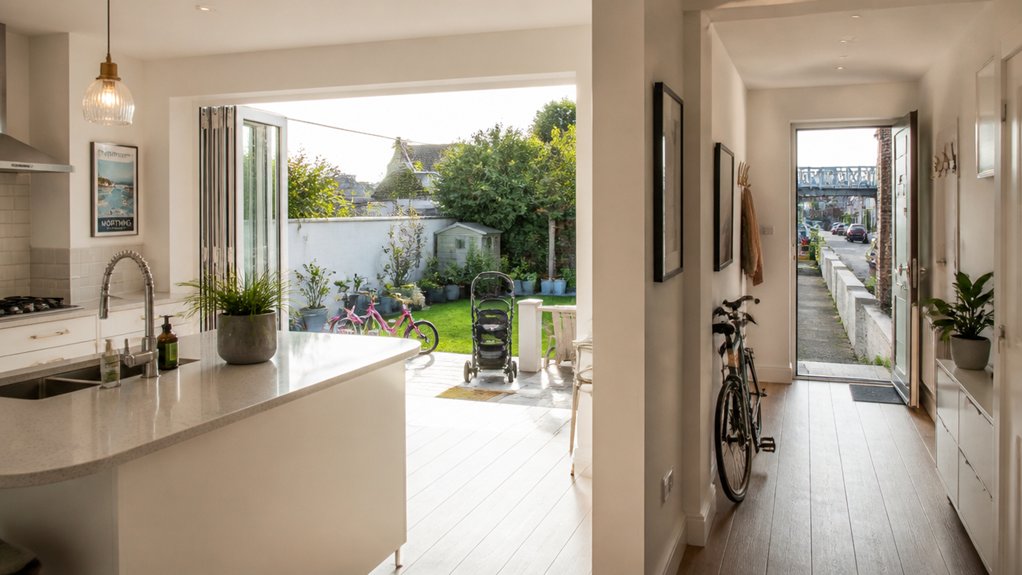
For families, Slough’s strongest locations balance school access, usable green space, commute times and housing type rather than relying on town-centre regeneration alone. You’ll find established family demand in Langley, where Elizabeth line access, larger period homes and proximity to parks support everyday convenience.
Wexham and Farnham Royal appeal if you prioritise quieter streets, detached or semi-detached stock and access to respected Local schools, although prices typically reflect limited supply.
Cippenham offers a practical middle ground: rail connections, family-sized houses and Community amenities make it suitable for buyers comparing space against budget.
Burnham can also suit households seeking village character with Slough and London connectivity nearby.
Before choosing, compare school catchments, walking routes, childcare provision and garden size, since these factors often determine long-term suitability more than headline transport improvements.
Slough Rental Yields and Investment Potential
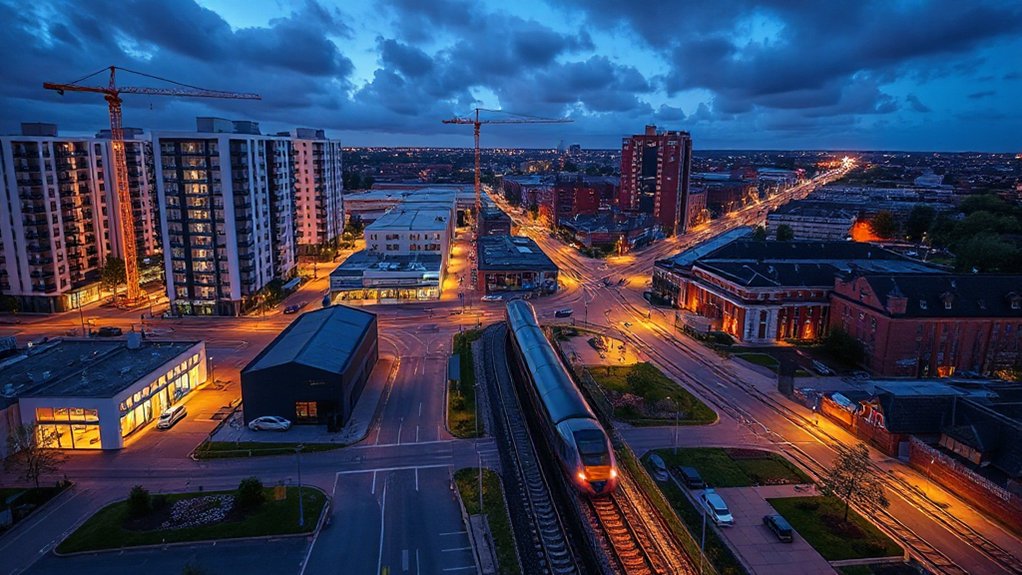
Slough’s investment case rests on its strong tenant base, shaped by Elizabeth line access, major employment hubs around Heathrow and the M4 corridor, and continued demand from London commuters seeking lower rents.
You can target resilient occupancy by focusing on one- and two-bedroom flats near the station, where professional tenants value fast links to Paddington and the City.
Rental yields typically benefit from Slough’s lower entry prices versus inner London, although your net return depends on service charges, mortgage costs, licensing requirements and void periods.
Compare gross yield against achievable rents, not advertised asking levels.
Regeneration around the town centre and transport-led development can create investment opportunities, but new-build supply may limit rental growth in individual schemes.
You should prioritise well-managed properties with competitive running costs and proven local rental demand.
Is Slough Right for Buyers, Renters and Investors?
Whether Slough suits you depends on your priorities: buyers can access prices below many west London alternatives, renters gain fast Elizabeth line and M4-corridor connectivity, and investors can target a large professional tenant pool.
You’ll find strongest buyer value in well-connected districts near the station, where regeneration may support long-term demand, though pricing varies sharply by condition and tenure.
If you rent, compare new-build schemes with older stock: luxury apartments often command premiums for concierge services, parking and proximity to transport, while established neighbourhoods can offer better space-to-cost ratios.
For investors, assess gross yield against service charges, void risk and mortgage costs rather than headline rent alone.
Slough’s employment base supports demand, but supply growth around central schemes can limit rental uplift.
Affordable housing requirements also affect development mix, availability and resale competition across local markets.
Frequently Asked Questions
How Reliable Are Elizabeth Line Services During Peak Commuting Hours?
You can generally expect reliable peak Elizabeth line journeys, supported by high service frequency and improving train punctuality. However, you’ll face occasional disruption from network congestion, so build modest contingency time into commuter travel plans.
Are There Planned School Expansions in Slough Regeneration Areas?
Yes—if you’re buying near a regeneration scheme, check Section 106 plans: they may fund school capacity and community facilities. For example, large developments often trigger expansion contributions, supporting demand while reducing admissions pressure.
What Council Tax Bands Apply to New-Build Slough Homes?
You’ll pay council tax bands A–H for new-build Slough homes, assigned after a Valuation Office tax assessment. Your band reflects estimated property value at April 1991 prices, not current market value; confirm with Slough Council.
Is Parking Readily Available Near Slough Elizabeth Line Stations?
Parking availability near Slough Elizabeth line stations is limited—think pressure, not plenty. You’ll find paid car parks and residential restrictions, while Regeneration zones may add spaces, but commuter demand keeps prices and competition elevated.
How Do Flood Risks Vary Across Slough Neighbourhoods?
Flood risks vary: you’ll find higher exposure near the Thames, Jubilee River, and low-lying central areas, while elevated neighbourhoods typically fare better. Check Flood mitigation plans, drainage infrastructure capacity, and insurer pricing before you buy.




Leave a Reply