

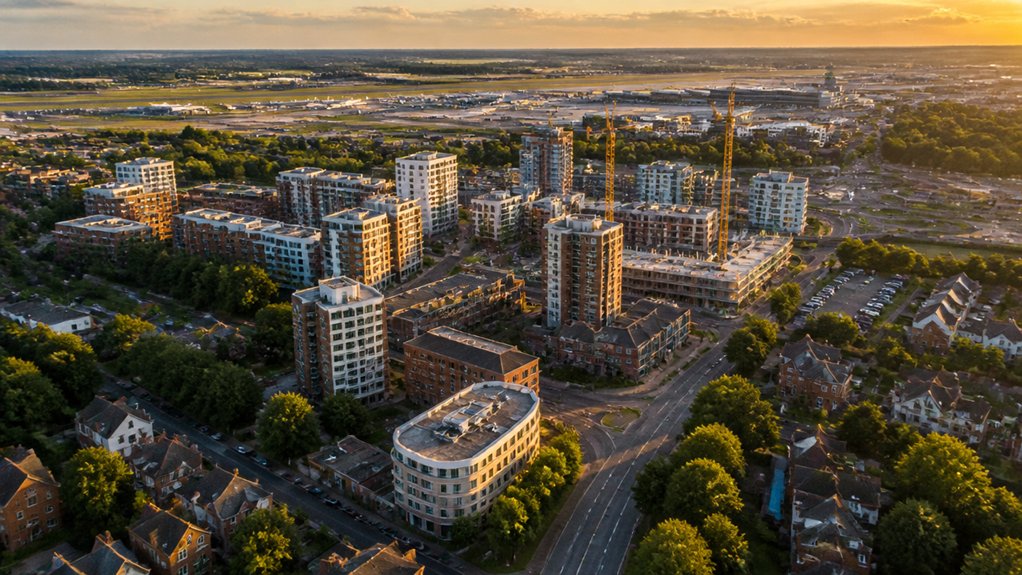
Crawley’s property market moves to the rhythm of one of the UK’s busiest airports, with Gatwick shaping demand, rents and buyer priorities across the town. You’ll see stronger interest near Three Bridges and Pound Hill, where rail links and employment access support values. Regeneration plans could add another layer of momentum, yet higher borrowing costs still test affordability. The key question is whether today’s prices reflect lasting value—or a market about to shift again.
Key Takeaways
- Gatwick Airport underpins buyer and rental demand from aviation, logistics, hospitality, and professional workers throughout the year.
- Three Bridges and Pound Hill generally command higher prices, especially for family homes near schools, green space, and rail links.
- Higher mortgage rates have slowed sales and increased negotiation, though well-presented, energy-efficient homes remain resilient.
- Town-centre regeneration, including Station Gateway and Queens Square, should improve amenities and long-term appeal despite temporary construction disruption.
- Future price growth depends on borrowing costs, Gatwick-linked employment, rail connectivity, housing affordability, and delivery of infrastructure projects.
Crawley Property Market: Prices, Demand and Value
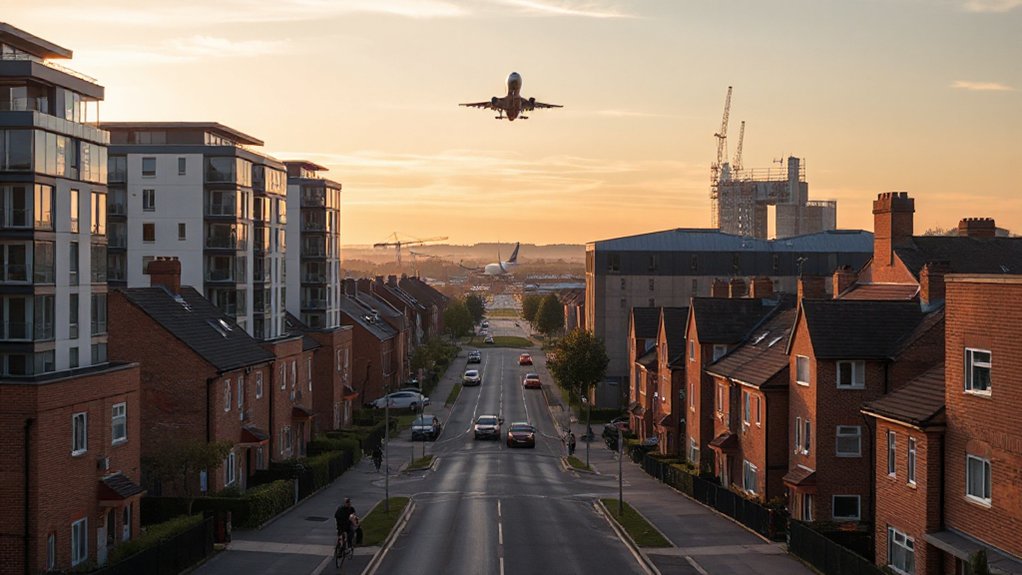
Crawley’s property market continues to draw demand from buyers who value fast rail links to London, proximity to Gatwick and a comparatively accessible entry point into West Sussex. You’ll find values vary sharply by neighbourhood, property type and condition, with Three Bridges and Pound Hill typically commanding stronger prices than more central stock.
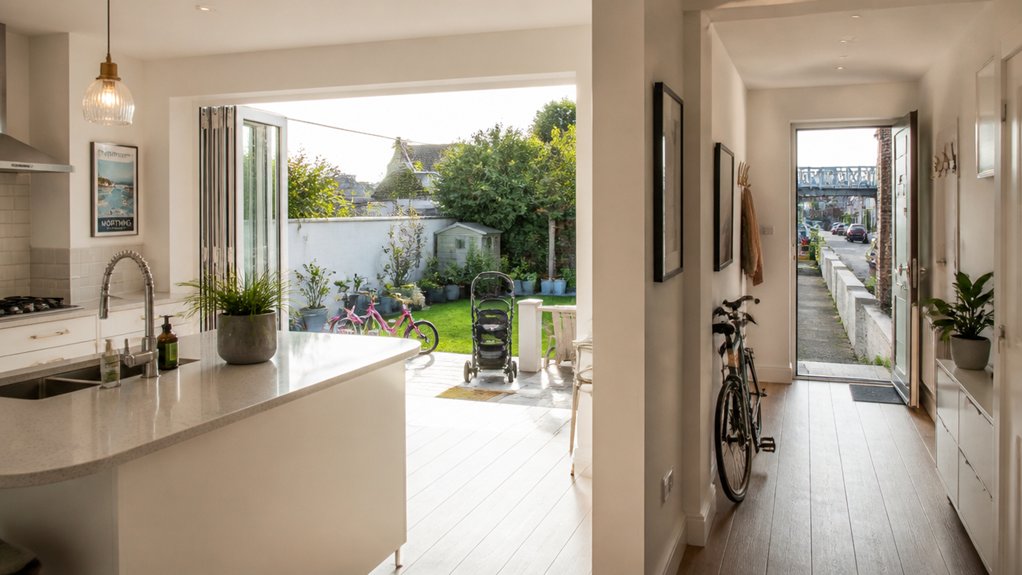
Family houses remain competitive where schools, green space and station access align, while first-time buyers often target apartments in Tilgate, Southgate and Maidenbower.
Recent pricing trends suggest a more selective market: correctly priced homes attract viewings quickly, but overstretched listings take longer to sell. Luxury apartments appeal to downsizers and professionals seeking low-maintenance living, whereas historic estates around the wider High Weald fringe command premiums for character, land and renovation potential.
You can improve value prospects by prioritising transport, energy efficiency and realistic pricing.
Gatwick’s Impact on Crawley Property Demand
Gatwick Airport remains a major force behind Crawley property demand, supporting a steady flow of aviation, logistics, hospitality and professional-services buyers and renters. If you work at the airport or in its supply chain, Crawley offers practical access to terminals, Manor Royal Business District and rail links across Sussex and London.
Demand is strongest where commuting stays straightforward: Three Bridges, Northgate, Pound Hill and neighbourhoods near Fastway routes appeal to shift workers, managers and contractors. Gatwick’s large employment base also sustains rental demand from relocators and temporary staff.
Proposed airport expansion keeps attention on future employment opportunities, although delivery timelines and planning conditions matter. For you as a buyer or landlord, the key driver isn’t tourism alone; it’s the airport’s year-round workforce, supporting consistent local housing need across multiple sectors.
Crawley Property Prices and Recent Trends
Crawley house prices have reflected strong commuter demand, though growth has moderated as higher mortgage rates reshape buyer budgets.
You’ll see recent shifts vary by neighbourhood, with well-connected areas near Gatwick and rail links often holding value more firmly.
Tracking asking prices, achieved sales and time on market helps you spot whether local momentum is strengthening or cooling.
House Price Growth
Recent Land Registry figures show house prices in the Crawley area have remained resilient despite higher mortgage rates, with average values broadly above pre-pandemic levels. You can see growth supported by Gatwick employment, London commuter links and limited family-house supply across neighbourhoods such as Three Bridges, Pound Hill and Maidenbower.
Detached and semi-detached homes typically command the strongest values, particularly near respected schools and rail connections. If you’re comparing stock, newer Luxury apartments around the town centre appeal to professionals seeking convenience, while historic homes in nearby Ifield and older Crawley villages attract buyers who value character and larger plots.
Price growth hasn’t been uniform: well-presented, energy-efficient properties generally achieve firmer results than homes needing extensive work. For you, local condition, transport access and refurbishment quality remain central to long-term value.
Recent Market Shifts
How has the market changed? You’re seeing Crawley’s price growth become more selective after the rapid gains of recent years. Demand remains strongest near Gatwick, Three Bridges station and regeneration zones, where commuters value fast London links and airport employment.
Buyers now compare energy ratings, service charges and transport access more closely, slowing sales of overpriced stock.
Luxury apartments around the town centre and new-build schemes attract professionals, but supply has increased, giving you more negotiating room than during peak competition.
Family houses in Maidenbower, Pound Hill and Tilgate continue to command premiums when presented well.
Meanwhile, homes with historical architecture in nearby conservation-minded areas appeal to buyers seeking character, though renovation costs affect offers.
You’ll find realistic pricing, efficient homes and move-in-ready condition increasingly determine whether a property sells quickly.
Crawley Rental Demand Near Gatwick
With Gatwick Airport continuing to anchor the local economy, rental demand in Crawley remains strongest in areas with fast access to the airport, rail links and major employment sites. You’ll see tenant demand supported by airport staff, aviation contractors, logistics workers and commuters using Three Bridges and Crawley stations.
This creates a steady flow of enquiries for well-presented one- and two-bedroom homes, particularly where tenants can limit travel time and avoid car dependence.
Rental affordability remains a key constraint. As rents rise, tenants increasingly compare Crawley with nearby Horley, East Grinstead and parts of south London, so realistic pricing matters.
You can expect the strongest letting performance from homes with reliable broadband, parking or station access, and flexible layouts for sharers. Landlords who track local listing volumes and void periods can react faster to shifting demand.
Best Crawley Areas for Buyers and Investors
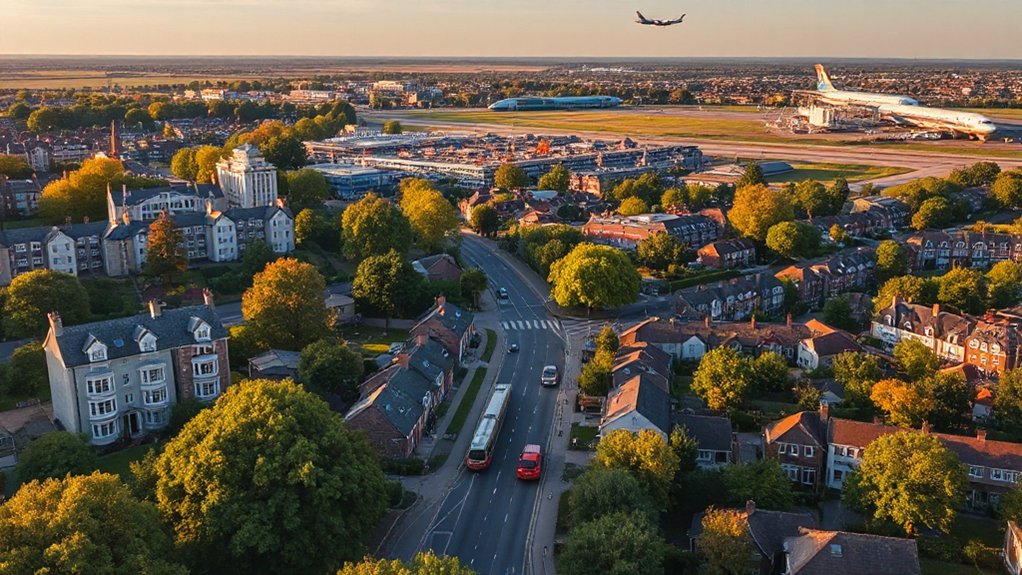
For buyers and investors, Crawley’s strongest opportunities tend to sit near transport, employment hubs and established amenities, but each neighbourhood serves a different strategy.
If you prioritise rental resilience, Three Bridges benefits from its mainline station, quick London access and proximity to Manor Royal, attracting professionals and Gatwick-linked tenants.
Central Crawley suits investors seeking flats with practical walkability to shops, buses and employment.
For owner-occupiers, Pound Hill and Maidenbower remain sought-after family friendly neighborhoods, supported by schools, green space and larger housing stock.
Tilgate appeals when you want established homes near the park and leisure facilities, while Furnace Green offers a balanced suburban choice.
Demand for Luxury apartments is strongest around well-connected locations, but you’ll usually achieve steadier long-term appeal by matching property type, tenant profile and local transport convenience.
Regeneration Plans Affecting Crawley Property Values
Crawley’s town centre redevelopment could reshape buyer demand by adding homes, retail space and public-realm improvements around key amenities.
You’ll want to track delivery timelines alongside infrastructure upgrades, particularly transport links serving Gatwick and the wider Sussex commuter network.
Areas nearest completed schemes often see stronger buyer interest, though construction disruption can affect short-term pricing.
Town Centre Redevelopment
Town Centre redevelopment is reshaping Crawley’s investment case, as schemes around the Station Gateway, Queens Square and the former Town Hall site aim to add homes, improve public spaces and strengthen links between the rail station and retail core.
For you, the key market signal is a shift towards mixed-use living: new apartments, refreshed commercial space and stronger local amenities can widen buyer and renter demand beyond airport-linked households.
Queens Square’s evolving retail and leisure offer may support footfall and help nearby flats compete more effectively with newer suburban stock.
You should also watch delivery timelines and planning conditions, since phased projects can create short-term disruption before values respond.
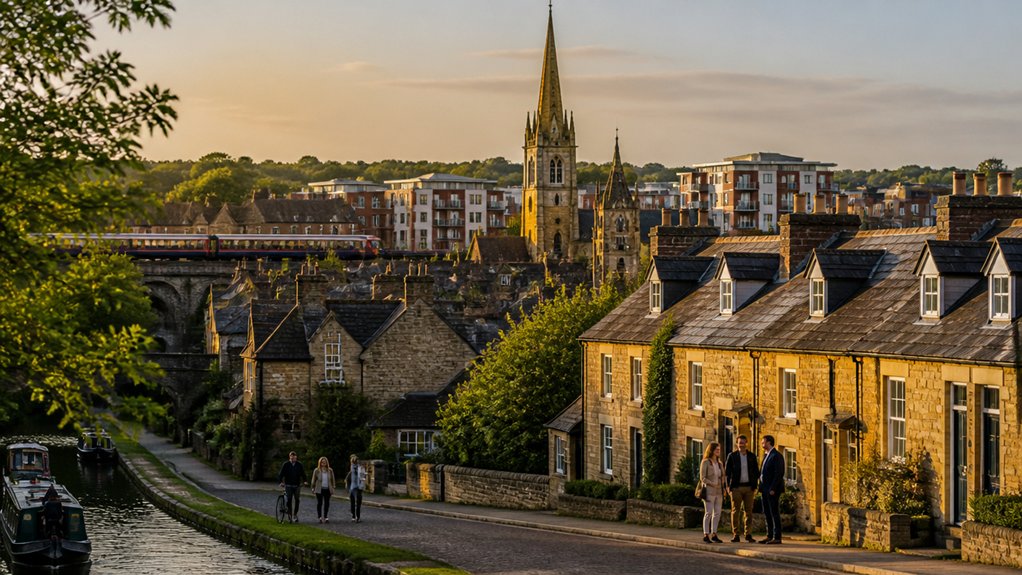
Crawley has limited historic architecture compared with older Sussex centres, so regeneration’s appeal rests on convenience, modern housing and an improved town-centre experience.
Infrastructure Upgrades Impact
Infrastructure upgrades will determine how far Crawley’s regeneration translates into property-price growth, particularly where better movement links reduce reliance on the car and improve access to Gatwick, London and neighbouring employment centres.
For you as a buyer or landlord, schemes improving public transport around the town centre, Manor Royal and Gatwick can widen tenant demand and support resale values. Faster, more reliable rail and bus connections typically increase appeal for airport staff, London commuters and businesses seeking accessible locations.
Watch delivery dates, funding commitments and disruption risks rather than headline announcements. Areas near upgraded stops may command stronger premiums, while construction can temporarily restrain demand.
Projects that embed environmental sustainability—safer walking routes, cycling links and lower-emission travel—should strengthen Crawley’s long-term competitiveness and help newer homes meet changing buyer expectations.
What to Budget for a Crawley Property Purchase
Buyers in Crawley should budget beyond the agreed purchase price, as recent local values vary sharply by property type, neighbourhood and proximity to rail links, Gatwick and major employment hubs.
Your Budget considerations should include stamp duty, solicitor and survey fees, mortgage arrangement charges, valuation costs and moving expenses.
Allow for a larger deposit if you’re targeting family homes in Three Bridges, Pound Hill or nearby commuter-focused areas, where competition can be stronger.
Flats in central Crawley may require lower upfront capital, but check service charges, lease length and planned major works carefully.
Compare mortgage options against your deposit size, income and expected monthly outgoings; a lower rate can carry higher fees.
Build a contingency fund for repairs, especially on older stock, and factor in council tax, insurance, utilities and ongoing maintenance before committing.
Crawley Property Market Outlook: 2026 and Beyond
Crawley’s property market outlook for 2026 and beyond will likely hinge on mortgage-rate movements, Gatwick-linked employment and sustained demand from London commuters seeking better value than inner and outer boroughs. If borrowing costs ease, you could see transaction volumes recover before prices accelerate, particularly for family houses near Three Bridges station and established neighbourhoods such as Pound Hill and Maidenbower.
Housing affordability will remain the main constraint: rising wages must keep pace with deposits, repayments and rental costs. New homes around town-centre regeneration schemes may broaden choice, but supply is unlikely to remove pressure quickly.
For Property investment, you should focus on transport access, EPC performance and tenant demand from airport, Manor Royal and rail-linked workers. Crawley’s relative value versus London and nearby Surrey supports measured, rather than speculative, medium-term growth.
Frequently Asked Questions
How Do Crawley School Catchment Areas Affect Property Choices?
School zoning can shift nearby home demand by 10% or more. You’ll often prioritise catchments with stronger Education quality, accepting higher prices or smaller homes to secure preferred Crawley primary and secondary school places.
What Are the Council Tax Bands Across Crawley Neighbourhoods?
Council tax bands across Crawley neighbourhoods run from A to H, based on 1991 property valuation. You’ll commonly find lower bands in smaller homes, while larger detached properties in Maidenbower and Pound Hill often sit higher.
Are There Flood-Risk Areas Buyers Should Avoid in Crawley?
Avoid high-risk river corridors near the River Mole and Gatwick Stream—they can flood like oceans during extreme rainfall. You’ll need a Flood risk assessment and should adapt Property investment strategies using Environment Agency maps and local data.
How Long Does Conveyancing Typically Take for Crawley Properties?
You’ll typically complete a Crawley property transaction in 8–12 weeks. Your legal process may stretch to 12–16 weeks if searches flag issues, chains involve multiple buyers, or mortgage approvals face delays.
Which Transport Links Connect Crawley to Central London?
You can reach central London via Thameslink trains from Crawley to London Bridge, Blackfriars and St Pancras, typically 45–60 minutes. Metrobus links Gatwick, while Public transport developments strengthen commuter connectivity across the town.


Leave a Reply