


If you’re weighing Havant against nearby South Coast markets, its appeal rests on more than relative affordability. You gain rail access to Portsmouth, Southampton and London, while regeneration is improving central amenities and shaping buyer demand. Prices have remained comparatively stable, but location, presentation and local risks can materially affect value. The key question is whether Havant’s current momentum matches your budget and long-term plans…
Key Takeaways
- Havant offers lower property prices than Portsmouth, with strong appeal for buyers seeking South Coast access, rail links, and family amenities.
- Rail journeys reach Portsmouth in around 15–20 minutes, Southampton in 45–60 minutes, and London Waterloo in roughly 80–100 minutes.
- The A27 can be congested at peak times, making Havant’s rail connections particularly valuable for regular Portsmouth and London commuters.
- Regeneration is improving town-centre amenities, public spaces, housing quality, and station-area demand, especially in walkable locations.
- Demand is strongest for realistically priced family homes near stations, schools, and services, while flats remain sensitive to mortgage rates and service charges.
Is Havant a Good Place to Buy?

Havant can be a good place to buy if you want South Coast connectivity without Portsmouth’s higher price point. Its appeal rests on relative value: buyers can often access more space, gardens, or family-oriented housing than in denser neighbouring markets, while regeneration investment may support longer-term demand.
You should assess each micro-location carefully, as pricing, condition and buyer competition vary between the town centre, Bedhampton, Emsworth borders and newer developments.
Local amenities strengthen day-to-day liveability, including schools, shops, green space and health services, although provision differs by neighbourhood.
Community events, sports clubs and coastal access also broaden its appeal for households seeking an established rather than purely commuter-led environment.
Your purchase case is strongest if you prioritise affordability, practical housing stock and potential upside from ongoing improvement, while budgeting realistically for maintenance and renovation.
Havant Commutes to Portsmouth, Southampton and London
From Havant, you can typically reach Portsmouth by train in around 15–20 minutes, supporting a practical daily commute.
Southampton connections usually take about 45–60 minutes.
While London-bound services offer longer travel times, they are still viable options, often reaching Waterloo in roughly 1 hour 20 minutes to 1 hour 40 minutes.
These journey times position Havant as a lower-cost coastal base for buyers balancing regional employment with occasional London access.
Portsmouth Commute Times
With direct rail links and access to the A27 and A3(M), Havant offers markedly different commute profiles: Portsmouth typically takes 20–30 minutes by train, Southampton around 45–60 minutes, and London Waterloo roughly 1 hour 20 minutes to 1 hour 40 minutes, depending on service and route.
For Portsmouth-bound workers, Havant’s rail journey is the strongest daily proposition. You can reach Portsmouth and Southsea in about 25 minutes on many services, making city-centre employment, the naval base and university accessible without London-level travel costs.
Driving can match rail outside peak periods, but A27 congestion can materially extend journey times. This reliability gap supports demand near Havant station, particularly among buyers seeking Harbor views and Coastal amenities while retaining a practical weekday routine.
The short commute also broadens your rental audience, attracting professionals who value lower housing costs and predictable access to Portsmouth.
Southampton Rail Connections
Southampton presents a longer but still workable rail commute, typically taking 45–60 minutes from Havant depending on the service, connections and peak-time conditions. You’ll usually travel via Fareham, with faster through services reducing interchange risk and making Southampton viable for hybrid workers attending two or three office days weekly.
The rail network gives you access to Southampton Central, a key employment hub for finance, logistics, healthcare and maritime industries. Journey reliability can vary during morning peaks, so proximity to Havant station remains a pricing advantage for buyers who commute regularly.
Planned station upgrades across the wider south-coast corridor could improve passenger capacity, accessibility and operational resilience over time. For you, this supports Havant’s appeal as a comparatively affordable base, particularly when Southampton salaries outweigh the cost and time of a longer daily journey.
London Travel Options
Although London sits farther from Havant, direct South Western Railway services to London Waterloo typically take around 1 hour 20 minutes to 1 hour 40 minutes, making the town a realistic option for hybrid rather than daily commuters. You can use early-morning and evening return services to structure two- or three-day office weeks, although peak fares and crowding affect the cost-benefit calculation.
Havant’s position on the Portsmouth Direct Line broadens your public transport choices, with connections supporting onward travel across south London and the wider network.
For buyers, this travel infrastructure creates a different demand profile from Portsmouth-focused locations. You’re likely to value larger homes, lower entry prices, and coastal access while accepting a longer capital commute.
As hybrid working remains established, London connectivity can underpin demand, particularly among households prioritising space over daily journey times.
Best Havant Areas for Buyers and Families
Havant offers buyers and families a broad mix of neighbourhoods, from established suburban streets near the town centre to coastal communities and larger village settings. If you prioritise walkability, central Havant puts you close to rail links, shops, healthcare and everyday services.
Bedhampton appeals when you want quieter residential roads, green space and convenient access to the coast and station. Emsworth suits households seeking a village-centre feel, waterside amenities and an active calendar of community events.
For more space, Waterlooville’s larger estates and family infrastructure can widen your choice, while Hayling Island offers a distinctly coastal lifestyle.
Your decision should weigh commuting needs against school catchments, outdoor access and local amenities. Research local schools carefully, as Ofsted outcomes, admissions criteria and transport routes can materially shape your preferred location.
Havant Property Prices and Market Trends
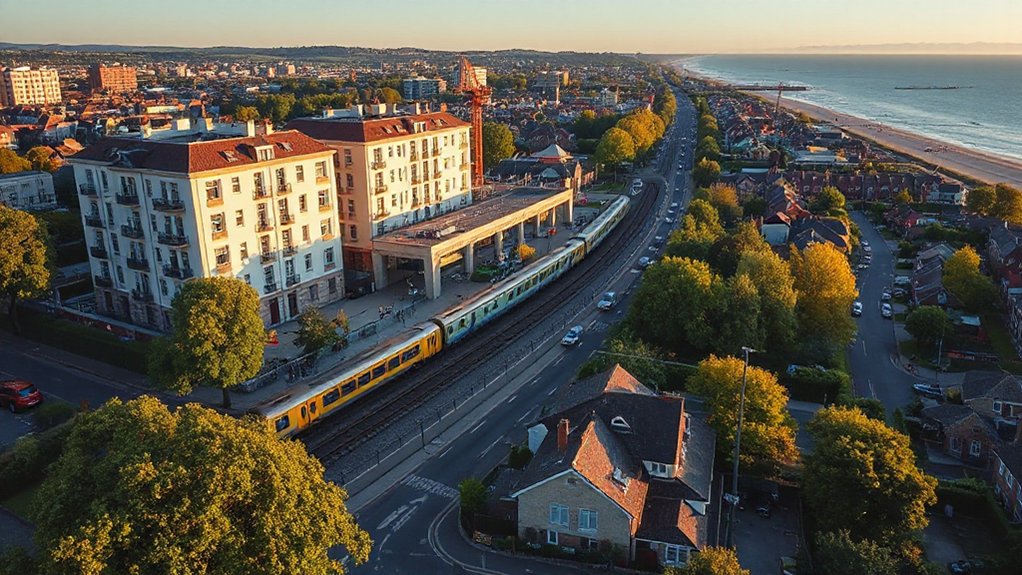
When you assess Havant property prices, track recent sale values against asking prices to identify whether the market is rising, stabilising, or correcting.
You’ll also need to weigh buyer demand against available stock, as low supply can sustain competition even when affordability pressures limit growth.
For investors, rental demand, transport links, and regeneration activity can indicate where long-term capital growth may outperform.
Current Property Price Trends
Property prices in Havant reflect a market that remains comparatively accessible within south Hampshire, while still benefiting from demand from Portsmouth, Chichester and London commuters. You’ll typically find values below neighbouring Chichester, helping Havant retain a clear affordability advantage for households comparing coastal and commuter locations.
Recent pricing has shown measured Property appreciation rather than rapid uplift, with detached homes and well-presented family properties generally achieving stronger price resilience than flats.
Market volatility has become more visible as mortgage-rate changes affect affordability calculations and transaction timings. If you’re tracking local values, focus on completed-sale evidence over asking prices, since initial listings can overstate achievable levels.
Renovated homes near rail links, schools and established amenities often command premiums, while properties needing significant work require sharper pricing to reflect renovation costs and financing constraints.
Buyer Demand And Supply
Buyer demand in Havant remains strongest for realistically priced family houses, particularly near rail stations, schools and everyday amenities.
Demand for flats is more sensitive to mortgage costs and service charges. If you’re selling a three-bedroom home in areas such as Bedhampton, Denvilles or central Havant, accurate pricing can attract viewings quickly, especially where gardens, parking and energy efficiency are present.
Supply shortages in the family-home segment support competition, but stock levels can change rapidly as vendors respond to changing borrowing conditions.
You’ll see sharper Market fluctuation among flats and homes requiring renovation, where buyers negotiate harder and compare monthly costs closely.
New listings that launch above local evidence often remain available longer, increasing the likelihood of price reductions.
Well-presented, correctly valued homes typically secure the strongest early interest and more credible offers.
Investment Outlook And Growth
Although Havant’s price growth has moderated from the rapid gains seen in the early 2020s, its investment case still rests on relative affordability, rail links to Portsmouth and London, and demand for family housing near amenities.
You’ll find that pricing typically compares favourably with neighbouring coastal and commuter markets, supporting buyer activity when borrowing costs ease.
For investors, market stability depends on realistic pricing, limited stock in popular family locations, and sustained commuter demand.
Rental prospects remain strongest near stations, town-centre services, schools, and employment routes, although yields should be assessed against maintenance, licensing, and finance costs.
Regeneration schemes and development opportunities could broaden supply and improve local infrastructure, but you should monitor delivery timescales and planning outcomes.
A selective strategy focused on well-connected, energy-efficient homes may offer the clearest medium-term growth potential.
What Your Budget Buys in Havant
What your budget buys in Havant depends sharply on location, property type and condition. At the entry level, you’ll generally find flats, smaller terraces and homes needing modernisation, particularly away from the waterfront and premium village settings. These Affordable neighborhoods can offer more internal space for the same spend, though buyers should price in refurbishment, leasehold charges and energy-efficiency upgrades.
With a mid-range budget, you can target established three-bedroom semis, family terraces and better-presented houses near stations, schools and local amenities. Competition typically increases for turnkey stock.
At higher price points, your search broadens towards detached family homes, larger plots and coastal-adjacent addresses. Luxury property opportunities usually centre on substantial period homes, upgraded detached properties and locations such as Langstone or Emsworth, where outlook, parking, gardens and specification command clear premiums.
How Regeneration Is Changing Havant Demand
Regeneration is reshaping Havant demand by improving the factors buyers and renters value most: transport access, town-centre amenities, housing quality and public domain. For you, this shifts the area’s appeal beyond relative affordability and rail connectivity.
Urban renewal initiatives can strengthen footfall, improve perceptions of safety and create more usable civic spaces, all of which influence location decisions.
Demand increasingly concentrates around neighbourhoods that combine station access with upgraded shops, services and public sphere. You’ll see buyers place greater weight on walkability, everyday convenience and the long-term condition of surrounding streets.
Community development also supports this trend by linking new homes, facilities and local employment opportunities. As regeneration progresses, Havant’s market may become more segmented: well-connected, improved locations could attract stronger interest than areas without comparable investment.
Havant Rental Demand for Property Investors

For property investors, Havant’s rental demand reflects the same preference for connectivity, convenience and improved local amenities that’s shaping buyer interest. You’ll find the strongest tenant preferences centred on walkable access to Havant station, town-centre services and major employment routes towards Portsmouth, Chichester and Southampton.
Demand is likely to remain broad-based, spanning commuters, young professionals, downsizers and households seeking comparatively accessible rents outside larger coastal centres.
To protect occupancy, target well-presented homes with efficient layouts, parking or reliable transport links, and practical outdoor space. Two-bedroom flats and family houses can serve different tenant pools, so compare achievable rents against purchase prices and running costs at street level.
Rental yields depend on entry price discipline, void periods and specification, not headline rents alone. Regeneration-led amenity improvements may also support tenant retention and rental resilience over time.
Havant Buying Checks: Flood Risk, Leases and Plans
Before you commit to a Havant purchase, test the address-specific risks that can materially affect value, finance and resale. Check Flood risk through Environment Agency maps, including surface-water and tidal exposure near Langstone Harbour and low-lying coastal areas.
Compare insurance quotes early: restricted cover or high premiums can narrow your buyer pool.
For flats, scrutinise Lease agreements rather than relying on the remaining term alone. You’ll want the ground rent review mechanism, service-charge history, planned major works and any lender-unfriendly clauses. Leases below 80 years can trigger sharply higher extension costs and reduce mortgage availability.
Review Havant Borough Council planning records within the surrounding streets. Regeneration, housing allocations, road schemes or commercial development can support demand, but construction disruption and new supply may cap short-term price growth.
Frequently Asked Questions
What Are Havant’s Best Primary and Secondary Schools?
You’ll find highly regarded options including Warblington School, Park Community School, and Emsworth Primary. Check latest School rankings, Ofsted reports, and progress data; compare extracurricular programs, catchment boundaries, and pupil outcomes before choosing.
Are There Good Healthcare Facilities Near Havant?
Yes—you’ll find accessible Healthcare facilities, not a medical desert: Havant War Memorial Hospital anchors local care, while medical clinics and GP practices support routine needs. You’re also within reach of Queen Alexandra Hospital’s specialist services.
What Leisure Activities and Green Spaces Does Havant Offer?
You’ll find Parks and playgrounds, coastal walks, and outdoor sports facilities across Havant. Staunton Country Park and Langstone Harbour support growing demand for active recreation, while community centres expand fitness, clubs, and family-focused leisure options.
Is Parking Readily Available in Havant Town Centre?
Parking availability in Havant town centre is generally good, with several public car parks and on-street options. You’ll find town centre access easiest outside peak shopping periods, though demand rises during weekday mornings and events.
What Council Tax Bands Apply to Havant Properties?
You’ll find Havant properties in council tax bands A–H, based on 1991 values. Your property tax depends on council banding, with Band D serving as the benchmark; annual charges vary by parish and local precepts.







Leave a Reply