

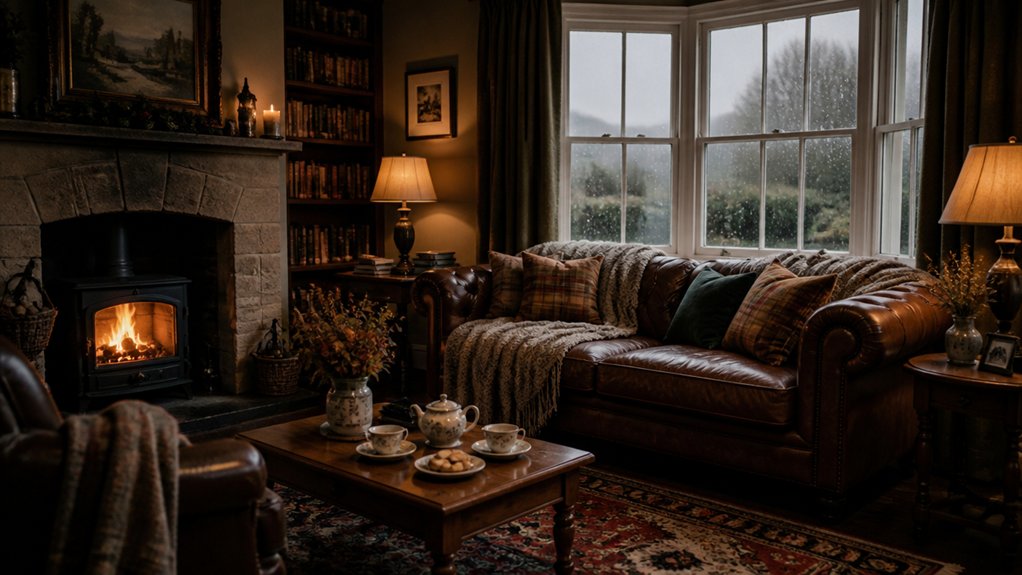
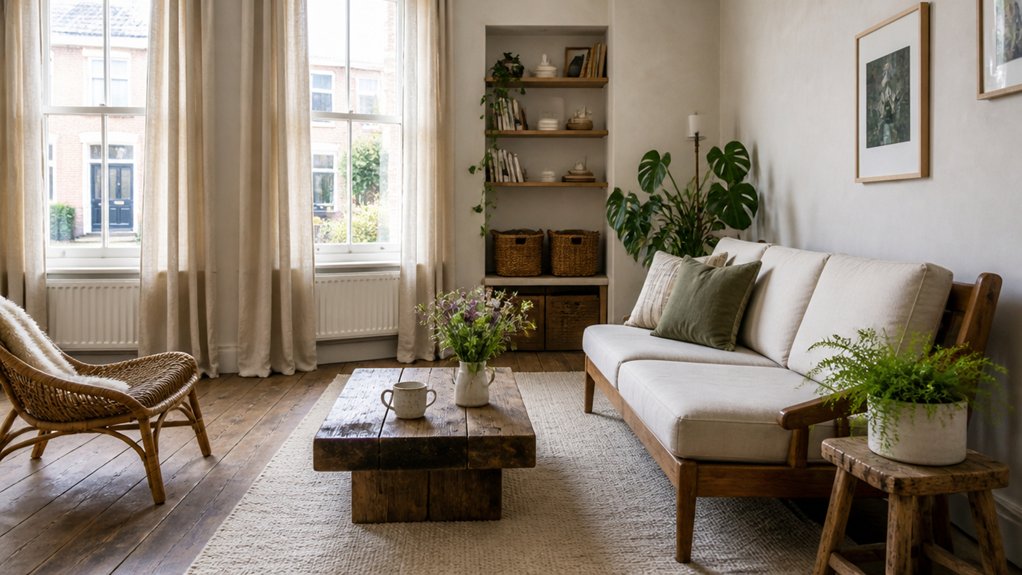
Rain taps the pane as dusk settles early, and your living room starts to feel like a refuge. You’ll get the most comfort by planning a chat-friendly layout, then bringing in russet, deep olive, and terracotta to warm the low light. You can layer wool throws, plaid cushions, and a thick rug, then soften it all with lamp light and draught-blocking curtains. But the real shift happens when you decide where the cosiest corner should be…
Key Takeaways
- Arrange seating toward the fireplace, keep walkways clear, and pull furniture off cold exterior walls for warmth and easy flow.
- Use a warm palette—russet, mustard, deep olive—with off-white trim, adding seasonal accents like brass candlesticks and pinecones in curated zones.
- Layer tactile textiles: wool throws, tweed or velvet cushions, and optional sheepskins to boost comfort and create a snug British look.
- Add thick wool rugs and layer smaller rugs to trap heat, define lounging and reading zones, and keep front furniture legs on rugs.
- Improve insulation and atmosphere with thermal-lined curtains hung high and wide, plus dimmers and warm 2700K lamps for evening glow.
Plan Your Cosy British Living Room Layout
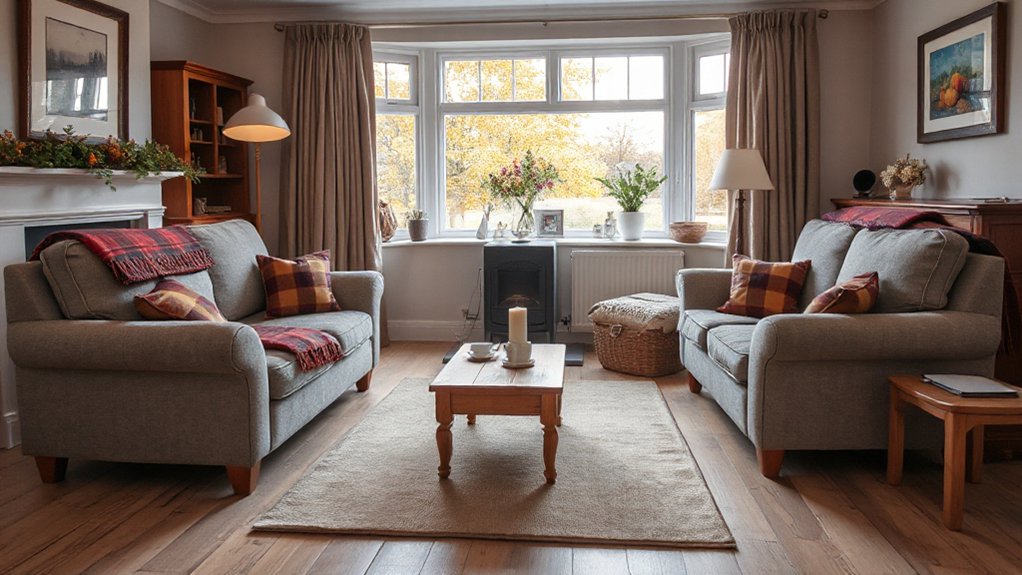
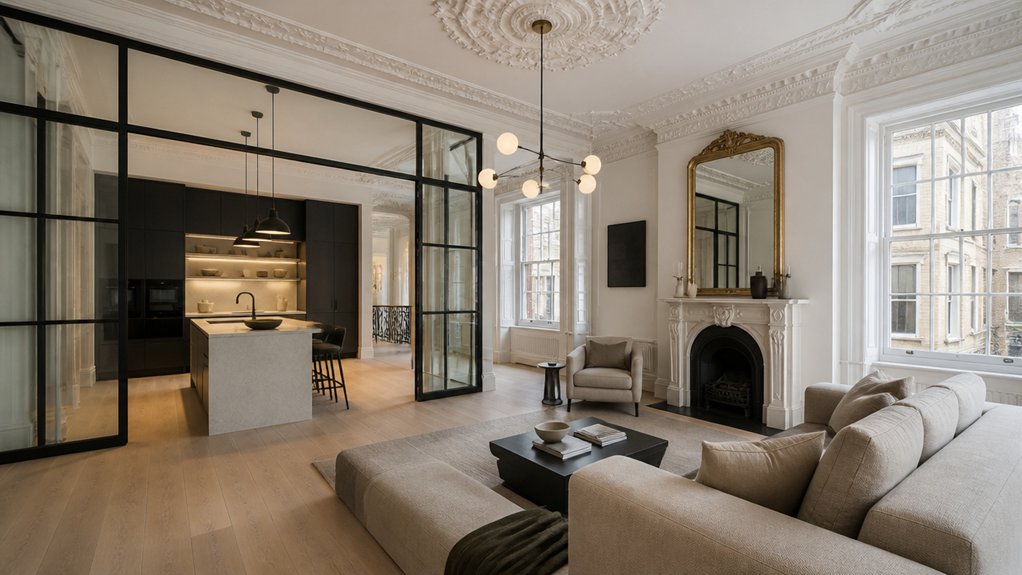
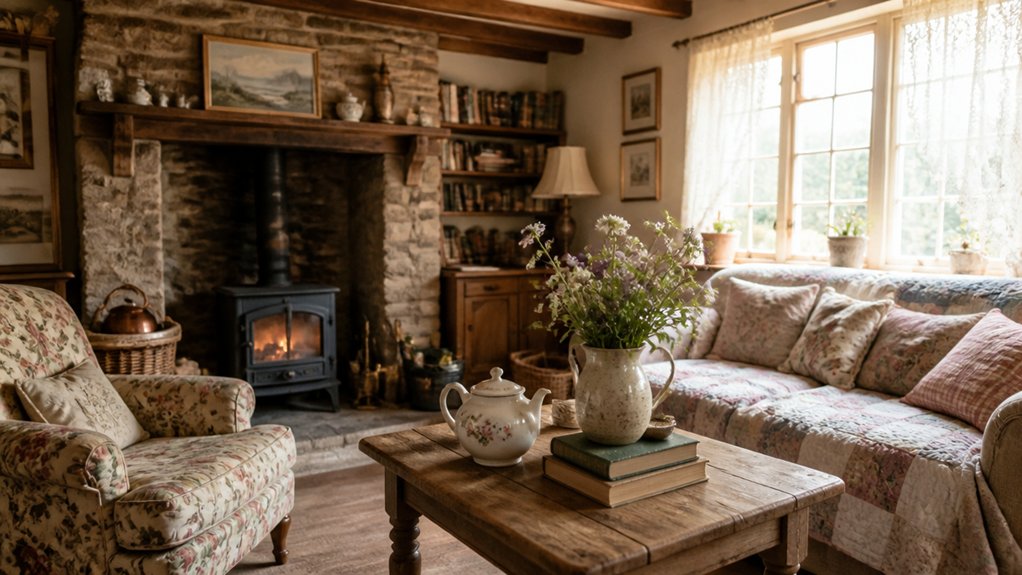
As the evenings draw in and the fire becomes the heart of the home, start by planning a layout that gathers everyone close and keeps draughts at bay. Angle your main sofa toward the hearth, then float a pair of armchairs opposite to form a snug conversation circle.
In open plan layouts, carve a “winter zone” by turning seating to face inward and setting a console or bookcase behind the sofa to block through-traffic. Keep walkways clear for logs, tea trays, and wellies by leaving a hand’s breadth between pieces and the radiator.
Your furniture placement should favour warmth: pull seats off cold exterior walls, tuck a footstool near the fender, and place a small lamp table within easy reach for reading after dusk.
Choose Warm Colours for Low-Light Days
Once you’ve pulled the seating in close and made the hearth the focal point, let your colour choices do the rest of the warming.
In British autumn and winter, grey skies flatten a room, so you’ll want Warm colour palettes that glow even before the fire’s lit: russet, oxblood, mustard, warm taupe, and deep olive.
Paint a single wall in a spiced terracotta or smoked caramel to anchor the space, then keep ceilings and trim in creamy off-white so daylight stretches further.
Choose patterned curtains in heritage checks or florals with red and gold notes to soften the view.
With Low light lighting, these shades read richer, so avoid icy blues and stark whites that turn cold after dusk.
Layer Textures for a Cosy British Living Room
When the evenings draw in and the fire hasn’t even caught yet, texture gives your living room its first real warmth. Start with textile layering: a brushed-cotton throw over the sofa back, then a woollen blanket folded at the arm for quick reach when the draught sneaks in.
Add cushions in varied weaves—tweed, velvet, and cable-knit—so every seat feels inviting and lived-in.
Bring in tactile textures through simple details: a linen lampshade that softens light, a knitted hot-water-bottle cover on the side table, and thick curtains that fall in generous pleats.
Mix matte and sheen—waxed wood, aged brass, and glazed ceramics—to catch the low winter sun. Keep it balanced so the room feels snug, not cluttered, by autumn and winter.
Add a Thick Rug for Warmer Floors
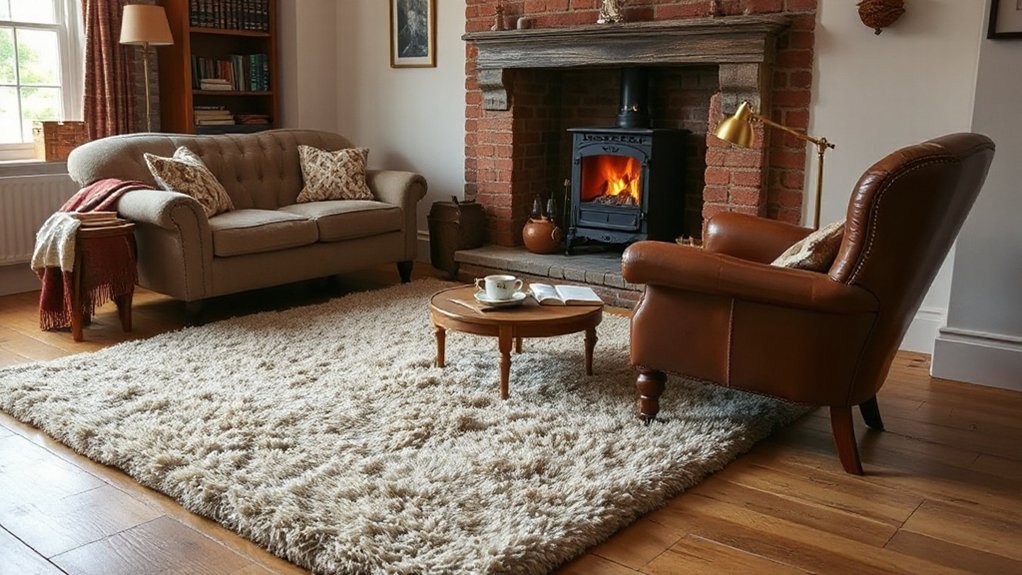
When the evenings draw in, you’ll feel the difference a high-pile wool rug makes underfoot, trapping warmth and softening draughty boards.
You can layer a smaller rug over a larger base to build extra insulation and that snug, lived-in look.
Use rugs to mark out zones—by the sofa for tea and telly, or under a reading chair—so every corner feels properly winter-ready.
Choose High-Pile Wool Rugs
As the days draw in and the floorboards start to bite, you’ll feel the difference a high-pile wool rug makes underfoot. Choose one with dense Wool textures that spring back after a long evening by the fire, and you’ll trap warmth where it matters most.
Look for Vintage patterns—Persian-inspired medallions, faded florals, or restrained tartans—that suit a British sitting room without shouting. Keep an eye on pile height: deeper feels cosier, but still needs to clear doors and sit neatly under a coffee table.
Check the backing and edging for tight stitching so it won’t curl when radiators go on. In richer autumn light, a rust, moss, or navy rug grounds the room and softens every step.
Layer Rugs For Warmth
Though one good wool rug takes the edge off a cold room, layering rugs locks in heat and adds that lived-in British cosiness you want for autumn and winter. Start with a thick, hard-wearing base—jute or flatweave—then place a deep-pile wool or sheepskin on top where your feet land first.
You’ll trap a cushion of air between layers, so draughts feel softer and the floor stays warmer longer. Keep the top rug slightly smaller so the border looks intentional, and add an underlay to stop creep and creaks.
Choose autumn tones—tobacco, oxblood, moss—to echo outdoor heating glow seen through the window, while the texture amplifies fireplace ambiance as you settle in with tea.
Use Rugs In Zones
Layered rugs bring depth and softness underfoot, and you can push that comfort further by zoning your living room with a thick rug where you actually sit and linger. Anchor the sofa and armchairs on it so your feet land on warmth, not bare boards, when the evenings draw in.
Use area rugs to create clear zone definition: one plush rectangle for the seating circle, a flatter runner by the bookcase or hallway route. Keep the front legs of key pieces on the rug to stop it drifting and to make the arrangement feel intentional.
Choose dense wool, deep pile, or a tufted weave for insulation, and add a felt underlay to cut draughts and hush footsteps. In autumnal tones—claret, moss, oatmeal—you’ll make the whole room feel settled.
Layer Lighting for Cosy British Evenings
When the afternoons draw in and rain taps the panes, good lighting turns your living room into a proper refuge. Start with an overhead dimmer so you can shift from bright tasks to a soft ambient glow by tea time.
Next, build mid-level light with table lamps on sideboards and a classic standard lamp beside your reading chair. Choose warm bulbs (around 2700K) and fabric shades to keep edges gentle. Add a small wall light or picture light to lift darker corners and highlight books, prints, and wood grain.
Finally, tuck in low, flickering points—LED candles in the hearth or a lantern on the windowsill—for depth on long evenings. Keep switches handy, and let statement fixtures feel traditional, not flashy.
Style Your Sofa With Winter-Ready Layers
Once you’ve set the mood with gentle lighting, turn to your sofa and dress it for winter comfort. You’ll get instant warmth by layering wool throws and thick blankets, neatly folded over the arm or draped along the back.
Then mix cushions in tweed, velvet, and cable-knit textures so the seat feels snug, traditional, and properly cold-weather ready.
Layer Throws And Blankets
As the evenings draw in and the firelight starts to feel essential, you can turn an ordinary sofa into a winter-ready perch with a few well-chosen throws and blankets.
Start with a breathable wool or brushed cotton throw for everyday warmth, then add a heavier knit or faux-fur layer for colder nights. Drape one neatly along the back for structure, and fold another within arm’s reach for quick wraps.
Choose heritage checks, herringbone, or deep autumnal plains that suit lamplight and dark wood.
Keep a basket nearby so layers stay tidy after outdoor entertaining or when you’ve come in from seasonal baking.
Air throws between uses, and spot-clean promptly, so they stay plush, fresh, and inviting all season long.
Mix Cushions And Textures
Although a good throw sets the mood, cushions bring the real winter depth to your sofa, so mix textures and fills rather than relying on matching sets.
Start with two feather-filled squares in wool tweed or brushed cotton, then add a smaller velvet or corduroy cushion for a gentle sheen in lamplight.
Use textile pairing to echo the season: herringbone with tartan, cable-knit with linen, or faux shearling against a smooth leather arm.
Keep a steady palette—oatmeal, forest green, oxblood, navy—so patterns feel traditional, not busy.
For cushion layering, place firmer cushions at the back, softer ones forward, and finish with a lumbar to support you during long tea-and-book evenings.
Rotate covers for late winter freshness.
Pick Curtains That Block Draughts
When the wind starts finding its way through older window frames, you’ll feel the chill long before the thermostat catches up. Start by checking for gaps, then back up draught proof windows with properly lined curtains that seal the edges.
Choose insulated curtains with a dense weave, interlining, or thermal backing, and hang them high and wide so fabric covers the top and sides of the recess. Let the hem kiss the floor or sit just above a thick rug to stop cold air pooling.
Pick heavier materials—wool blends, velvet, or brushed cotton—for that autumnal, lamps-lit snugness. Use a taped heading for neat folds, and add tiebacks so you can pull them clear on bright afternoons without losing warmth.
Create a Cosy Reading Nook by the Window
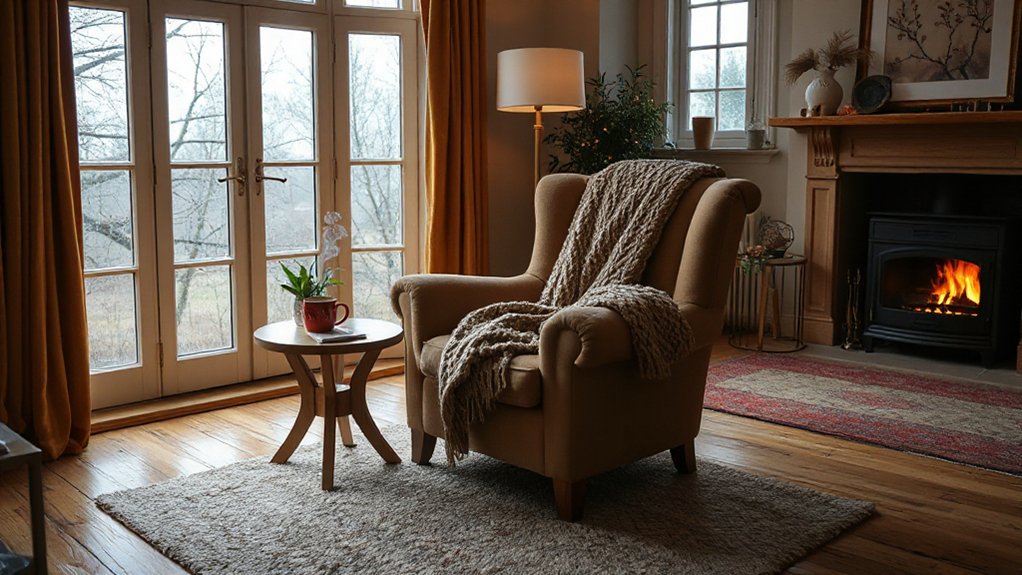
If your living room window catches the soft afternoon light, claim that spot for a reading nook that feels made for autumn and winter. Set a sturdy armchair slightly angled to the glass, so you can watch rain bead on the pane without feeling exposed.
Layer comfort with a wool throw and a firm lumbar cushion in tweed or tartan, then add a small footstool to keep you warm and settled. Tuck a slim side table within easy reach for your teacup and bookmark, and place a shaded lamp low beside the chair for early dusk.
Finish your Window treatments with lined curtains or a Roman blind to soften glare and hold heat, and you’ve built a proper Reading corner.
Add Autumn-Winter Accents Without Clutter
You can warm up your living room for autumn and winter with layered textiles—think a wool throw, a plaid cushion, and a soft rug—while keeping the look tidy.
Choose a few minimal pieces of seasonal décor, such as a brass candlestick, a bowl of pinecones, or a small vase of branches, rather than scattering bits everywhere.
Create curated zones so each accent has a clear home, and your room stays cosy, calm, and properly lived-in.
Layered Textiles, Minimal Pieces
As the light fades earlier and the evenings draw in, layered textiles give a British living room its autumn–winter warmth without asking for extra furniture or fussy décor. Start with one honest wool throw over the sofa arm, then add a second, lighter knit for touch and contrast.
Choose cushion covers in tweed, brushed cotton, or velvet, but keep the palette calm—oatmeal, moss, claret—to support Minimalist decor.
Prioritise Textile durability: look for tight weaves, robust seams, and removable covers that stand up to tea, pets, and constant use. Swap summer linens for heavier curtains or a lined Roman blind to hold heat and soften drafts.
A single sheepskin on the favourite chair adds comfort, yet it’s easy to lift away come spring.
Seasonal Decor, Curated Zones
Though autumn and winter invite a few extra comforts, a cosy British living room still feels best when seasonal décor stays deliberate and zoned. Choose two or three “stations”: mantel, coffee table, and reading corner, then keep the rest calm and breathable. Hang seasonal wreaths on an interior door or above the fireplace; they signal the season without stealing floor space.
On the mantel, group candles with one brass candlestick and a small vase of berried stems; limit yourself to a tidy trio.
On the coffee table, swap in a lidded tin for conkers and clementines, and add one wool runner.
Create a tea zone with a tray, your best festive tableware, and a biscuit jar, so sparkle feels contained. Rotate weekly, not pile up.
Keep Your Cosy Living Room Tidy and Practical
When the evenings draw in and the throws come out, a tidy living room keeps the whole space feeling calm, welcoming, and properly cosy.
Start with sensible Storage solutions: a lidded basket for blankets, an ottoman for board games, and a slim console for lamps and candles. Keep remotes corralled in a tray, and use a small log bin so kindling doesn’t wander across the hearth.
Stick to quick cleaning routines that suit the season. Give the sofa a brisk brush, hoover crumbs from tea and biscuits, and wipe side tables before you light the fire or switch on fairy lights.
Hang wet scarves on a peg rail by the door, not the armchair, and you’ll keep the room practical without losing its warmth.
Frequently Asked Questions
How Can I Reduce Condensation on Living Room Windows in Winter?
You’ll cut winter window condensation by lowering indoor humidity: crack vents daily, use extractor fans, and dry laundry elsewhere. Boost window insulation with draught strips, heavy lined curtains, and secondary glazing; keep steady heating.
Which Houseplants Thrive in Low-Light British Living Rooms?
Like a Victorian telegram, you’ll pick snake plant, ZZ plant, pothos, peace lily, and cast-iron plant for low light. For Indoor gardening, you’ll mind Plant placement: tuck them near north windows, rotate weekly, and avoid draughts.
What Are the Best Heating Options for Renters Without Central Heating?
You’ll get the best warmth with efficient Electric heaters like oil-filled radiators, plus safe fan or panel units for quick boosts. For Fireplace options, choose plug-in electric stoves; add draught excluders and thick curtains.
How Do I Choose Pet-Friendly Fabrics That Still Feel Cosy?
Start with hard-wearing weaves; you can’t have your cake and eat it. Choose Pet safe textiles like tight-knit wool blends, denim, or microfiber. For Cozy fabric options, add washable throws in brushed cotton or faux fur.
What’s the Best Way to Soundproof a Draughty Victorian Living Room?
Start with Window sealing and heavy lined curtains; you’ll block both noise and chills. Add rugs and underlay, then use insulation techniques like acoustic plasterboard or mineral wool in studs. You’ll feel calmer all season.





Leave a Reply