

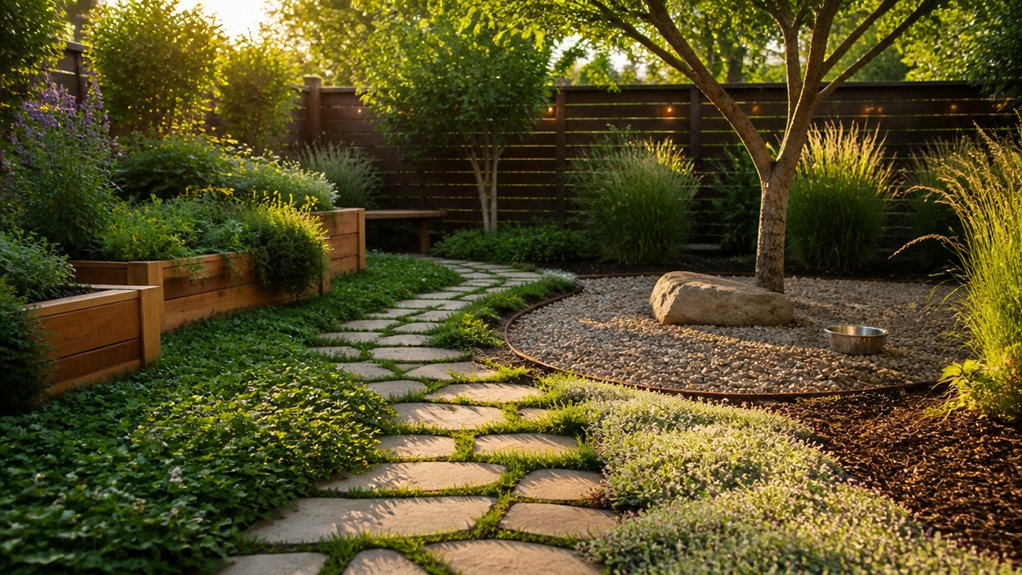
Your garden should work like a well-cut suit: tailored, durable, and still elegant. You’ll map clear zones for play, potty, and planting, then tie them together with paw-safe surfaces like stabilized gravel, turf, and smooth-edged stone. You’ll choose non-toxic, wildlife-friendly plants and reinforce high-traffic corners with resilient groundcovers and tidy borders. Add dog-proof fencing with a self-closing gate, and you’ll keep the look crisp—until you decide where the “yes” digging spot goes…
Key Takeaways
- Zone your yard into play, potty, and planting areas to control wear, drainage, and sightlines while keeping the design cohesive.
- Build durable surfaces with proper grading, compacted bases, and pet-friendly paths to prevent mud, ruts, and patchy turf.
- Choose pet-safe plants and relocate or barrier toxic species, keeping tempting bulbs and low foliage out of reach.
- Use safe materials—avoid cocoa mulch and exposed fertilizer spikes—while improving soil with compost, sandy loam, and neutral pH.
- Add dog-proof fencing, self-latching gates, and a designated dig pit to manage behavior without sacrificing a clean, beautiful layout.
Start With Zones for Play, Potty, and Plants
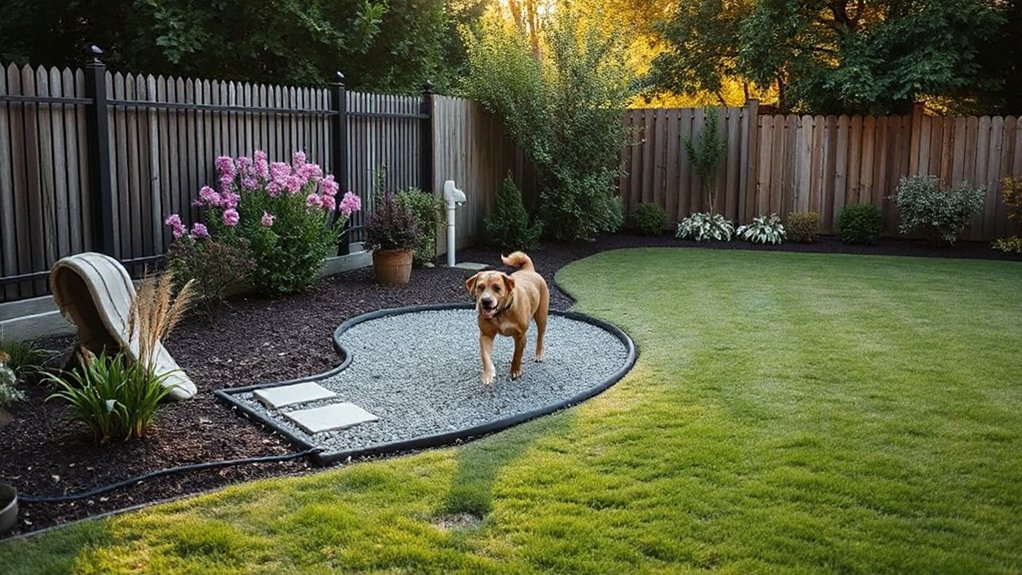
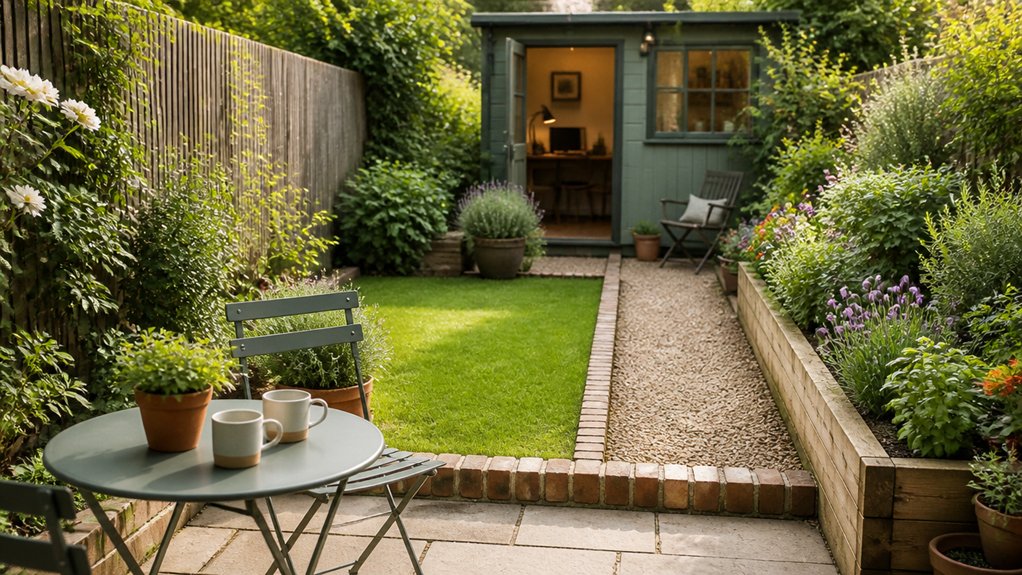
Before you pick plants or lay pavers, map your yard into three clear zones—play, potty, and planting—so each area can be built to handle the specific wear, drainage, and safety demands pets create.
Place the play zone where sightlines from doors are clean; use turf reinforced with grid pavers over 4–6 inches of compacted, free‑draining base. Grade 1–2% away from the house.
Put the potty zone downwind and downhill, edged with hose access, and build it like a biofilter: gravel trench, permeable surface, and a flush‑to‑drain routine.
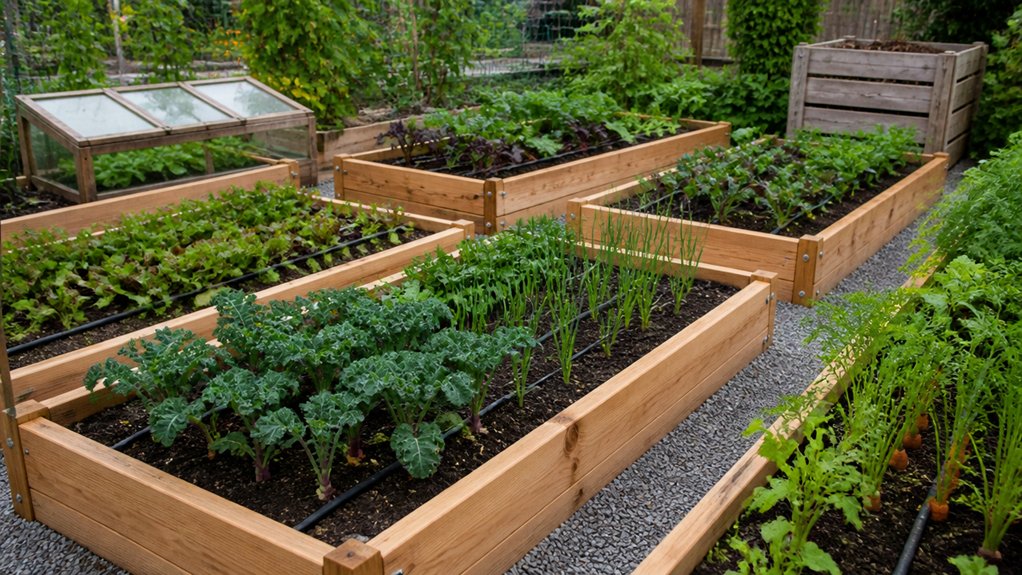
Keep the planting zone as the visual frame—mulched paths, drip irrigation, and Pet safe fertilizers to reduce runoff. Specify Wildlife friendly plants to soften boundaries and support pollinators without sacrificing structure.
Choose Pet-Safe Plants and Flag Toxic Ones
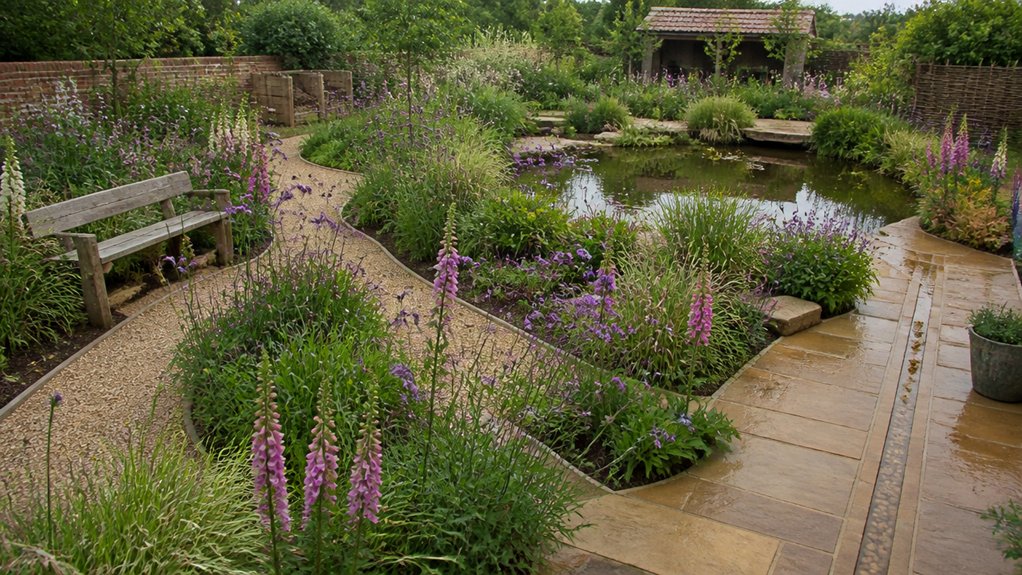
Once you’ve set your garden zones, audit the plant palette for common toxins—think lilies, sago palm, oleander, foxglove, and azalea—so you’re not planting hazards into high-traffic pet routes.
Swap risky ornamentals for pet-safe options like rosemary, thyme, snapdragons, sunflowers, and Boston fern, keeping texture and color aligned with your site’s light and irrigation.
Then you’ll manage exposure with clear labels, tidy plant ID stakes, and strategic placement—reserve questionable species for fenced beds, raised planters, or behind hardscape barriers.
Common Toxic Garden Plants
Where do garden hazards hide in plain sight? They’re often your most ornamental specimens at the entry border or patio pots.
For Toxic plant identification in Pet safe landscaping, scan beds for lilies (cats), sago palm, oleander, foxglove, monkshood, yew, azalea/rhododendron, and daffodil bulbs.
Note micro-sites: dogs dig in bulb drifts, cats brush against cut stems, and chewers target low, tender shoots along paths.
Map risk by height and access—anything under nose level or within leap range counts.
Flag plants with milky sap, glossy berries, or bitter alkaloid foliage, and treat prunings as hazardous waste.
Keep ID tags on nursery stock, photograph labels, and cross-check Latin names before you plant or relocate.
Pet-Safe Plant Alternatives
How do you keep a garden lush without stocking it with veterinary emergencies? Start with Pet friendly plants that deliver structure, texture, and seasonal color: cast-iron plant for deep shade, coral bells for crisp mounds, and rosemary or thyme for sun-baked edges and aromatic resilience.
For vertical interest, train star jasmine on a trellis and use Boston fern in sheltered courtyards where humidity stays higher.
Pair these with strict Toxic plant identification when you shop or inherit beds: lilies, sago palm, oleander, and foxglove can turn a quick nibble into an urgent call.
Choose non-toxic substitutes that match the look—snapdragon instead of foxglove’s spires, camellia for glossy evergreen mass, and marigold for bright, low borders that tolerate paws and light foot traffic.
Labeling And Placement Tips
Even if you’ve chosen the right species, you’ll keep pets safer by labeling every new planting and staging it by risk: use UV‑stable, weatherproof tags that list the common name plus “PET‑SAFE” or “TOXIC,” then map those notes in your garden journal so you can verify unknown volunteers and inherited shrubs before anyone sniffs or chews.
Treat Plant labeling as hardscape: tuck tags low on the north side of stems so they’re readable yet visually quiet.
For Placement strategies, push any flagged toxic plants into fenced backdrop beds or raised planters behind 900‑mm edging, and keep pet‑safe textures at nose height along paths. Cluster safe groundcovers near play zones, and site irritants downwind of lounging patios.
Recheck tags after pruning and seasonal swaps.
Fix Mud, Urine Spots, and High-Traffic Wear
After a few rainy play sessions, the weakest parts of your yard will announce themselves as slick mud lanes, yellowed urine rings, and flattened turf along fence lines and gate runs.
Start by regrading ruts to a 1–2% fall away from patios, then topdress with a 60/40 sand‑compost mix and roll it flat for a clean, park‑like surface.
In run paths, install hidden edging and a 3–4 inch gravel‑drain strip beneath turf to stop churn.
For urine, deep‑water the spot within 8 hours, then core‑aerate and overseed; keep pH near neutral with light gypsum, not lime.
Pet nutrition and training techniques matter: hydrate diets and cue a designated pee zone to localize damage.
Rake weekly.
Swap Grass for Durable, Pet-Friendly Groundcovers
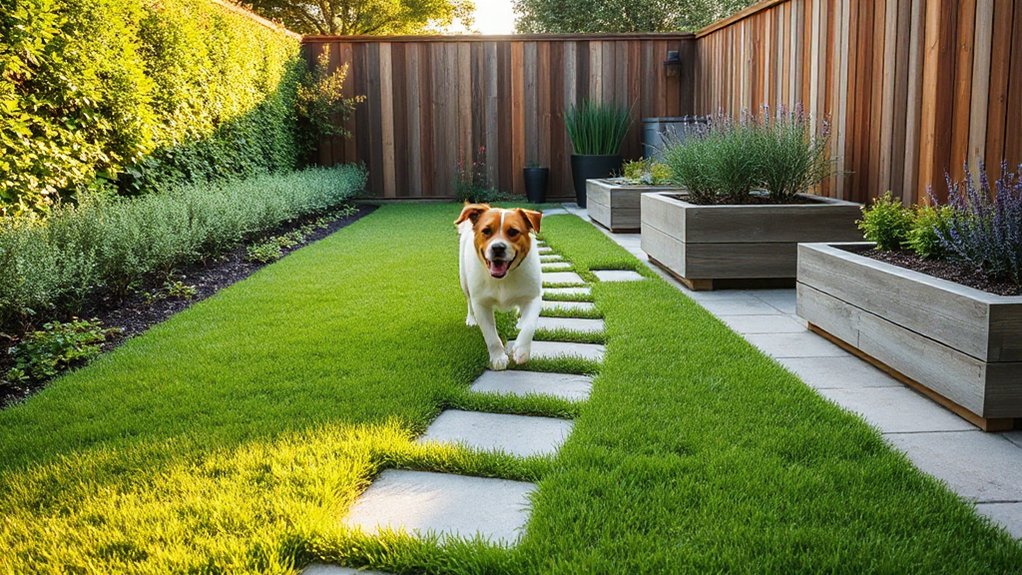
When turf can’t keep up with paws, you’ll get a cleaner, more resilient surface by swapping grass for low, mat-forming groundcovers that tolerate compaction and shed water fast.
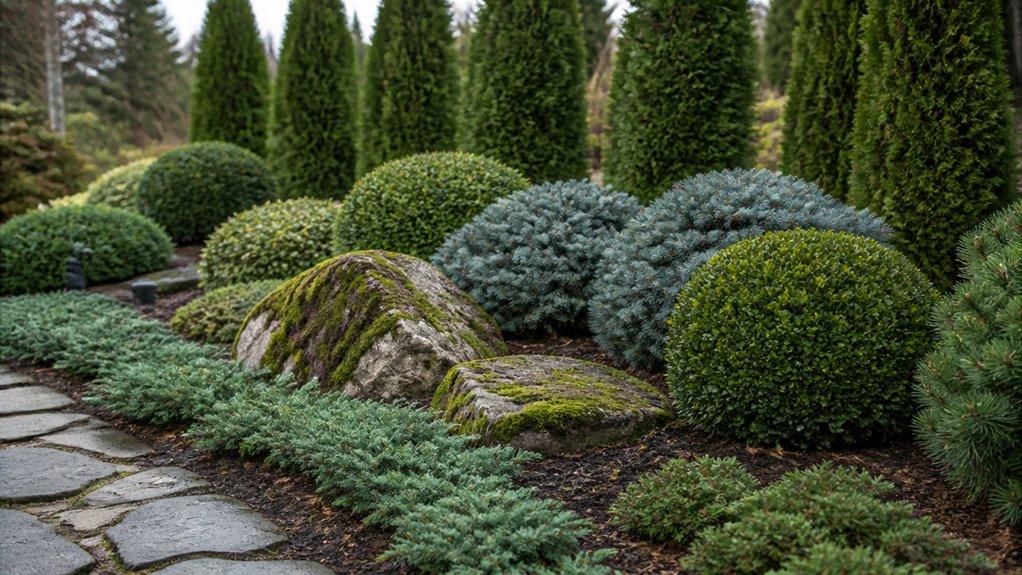
In sunny runs, plant thyme or kura clover for a tight, fragrant carpet; in coastal or windy sites, use dwarf yarrow or sedum for droughty, fast-draining beds.
Edge paths with steel or stone to keep runners from lifting and to preserve crisp lines.
Install on a 2–3% slope so water moves off quickly, and topdress lightly each spring to maintain a seamless plane.
If you need an ultra-clean dog corridor, use Artificial turf in narrow strips.
Feed living covers with Non toxic fertilizers to keep color without stressing pets.
Choose Pet-Safe Mulch and Paw-Friendly Soil
Groundcovers take the beating, but the mulch and soil you lay around them determine whether your garden drains cleanly or turns into a muddy, paw-gritty mess.
Skip cocoa hulls and dyed chips; both can be risky if ingested and stain coats. Choose washed cedar-free pine bark fines or shredded leaf mold, laid 2–3 inches deep and kept off crowns for airflow and rot control.
In high-traffic zones, topdress with composted fines to knit particles without hardpan.
Build soil like a sponge: 3–4 inches of compost blended into the top 8–10 inches, plus angular sand only if you’ve got clay.
Keep fertilizers slow-release and low-salt.
Pair these beds with Pet safe plants, and practice Toxic plant identification before you mulch around new installs.
Build Pet-Friendly Paths, Edges, and Borders
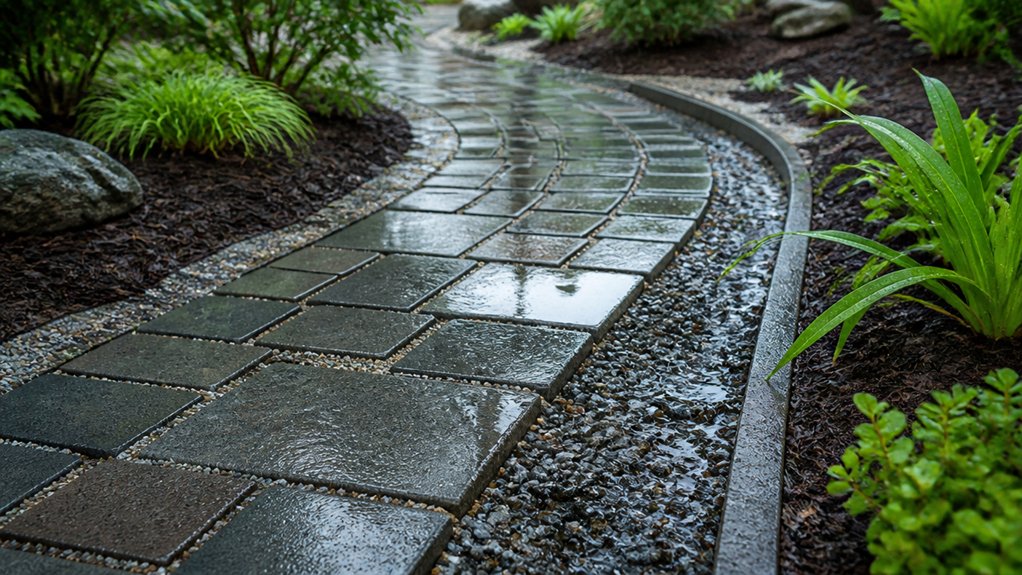
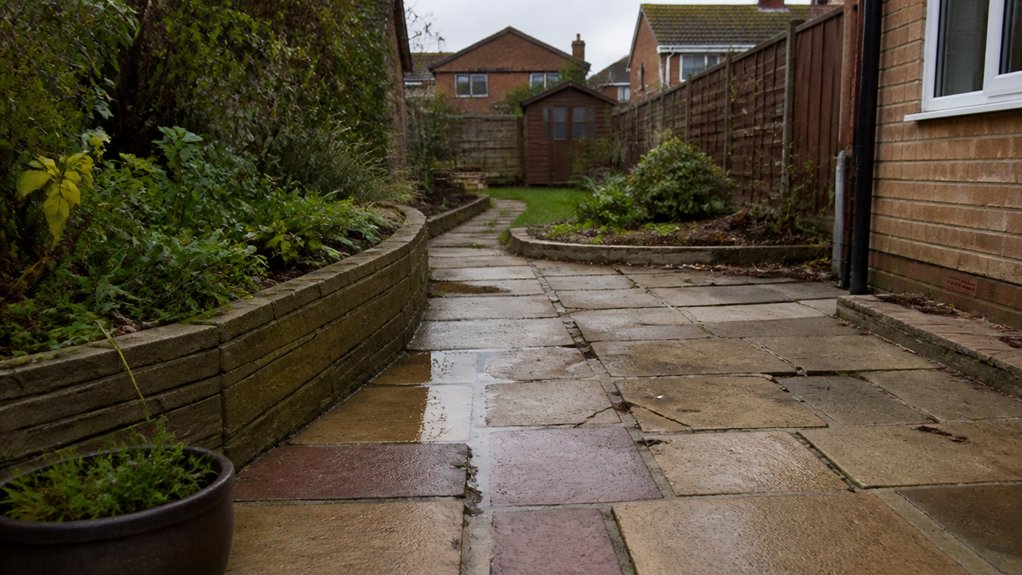
A few well-placed routes and clean edges can steer paws away from tender beds while giving your garden a crisp, designed geometry. Set primary paths where your pet already patrols—between door, shade, and bowl—then pave with compacted decomposed granite or tumbled pavers for traction and coolness.
Keep joints tight to prevent nail snags, and crown the surface 1–2% for drainage.
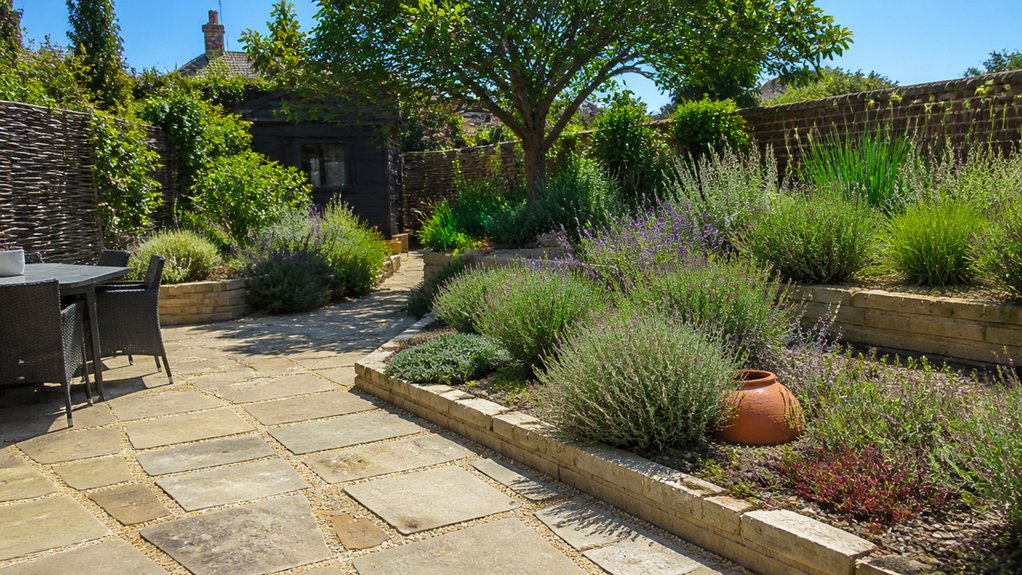
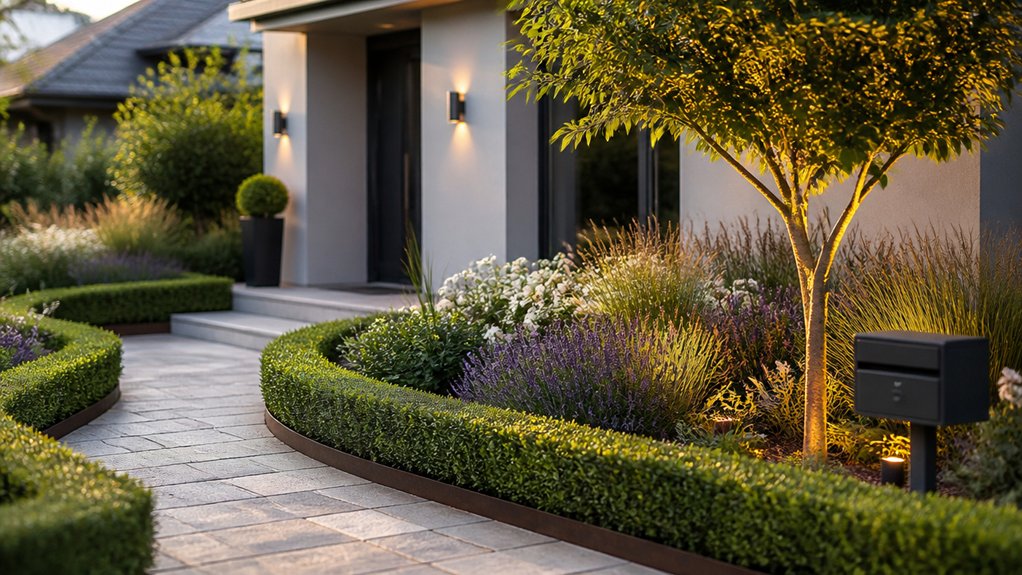
Define borders with flush steel edging or chamfered stone that won’t trip or scrape bellies. Use wide turning radii at corners to reduce shortcutting.
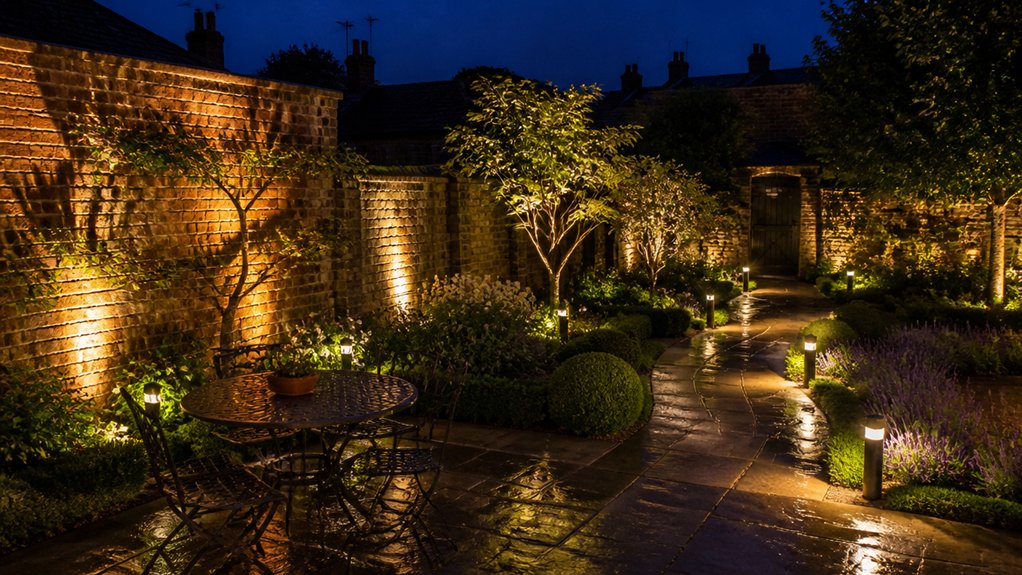
Where paths meet water features, add non-slip textured slabs and a drip edge to stop muddy splashback. Layer low, warm garden lighting along edges to reinforce the route at dusk.
Add Dog-Proof Fencing and a Self-Closing Gate
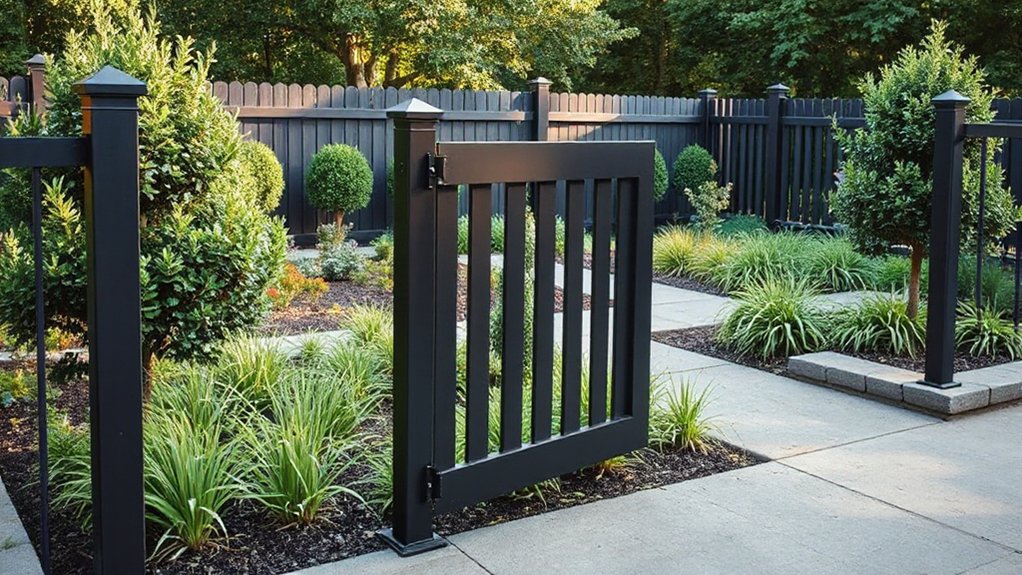
Those crisp paths and edges guide paws, but perimeter control keeps the whole layout working. Set a dog-proof fence to your site: 48–72 inches high, with 2×4 welded wire or vertical pickets spaced under 4 inches. Bury a 12-inch wire skirt or turn it outward to block tunneling, and cap wood with smooth rails to prevent chewing splinters.
Align posts on a tight stringline so the fence reads clean against planting masses and hardscape. Install a self-closing, self-latching gate with spring hinges, a gravity latch, and a flush threshold to stop nose-push escapes.
Add a double-gate airlock near the entry walk, keeping Pet grooming and veterinary care runs stress-free during arrivals and departures.
Create “Yes Zones” for Digging and Sniffing
You’ll reduce plant damage by mapping “yes zones” that match how your pet moves: a designated digging pit set in a shaded corner, edged with pavers, and kept loose with a sand–topsoil blend.
You’ll choreograph sniffing with scent trails and low borders—think herb strips, log rounds, and gravel ribbons that guide noses along the perimeter instead of through beds.
You’ll keep it safe and clean by specifying untreated mulch and contaminant-free soil, then avoiding cocoa hulls, sharp chips, and chemical-laden amendments.
Designated Digging Areas
While a perfectly edged bed may look pristine on paper, pets need an intentional outlet for scenting and excavation, so build a designated “yes zone” that absorbs those behaviors without collateral damage.
Site it in a low-visibility corner with good drainage, away from tree root zones and irrigation spray. Excavate 8–12 inches, install a geotextile separator, then backfill with washed sand or a sand/loam blend that’s easy to rake flat.
Edge it with steel or stone set flush so paws don’t trip and your garden aesthetics stay crisp. Bury a few durable toys to reinforce use, and top-dress monthly to keep it clean.
Place a small log or rock cluster nearby for wildlife benefits, but keep it outside the dig pit.
Scent Trails And Borders
A dedicated dig pit handles the heavy excavation, but most pets patrol with their noses, so give them a guided route that keeps sniffing and scent-marking off your beds. Set Scent trails along the garden’s working edge: a 24–30 inch patrol lane that loops from gate to patio, then back to the dig pit.
Anchor it with durable, aromatic plants in tight drifts—thyme near paving joints, rosemary at sunny corners, and mint confined in containers where you want “stop-and-sniff” nodes. For Border design, use low, readable geometry: a 6–8 inch clipped boxwood line or steel edging, backed by coarse-textured grasses that hide paw scuffs.
Interrupt runs with flat stones and a water bowl so you control pace and points of interest.
Safe Soil And Mulch
Where do paws and noses meet the ground most often—your paths, patrol lanes, and the designated dig pit? Treat those zones like living surfaces: build soil health with screened compost, sandy loam, and a neutral pH (6.5–7.0) so it drains fast yet stays cool. Skip cocoa mulch, dyed chips, and fertilizer spikes; you don’t want toxins at muzzle height.
For the dig pit, edge it with steel or stone, then fill it with washed play sand blended 30% topsoil so it packs softly and doesn’t blow.
Choose mulch options that look refined and stay put: shredded bark, pine fines, or leaf mold in 2-inch lifts, kept 6 inches off stems. Top-dress twice yearly, rake weekly.
Keep the Garden Tidy Despite Pets Year-Round
Because pets track mud, shed fur, and love to dig, you’ll keep a pet-friendly garden looking intentional by building tidiness into the layout and the maintenance cycle.
Map Pet behavior: where they run, lounge, and scratch, then harden those zones with decomposed granite, turfstone, or tight-jointed pavers set on a compacted base so paws don’t churn soil.
Edge beds with steel or brick to stop mulch migration, and choose shredded bark that knits together.
Install a hose bib near the gate and a gravel “paw wash” strip to intercept grit.
For garden maintenance, prune to lift canopies, rake fur from groundcovers, and sweep paths weekly.
In wet months, add French drains and a boot tray station.
In summer, top-dress and recompact.
Frequently Asked Questions
How Do I Deter Neighborhood Cats From Using My Garden as a Litter Box?
Install Garden barriers: 2-inch mulch, gravel bands, or low lattice edging to block digging. Add Cat deterrents like motion-activated sprinklers, citrus peel, or prickly groundcovers. Keep beds tidy, remove loose soil, and refresh scents.
What Garden Lighting Options Are Safest for Pets at Night?
Choose low‑voltage LED garden lighting with sealed, shatterproof housings and warm 2700K output; you’ll minimize heat, glare, and paw burns. Use pet safe options like flush path lights, shielded bollards, and buried, armored кабling.
Can I Include a Pond or Fountain Without Risking Pet Safety?
Yes—you can, like a calm mirror set in stone. Choose shallow water features with gently sloped edges, grates, and GFCI pumps; fence or net as needed. Prioritize plant safety; skip toxic marginals near banks.
How Can I Prevent Pets From Bringing Ticks and Fleas Indoors?
You’ll cut indoor hitchhikers by pairing Tick prevention and Flea control: apply vet-approved topicals, comb after yard time, launder bedding weekly, and vacuum edges. In the landscape, mow, remove leaf litter, install gravel borders.
What’s the Best Way to Introduce a New Pet to the Garden?
Start with short, leashed sessions; 60% of dogs explore by scent first, so you’ll guide calmly. Use your garden layout to stage zones, and use plant selection to buffer paths with hardy, non-toxic borders.

Leave a Reply