

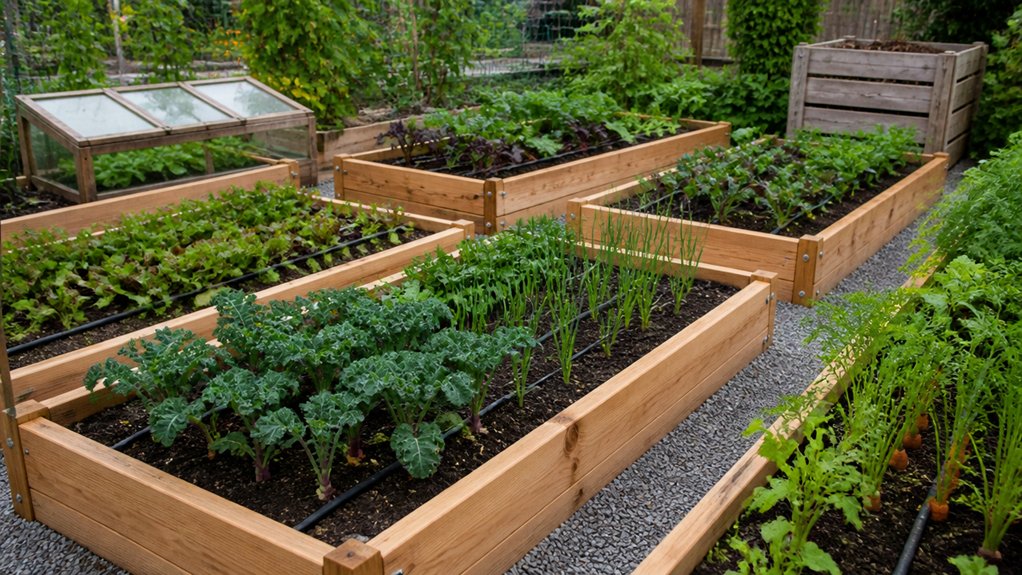
You probably don’t know that a modest 10–15 cm lift in soil level can raise spring root-zone temperatures by about 1–2 °C in many UK gardens, which materially speeds early growth. You’ll get the best results when you set bed width around 1.2 m for reach, keep paths firm and drainable, and match height to crop depth and your back. Choose durable edging, build in pest exclusion, and you’ll avoid the common yield bottlenecks—if you size and fill it correctly…
Key Takeaways
- Plan beds north–south with wide, firm paths (45–60 cm+) for UK wet weather, drainage, wheelbarrows, and comfortable access.
- Use practical sizes: 1.2 m wide for two-sided access (0.6 m against walls), 2–3 m long, with modular lengths for rotation.
- Choose height by crop and ergonomics: 20–30 cm salads, 30–45 cm roots, 40–60 cm easier access, 70–90 cm accessible gardening.
- Build with durable materials suited to UK moisture: treated timber/cedar, steel, recycled plastic, or brick; add liners and mesh bases for pests.
- Fill with peat-free mix (40% multipurpose, 40% green-waste, 20% loam), crown slightly for drainage, and use hoops with fleece or mesh covers.
Plan Your Raised Bed Layout and Paths
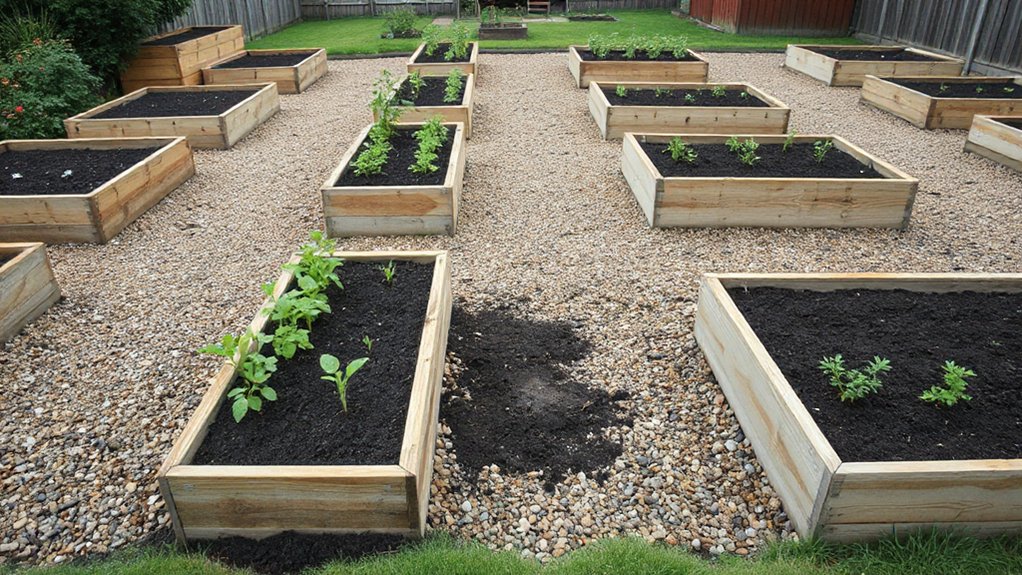
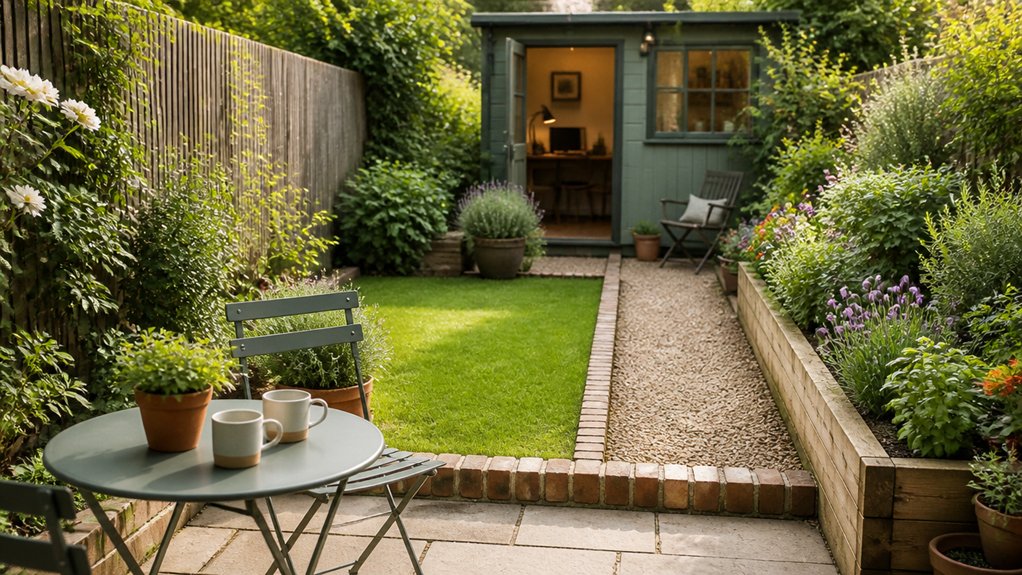
Before you build anything, map your raised beds and paths to match how you’ll actually work the plot and how UK weather will affect access.
Orient runs to capture light (typically north–south) and keep paths on the high side of any slope to reduce waterlogging.
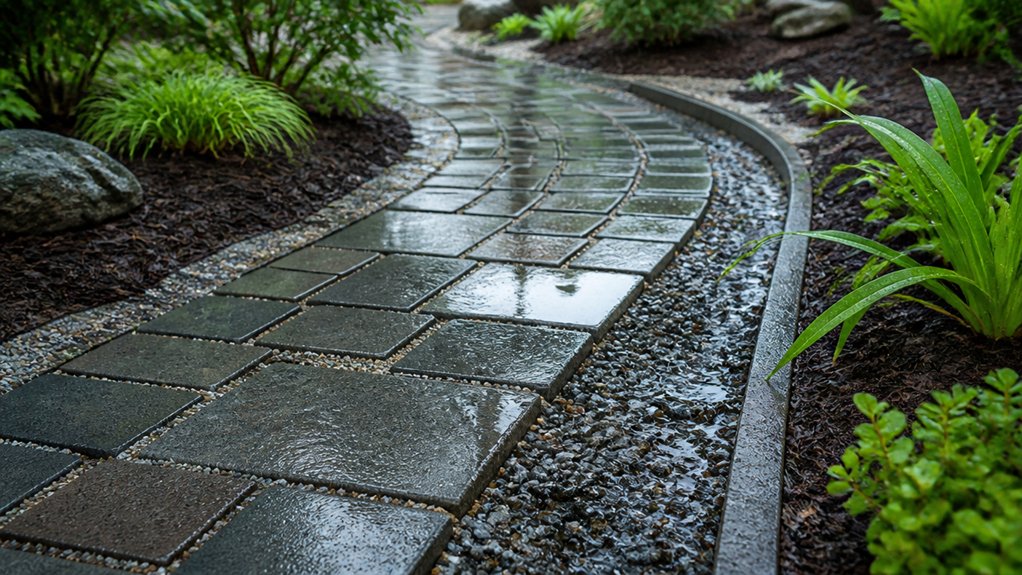
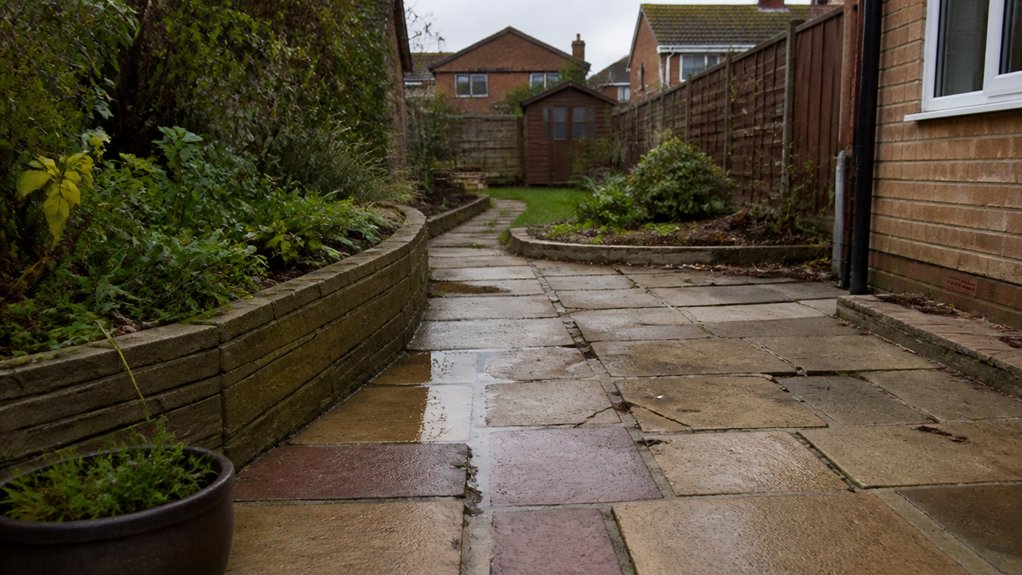
In heavy clay areas common across England, plan for firm, free-draining paths so you can reach beds after winter rain without compacting soil.
Set main routes wide enough for a wheelbarrow and your Gardening tools, and keep turning space at bed ends.
Use mulch, compacted gravel, or permeable paving to cut mud and weeds.
Do Soil testing up front (pH, nutrients, texture) so you can group beds by crop needs and manage amendments efficiently.
Choose Raised Bed Width and Length (UK Rules)
In UK conditions, you’ll get the best reach and least compaction by sizing bed width to your access: about 1.2 m if you work from both sides, or 0.6 m if you’ve only got one-sided access.
You’ll keep management efficient by choosing practical lengths (often 2–3 m) that fit your crop rotation, irrigation runs, and protection systems like cloches or netting without creating awkward dead space.
You must also match dimensions to UK site constraints—boundary setbacks, existing paving, drainage falls, and exposure to wind—so beds stay stable, workable, and compliant with your plot.
Ideal Bed Widths
Although you can build a raised bed to almost any footprint, you’ll get the best results in UK gardens by sizing it around comfortable reach and typical plot access.
For most adults, an easy, safe reach is about 60–75cm from the path, so aim for 1.2m wide if you’ll access from both sides, or 60–75cm if it sits against a wall or fence.
If you include a central stepping board, don’t exceed about 1.5m or you’ll compact soil.
Keep paths at least 45–60cm wide for wellies, barrows, and UK allotment traffic.
In exposed sites, narrower beds warm faster in spring.
You can still match decorative options or historical garden styles, but keep widths ergonomic.
Practical Bed Lengths
Because bed length doesn’t affect reach the way width does, you should size it around access, structure, and how you’ll work the plot. In most UK gardens and allotments, 2.4–3.6m (8–12ft) gives you efficient runs for crop rows, netting, and standard timber lengths (2.4m), while keeping weeding, watering, and harvesting manageable without excessive walking.
Keep lengths modular so you can rotate crops as discrete blocks and replace boards without dismantling whole frames. If you’ll use hoops or Enviromesh, match bed length to readily available cane and scaffold-net spans to reduce sag and wind flap.
Longer beds look tidy and improve garden aesthetics, but include end paths or cross-steps if you can’t comfortably work from both sides. Leave a short unplanted strip for wildlife attraction.
UK Site Constraints
Where should you let the site—not your ideal layout—set bed width and length in a UK garden or allotment? Start with access: in most UK plots you’ll work from both sides, so keep width to 1.0–1.2 m; if a bed must sit against a fence, cap it at 0.6 m to avoid overreaching in wet seasons.
Let existing paths, shed bases, and water points dictate length; split long runs every 3–4 m with cross-paths so you can wheelbarrow compost without compacting soil.
Check drainage: on heavy clay, shorter beds align with slight fall and allow outlets.
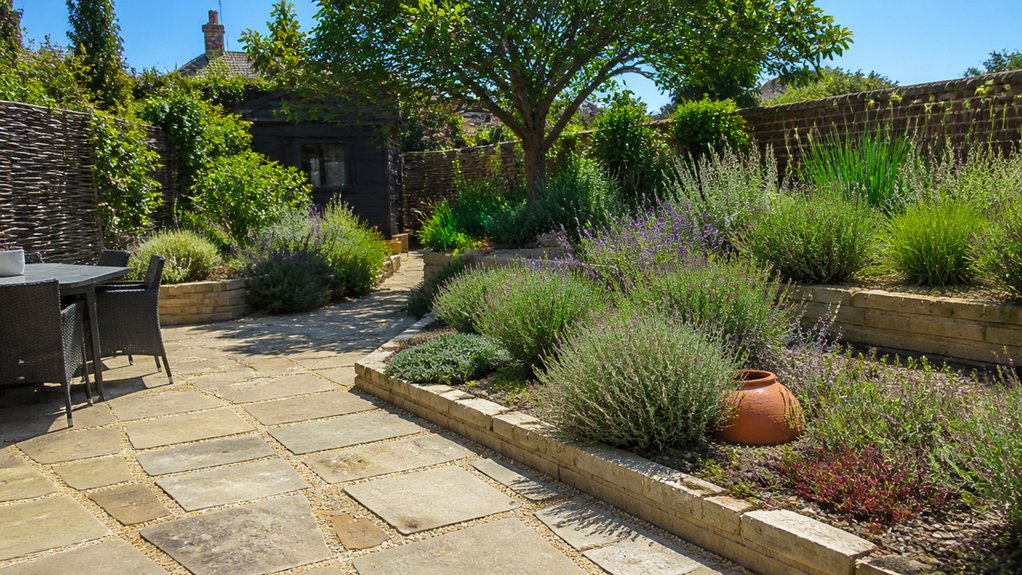
Respect boundaries and sightlines for Garden aesthetics, and leave a sunny edge strip for Wildlife attraction.
Choose Raised Bed Height for Comfort and Crops
If you choose the right raised bed height, you’ll reduce back and knee strain while giving roots enough depth to perform in the UK’s often heavy, moisture-retentive soils.
Aim for 20–30 cm internal depth for salads, onions, and shallow brassicas.
Go 30–45 cm for carrots, parsnips, and potatoes to prevent forking and waterlogging.
For access, 40–60 cm high lets you work with less bending, while 70–90 cm suits seated gardening and wheelchair reach (keep bed width to 1.2 m so you don’t overreach).
Taller beds also improve drainage on clay and warm earlier in spring.
Match height to garden aesthetics, and use height as pest control by reducing slug habitat and making netting easier.
Choose Raised Bed Materials (Cost and Lifespan)
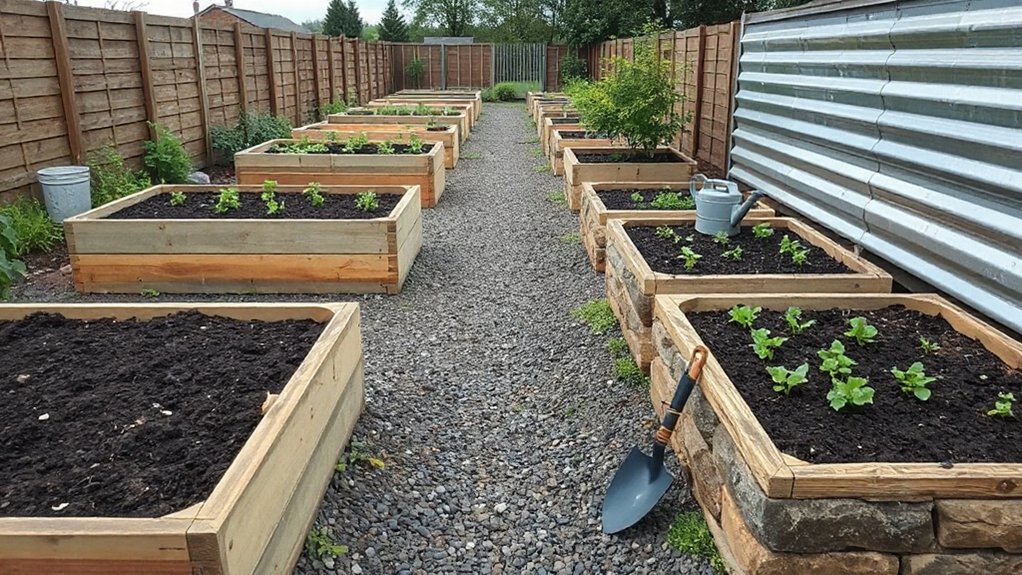
When you choose raised bed materials, you balance upfront cost against expected service life in UK conditions. Softwood is usually cheapest but tends to rot sooner in damp soils.
While larch, oak, recycled plastic boards, brick, or galvanised steel cost more, they typically last longer with less maintenance. You’ll also need to factor in UK weather durability—persistent rainfall, freeze–thaw cycles, and coastal salt exposure can accelerate decay and corrosion.
These weather conditions can change the best-value option for your site.
Material Cost Comparison
Although raised bed materials vary widely in upfront price, you’ll get the best value by comparing cost per year of service rather than ticket cost alone, because UK weather (persistent winter wet, freeze–thaw, and UV) drives rot, corrosion, and warping.
Budget softwood sleepers look cheap at builders’ merchants, but you’ll often pay again in fixings, liners, and extra boards. Larch, oak, or treated timber costs more upfront yet can reduce maintenance spend.
Galvanised steel kits price higher, but you save time on cutting and keep edges square.
Recycled plastic boards sit mid-to-high, yet you avoid preservatives and splitting.
Brick or blockwork costs most in materials and labour, but gives straight lines that support garden aesthetics and planting aesthetics.
Always include delivery, corner brackets, and VAT in your comparison.
Lifespan By Material
Cost per year only works if you’ve got a realistic service life for each build, because UK raised beds fail mainly through constant winter wet, freeze–thaw cycling, and UV-driven surface breakdown.
Untreated softwood boards often last 3–6 years; thicker boards and good drainage push that up.
Pressure-treated timber typically gives you 10–15 years in contact with soil, but check UC ratings and avoid older stock.
Cedar/larch sit around 8–12 years, depending on thickness.
Galvanised steel or aluminium beds commonly run 20+ years with minimal section loss, and you won’t fight rot.
For composite durability, expect 15–25 years if UV-stabilised.
Bamboo longevity is shorter: canes and panels usually manage 2–5 years outdoors, unless fully sealed and kept off soil.
UK Weather Durability
Why do raised beds that look solid in August turn soft and bowed by February in the UK? Repeated wetting, freeze–thaw, and fungal decay drive swelling and fibre breakdown, especially where boards contact saturated soil.
In maritime climates, you should prioritise rot-resistant and dimensionally stable materials: oak, larch, and cedar outlast softwood; recycled plastic boards ignore moisture but can creep under load; galvanised steel resists rot and slugs but needs insulated edging to reduce heat loss in winter.
Untreated pine is cheapest yet often fails in 3–5 years; hardwood may reach 10–15, steel 20+.
Use membrane liners and raised feet to limit wicking, support soil enrichment without waterlogging, and add mesh bases for pest prevention against voles.
Fill a Raised Bed: Peat-Free Mix + Drainage
Before you add a single plant, fill the bed with a peat-free growing mix that holds moisture without turning waterlogged, because UK rainfall and heavy subsoils can punish poor drainage.
Build a 5–10cm drainage layer only if you’re on compacted clay: coarse gravel or sharp sand, then a permeable membrane to stop fine particles migrating.
For the main fill, blend 40% peat-free multipurpose, 40% mature green-waste compost, 20% loam or topsoil; this supports structure and nutrient buffering.
Add compost enrichment annually (2–5cm) rather than overloading fresh organics that slump and block pore space.
Aim for pH 6.5–7.0 and keep beds slightly crowned.
For pest control, top with horticultural grit to deter slugs and improve surface aeration.
Raised Bed Designs for Salads, Roots, Brassicas
Although you can grow almost anything in a standard 1.2m-wide bed, you’ll get cleaner harvests and fewer losses in the UK if you match bed depth, surface layout, and protection to the crop group.
For salads, keep the bed 15–20cm deep, level the surface finely, and use close spacing to shade soil and slow evaporation in dry spells.
For roots, go 25–35cm deep with stone-free, firmed mix; split the surface into shallow drills to reduce carrot forking and parsnip canker risk on cold, wet sites.
For brassicas, build 30cm-plus depth, add wider plant spacings, and keep a 30–40cm path for access during slug peaks.
Use Companion planting (alliums beside brassicas) and crop rotation for Pest control against aphids and clubroot.
Add Raised Bed Hoops, Covers, and Netting
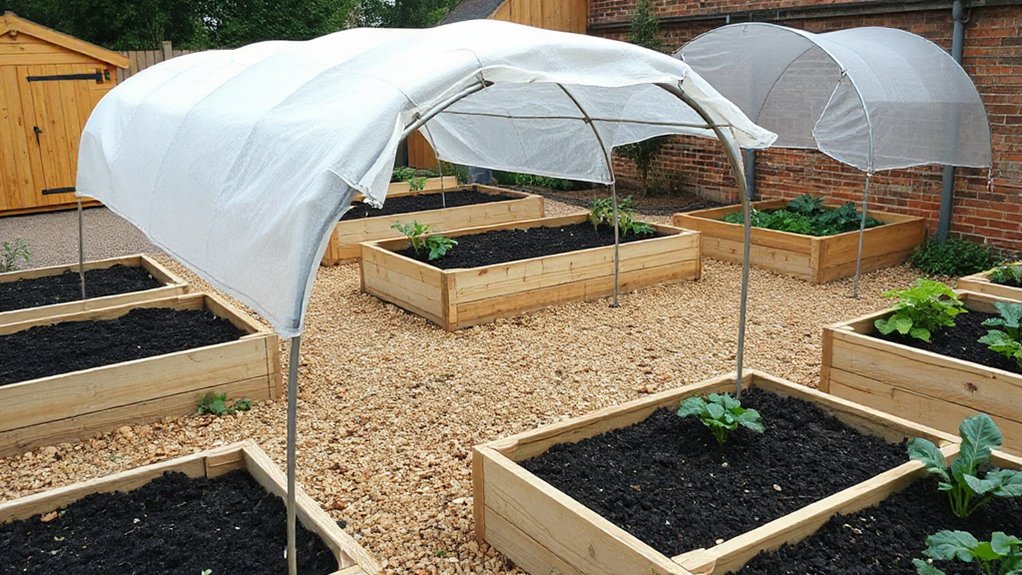
Once you’ve matched bed depth and surface finish to salads, roots, and brassicas, you can cut losses further by adding simple hoops and the right cover at the right time.
Use 16–20 mm MDPE or galvanised wire hoops at 60–90 cm spacing; fix to timber sides with pipe clips so you can swap covers fast.
For season extension, drape 30–50 gsm horticultural fleece over hoops to lift soil temperature and protect from late frosts common in UK springs.
For summer pest control, fit 0.8–1.0 mm insect mesh against carrot fly, cabbage root fly, and whitefly; seal edges with soil or battens to stop gaps.
Match covers to planting schedules: fleece for early sowings, mesh from transplanting, and remove during flowering for pollination.
Frequently Asked Questions
Do Raised Beds Need Planning Permission in the UK?
You don’t usually need planning permission for raised beds in the UK; they’re typically permitted development. Picture Whitehall policing your garden aesthetics: check conservation areas, listed buildings, or excessive height. Beds improve soil quality.
How Do I Protect Raised Beds From Slugs Without Pellets?
You’ll protect beds by combining Natural barriers (copper tape, wool pellets, sharp grit) with night hand-picking, beer traps, and nematodes (Nemaslug) in warm soils. Encourage Beneficial insects like ground beetles via log piles and diverse planting.
Can I Build Raised Beds on a Concrete Patio or Decking?
Yes—you can build raised beds on a concrete patio or decking. Choose material durability (treated timber, composite) and add a membrane plus drainage gaps. Prioritise accessibility design: 600mm height, 1.2m width, stable edging.
What Crop Rotation Works Best Across Multiple Raised Beds?
Like a chessboard, you’ll rotate beds in 4 blocks: brassicas, legumes, roots/alliums, then potatoes/fruiting crops. This UK-proven sequence preserves soil fertility and boosts crop diversity, breaking pest cycles and smoothing nutrient demand annually.
How Do I Prevent Cats or Foxes From Digging in Raised Beds?
You’ll stop digging by installing taut wire mesh covers and edging with gravel. Use Cat deterrents like motion-activated sprinklers and citrus repellents; focus on Fox prevention with 600mm buried weldmesh skirts and secure gates.


Leave a Reply