

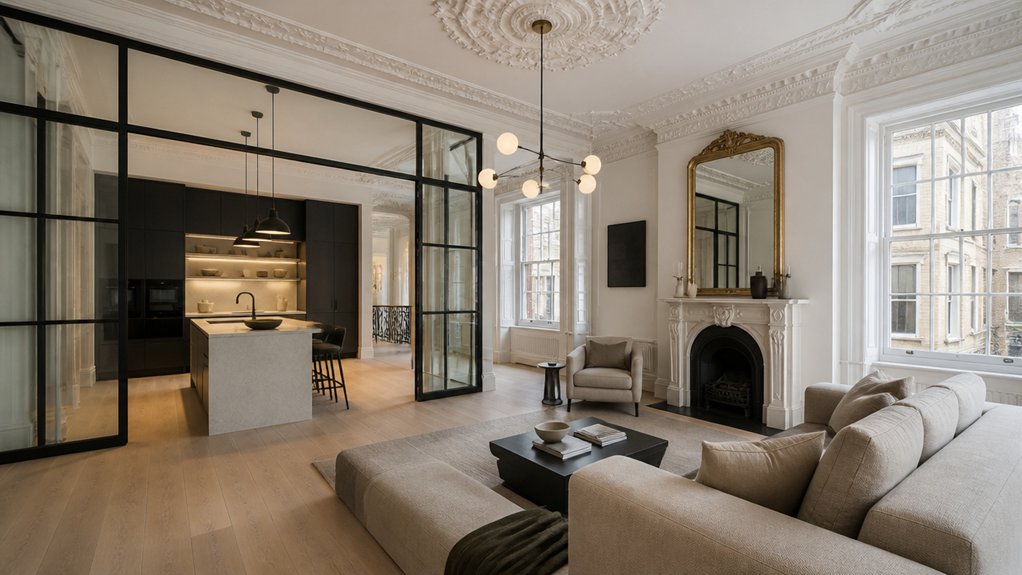
You probably don’t know that many “period” rooms were originally painted in deeper, muddier hues than today’s default white. If you treat cornices, sash windows, and chimney breasts as the room’s organising grid, you can add modern pieces without fighting the architecture. Keep proportions slim, finishes matte, and colours restrained—off-whites, soft greens, oxblood—then let texture do the work. The real shift happens when you decide which features stay in charge, and which quietly step back…
Key Takeaways
- Preserve authentic period features (cornices, sash boxes, tiled hearths) and repair originals before replacing, avoiding polyurethane pastiche mouldings.
- Let heritage architecture set the layout: keep chimney breasts, bay windows, and original sightlines, respecting historic room proportions and thresholds.
- Choose modern furniture scaled to period joinery, with slimmer legs and lifted bases that clear dado rails, mantels, skirting, and picture rails.
- Bridge old and new with a tight palette: one neutral, one mid-tone, one accent, plus restrained patterns and layered textures.
- Create cohesion with warm, high-CRI layered lighting and materials that echo originals, pairing historic details with modern honed stone, steel, or microcement.
Choose Which Period Features to Keep
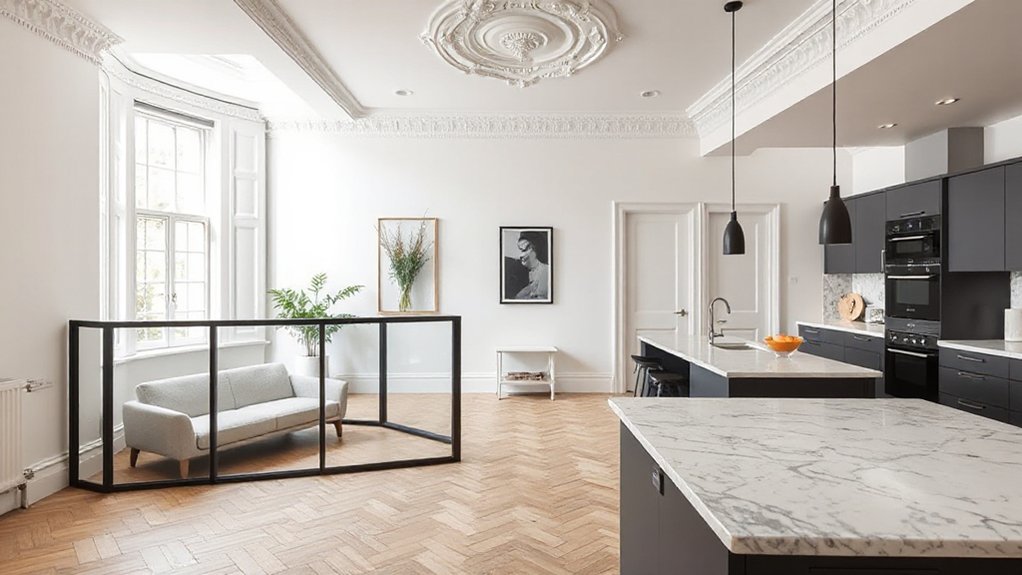
Although British homes often carry layers of Georgian, Victorian, and Edwardian updates, you’ll get the cleanest modern result by deciding which period features deserve to stay—and treating them as intentional anchors rather than inherited clutter.
Walk room by room and grade elements by authenticity, condition, and visual weight. Keep pieces that show historic craftsmanship: hand-run cornices, original sash boxes, tiled hearths, or well-proportioned architraves.
If period ornamentation feels heavy, retain one “hero” detail and simplify the rest—strip back overbuilt coving, remove fussy ceiling roses, or replace mismatched spindles with quieter profiles.
Check what’s truly original versus later pastiche; shiny polyurethane mouldings rarely earn space.
Repair before you replace, and match timber species and profiles when you must intervene.
Use Heritage Features as Layout Anchors
Once you’ve decided which original details earn their place, let them set the plan rather than forcing a modern layout over them. Treat a chimney breast, bay window, or stair hall as your fixed axis, the way Georgian and Victorian rooms were proportioned around heat, light, and circulation.
Align new sightlines with existing doorways so the enfilade still reads, even if you open a wall. Keep thresholds where they historically controlled drafts and privacy, then use glazing or half-height joinery to borrow light without erasing hierarchy.
Let decorative moldings dictate ceiling drops and lighting positions, and size built-ins to sit clear of cornices, skirting, and picture rails. Place antique accents at pauses—mantels, landings, window seats—so the old structure stays legible, not sentimental.
Add Modern Furniture That Suits Period Scale
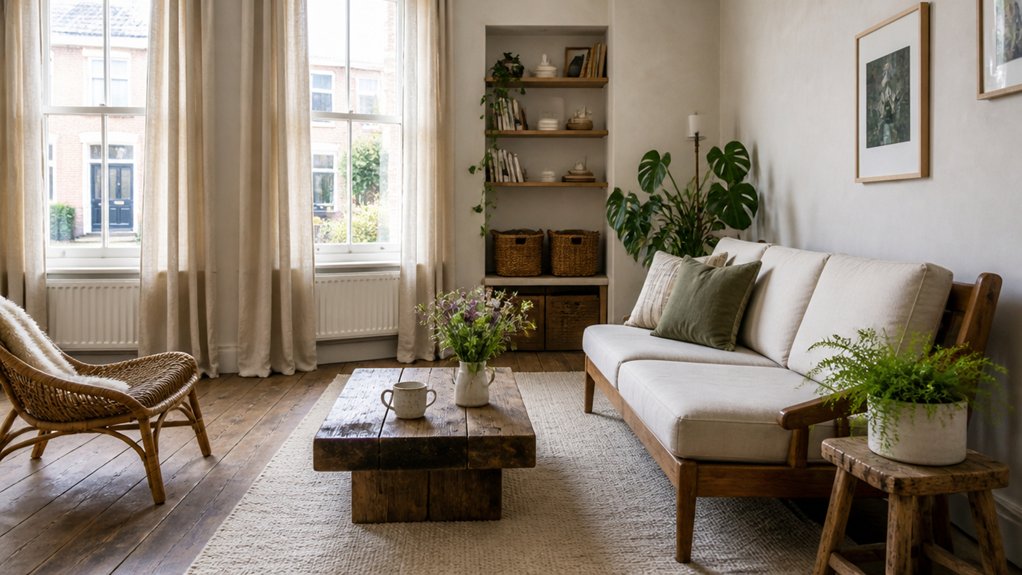
If you choose modern pieces with the same respect for proportion that Georgian and Victorian makers worked to, they’ll sit comfortably against sash windows, deep skirting, and tall chimney breasts instead of looking adrift.
Start by measuring sightlines: sofa backs should clear dado rails, and arm heights shouldn’t fight mantel shelves. Choose slimmer legs and lifted bases so boards and hearths remain visible, echoing the lightness of period chairs.
In dining rooms, pick tables with generous aprons and solid edge profiles, scaled to long bays rather than compact flats. Use tall bookcases or modular shelving that reaches near cornice level to honour Period proportions.
Prioritise furniture compatibility by matching visual weight to existing joinery, not copying ornament. Add one statement piece, then let spacing do the work.
Bridge Old and New With a Tight Colour Palette
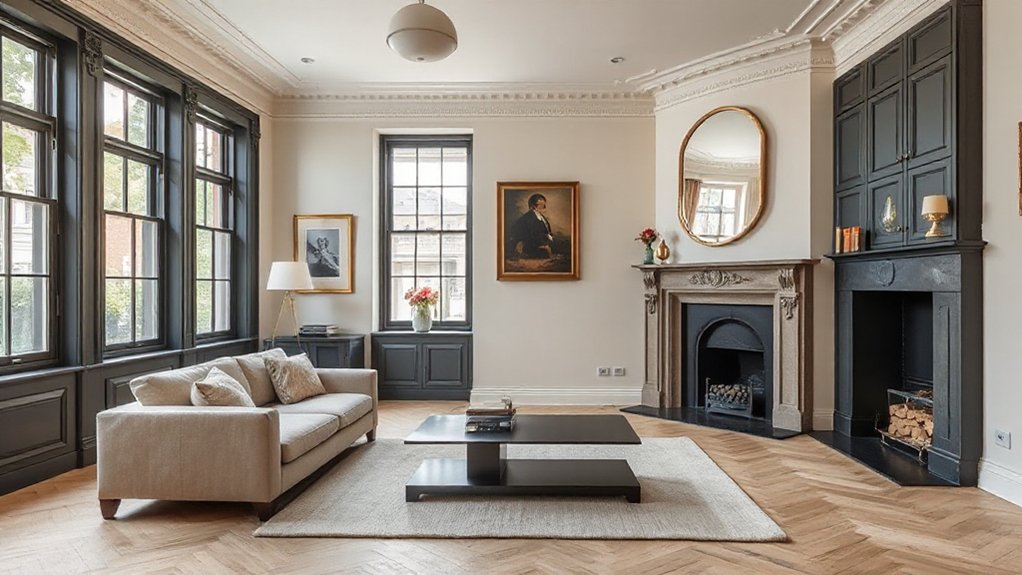
Scale gets your modern furniture sitting properly in a Georgian parlour or a Victorian front room; colour is what makes it feel like it belongs there. Choose a tight palette pulled from what’s already authentic: the warm off-whites of lime plaster, the sooty greens and oxbloods seen in 19th-century paint ranges, the honeyed tones of aged oak.
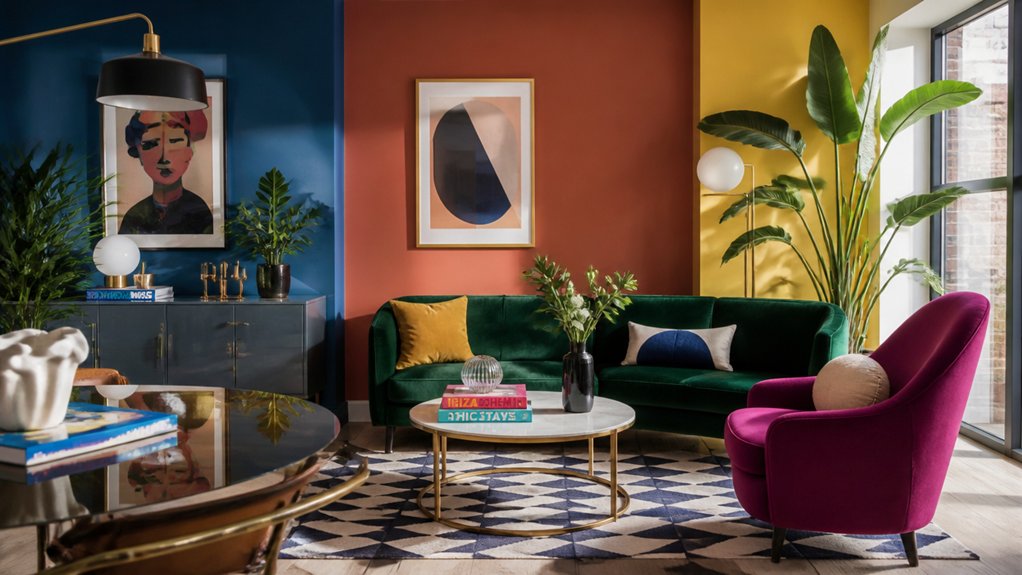
Limit yourself to one dominant neutral, one historical mid-tone, and one crisp contemporary accent, then repeat them on skirting, textiles, and artwork for Color harmony. Keep patterns restrained—pinstripes, small checks, subtle botanicals—so cornices and fireplaces stay primary.
Use Texture contrast to bridge eras: matte distemper-like walls with lacquered cabinetry, linen with chrome, wool with glass.
Layer Lighting to Modernise Period Rooms
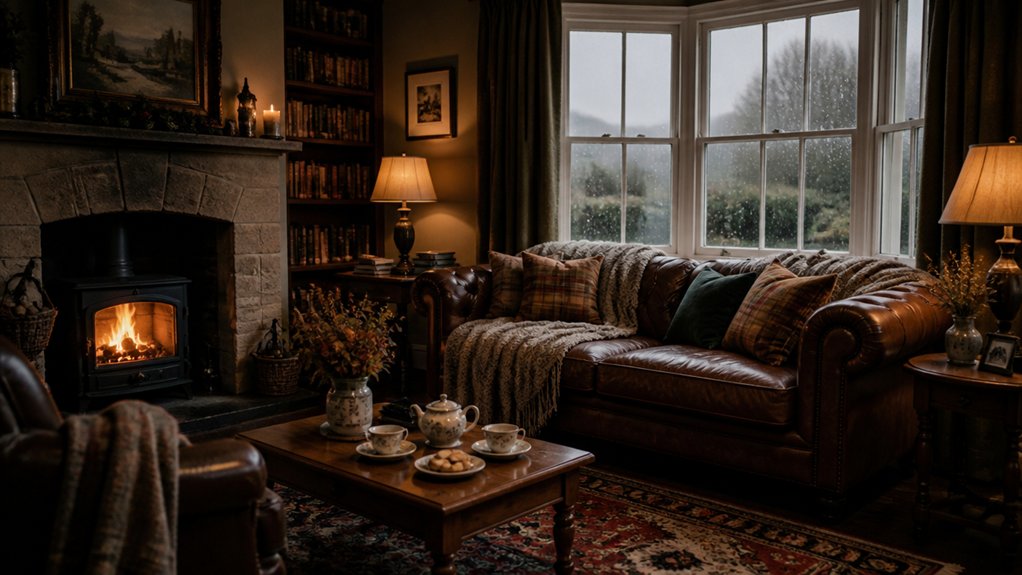
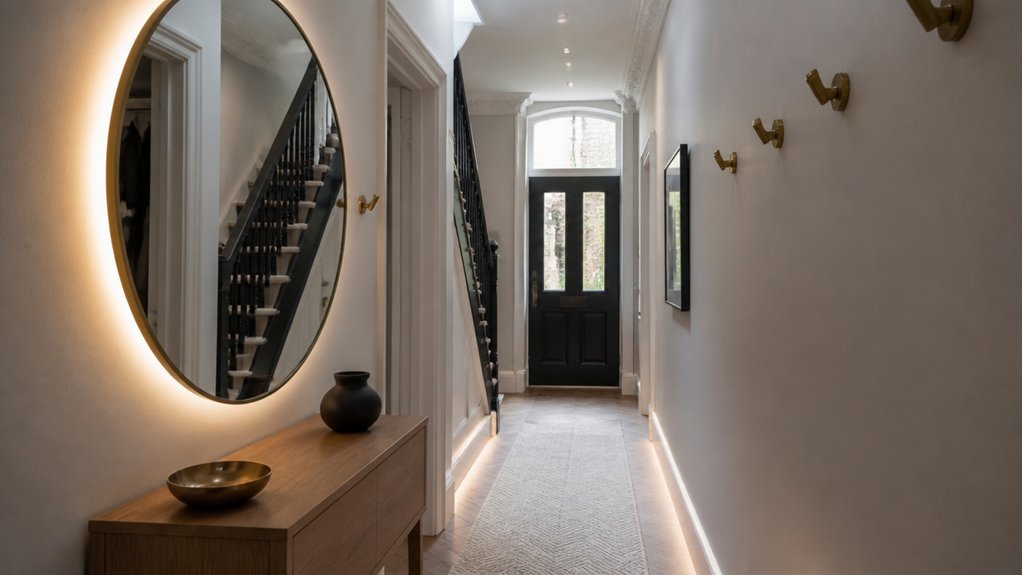
Although a period room may already have a handsome ceiling rose and a central pendant, you’ll modernise it faster by building a proper lighting hierarchy rather than relying on one “big light.” Keep the original fitting where it suits the architecture, then layer in task light (a reading lamp by the wingback, discreet under-shelf LEDs in a bookcase), ambient fill (wall lights that graze plasterwork and soften shadowy corners), and accent light (a narrow-beam picture light over oils, a small uplight to pick out a chimneypiece).
Choose Contemporary lighting with slim profiles, warm dim-to-amber LEDs, and high CRI so oak, marble, and paint read true. Put each circuit on dimmers, and aim beams to respect cornices and panelling, not fight them. With Layered illumination, evening feels curated, not cluttered.
Mix British Staples With Modern Materials
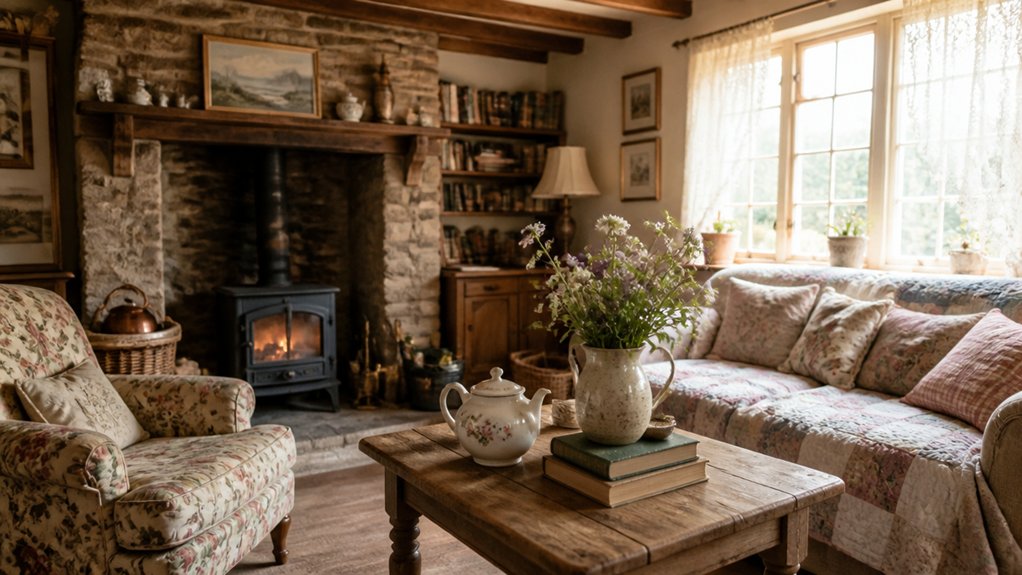
When you start with British staples—panelled wainscoting, a carved chimneypiece, a sash-window bay—you can keep their proportions and craftsmanship intact while swapping in modern materials that sharpen the whole room.
Keep Historical authenticity by restoring moulding profiles, matching lime plaster repairs, and reusing original skirting where you can.
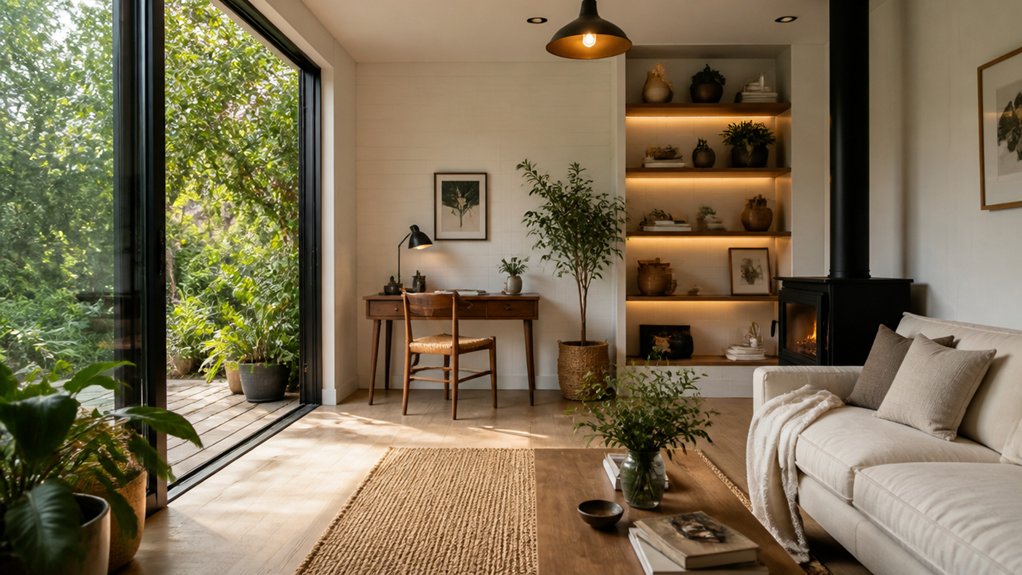
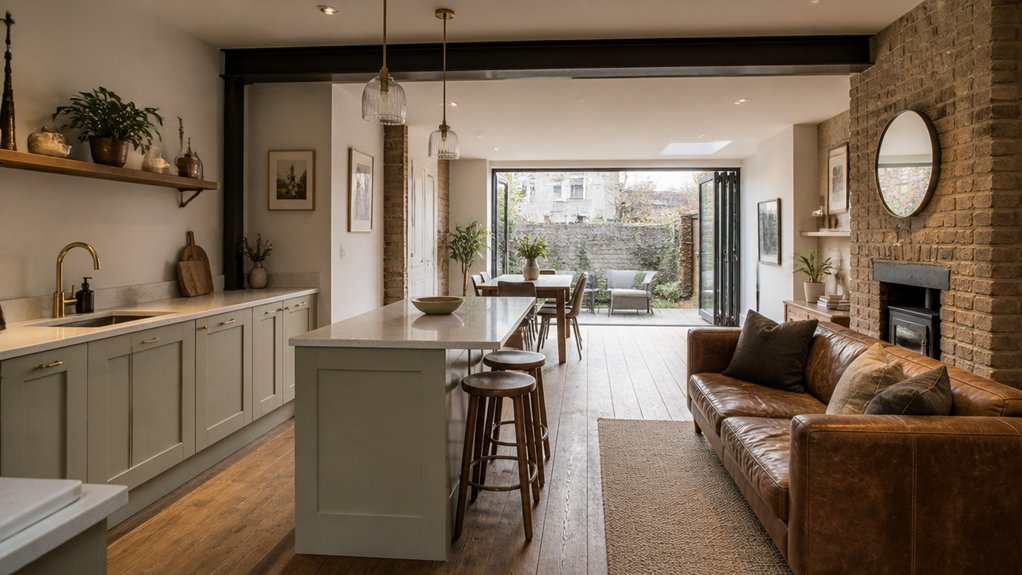
Then introduce Material contrast with honed stone hearths, microcement on the chimney breast, or a thin blackened-steel fire surround that sits crisply within the opening.
You can pair oak floorboards with large-format porcelain in the scullery zone, or set a marble-topped island against Shaker joinery so the grain and veining read like updated Georgian restraint.
Choose brushed brass, matte lacquer, and clear glass to echo period shine without copying it.
Avoid the Mismatched “Showhome” Look
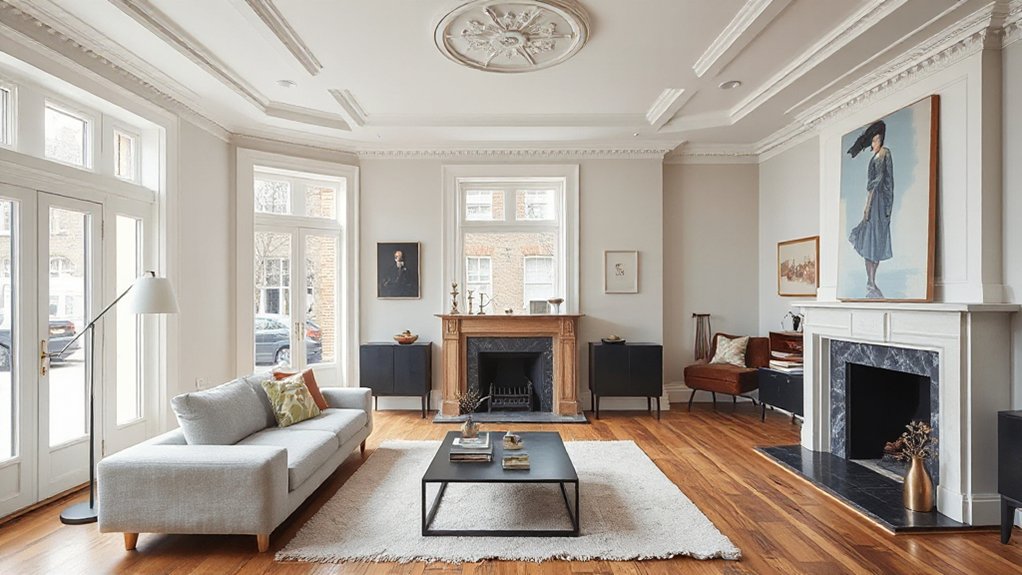
To avoid a mismatched “showhome” look in a Georgian terrace or Victorian semi, you’ve got to set a cohesive palette that respects the building’s undertones—chalky whites, soot greys, and muted heritage greens.
Then you blend materials with intent, echoing original timber, brass, and stone in modern equivalents like matt black steel, pale oak, or honed marble.
When every new finish relates back to something already in the room, the contrast reads curated rather than chaotic.
Create A Cohesive Palette
Even if your home pairs Georgian brickwork or Victorian cornicing with a sleek new kitchen, a cohesive palette will keep the result feeling curated rather than like a mismatched “showhome.” Start by taking cues from the building’s original materials—warm lime plaster, aged oak, soot-softened stone, deep heritage greens and oxbloods—and translate them into a restrained set of repeatable tones across walls, joinery, textiles, and metalwork.
Use Historical context to guide undertones: Georgian rooms favour cleaner, chalky hues; late-Victorian schemes accept richer, smokier shades.
Let Cultural influences refine accents—Arts and Crafts earths, Regency neoclassical creams, or Edwardian sea-glass pastels—then repeat them in small doses.
Limit yourself to one warm neutral, one cool neutral, and two accents, and stick to consistent sheen levels.
Blend Materials With Intent
Because period houses already carry a strong material “grammar”—lime plaster against timber, hand-fired brick beside rubbed stone—you’ll get a far more believable mix by choosing one dominant historic surface and letting modern additions play a supporting role. Keep original skirtings, architraves, and floorboards as your “base note,” then introduce contemporary pieces in fewer, quieter finishes—blackened steel, pale oak, honed concrete, or matte lacquer.
Aim for Textural contrast, not a catalogue of trends: pair a crisp glass balustrade with worn elm treads, or a slim plastered fireplace with a marble hearth. Maintain Material harmony by repeating one tone across old and new—warm putty, sooty grey, or aged brass—so shift feel deliberate.
Avoid mixing too many sheen levels or competing grains anywhere.
Frequently Asked Questions
How Do I Get Listed Building Consent for Interior Changes?
Even if you think it’s “just inside,” you must apply to your local authority for Listed Building Consent. Submit drawings, heritage statement, materials, and method details. You’ll address Historic preservation and related Planning permissions before starting work.
What Insulation Upgrades Are Best Without Harming Period Walls?
You’ll protect period walls by using breathable Historic preservation Insulation techniques: sheep’s wool or wood-fibre internal linings, lime plaster finishes, draught-proofing, and insulated lofts/floors. You’ll avoid impermeable foams, cement renders, and trapped moisture risks.
How Can I Soundproof Floorboards While Keeping Original Character?
You can cut footfall noise by up to 30% by lifting boards, adding dense wool underlay, and refixing with screws. Pair Ceiling treatments for airborne sound and discreet Window upgrades; keep skirtings, boards, and patina intact.
Which Modern Smart-Home Systems Suit Heritage Properties Discreetly?
You’ll suit heritage homes with wireless Zigbee/Z-Wave lighting, thermostats, and sensors, plus hub-based control, enabling Smart technology integration. Choose Discreet system design: hide gateways in cupboards, use period-appropriate switches, avoid chasing plasterwork, preserve mouldings.
How Do I Source Reclaimed Materials That Match Existing Period Details?
Start at architectural salvage yards, reclamation dealers, and demolition auctions; bring measured profiles and paint scrapes. Specify Reclaimed timber by species and cut, and seek Period accurate fixtures via specialist foundries, ensuring matching patina.

Leave a Reply