

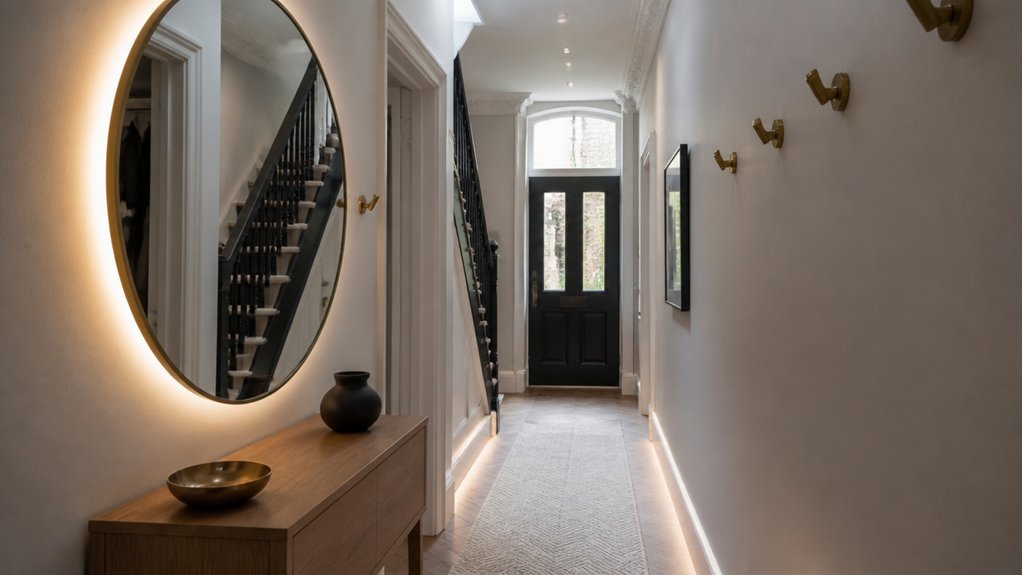
Like a London mews entrance that feels brighter than it should, you can make a dark UK hallway look modern without knocking down walls. You’ll start by spotting what’s stealing light—solid doors, flat paint, heavy flooring, and a single harsh pendant—then you’ll fix it with glazed panels, mirrors, warm layered LEDs, and slimmer storage that keeps sightlines clear. But one choice changes everything first…
Key Takeaways
- Replace solid internal doors with glazed or reeded panels to borrow daylight and modernise sightlines without sacrificing privacy.
- Use warm neutral paint in eggshell or soft satin, and paint the ceiling one shade lighter to lift and brighten.
- Layer lighting: slim flush ceiling light, shoulder-height sconces, and dimmable 2700K LEDs to eliminate shadows and add depth.
- Add tall, slim mirrors opposite the front door or windows, and choose reflective finishes like opal glass or brushed brass to amplify light.
- Install pale, matte oak or warm stone-look flooring and use shallow, wall-hung storage to reduce shadow pooling and keep the hall clutter-free.
Identify What’s Making Your Hallway So Dark
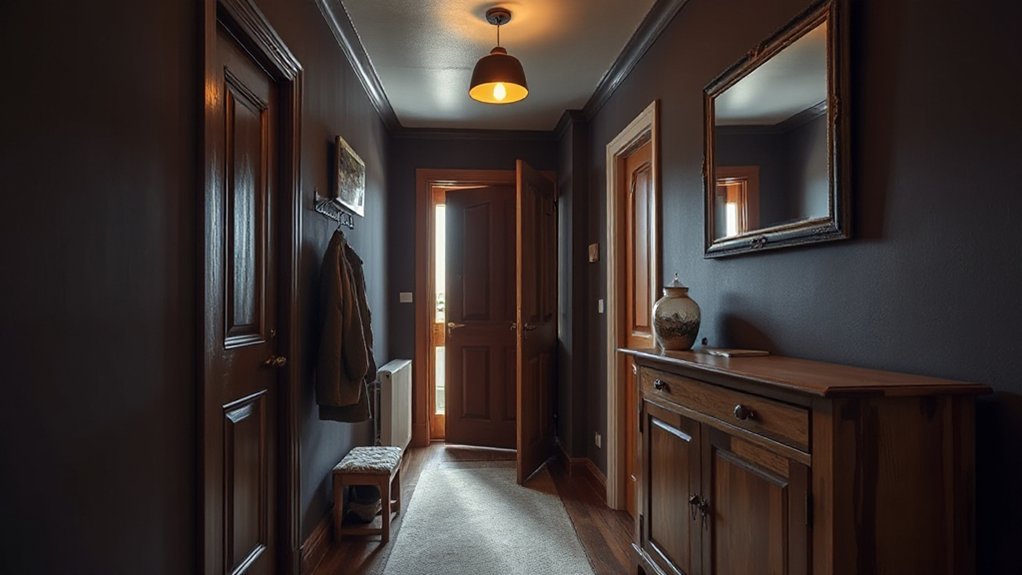
Before you start swapping paint colours or adding new lights, take a quick, honest look at what’s actually stealing brightness from your hallway.
Notice whether your front door glazing is small, frosted, or shaded by a porch, limiting natural light from the street. Check if internal doors sit closed most of the day, blocking daylight spill from brighter rooms.
Look up: low ceilings, deep coving, and bulky loft hatches can cast heavy shadows.
Scan surfaces: dark laminate, busy wallpaper, and matte finishes absorb light instead of bouncing it.
Then assess airflow—poor hallway ventilation can leave the space feeling stale and dim, especially with damp-prone corners.
Finally, map your sightlines from entrance to stairs; tight turns and tall furniture create visual bottlenecks.
7 Quick Fixes to Brighten a Dark UK Hallway
Start by layering reflective lighting—ceiling, wall, and low-level LEDs—so you bounce light along the length of your hallway and soften harsh shadows.
Then switch to light-boosting paint choices like warm off-whites, pale stone, or a satin finish that catches glow without shouting “gloss.”
These two quick upgrades set the tone for the rest of your fixes, making the space feel instantly wider and more current.
Reflective Lighting Layers
Although you can’t always add a window to a typical UK hallway, you can make it feel instantly brighter by layering reflective lighting—think warm ambient light, targeted task spots, and a touch of sparkle that bounces illumination off pale walls, glass, and metal.
Start with a slim ceiling flush or track to wash the space evenly, then add a pair of wall sconces at eye level to lift shadows along the corridor.
If you’ve got a console, use a small lamp or picture light to create a welcoming focal point.
Choose warm LEDs (around 2700K) and dimmers so the glow feels modern, not clinical.
Finish with mirrored shades, opal glass, or polished brass for reflective lighting and effortless layered illumination.
Light-Boosting Paint Choices
If your hallway feels like it swallows daylight, the right paint choice can bounce what little light you’ve got back into the space in a single weekend. Choose warm off-whites, soft greiges, or pale blush to lift shadows without that stark “rental white” glare; colour psychology says warm undertones feel welcoming, while cool whites can read icy under LED bulbs.
For maximum bounce, pick a durable eggshell or satin on walls and a higher sheen on skirting and doors. Treat the ceiling like a light source: go one shade lighter than the walls.
Use smart paint application techniques—cut in cleanly, keep a wet edge, and roll in a “W” to avoid lap marks. Finish with a crisp, contrasting trim for definition.
Choose Low-Light Paint Colours That Still Look Modern
In a dark UK hallway, you’ll get a more modern look by choosing paint colours that keep their depth in low light. Start with warm neutrals like putty, greige, and soft taupe—they bounce what little daylight you have without turning cold or flat.
If you want more drama, go for moody jewel tones such as deep teal, inky navy, or bottle green to create a sleek, cocooning feel.
Modern Warm Neutrals
Where do you start when your hallway barely sees daylight? Begin with warm neutrals that hold their colour in shadow and still feel current. Think creamy off-whites, soft oat, biscuit, or a balanced greige with a hint of taupe. These shades bounce what little light you’ve got without turning cold or chalky, so the space reads calm and intentional.
To keep it modern, pick contemporary palettes with subtle undertones that work with UK brick, timber, and black ironmongery. Test swatches at skirting height and near the ceiling; low light shifts colour fast.
Choose a matt or durable flat finish to hide scuffs, then add a satin on woodwork for crisp contrast and depth.
Moody Jewel Tones
Because dark hallways swallow pale paint, moody jewel tones can actually look cleaner and more modern—think inky teal, bottle green, sapphire, aubergine, or oxblood that read rich rather than gloomy in low light. Use a soft-matt finish to hide scuffs and stop glare from ceiling spots.
If you’ve got low ceilings, paint the ceiling one shade lighter in the same family to lift the space without losing depth. Pair these Moody colour palettes with crisp trim in warm white or putty to sharpen lines around doors and skirting.
Add Jewel tone accents through a runner, framed prints, or a lacquered console, then balance it with brushed brass hooks and a black-framed mirror for a current, London-townhouse feel.
Pick a Paint Finish That Bounces Light
Ever wondered why some hallways feel brighter even with the same bulbs? It’s often down to paint sheen. Matte absorbs light and can make a narrow UK corridor feel flatter, while eggshell or soft satin gently reflects, lifting colour without looking plasticky.
If you love moody jewel tones, keep them, but switch the finish on walls and woodwork to add glow.
Choose scrubbable eggshell for busy walls and a satin or semi-gloss for skirting, doors, and handrails; those trims catch light and sharpen edges for a modern look.
Test samples beside your lighting fixtures at day and night, because undertones shift. Avoid full high-gloss on large walls; it highlights bumps and feels dated fast.
Layer Lighting: Ceiling, Wall and Accent Placement
Paint sheen helps your hallway catch and bounce what light you already have, but you’ll get a bigger uplift by layering the light itself. Start with ceiling fixtures for an even ambient glow: a slim flush mount or discreet downlights suit low UK ceilings and keep sightlines clean.
Next, add wall lights at shoulder height to soften shadows and make narrow passages feel wider; choose opal glass or ribbed shades for a current, diffused look.
Then finish with accents: LED strips under a picture ledge, a lit niche, or a low-level skirting light for safe night movement. Put each layer on separate switches or a dimmer so you can tune brightness through the day.
This layered illumination feels modern, welcoming, and practical for busy evenings.
Use Mirrors to Push Daylight Further Down the Hall
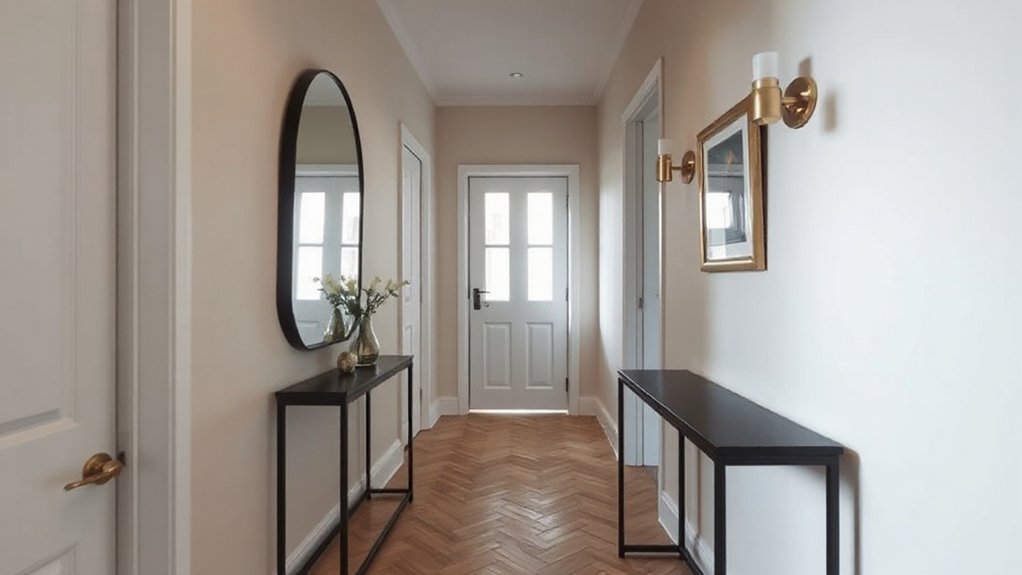
Place a mirror opposite your front door glazing or nearest window so it bounces daylight deeper down the hallway and brightens shadowy corners.
Choose reflective styles that suit a modern UK look—lean a tall, slim mirror to elongate the space or use a cluster of smaller mirrors to scatter light along the wall.
Finish with the right frame: thin black metal feels contemporary, pale oak warms up grey schemes, and a frameless edge keeps everything crisp and minimal.
Strategic Mirror Placement
In a dark UK hallway, where can you find extra daylight without adding a single fitting? You’ll “borrow” it by nailing mirror placement to the brightest source you’ve already got.
Position a mirror opposite a glazed front door, sidelights, or a room doorway that spills sun, so it throws light back into the corridor rather than bouncing it into a wall.
If your hall bends, place a mirror on the return wall just after the turn to pull brightness around the corner.
In narrow spaces, hang it at eye level and keep it centred on the main sightline from the entrance to avoid awkward glare.
Pair it with reflective decor—lacquered trays, glass shades, or polished console tops—so the light keeps travelling, not stopping at one shine.
Reflective Styles And Frames
Once you’ve got the mirror catching your best natural light, the frame and finish decide how far that brightness travels. Choose slim, pale mirror frames in oak, ash, or matte brass to keep edges quiet and let light spill.
In narrow UK halls, avoid chunky black borders that visually “cap” the glow. If you want a modern lift, try a softly arched or pill shape—on-trend, but still timeless.
To amplify daylight, lean into reflective surfaces beyond the glass. Pick a lightly antiqued mirror for gentle sparkle, or go for a crisp, clear pane for maximum bounce.
Pair it with satin-finish paint, brushed metal hooks, and a glazed pendant shade so highlights repeat down the corridor. Keep finishes consistent to stop the look feeling busy.
Swap Solid Doors for Glazed Options (UK-Friendly Choices)
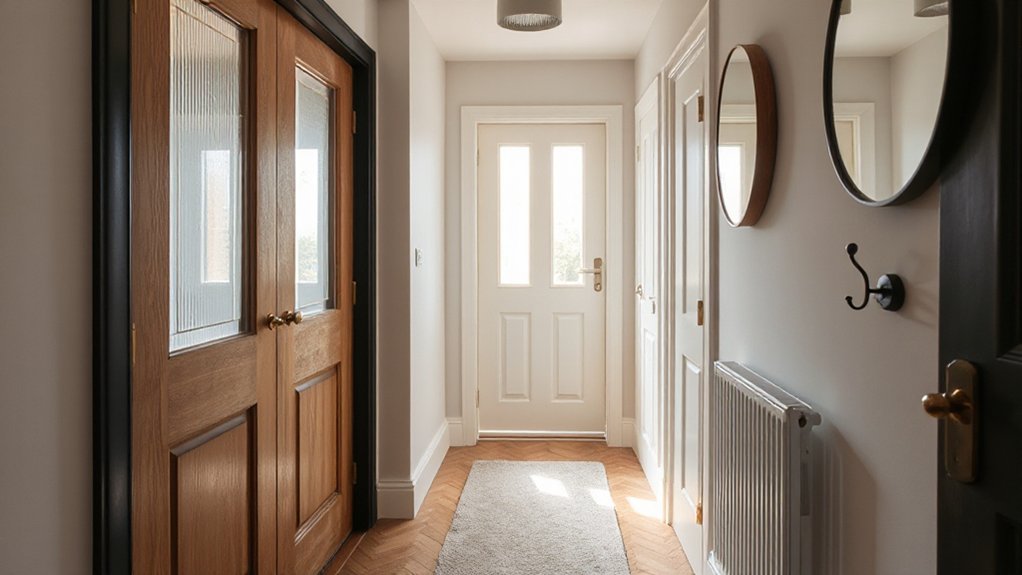
Why let a solid door steal daylight from your hallway when a glazed option can bounce it straight through? Swap to glazed doors and you’ll instantly pull light from adjoining rooms, making the space feel wider and more current.
For UK friendly options, consider a half-glazed internal door with reeded or fluted glass: it blurs clutter while still sharing brightness.
Prefer a cleaner look? Go for slim black-framed Crittall-style glazing to nod to industrial trends without heavy renovation.
If privacy matters, choose satin glass or add discreet film panels.
Keep fire-safety in mind for kitchens or integral garages: look for certified FD30 glazed doors where required.
Match handles and hinges in brushed brass or matte black for a cohesive, modern finish.
Choose Light-Lifting Hallway Flooring (Tile, Wood, LVT)
Glazed doors will pull more daylight into your hallway, but the flooring decides whether that light fizzles out or reflects around the space. Go for pale, matte-finished oak or ash to brighten without glare, and pick wider planks to visually stretch tight UK halls.
Prefer tile? Choose large-format porcelain in warm stone tones; fewer grout lines reads calmer and lighter, while a satin finish hides scuffs.
For busy households, LVT is one of today’s innovative flooring options: it gives you realistic wood or terrazzo looks, added underfoot softness, and better slip resistance.
Whatever you choose, prioritise sustainable material choices, like FSC-certified timber, recycled-content LVT, or low-VOC adhesives, so your upgrade looks modern and feels healthier too.
Add Slim Hallway Storage That Won’t Steal Light
Because UK hallways often run narrow and short on natural light, you’ll get the sleekest upgrade by choosing slimline storage that hugs the wall and stays visually “quiet.” Think shallow shoe cabinets (around 18–22cm deep), floating consoles, and peg rails that lift clutter off the floor so light can travel.
For maximum brightness, pick pale matte finishes, fluted fronts, or mirrored panels that bounce daylight without feeling fussy. Keep legs thin or go fully wall-hung so shadows don’t pool at floor level.
A narrow bench with concealed storage gives you a landing spot without bulk; pair it with a tall, slim umbrella stand to use vertical space. Choose light efficient furniture with soft-close doors, hidden pulls, and cable cut-outs for chargers.
This slim storage modernises instantly.
Modern Hallway Styling: 5 Clutter-Free Rules
Slim storage clears the floor and brightens a dark hallway, but it’s the styling that keeps it looking modern rather than merely “tidy for now.” Follow five rules:
1) Edit hard—aim for Clutter reduction by keeping only daily-use items at the door.
2) Choose one hero piece, like a sculptural mirror or slim console, then let it breathe.
3) Limit finishes to two (oak and black, brass and white) for Visual simplicity.
4) Corral small stuff in matching trays, lidded boxes, or wall pockets so surfaces stay clean.
5) Add one soft layer—runner, ribbed mat, or wool cushion—then echo its tone in a single print or artwork.
Keep sightlines open, and the space feels lighter.
Frequently Asked Questions
How Much Does It Cost to Modernise a Dark UK Hallway?
You’ll typically spend £300–£3,000 to modernise a dark UK hallway, depending on finishes. Choose cost effective upgrades like brighter paint and LEDs, plus DIY renovation tips for shelving and mirrors to maximise light.
Do I Need Planning Permission for Glazing or Structural Hallway Changes?
You don’t always need planning permission, but you’ll need it for some glass extensions and major structural alterations. Like pouring daylight through a keyhole, check permitted development, listed status, and building regs; ask your council.
What Are the Best Bulbs for Hallway Lighting in the UK?
You’ll get the best hallway light from warm-white 2700–3000K, high-CRI (90+) LED options, ideally 470–800 lumens per fitting. Choose dimmable bulbs and smart lighting for schedules, sensors, and sleek, modern ambience.
How Can I Modernise a Hallway in a Listed or Conservation-Area Property?
Over 40% of UK listed-building applications get conditions, so you’ll modernise by working with consent early. You’ll prioritise historical preservation, choose reversible fittings, highlight original details, and plan gentle wall restoration with breathable paints.
What Hallway Design Ideas Help Reduce Noise and Improve Acoustics?
You’ll cut hallway noise by adding acoustic panels on ceilings or upper walls, laying a thick runner with underlay, sealing gaps, and upgrading to soundproof doors. Choose textured finishes and soft furnishings for calmer, current acoustics.

Leave a Reply