


If you’re evaluating Luton, you’ll find a market shaped by regeneration, rail connectivity and shifting buyer demand. Town-centre upgrades, station-area investment and links to London and Luton Airport support interest in well-located homes, although rates and affordability still influence pricing. You’ll need to compare neighbourhood-level supply, yields and transport access carefully, because the strongest opportunities aren’t always where you’d expect.
Key Takeaways
- Luton’s market is driven by London commuters, airport employment, rail connectivity, and regeneration across town-centre and station-corridor areas.
- Luton Parkway, Leagrave, and central stations support commuter demand, with London journeys typically taking around 25–40 minutes.
- Regeneration can improve amenities, housing quality, rental appeal, and long-term values, although construction disruption may affect short-term prices.
- Price growth has slowed since the post-pandemic surge, with mortgage rates, supply levels, and achieved sale prices shaping current market conditions.
- First-time buyers can consider lower-priced flats, terraces, Shared Ownership, Lifetime ISAs, and 5–10% deposit options.
Luton Housing Market: Prices, Demand and Trends
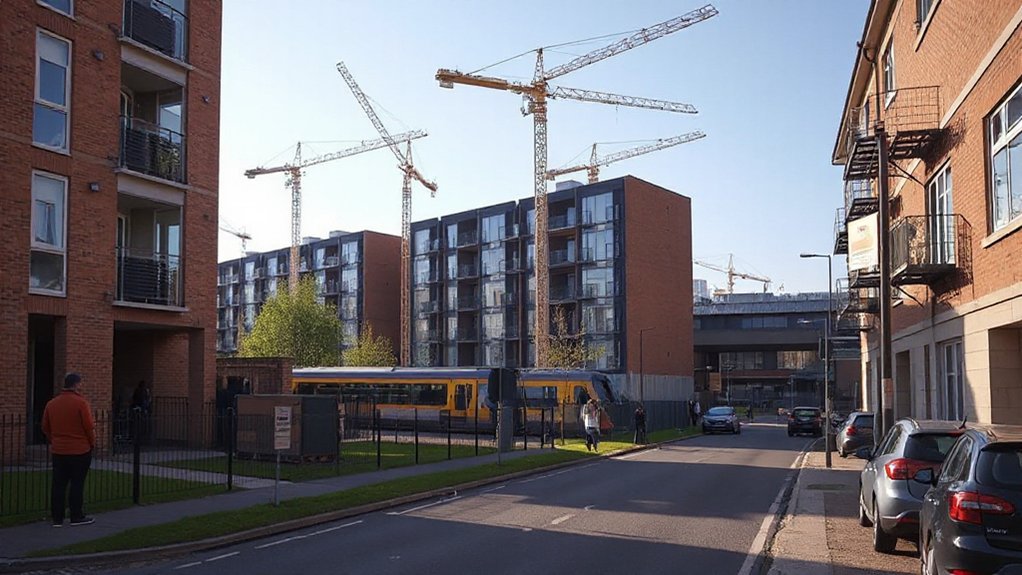
Luton’s housing market combines London commuter demand with comparatively lower entry prices, although affordability has tightened as values and mortgage costs have risen. You’ll find demand supported by rail access, airport employment and buyers seeking alternatives to higher-priced London and Home Counties locations.
Transaction volumes typically respond quickly to interest-rate changes, creating market volatility and longer selling periods when borrowing costs climb.
Price growth has moderated from the post-pandemic surge, so you should assess recent achieved prices rather than rely on asking-price comparisons.
Flats and lower-value homes can attract first-time buyers, while family houses draw commuter demand, though both segments remain rate-sensitive.
Effective pricing strategies matter: accurately priced listings generate early viewings, whereas optimistic launches often require reductions.
Track mortgage approvals, supply levels and sold-price data to judge whether negotiating power currently favours you or the seller.
Best Luton Neighbourhoods for Different Buyers
Your best Luton neighbourhood depends on whether you prioritise schools and space, rail access, or rental yields.
You can target family-friendly areas such as Wigmore and Bushmead, commuter hotspots near Luton Parkway and Leagrave, or investment-led locations with lower entry prices and strong tenant demand.
Comparing prices, transport links and local rental performance helps you match your budget to the market’s strongest trends.
Family-Friendly Areas
For families, the best Luton neighbourhood depends on whether you prioritise school access, larger homes, green space or commuter convenience. Stopsley and Wigmore typically appeal if you want suburban housing, established amenities and access to parks.
While Barton Hills offers a quieter setting with larger family-oriented stock. Leagrave can suit buyers seeking comparatively accessible house prices and practical local services, though you should assess street-level variation carefully.
Before making an offer, compare each school catchment against admission criteria rather than relying on postcode assumptions. Review Ofsted reports, pupil-place pressure and planned housing delivery, as these factors can affect demand over time.
You should also inspect walking routes, traffic levels and playground safety near homes you shortlist. Areas with usable green space and consistent family demand often show greater resilience when market conditions soften.
Commuter Property Hotspots
Commuters usually focus on routes rather than postcodes, and Leagrave, Luton town centre and the areas around Luton Airport Parkway stand out for rail access. From these stations, you can reach central London in roughly 25 to 40 minutes on faster services, depending on your destination and timetable.
Leagrave suits buyers who prioritise established housing and straightforward Thameslink connections, while the town centre offers walkable access to shops, buses and rail.
Near Airport Parkway, you benefit from the DART link to Luton Airport and direct services towards St Pancras.
These commuter property hotspots reflect demand for lower-friction journeys rather than uniform neighbourhood appeal. When comparing homes, measure door-to-platform time, service frequency and planned improvements.
Transit oriented developments may increasingly concentrate new supply near stations, influencing local choice and daily convenience.
Investment-Friendly Neighbourhoods
Investment potential in Luton varies sharply by tenant demand, transport access and the type of stock available. You’ll find stronger rental liquidity around the town centre, Station Road and High Town, where rail access, the university and employment hubs support demand from commuters, students and young professionals.
Compare yields against maintenance costs carefully: older conversions can produce higher gross returns but may require greater capital spending.
For family-led investment, consider Leagrave, Stopsley and Wigmore. These areas typically attract longer tenancies, driven by schools, green space and airport employment, although entry prices can be higher.
Bury Park offers lower-price stock and established rental demand, but you should assess licensing, property condition and tenant profile street by street.
Target locations benefiting from urban renewal and community development, as improving amenities can strengthen both rental resilience and future resale appeal.
Luton Housing Options for First-Time Buyers
As a first-time buyer, you can target Luton’s lower-priced flats, terraces, and shared-ownership homes to reduce your entry cost.
Compare deposit requirements against available support schemes, including Lifetime ISAs and shared ownership, to identify the most workable monthly budget.
With affordability remaining a key market driver, acting on well-priced starter stock can strengthen your position.
Affordable Starter Homes
Luton remains one of Bedfordshire’s more accessible markets for first-time buyers, particularly when compared with nearby London and Hertfordshire locations. You’ll typically find lower entry prices in areas with older housing stock, including parts of Leagrave, Farley Hill and Bury Park, where flats, terraces and maisonettes widen your choice.
Affordable housing in Luton is concentrated in smaller properties, with one- and two-bedroom flats often setting the market’s entry point.
Starter homes near rail stations can command a premium, reflecting commuter demand and improved access to London. You should compare service charges, lease lengths and energy performance alongside asking prices, as these materially affect monthly costs and resale prospects.
Regeneration around the town centre and transport corridors may support long-term demand, but pricing varies sharply by street, condition and tenure.
Deposit Support Schemes
How you fund a deposit can shape which Luton properties are realistically within reach. With prices varying sharply between central neighbourhoods, commuter corridors and regeneration zones, even a modest deposit increase can improve your mortgage rate and borrowing capacity.
You should compare 5% and 10% deposit scenarios, factoring in lender affordability tests, fees and monthly repayments rather than focusing only on the purchase price.
Down payment assistance may be available through family gifts, workplace programmes or local support initiatives, although eligibility and funding limits can change.
Government grants are less common for direct purchases, but schemes such as Shared Ownership can reduce your upfront cash requirement by letting you buy an initial share.
Check whether you can use a Lifetime ISA bonus, and confirm that your chosen property and lender meet scheme rules before offering.
Transport Links and Luton House Prices
Strong transport links shape Luton’s housing market by widening commuter demand and supporting price resilience near key routes. You’ll typically see stronger buyer interest around Luton Parkway, Leagrave and the town centre, where rail access shortens journeys to London and other employment hubs.
Thameslink services and proximity to the M1 broaden the pool of renters and purchasers, helping demand remain comparatively steady when wider market conditions soften.
For you as a buyer, public transport can influence both resale prospects and rental appeal. Areas with walkable stations often command a convenience premium, although property condition, school catchments and local supply still determine final values.
Housing affordability remains Luton’s competitive advantage against many London commuter locations, but improved connectivity means well-positioned homes can face faster competition and narrower negotiating margins.
How Regeneration Is Affecting Luton House Prices

Regeneration is reshaping Luton’s price map by concentrating investment around the town centre, station corridors and former commercial sites. If you’re comparing neighbourhoods, you’ll see values respond fastest where urban renewal improves amenity, housing quality and the local streetscape.
New apartments can raise the area’s profile, while refurbished public spaces and repurposed employment land broaden buyer appeal.
Infrastructure development also changes pricing expectations before projects complete. You may pay a premium for homes near upgraded routes, improved pedestrian links or major mixed-use schemes, particularly where supply remains constrained.
However, price growth won’t be uniform: construction disruption, dense new-build pipelines and differing school catchments can limit short-term gains.
Track achieved sale prices, not asking figures, and compare property condition carefully.
Regeneration tends to support longer-term value, but location within each scheme remains decisive.
Luton Buy-to-Let: Yields, Demand and Risks
Luton’s buy-to-let market can offer competitive gross yields, particularly for well-priced flats and shared housing near the town centre, station and major employment hubs. You’ll find tenant demand supported by airport workers, hospital staff, students and London commuters seeking lower rents than in the capital.
Small units can produce stronger headline yields, but you should test net returns against mortgage costs, service charges, void periods, letting fees and maintenance.
Buy to let profitability depends on disciplined pricing and tenant selection, not yield alone. Houses in multiple occupation may raise income, yet they bring licensing, management and compliance obligations.
Landlord regulations also affect operating costs: you must meet safety standards, deposit rules, energy-efficiency requirements and right-to-rent checks.
Monitor local supply closely, as new apartment schemes can increase competition and limit rent growth in specific postcodes.
Luton Housing Market Outlook: What Comes Next
What comes next for Luton’s housing market will depend on interest-rate movements, mortgage affordability, local wage growth and the pace of new supply. If borrowing costs ease, you may see buyer demand strengthen first in lower-priced flats and family homes, where monthly payments remain most sensitive to rate changes.
Housing affordability will continue to shape performance across postcodes. Areas near stations, the airport and regeneration sites could attract stronger demand, but price growth may stay measured if stock levels rise.
You should also track planning delivery rather than announced schemes, as completions affect competition directly.
For landlords, the rental market should remain supported by commuter demand, students and households priced out of ownership. However, higher compliance costs and tenant affordability pressures could limit rent increases.
Your outlook is thus one of gradual, uneven growth rather than a rapid market rebound.
Frequently Asked Questions
What Council Tax Bands Apply to Properties in Luton?
You’ll pay council tax in Luton under bands A–H, based on your property valuation as at 1 April 1991. Charges vary annually; you may qualify for a tax exemption, discount, or reduction.
How Do I Check Flood Risk Before Buying in Luton?
Check Floodplain mapping first: it identifies areas with a 1% annual river-flood probability. You should review Environment Agency data, inspect Water drainage systems, and commission a survey to quantify property-specific exposure and insurance costs.
Are There Selective Licensing Rules for Luton Landlords?
Yes, you’ll need to check Luton’s selective licensing designations, which can vary by ward and property type. Landlord licensing and Property regulations change, so verify current council maps, fees, exemptions, and compliance deadlines before letting.
What Schools Are Available Near Luton Residential Areas?
You’ll find primary schools, secondary academies, colleges, and specialist provision near most Luton residential areas. School quality varies by Ofsted rating and catchment demand, so compare performance data, admissions criteria, and Local education capacity before choosing.
How Long Does the Conveyancing Process Typically Take?
You’ll typically complete conveyancing in 8–12 weeks, though chain-free purchases can finish in 6–8. Track legal process steps closely: searches, mortgage approval, and enquiries drive most conveyancing delays, with complex chains extending timelines.










Leave a Reply