

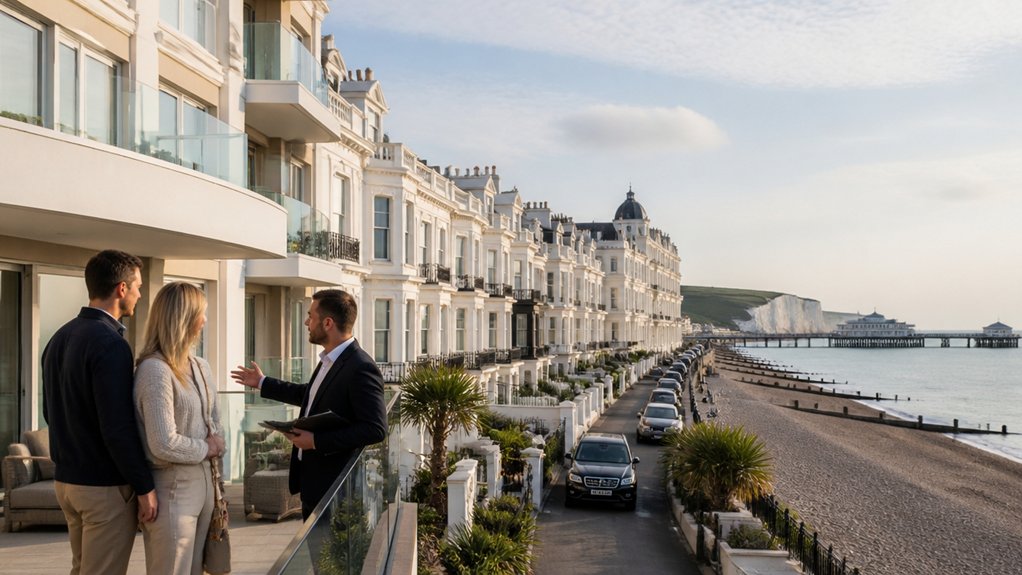
You’ll find premium seafront prices, established demand in Meads and Old Town, and better-value options in Hampden Park and Willingdon. Eastbourne attracts retirees, families, investors, and London movers, but each group prioritises different features, from sea views to low-maintenance layouts and station access. With flats and downsizing homes driving much of the activity, the key question is whether your preferred area matches both your budget and long-term plan.
Key Takeaways
- Eastbourne offers Victorian terraces, seafront apartments, family homes and new developments, appealing to commuters, retirees, downsizers and lifestyle buyers.
- Prices are highest in Meads, Old Town and prime seafront locations, while Hampden Park, Langney and Seaside offer more accessible entry points.
- Seafront homes command premiums for views, balconies and promenade access, but buyers should assess flood risk, salt-weather maintenance and service charges.
- Families favour Old Town, Ratton and Willingdon for schools and space, while retirees prioritise lift access, healthcare proximity and manageable costs.
- Investor demand remains strongest near the station, town centre and seafront, although lease terms, repairs, voids and management costs affect net yields.
Eastbourne Property Market at a Glance
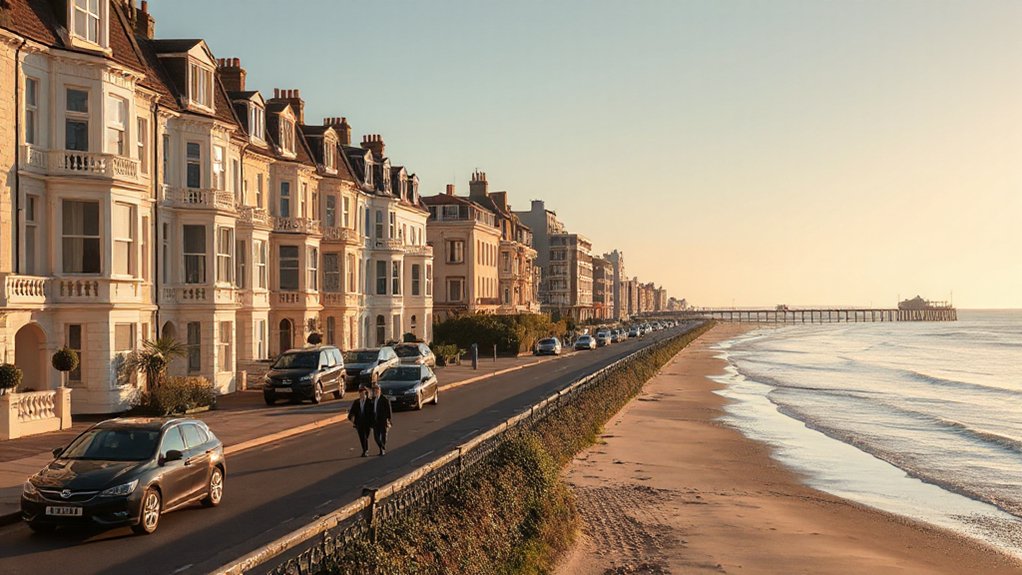
Eastbourne’s property market combines resilient demand with a broad mix of Victorian terraces, seafront apartments, family homes, and newer developments.
You’ll find buyer interest supported by rail links to London, a sizeable retiree population, and demand from households seeking more space near the coast.
Transaction activity typically responds quickly to mortgage-rate changes, while well-presented homes with energy-efficient upgrades attract stronger viewing levels.
Coastal architecture remains a defining draw, particularly where period character meets practical layouts and modern maintenance.
Local amenities, including schools, shopping, healthcare, parks, and the promenade, influence buyer decisions and rental appeal.
You should expect a market shaped by affordability relative to larger Sussex hubs, but also by constrained supply in established neighbourhoods.
Sellers who price accurately and present clear condition information generally compete more effectively.
Eastbourne Prices by Area and Property Type
Prices across Eastbourne vary sharply by neighbourhood, proximity to the seafront, condition, and property type. You’ll typically pay a premium in Meads, the town centre’s prime coastal addresses, and parts of Old Town, where larger period homes and established demand support higher values.
Sovereign Harbour attracts buyers seeking modern apartments and houses, although service charges can affect affordability comparisons.
Flats remain the entry point for many purchasers, particularly converted Victorian stock around the centre and Devonshire area.
Family houses command stronger prices in Ratton, Willingdon and Hampden Park, where space, schools and parking influence demand.
Architectural styles matter: Regency and Victorian properties can achieve premiums when renovated well, while 1930s and post-war homes often offer clearer value.
New Property development adds supply, but buyers should compare specification, lease terms and resale evidence.
What Seafront Living in Eastbourne Is Really Like
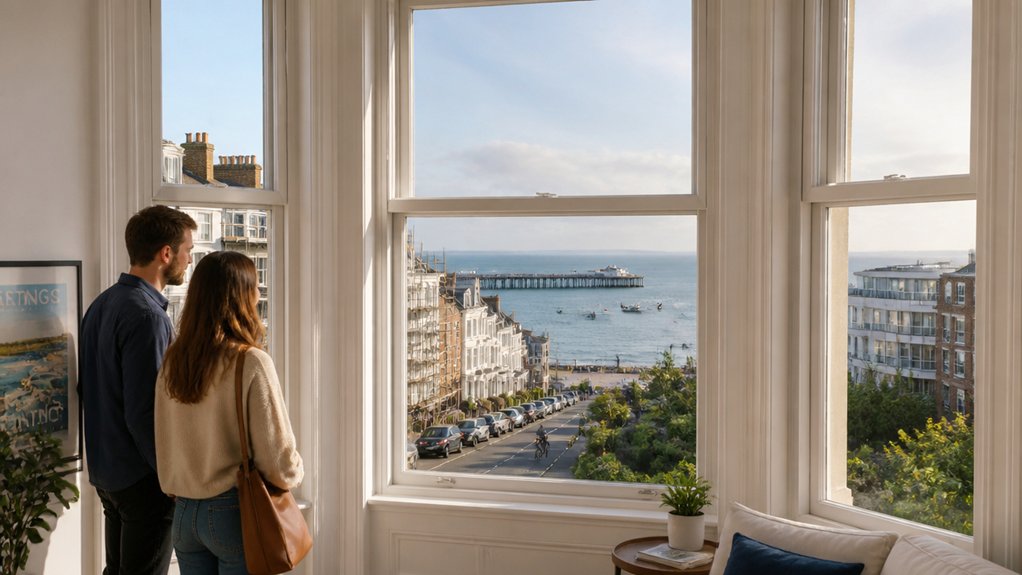
Seafront living delivers Eastbourne’s strongest lifestyle appeal, but it also creates a clear trade-off between outlook, convenience and running costs. You gain immediate access to promenades, beaches, cafés and year-round Seafront amenities, supporting demand from downsizers, second-home buyers and remote workers seeking a walkable routine.
However, exposure shapes ownership costs. Salt air, wind and moisture can accelerate exterior maintenance, while service charges in managed blocks may reflect lift, façade and communal-area upkeep. You’ll also need to assess flood-risk data, insurance terms and lease length before comparing headline prices.
The Coastal community remains a major draw: events, watersports and independent hospitality create activity beyond peak summer. Yet visitor traffic, parking pressure and seasonal noise can affect day-to-day convenience.
Your best decision weighs these operational factors against the premium attached to uninterrupted sea views.
Best Eastbourne Areas for Different Buyers

For family living, you’ll likely prioritise areas with strong school access, larger housing stock and reliable transport, such as Old Town and Sovereign Harbour.
If you’re retiring, you may favour Meads or the seafront, where walkability, amenities and lower-maintenance flats shape demand.
Your best fit depends on whether you value space and schooling or convenience and lifestyle access.
Best Areas for Families
Families tend to prioritise Eastbourne areas that combine strong school access, green space and practical transport links, with Old Town, Meads, Ratton and Willingdon consistently standing out.
You’ll find these family friendly neighborhoods attract sustained demand because they offer larger housing stock, nearby parks and established school catchments. School district ratings matter, but you should also assess Ofsted reports, admission boundaries and walking routes before committing.
Old Town and Meads typically command higher prices, reflecting character homes, perceived school quality and limited supply.
Ratton offers a more balanced value proposition, with family-sized properties and access to Hampden Park amenities.
Willingdon appeals if you want more space and road links towards Polegate and the A22.
Compare sold-price data by street: proximity to schools can create meaningful local premiums.
Ideal Locations for Retirees
Retirees often favour Eastbourne’s Meads, Lower Meads, Sovereign Harbour and Old Town, where walkability, healthcare access and low-maintenance housing shape demand.
If you prioritise seafront promenades, Meads and Lower Meads place you near theatres, cafés, gardens and Devonshire Park, although larger period flats can carry higher service charges.
Sovereign Harbour suits you if you want modern apartments, lifts, parking and level waterfront routes; its newer stock also appeals to downsizers seeking predictable maintenance.
Old Town offers a village feel, independent shops and bus links, but its hills may limit mobility for some buyers.
Demand increasingly concentrates on homes within easy reach of GP surgeries, pharmacies and transport.
You’ll find Retirement communities and Senior amenities most accessible around the town centre, Meads and harbour.
Check lease terms, ground rents, accessibility and management fees before committing.
Meads, Old Town or Sovereign Harbour?

Choosing between Meads, Old Town and Sovereign Harbour depends on whether you prioritise period character, established community amenities or waterfront living.
Meads typically commands a premium, supported by Victorian and Edwardian stock, proximity to the seafront and limited supply. Watch Meads development proposals closely: new schemes can broaden choice but rarely alter the area’s established high-value profile.
Old Town charm attracts buyers seeking independent shops, historic streets and a village-like setting, while its housing mix creates wider price variation than Meads.
Sovereign Harbour offers newer apartments, marina views and low-maintenance living, with demand shaped by service charges, lease terms and waterfront outlooks.
You should compare total ownership costs, resale liquidity and planned local infrastructure, not simply headline asking prices, before selecting an area.
What First-Time Buyers Can Afford
For first-time buyers, Eastbourne affordability hinges on deposit size, income, mortgage rates and the type of property you target rather than area averages alone. With a 10% deposit, you’ll generally access more competitive lending rates than at 5%, reducing monthly repayments and widening your search.
Flats and smaller terraces typically provide the lowest entry points, while lease length, service charges and EPC ratings can materially alter your real cost.
Affordable neighborhoods often include parts of Hampden Park, Langney, Seaside and Willingdon Trees, where stock can offer better value than prime coastal locations.
Track asking-price reductions, not just sold-price headlines, because motivated sellers can improve your negotiating position.
Practical First time buyer tips include securing an agreement in principle, budgeting for legal fees and surveys, and avoiding properties with high recurring charges that restrict future affordability.
Why London Buyers Are Moving to Eastbourne
London buyers are increasingly targeting Eastbourne because their capital equity can stretch further into larger homes, coastal access and lower day-to-day housing costs. If you’re selling a London flat, the price gap can release more bedrooms, outdoor space or a premium location without matching capital-level borrowing. Rail links also support hybrid working, allowing you to retain city access while reducing housing pressure.
Demand is strongest around the seafront, Meads and town-centre schemes, where Luxury apartments appeal to buyers seeking managed buildings, views and walkable amenities. Eastbourne’s Historic landmarks, including the pier and Victorian seafront, add lifestyle value that newer commuter towns can’t replicate.
You’re also joining a market shaped by sustained relocation demand: buyers increasingly prioritise space, recreation and predictable monthly costs over proximity to a daily London office.
Downsizing Near Eastbourne’s Seafront
If you’re downsizing near Eastbourne’s seafront, you’ll likely prioritise lift access, low-maintenance living, parking and proximity to amenities.
Demand tends to concentrate on purpose-built flats, retirement developments and compact period apartments with sea views.
You can compare service charges, lease terms and energy performance to identify which option best protects your budget and lifestyle.
Seafront Downsizing Priorities
Downsizing near Eastbourne’s seafront typically shifts the priority from maximum floor space to manageable layouts, lift access and low-maintenance living. You’ll often weigh service charges, lease length and energy efficiency more heavily than an extra bedroom, particularly as running costs remain a key affordability metric.
Your downsizing motivations may include releasing equity, reducing upkeep or gaining easier access to daily services.
Proximity to Seafront amenities also shapes demand: level promenades, cafés, theatres, medical facilities and transport links can reduce car dependence. You should assess building management records, planned major works and reserve funds, since these directly affect future costs.
Buyers increasingly favour homes that support ageing in place, with step-free entry, secure access and practical storage. This trend concentrates demand on convenience, predictable expenditure and long-term usability rather than simply a smaller footprint.
Popular Property Choices
Apartments in purpose-built seafront blocks remain the leading choice for Eastbourne downsizers, as lifts, concierge-style security and shared maintenance reduce day-to-day demands. You’ll typically prioritise one- or two-bedroom layouts, level access and manageable service charges over surplus space.
Demand concentrates around Grand Parade, Meads and Sovereign Harbour, where walkability supports car-light living and resale appeal.
Luxury apartments attract buyers seeking balconies, sea views, parking and modern insulation, although premium pricing can narrow yields versus older stock.
If you favour Historic architecture, converted Regency flats offer character, high ceilings and central locations, but you should assess lease length, conservation restrictions and repair liabilities carefully.
Trend data suggests downsizers increasingly pay for turnkey condition, while dated units require sharper pricing to compete.
Ground-floor homes appeal where private entrances and outdoor space outweigh view premiums.
Eastbourne Buy-to-Let Yields, Demand and Risks
Eastbourne’s buy-to-let market combines relatively accessible entry prices with rental demand shaped by its coastal location, older population and commuter links to Brighton and London.
You can typically target gross Buy to let yields around 5% to 7%, although returns vary sharply by purchase price, condition and tenant profile.
Smaller flats near the town centre, station and Seafront amenities often command strong tenant interest, while family houses can offer steadier, longer tenancies.
You should calculate net yield carefully: management fees, service charges, licensing requirements, maintenance and void periods can materially reduce income.
Older converted flats may carry high repair liabilities, and lease terms can limit mortgage options.
Seasonal employment and competition from holiday lets can also affect occupancy.
Stress-test affordability against higher mortgage rates and allow a realistic contingency before committing.
Eastbourne Buyer Trends Shaping Demand
You can see Eastbourne’s demand shaped by buyers prioritising coastal lifestyle benefits, including seafront access and rail links.
Downsizers often target manageable homes and apartments, concentrating activity in well-connected, amenity-rich areas.
Investor interest remains selective, with buyers weighing rental demand, yields and regulatory costs before committing.
Coastal Lifestyle Demand
Coastal lifestyle demand continues to shape Eastbourne’s property market, with buyers prioritising sea views, promenade access, outdoor space and proximity to amenities over purely internal floor area. You’ll see this preference concentrated around the seafront, Sovereign Harbour and Meads, where location-led features can support stronger enquiry levels and resilience in asking prices.
Demand increasingly reflects hybrid working: buyers can trade commuting frequency for daily access to walking routes, cafés, green space and Coastal amenities. Properties with balconies, terraces, parking or direct promenade connections often attract wider interest than comparable homes inland.
Beachfront activities also influence search behaviour, particularly among purchasers seeking sailing, swimming, cycling and year-round outdoor routines. For sellers, presentation matters: you should emphasise usable exterior space, view corridors and walkable distances, because these lifestyle benefits increasingly drive value perceptions.
Downsizer Buying Patterns
Alongside lifestyle-led demand, downsizers are shaping Eastbourne’s buyer pool by favouring manageable, well-located homes over larger properties with higher upkeep. You’ll see strongest interest in lift-served flats, ground-floor homes and properties close to shops, stations and the seafront, where daily convenience can outweigh internal square footage.
Luxury apartments appeal when they combine secure entry, balconies, parking and low-maintenance communal management. Buyers often benchmark service charges carefully, so transparent costs and efficient buildings support stronger demand.
Historic cottages attract a different downsizer profile: you may prioritise character and walkability, but seek modern heating, practical layouts and limited garden responsibilities.
This shift tightens competition for two-bedroom homes in established neighbourhoods. Sellers who present accessibility, storage and running-cost information clearly can position properties more effectively for this increasingly selective audience.
Investor Interest Trends
Investor appetite in Eastbourne remains concentrated on rental resilience rather than speculative capital growth. You’ll see demand strongest for well-located flats near the seafront, station and town-centre amenities, where tenant pools include professionals, retirees and seasonal workers.
Investors increasingly test net yields against service charges, licensing requirements and mortgage costs before bidding.
Luxury apartments attract interest when they offer secure parking, lifts and low-maintenance management, but high annual charges can narrow returns.
Historic conversions remain popular where character supports rents, although you should assess lease length, repair liabilities and listed-building restrictions carefully.
Demand is also shifting toward energy-efficient stock, as landlords price in upgrading costs and tenant preference for lower bills.
You’re likely to face competition for turnkey two-bedroom units, while dated properties require sharper pricing to compensate for refurbishment risk and slower rental readiness.
Frequently Asked Questions
How Long Does the Eastbourne Property Conveyancing Process Usually Take?
You’ll typically complete an Eastbourne purchase in 8–12 weeks. Your Conveyancing timeline can extend to 16 weeks if surveys, chains, or mortgage delays arise. A prompt Property valuation and early paperwork usually reduce completion risks.
Are There Flood Insurance Concerns for Seafront Properties?
Yes—Flood risk can raise premiums and limit insurance coverage; think of it as a tide line on your budget. You’ll need flood-history checks, insurer quotes, and elevation data, since coastal claims trends increasingly shape lender requirements.
What Council Tax Bands Apply to Eastbourne Homes?
You’ll find Eastbourne homes across Bands A–H, based on 1991 values. Band D properties provide the benchmark for annual charges. Check discounts, Council tax exemptions, and single-person reductions, as rates vary by property valuation.
Which Schools Are Most Popular With Eastbourne Families?
You’ll find families favouring St Andrew’s Prep, Bede’s, Cavendish School and Ratton School, reflecting strong school rankings, Ofsted outcomes and demand. Compare catchments, attainment data and extracurricular activities, as popularity shifts with admissions capacity.
Are There Restrictions on Holiday Lets in Eastbourne?
You’ll face a maze of Holiday let regulations in Eastbourne: planning rules, lease terms and safety duties can apply. Short term rental licensing isn’t currently universal, but you should monitor national reforms and council enforcement trends closely.




Leave a Reply