


If you’re evaluating High Wycombe, you’ll find a market shaped by London commuter demand, improving transport links and comparatively accessible purchase prices. Gross yields can sit around 4–7%, with town-centre flats often targeting income while family areas may offer stronger capital-growth potential. However, returns vary sharply by corridor, tenant profile and running costs. The key question is where your budget can produce the best risk-adjusted result.
Key Takeaways
- High Wycombe combines lower entry prices than Reading and Slough with strong commuter demand via rail links to London Marylebone and the M40.
- Central High Wycombe offers strong rental demand from commuters, students, and local workers, particularly for well-presented flats near the station.
- Smaller flats and HMOs can achieve gross yields of 5–7%, while terraced and semi-detached houses typically offer 4–5% yields.
- Growth corridors include town-centre regeneration areas, Booker and Cressex near the M40, and family locations such as Hazlemere, Downley, and Abbey Barn.
- Investors should stress-test for voids, financing costs, EPC upgrades, service charges, licensing, and refurbishment costs before relying on headline yields.
Is High Wycombe a Good Investment?

High Wycombe can offer a compelling investment case for landlords seeking a balance of commuter-led demand, comparatively accessible entry prices and solid rental yields. You can target professionals, families and sharers who value rail access to London alongside lower purchase costs than many neighbouring commuter markets.
Your returns will depend on micro-location, property condition and tenant profile. Well-presented two-bedroom flats and houses near stations, business parks and town-centre amenities can support consistent occupancy.
Luxury apartments may command stronger rents when specification, parking and transport links justify the premium, but you should test achievable rents against service charges.
Commercial developments can broaden local employment demand, although residential investors should assess vacancy risk, leasehold costs and planned supply.
Focus on gross yield, net operating income and realistic void allowances before committing capital.
Drivers of High Wycombe Property Growth
Property growth in High Wycombe is driven primarily by its London commuter connection, relative price discount to nearby Buckinghamshire and Berkshire markets, and a broad local employment base. You can access the capital via fast Chiltern Railways services while buying below many surrounding commuter-town price points, supporting continued buyer demand.
The town’s economy benefits from business parks, retail, education, healthcare, and logistics employers, which diversify demand beyond London-led purchasers. Affordable housing remains a key draw for first-time buyers and families priced out of Beaconsfield, Marlow, and Maidenhead.
Infrastructure development, including regeneration around the town centre and transport improvements, can strengthen accessibility and investor confidence. For you, the growth case rests on sustained affordability, employment resilience, and commuter convenience rather than speculative pricing alone.
High Wycombe Rental Yields by Property Type
Rental yields in the High Wycombe market vary sharply by property type, with smaller flats and HMOs typically producing the strongest gross returns because their purchase prices sit below family-house values while tenant demand remains broad. You can target gross yields around 5–7% from well-priced one- and two-bedroom flats, while compliant HMOs may exceed this range where management and licensing costs are controlled.
Terraced and semi-detached houses often deliver lower percentage yields, typically 4–5%, but can offer steadier family tenancy profiles and stronger long-term capital resilience.
Luxury apartments command higher rents, yet elevated acquisition prices and service charges can compress net returns.
Student accommodations can provide reliable occupancy when configured for sharers, although you should factor in seasonal turnover, furnishing budgets, and tighter operational oversight.
Your best yield depends on purchase discipline, realistic void allowances, and full running-cost analysis.
Best High Wycombe Areas for Commuters

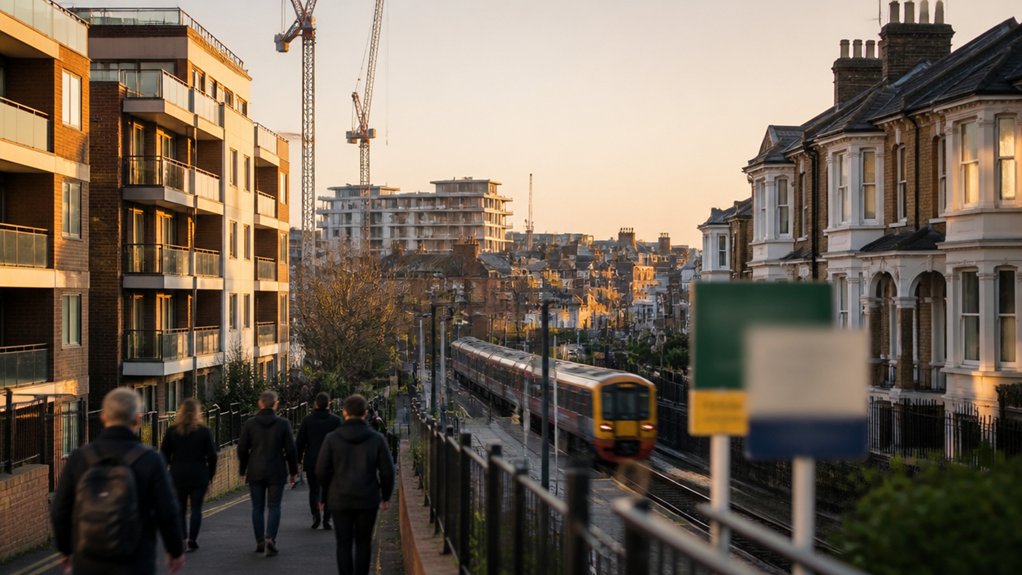
For commuters, central High Wycombe remains the strongest investment focus: its Chiltern Railways services reach London Marylebone in roughly 25–35 minutes, supporting consistent demand from professionals who prioritise walkable station access.
You can target two-bedroom flats and compact houses near rail links, where commuter convenience helps reduce void risk and supports resilient rents.
Beyond the core, Booker and Cressex appeal to tenants needing fast M40 access for Heathrow, Uxbridge, and west London employment centres. These areas benefit from proximity to major transportation hubs and business parks, broadening the tenant pool beyond rail users.
You should compare purchase prices against achievable rents carefully: road-connected locations can offer stronger yield potential than premium rail-adjacent stock, particularly where parking, home-working space, and reliable bus connections strengthen tenant appeal.
High Wycombe Town-Centre Rental Opportunities
High Wycombe town centre offers one of the area’s deepest tenant pools, driven by rail commuters, young professionals, students, and workers linked to the Eden Centre, local offices, and nearby business parks.
You can target consistent demand with well-presented one- and two-bedroom flats near the station, retail core, and university facilities. Smaller units typically support stronger gross yields because purchase prices remain accessible while tenant turnover stays active.
Luxury apartments can command rental premiums when they provide concierge-style amenities, secure parking, balconies, and high-spec interiors, although you should test achievable rents against competing new-build stock.
You can also assess mixed-use blocks where Commercial spaces strengthen daytime footfall and local convenience.
Focus on service charges, lease terms, EPC ratings, and void-risk assumptions.
A disciplined acquisition model should prioritise net yield, not headline rent, particularly where management costs materially affect returns.
High Wycombe Family Areas for Capital Growth
Family-focused neighbourhoods such as Downley, Hazlemere, Tylers Green, Kingswood Park and the Abbey Barn area can support stronger long-term capital growth because buyers place a premium on school catchments, larger homes, green space and commuter access.
If you target Family friendly neighborhoods, focus on three- and four-bedroom houses with parking, gardens and practical layouts, as these appeal to owner-occupiers and stable professional tenants.
You can strengthen yield resilience by buying near reputable schools, local amenities and routes into High Wycombe station.
Supply is typically more constrained than in central apartment-led locations, helping well-presented family stock retain demand through changing market cycles.
Luxury apartments may suit a different tenant profile, but family houses generally offer broader resale demand.
Prioritise properties needing cosmetic improvement: you can add value, improve rental appeal and protect your exit strategy.
High Wycombe vs Aylesbury, Slough and Reading

Compared with Aylesbury, Slough and Reading, High Wycombe offers a balanced investment profile: lower entry prices than Reading and many Slough locations, while retaining strong London connectivity via the Chiltern Railways service to Marylebone.
You can target commuter demand without paying Reading’s premium pricing, while accessing a broader employment base than Aylesbury typically provides.
Slough benefits from major corporate occupiers and the Elizabeth line, but its higher values can compress yields.
Reading commands strong rental demand from technology and finance, yet investors often face steeper acquisition costs.
High Wycombe’s regeneration, retail base and expanding Commercial developments support tenant demand across professional and family segments.
You can diversify between period houses, new-build schemes and Luxury apartments, positioning for competitive rents and potentially stronger yield margins than its higher-priced Thames Valley rivals.
High Wycombe Investment Risks and Costs
Relative value can improve High Wycombe’s yield outlook, but you’ll need to account for stamp duty, legal fees, mortgage costs, refurbishment budgets and ongoing management charges before evaluating net returns.
Test each purchase against achievable rents, not asking rents, and model void periods, maintenance and rate rises.
Older stock can offer stronger entry yields, yet EPC upgrades, damp remediation and leasehold service charges may erode cash flow.
You should also price in landlord regulations, including licensing, safety compliance and potential tenancy-rule changes.
Infrastructure development around rail links and regeneration corridors can support demand, but construction disruption or delayed delivery may affect short-term lettings and resale timing.
Stress-test your model at lower occupancy and higher financing costs.
A property that delivers a modest gross yield may underperform unless its rental growth, costs and exit value remain resilient.
Frequently Asked Questions
What Financing Options Are Available for High Wycombe Buy-To-Let Investors?
You can access buy-to-let mortgage options, limited-company loans, bridging finance, and remortgaging. Compare interest rates, loan-to-value limits, fees, and rental-stress tests to protect cash flow and maximise yields across your portfolio.
Are There Licensing Requirements for Landlords in High Wycombe?
You may need Landlord licensing for HMOs in High Wycombe; standard single lets typically don’t require it. Check council Rental regulations, as selective schemes can change. Compliance costs affect yields, so budget inspections, upgrades, and fees.
How Do Local Schools Affect Property Demand in High Wycombe?
Strong school quality coincides with higher demand: you’ll attract family tenants faster, support lower voids, and strengthen resale prospects. Local reputation drives catchment premiums, helping you justify rents and protect yields across High Wycombe.
What Regeneration Projects Are Planned Beyond the Town Centre?
Beyond the town centre, you’ll see urban redevelopment around Cressex, Abbey Barn North, and transport corridors, alongside community initiatives improving amenities. These schemes could widen tenant appeal, support rental growth, and strengthen long-term yield prospects.
Can Overseas Investors Purchase Property in High Wycombe?
Yes, you can purchase property in High Wycombe from overseas, subject to International regulations and checks. You’ll find Market trends increasingly yield-focused, with rental demand potentially delivering standout returns, though taxes, financing, and legal advice matter.






Leave a Reply