

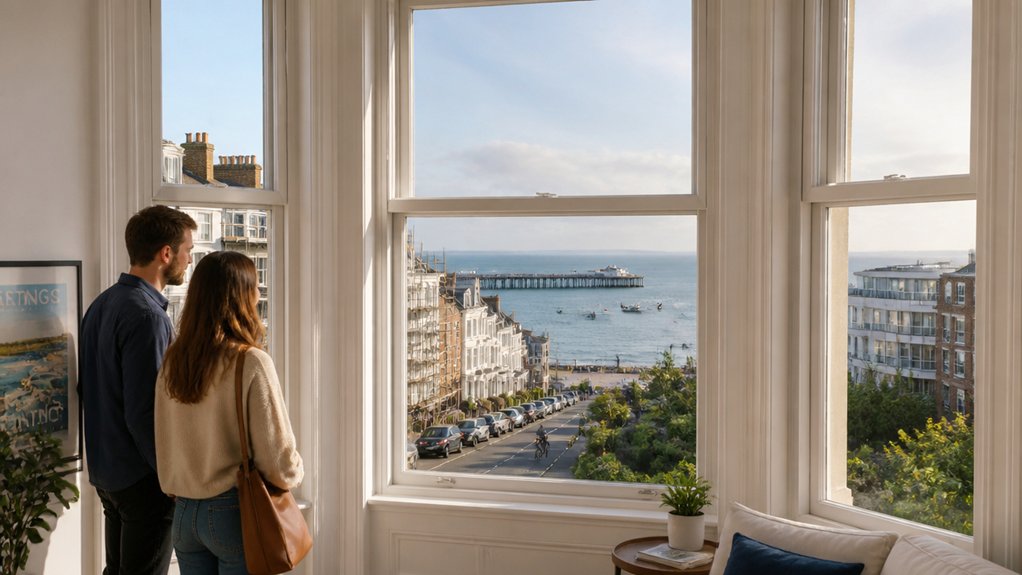
Coincidentally, as coastal buyers seek better value beyond Brighton and Eastbourne, Hastings is gaining attention for the same reasons: lower entry prices, character housing and visible regeneration. You can find contrasting conditions across Old Town, St Leonards and outlying family areas, where demand, transport links and improvement plans shape values differently. The key question is whether today’s affordability will persist as investment and buyer competition build.
Key Takeaways
- Hastings combines coastal lifestyle, period homes, and relative affordability, attracting families, hybrid workers, first-time buyers, and London relocators.
- Regeneration in Old Town, St Leonards, station areas, and the seafront supports demand, rental appeal, and long-term neighbourhood attractiveness.
- Premium locations include Burton St Leonards, West Hill, and seafront streets, where renovated period homes and sea views command stronger prices.
- More affordable options are found in Ore, Hollington, and parts of St Leonards, although condition, energy efficiency, and renovation costs matter.
- Prices vary widely by location, property condition, transport access, mortgage rates, and seller expectations, with slower sales not always indicating falling values.
Is Hastings a Good Place to Buy in 2025?
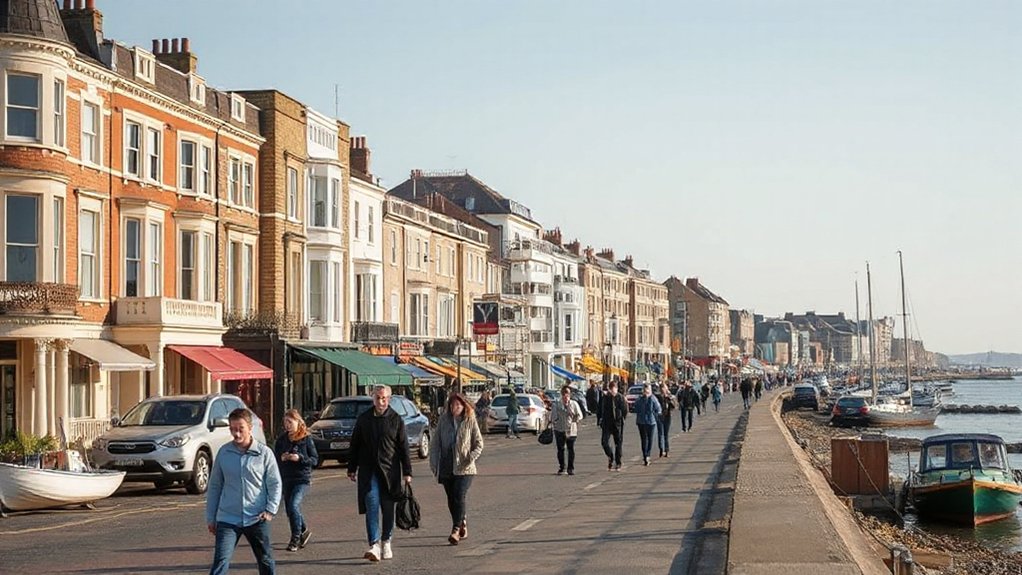
Hastings offers a compelling buying case in 2025 if you’re targeting relative value, lifestyle appeal, and longer-term growth potential. You benefit from a coastal location with direct rail access to London, expanding independent retail, and regeneration concentrated around the town centre and seafront.
Demand increasingly reflects hybrid working: buyers want more space, walkability, beaches, and character without paying prime South Coast prices.
You can target distinct segments, from period homes near the Old Town to luxury apartments overlooking the coast. The town’s historic architecture strengthens its appeal for owner-occupiers and holiday-let investors, while cultural venues and improving amenities support year-round demand.
Your decision should still account for local flood-risk checks, property condition, and transport needs. Hastings suits buyers prioritising lifestyle-led value and a market with visible improvement drivers.
Hastings House Prices and Market Trends
What’s driving Hastings house prices in 2025? You’ll see a market shaped by constrained coastal supply, ongoing regeneration and buyer demand for period homes near the seafront and Old Town.
Prices vary sharply by property type, condition and proximity to stations, so headline averages can mask important differences. Well-presented family houses often attract competition, while flats requiring modernisation may provide more affordable options.
Market fluctuations remain relevant: mortgage-rate expectations, transaction volumes and seller pricing discipline can quickly alter negotiating conditions. You should track asking-price reductions, time on market and achieved-sale prices rather than relying solely on annual growth figures.
A slower market doesn’t necessarily mean falling values; it can instead signal fewer completed sales and wider gaps between ambitious listings and realistic offers. Your strongest position comes from evidence-based pricing.
How Hastings Compares With Sussex Rivals
Against Sussex rivals, Hastings typically offers more space and period character for the budget than Brighton & Hove, Lewes or many West Sussex coastal towns, although prices depend heavily on the neighbourhood and condition. You’ll usually find a wider gap between asking prices and equivalent Brighton stock, particularly for Victorian terraces and larger family homes.
Hastings also competes strongly with Eastbourne and Worthing where buyers prioritise value over faster rail access to London.
Its relative affordability can widen your choice, but transaction costs, energy efficiency and renovation needs still affect the true comparison. Cultural heritage supports demand from lifestyle buyers, while improving local amenities and regeneration schemes strengthen the town’s long-term appeal.
You should benchmark price per square foot, time on market and sold-price reductions against nearby coastal locations, rather than relying on headline averages alone.
Hastings Areas for Different Buyers
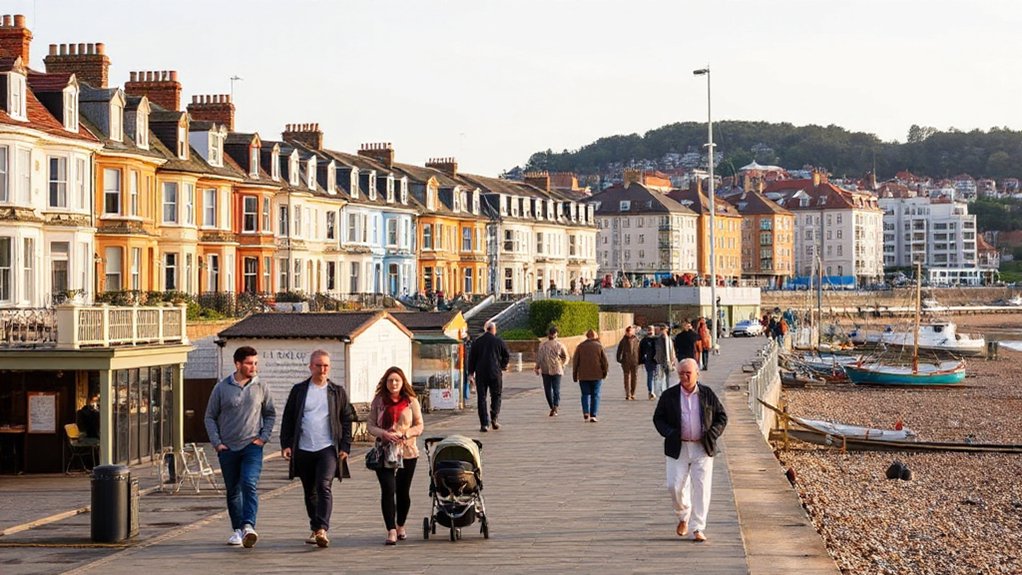
Your best Hastings area depends on your budget, life stage and demand for coastal access.
First-time buyers often target value-led neighbourhoods, while families prioritise schools, space and transport links.
Premium coastal locations command higher prices, reflecting limited supply and sustained lifestyle demand.
First-Time Buyer Hotspots
Hastings gives first-time buyers a wider choice of entry points than its headline prices suggest, with neighbourhoods such as Ore, Hollington and parts of St Leonards often offering better value than the Old Town, central seafront and Burton St Leonards.
You’ll typically find lower asking prices in Ore and Hollington, where housing stock includes terraces, maisonettes and Affordable apartments suited to smaller deposits.
Parts of St Leonards offer a different proposition: you can target period conversions near transport links while avoiding the premium attached to the most established addresses.
Demand remains strongest for homes that combine workable condition, commuter access and realistic service charges.
If you prioritise Historic architecture, compare conversion costs, lease length and maintenance liabilities carefully.
Regeneration activity can support longer-term appeal, but you should base affordability on monthly ownership costs, not purchase price alone.
Family-Friendly Neighbourhoods
Families tend to focus on the north and west of Hastings, where spacious housing, school access and everyday amenities shape demand more than seafront proximity.
If you’re comparing family options, areas around Hollington, Silverhill, St Helens and Ore typically offer larger homes, practical transport links and access to primary schools, helping support steady buyer interest.
Detached and semi-detached stock attracts households seeking gardens, extra bedrooms and room to work from home, while terraced streets can provide lower entry prices.
You’ll also find Community parks, sports facilities and shopping parades that reduce reliance on the town centre.
Local festivals and school-led activities strengthen neighbourhood identity, which can influence longer-term retention.
Demand often rises fastest for well-presented three-bedroom properties near reputable schools, particularly where renovation costs remain manageable.
Premium Coastal Locations
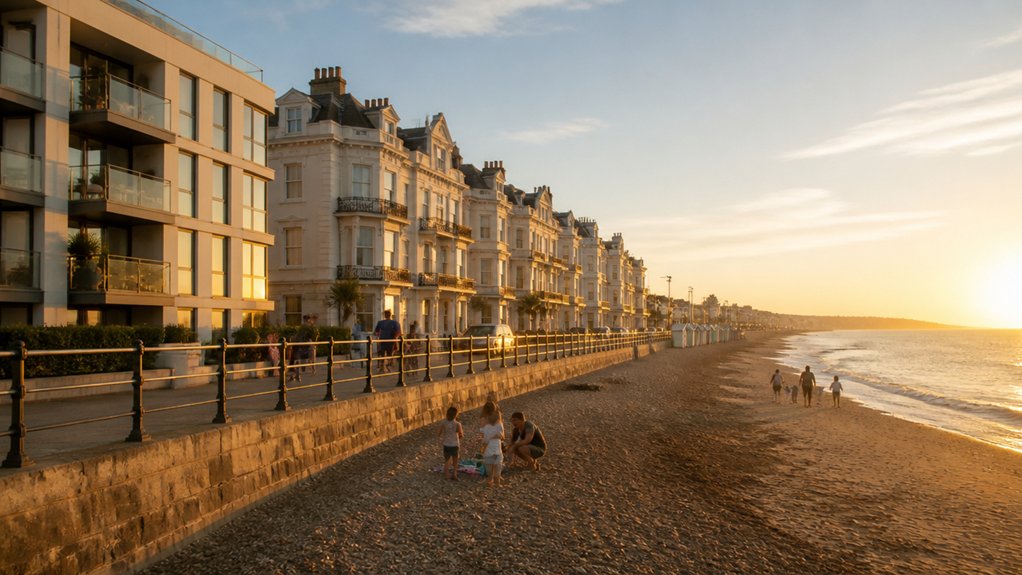
Premium coastal demand concentrates around Burton St Leonards, the seafront and parts of West Hill, where buyers pay for period architecture, direct beach access and sea views. You’ll typically find stronger price resilience here than in inland districts, particularly for renovated Victorian apartments, townhouses and homes with uninterrupted outlooks. Limited stock supports competition, while second-home and lifestyle buyers widen the demand base.
Luxury waterfronts attract purchasers who prioritise walkability, entertaining space and proximity to independent cafés, galleries and the station. You should expect premiums for balconies, parking and well-managed communal areas, as these features improve rental appeal and resale liquidity.
West Hill adds Seaside charm through elevated views and historic streets, although steep access can narrow the buyer pool. Track condition carefully: restoration costs can materially affect your total investment.
How Regeneration Is Changing Hastings Areas
Regeneration is reshaping buyer demand across Hastings, so you’ll see price and rental trends vary sharply by neighbourhood.
Old Town investment supports premium character homes, while town centre renewal may widen the appeal of central stock and amenities.
In St Leonards, ongoing transformation is attracting buyers who want relative value alongside improving retail, cultural, and transport-led prospects.
Old Town Investment
Old Town investment is reshaping Hastings’ appeal by pairing its historic streetscape with stronger demand for independent retail, hospitality and character-led homes. You’ll see buyer interest concentrate around properties that combine Historic architecture with walkable local amenities, including cafés, galleries, pubs and the seafront.
This micro-market typically attracts lifestyle-led purchasers, second-home buyers and landlords targeting short-stay demand, supporting pricing resilience when wider conditions soften. Renovated period cottages and apartments can command a premium over less distinctive stock, particularly where improvements preserve original features while adding modern efficiency.
For investors, the key metric isn’t simply entry price: assess rental seasonality, planning constraints, maintenance costs and street-by-street buyer demand. Limited supply within the conservation area can underpin long-term value, but condition and accessibility still determine your achievable return.
Town Centre Renewal
Town centre renewal is shifting demand in Hastings toward areas that offer better public spaces, transport links and a broader mix of independent businesses. If you’re evaluating local value, watch how investment around the station, shopping streets and seafront connections changes buyer priorities.
Urban revitalization can strengthen rental appeal by increasing footfall, improving the streetscape and supporting cafés, services and flexible workspaces.
You’ll see the clearest market effect where upgrades make everyday living easier: safer routes, cleaner public areas and more reliable access to rail services. Community engagement also matters, because schemes shaped by residents are more likely to match local needs and sustain trading activity.
For buyers, renewal may widen the gap between well-connected central homes and comparable stock in less improved locations, influencing both demand resilience and longer-term price growth.
St Leonards Transformation
St Leonards has become a key indicator of how targeted investment can reshape Hastings’ housing demand, with its independent retail scene, seafront character and improving public environment attracting buyers priced out of stronger Sussex markets.
You can see demand concentrating around Warrior Square, Kings Road and the promenade, where period conversions offer lower entry prices than Brighton or Eastbourne while retaining rail access to London.
St. Leonard’s regeneration is also broadening its buyer base. Refurbished shops, cafés, public-realm upgrades and Cultural Festivals increase footfall and strengthen rental appeal for landlords.
As vacancy rates fall and amenity density rises, you’re likely to find faster competition for well-presented flats and houses near the station or seafront.
This shift doesn’t remove affordability advantages, but it narrows the discount, making condition, location and energy efficiency increasingly decisive factors.
Hastings Lifestyle: Commuting, Schools and Coastal Living
Hastings attracts buyers who value a coastal lifestyle without giving up rail access to London: direct services to London St Pancras typically take around 1 hour 30 minutes, while Ashford International is reachable in roughly 40 minutes.
You can balance hybrid working with sea air, choosing neighbourhoods near stations or quieter edge-of-town areas.
Families assess Ofsted reports, catchment patterns and travel times alongside school places, with primary and secondary options spread across Hastings and St Leonards.
The lifestyle proposition strengthens demand from households seeking daily access to the beach, the Old Town and Alexandra Park.
You’ll find year-round community events supporting local engagement, while the seafront, Country Park and nearby trails expand outdoor activities.
This combination broadens Hastings’ appeal beyond retirees, attracting commuters, young families and remote workers who prioritise practical connectivity and everyday amenity.
Hastings Buying Costs, Demand and Competition
Although Hastings remains relatively affordable by South East coastal standards, buyers should budget beyond the agreed price: deposit, mortgage fees, survey costs, legal work and Stamp Duty Land Tax can materially raise the cash required to complete.
Your upfront total will vary by purchase price, loan-to-value ratio and property condition, with older coastal homes often justifying more detailed surveys.
Local market dynamics can differ sharply between neighbourhoods. You may face stronger competition for renovated period homes, family houses near sought-after schools and properties within walking distance of the seafront or station.
Conversely, homes needing modernisation can attract fewer bidders but require realistic refurbishment allowances.
Monitor asking-to-achieved price gaps, listing volumes and time on market to judge negotiating scope.
Housing affordability also depends on monthly mortgage payments, not simply headline prices, so stress-test your budget before offering.
What Could Shape Hastings House Prices Next?
Looking ahead, Hastings house prices will depend heavily on mortgage-rate movements, local supply and the strength of buyer demand relative to new listings. If borrowing costs ease, you may see affordability improve, expanding the buyer pool and supporting values, particularly for family homes and well-connected coastal properties.
However, price growth won’t be uniform. Market fluctuation could persist where sellers set ambitious asking prices or where stock rises faster than demand. You should monitor agreed sales, time on market, price reductions and the sale-to-list-price ratio for clearer direction than headline averages.
Regeneration progress, rail connectivity and continued London-led relocation demand may strengthen specific neighbourhoods.
For investors, Investment opportunities could emerge in areas benefiting from rental demand, refurbishment potential and comparatively lower entry prices, although yields must still absorb financing, maintenance and regulatory costs.
Frequently Asked Questions
Are There Flood Risks for Properties Near Hastings Seafront?
Yes—Seaside flood risks can cast a shadow over Hastings seafront properties. You should check Environment Agency maps, tide-surge history, elevation, and insurance terms. Coastal property safety varies by frontage, defences, maintenance, and projected sea-level trends.
Which Hastings Neighbourhoods Have the Best Rental Yields?
You’ll typically find strongest yields in Central St Leonards, Ore, Hollington, and Baird, where lower entry prices support returns. Investment hotspots track Rental market trends: demand favours stations, seafront amenities, and affordable family housing.
Do Hastings Properties Face Restrictions in Conservation Areas?
Yes, you’ll face conservation area regulations in designated Hastings zones. Heritage property restrictions can require consent for demolition, exterior alterations, windows, doors, and trees. Check Hastings Borough Council records before pricing renovations, as approval timelines affect investment returns.
What Are the Parking Permit Rules for Hastings Residents?
Parking permits let you park in designated resident zones, but resident restrictions vary by street and permit type. You’ll typically need proof of address and vehicle ownership; check Hastings Borough Council’s current fees, eligibility, and zone maps.
Are Short-Term Holiday Lets Profitable in Hastings?
Like a tide, profitability can rise and fall: you’ll earn most during peak summer demand. Model occupancy, cleaning, mortgage, and platform costs carefully; Holiday rental regulations and seasonal occupancy trends determine whether your returns outperform long-term letting.





Leave a Reply