

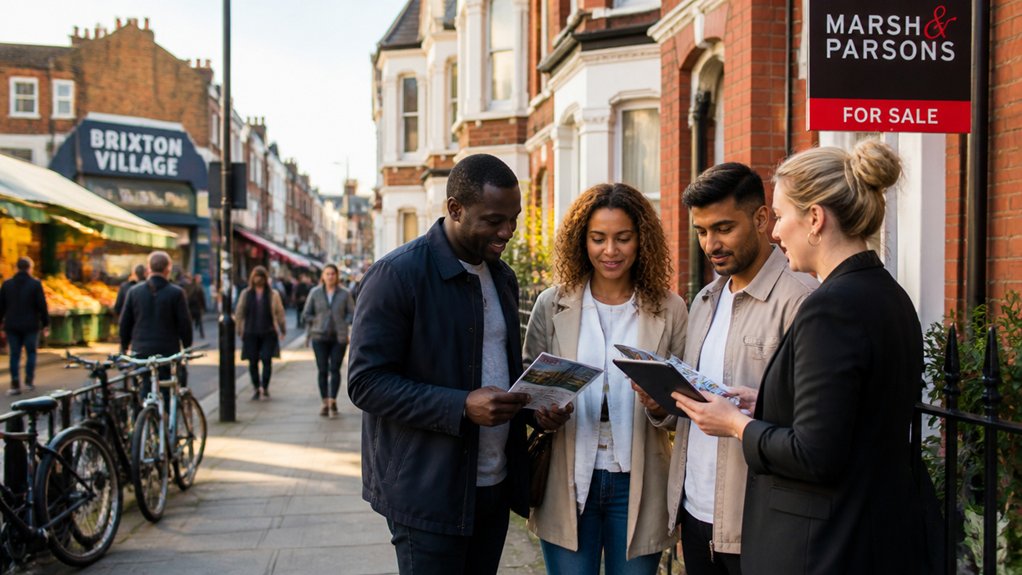
If you’re buying in Brixton, you can’t treat a valuation as a single number on a brochure. You need to see how the agent builds it: property basics, condition, layout, outdoor space, then micro-location factors like station walk time, school catchments, and nearby amenities. You should also separate sold evidence from optimistic asking prices and watch for fast sales or reductions. The question is whether the comps actually match your target…
Key Takeaways
- Agents assess tenure, floor area, condition, and planning constraints, then document layout, light, and upgrades with notes and photos.
- They benchmark against recent sold comparables, adjusting for size, street, finish, and extensions, then cross-check with local price trends.
- Micro-location drives value: transport walkability, Brockwell Park proximity, school catchments, and quieter streets outperform busier roads like Brixton Road.
- Condition, layout efficiency, and outdoor space are priced via renovation cost allowances and premiums for turnkey finishes, home offices, and usable gardens.
- Asking prices are signals; agents triangulate sold data, current listings, offer activity, and fall-through rates to set a testable pricing range.
How Brixton Estate Agents Value a Home (Step-by-Step)
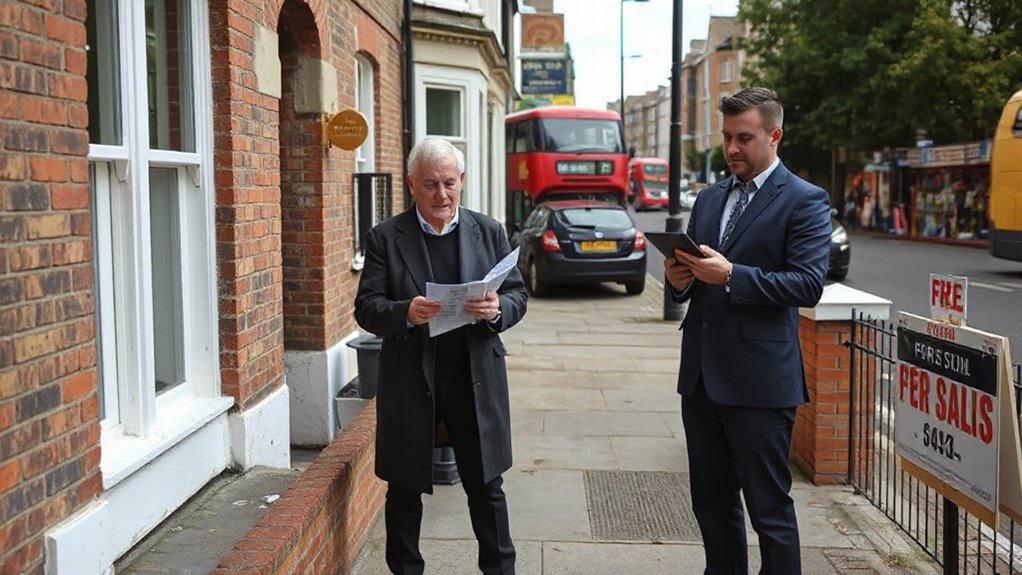
Although every agency has its own template, Brixton estate agents typically value your home using a consistent, standards-led process.
First, you’ll provide property basics: tenure, floor area, condition, and planning constraints.
Next, the agent inspects layout, light, specification, and any measurable improvements, recording evidence with photos and notes.
They then benchmark against recent local comparables adjusted for size, street, and finish, and sanity-check against historic property trends to avoid one-off anomalies.
After that, they assess demand drivers such as transport links, schools, parks, and other neighborhood amenities, weighting them against noise, frontage, and parking.
Finally, they apply a pricing range and recommended strategy, documenting assumptions so you can test and challenge them objectively.
Sold vs Asking in Brixton: Which Should You Trust?
Why do asking prices in Brixton often look miles away from sold prices? Asking is a marketing signal, not a verified outcome. Agents may price high to test demand, protect instructions, or anchor negotiations.
Sold prices reflect completed transactions, but they lag: Land Registry data can trail deals by weeks, so it may miss current Market trends.
To decide what to trust, you should triangulate. Start with recent sold comparables adjusted for size, condition, and tenure, then layer in pending offers and fall‑through rates from portals and agents.
Next, check time on market: rapid sales at or above asking indicate tight supply and shifting buyer preferences; repeated reductions signal overpricing.
Finally, treat any single metric as noise; use a range and document your assumptions.
Which Brixton Streets, Stations, and Schools Add Value
Once you’ve grounded your price range in sold comparables rather than headline asking figures, you can focus on what actually shifts Brixton values: micro‑location. Track local market trends street by street: prime Victorian terraces near Brockwell Park and along Railton Road, Herne Hill borders, and quiet pockets off Acre Lane often show tighter discounts and faster resales than busier frontages like Brixton Road.
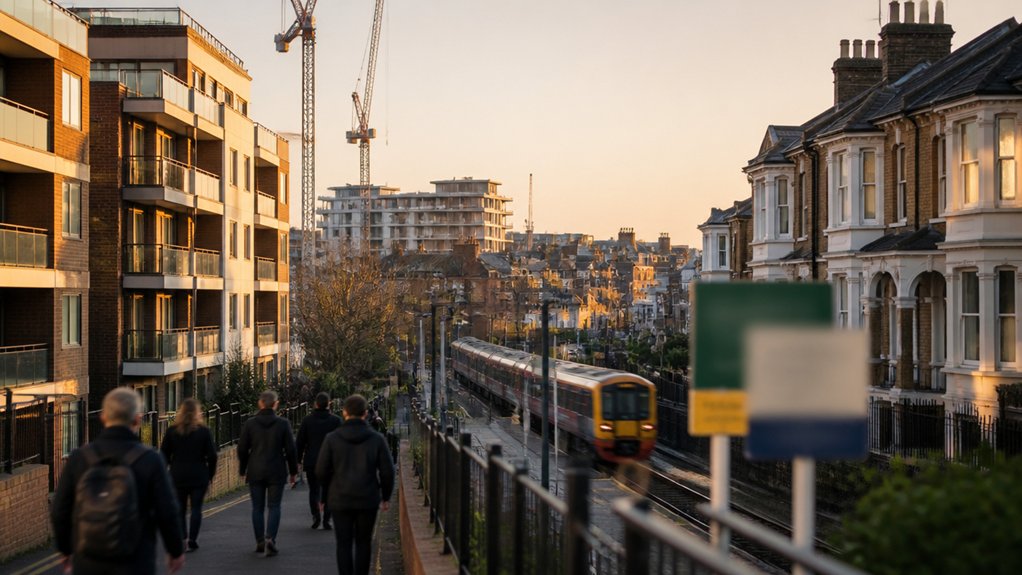
Next, price the transport premium: walkable access to Brixton (Victoria line), Brixton Overground, and nearby Stockwell typically supports higher £/sq ft than areas reliant on buses.
Finally, test school catchments as property appreciation factors: demand clusters around well‑regarded primaries and sixth forms, so boundary lines can move value even within the same postcode. Use recent Land Registry data and time‑to‑sell metrics.
How Condition, Layout, and Gardens Change Brixton Value
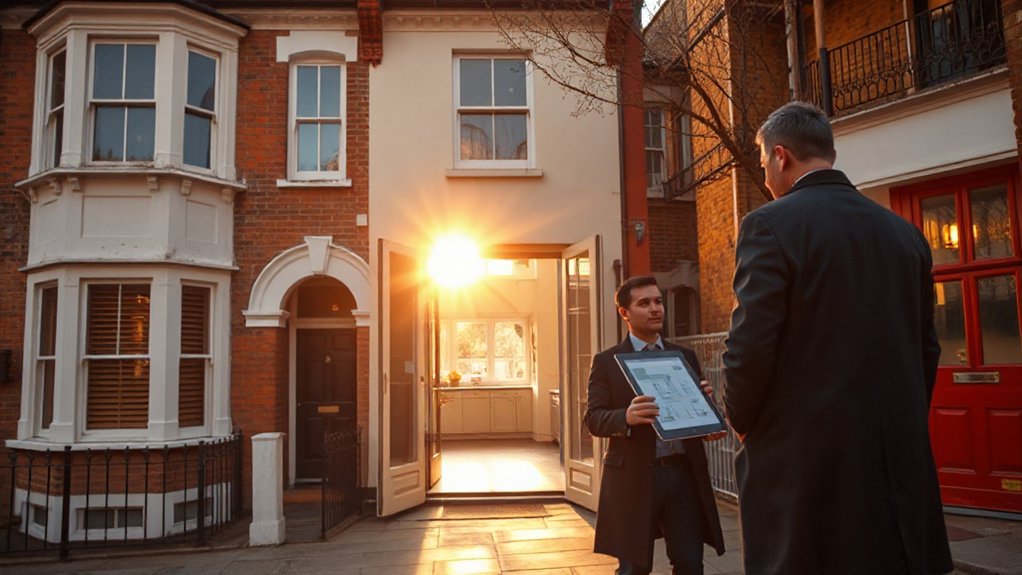
Because two homes on the same Brixton street can trade at very different £/sq ft, you should benchmark value against condition, layout efficiency, and usable outdoor space, then adjust your offer with evidence.
Start with condition: date kitchens, bathrooms, electrics, glazing, and roof; price in Property renovation using itemised quotes and realistic contingency.
Next, test layout efficiency: count wasted corridor space, check room proportions, storage, and whether a loft or side return can convert without compromising light and circulation.
Then value gardens by function, not just size: level access, privacy, orientation, drainage, and secure bike/store space typically outperform awkward plots.
Track Market trends by noting premiums for turnkey finishes, flexible workspaces, and low-maintenance outdoor areas in recent local completions.
How to Sanity-Check a Brixton Agent’s Valuation
After you’ve adjusted for condition, layout efficiency, and usable outdoor space, you still need to pressure-test the agent’s number against hard comparables.
Pull at least three sold prices within 0.25 miles and six months, matching tenure, bedroom count, and floor area; convert each to £/sq ft and note the range. Reject outliers unless you can explain them (extension, corner plot, basement).
Then check current competition: list prices for similar homes, average time on market, and any reductions—these signal market trends and negotiating power.
Ask the agent to justify their pricing strategies: who’s the target buyer, what’s the launch price versus expected close, and what evidence supports that delta. If they can’t cite data, discount the valuation.
Frequently Asked Questions
How Long Does a Brixton Home Valuation Appointment Typically Take?
A Brixton home valuation appointment typically takes 30–60 minutes, depending on size and access. You’ll review condition and upgrades, note market trends, and run property comparison checks against recent local sales and listings.
Do I Need to Prepare Documents Before an Estate Agent Visits?
Yes—you should prepare documents before the visit. You’ll speed verification and support pricing strategies. Gather title, lease, EPC, service-charge data, recent renovations, planning consents, utility costs, and comparables; pair with home staging notes for accuracy.
Will Getting a Valuation Affect My Council Tax Band or Insurance?
No, a valuation alone won’t change Council tax or Insurance premiums. Like a map, it guides decisions, not law. Only formal reassessments or policy updates shift costs. You’ll stay unchanged unless you report changes.
Can I Get an Accurate Valuation Without Allowing Viewings?
Yes, you can, but you’ll reduce valuation accuracy. You should share recent photos, floorplans, specs, and comparable sales so the agent models market trends. You can request a desktop or video valuation for stronger confidence.
Are Online Brixton Valuation Tools Reliable Compared With In-Person Appraisals?
Not fully; like an oracle, online tools estimate, but you’ll see Online accuracy limits and valuation discrepancies. You should use them for ballpark figures, then verify with an in-person appraisal that checks condition, layout, comps.


Leave a Reply