

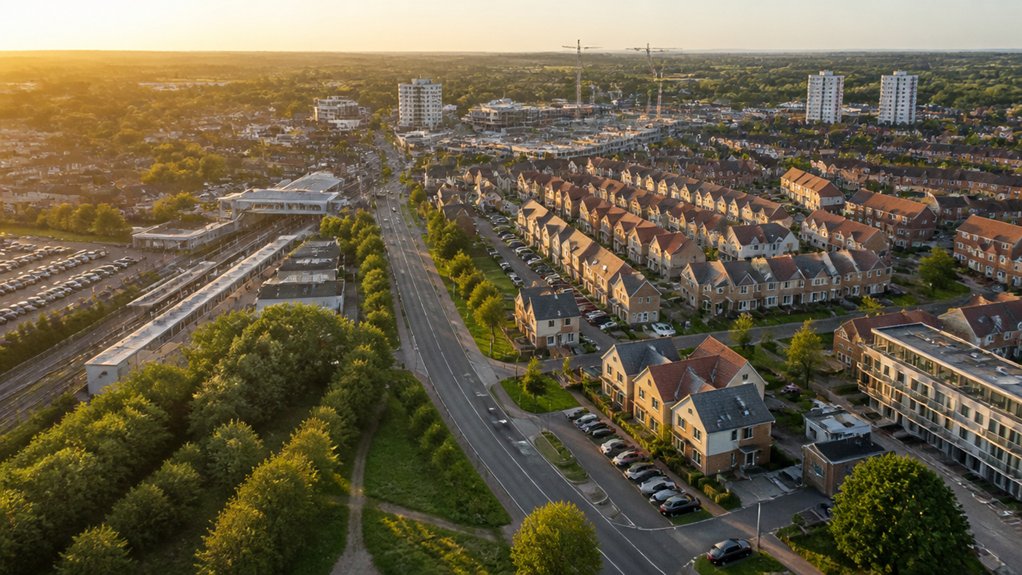
Basildon pairs new-town affordability with rising buyer competition. You’ll see demand supported by regeneration, improving amenities, and rail links that keep London within commuting range. While prices often remain below nearby Essex hotspots, first-time buyers, families, and investors are targeting different parts of the town. The key question is whether expansion can keep pace with demand—and where the strongest opportunities may emerge.
Key Takeaways
- Basildon’s new-town expansion, regeneration schemes, and development pipeline are improving housing, amenities, public spaces, and town-centre activity.
- Buyer demand is strongest for well-priced three-bedroom family homes, modern flats, and properties near C2C rail stations and major roads.
- London connectivity via C2C services, the A13, A127, and M25 supports commuter demand from professionals, families, and out-of-London buyers.
- Affordable entry prices relative to Brentwood, Billericay, and London attract first-time buyers and investors seeking realistic rental yields.
- Langdon Hills and Noak Bridge appeal to families, while Laindon, Pitsea, Vange, and central Basildon suit budget-conscious and rail-focused buyers.
Basildon Property Market: The Current Picture
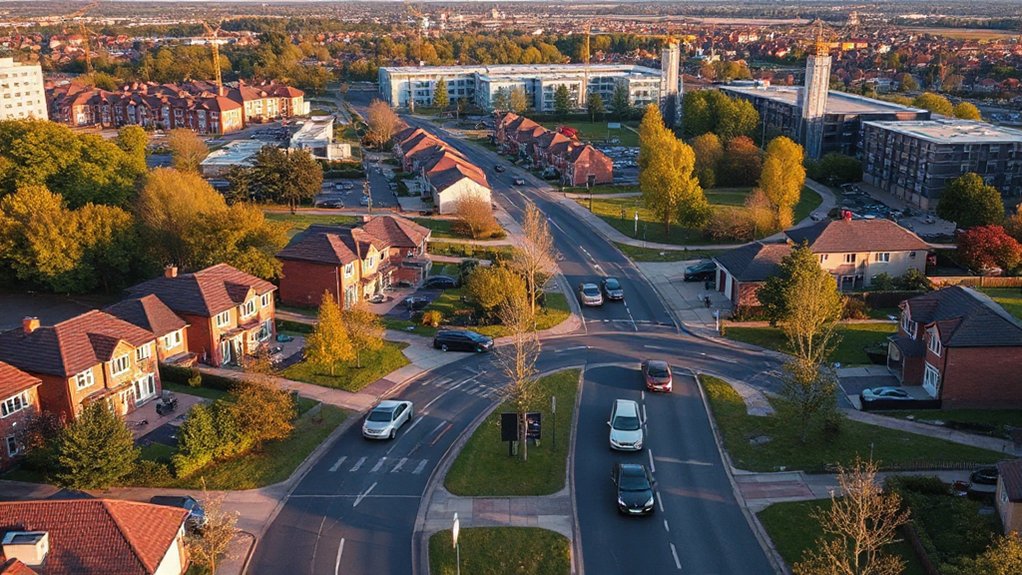
Basildon’s property market remains active, with buyer demand concentrating on well-priced family homes, modern flats and properties close to transport links. You’ll find activity shaped by the town’s continuing new-build pipeline, regeneration schemes and commuter appeal, particularly around rail-connected neighbourhoods.
Supply varies by area, so accurately presented homes can attract early interest when they match current lifestyle requirements.
You should also watch how buyers prioritise practical locations over size alone. Access to local amenities, schools, green space, shopping and healthcare increasingly influences viewing decisions.
Community events help reinforce neighbourhood identity and resident engagement. Developers and sellers who highlight walkability, parking, energy efficiency and flexible living space align more closely with today’s search behaviour.
The market remains sensitive to mortgage conditions, yet Basildon’s connectivity supports steady underlying enquiry.
Basildon House Prices and Buyer Trends
You’ll see Basildon house prices shaped by recent growth rates, mortgage costs, and the supply of homes for sale.
Buyer demand remains strongest where properties offer good transport links, family space, or value against nearby Essex markets.
Tracking agreed-sale prices and listing activity helps you judge whether demand is pushing prices higher or becoming more selective.
House Price Growth
Although price growth has moderated from its post-pandemic peak, Basildon’s housing market continues to attract buyers seeking better value than many neighbouring Essex and London commuter locations. You’ll find pricing remains shaped by mortgage affordability, local supply and the gap between established neighbourhoods and regeneration-led schemes.
Family houses generally hold value more steadily than smaller flats, while new-build pricing can command a premium where specifications, transport access and amenities justify it.
For your investment calculations, compare achieved sale prices rather than asking figures, as vendors increasingly price competitively to secure transactions. Luxury apartments may show wider price variation due to service charges and buyer budgets.
Rental yields can strengthen the investment case, but they don’t guarantee capital growth; factor in maintenance, financing costs and likely resale liquidity when evaluating Basildon’s medium-term price outlook.
Buyer Demand Trends
Buyer demand in Basildon remains strongest for well-priced family homes near transport links, schools and everyday amenities.
While affordability constraints have made buyers more selective across flats and higher-value stock. You’ll typically see the fastest interest in three-bedroom houses, particularly where sellers present realistic asking prices and good energy efficiency.
Commuter access to the C2C line continues to support demand from London-linked buyers, but higher mortgage costs mean fewer purchasers stretch beyond their budgets.
Flats attract first-time buyers and investors when service charges remain manageable, although supply can lengthen selling times.
For Property investment, you should assess tenant demand alongside purchase costs, as rental yields vary by location, property type and ongoing expenses.
New Town regeneration and local employment growth could underpin demand, but pricing accurately remains essential.
Why Demand for Basildon Homes Is Rising
You’re seeing demand for Basildon homes rise as New Town regeneration improves local amenities and reshapes key neighbourhoods.
Strong rail and road links keep London commuters active in the buyer pool, supporting consistent interest.
As affordability pressures persist elsewhere in Essex and London, Basildon’s growing appeal broadens demand from first-time buyers, families and investors.
New Town Regeneration
Basildon’s new town regeneration is strengthening demand by bringing investment into housing, public spaces, transport links and town-centre amenities. You can see how this Urban planning focus reshapes buyer priorities: modern homes, improved retail provision and better-quality shared environments support both owner-occupier appeal and rental demand.
Regeneration also helps older neighbourhoods compete by raising local standards and encouraging private investment.
For you as a buyer, the key trend is value linked to change. Areas benefiting from redevelopment can attract stronger interest before projects fully mature, although pricing varies by location, property type and delivery timelines.
Community development matters too, as schools, leisure facilities and usable green spaces influence long-term desirability. With supply remaining selective, you’ll find that homes near visible improvement schemes often command greater attention from families, professionals and landlords.
That supports resilience across Basildon’s evolving market.
Strong Transport Connections
Transport connectivity adds a clear market advantage to regeneration-led growth in Basildon. You benefit from direct C2C rail services linking Basildon to London Fenchurch Street, while the A13, A127 and M25 provide practical road access across Essex, London and the wider South East.
These routes support commuter demand and strengthen the town’s position for households balancing workplace access with comparatively attainable local pricing.
Public transport investment also matters to market performance. Frequent rail connections, local bus networks and station-focused Infrastructure development improve journey reliability and widen the area’s effective commuter catchment.
For you as a buyer, shorter or more predictable travel times can influence which neighbourhoods offer the strongest value. As transport capacity and connectivity remain central to relocation decisions, well-connected Basildon locations can sustain demand through changing market cycles.
Growing Buyer Appeal
Buyer demand for Basildon homes is rising as comparatively accessible pricing, London commuting links and ongoing regeneration broaden the town’s appeal. You can often secure more space here than in inner London or nearby Essex hotspots, making the market attractive to first-time buyers, families and commuters seeking value.
New-build supply is also reshaping buyer choice. Developments featuring luxury apartments appeal to professionals who prioritise modern layouts, amenities and station access, while larger homes attract households trading up.
For investors, steady commuter demand supports rental opportunities, particularly near transport hubs and town-centre schemes.
As regeneration improves retail, leisure and public spaces, you’re buying into a location with expanding practical appeal. This combination of relative affordability, connectivity and improving stock is widening Basildon’s buyer base and underpinning demand.
Transport Links for London Commuters
With direct C2C rail services to London Fenchurch Street typically taking around 30–40 minutes, Basildon remains a practical choice for commuters seeking lower entry prices than many inner-London and Essex rail-belt locations.
You can reach key City employment areas without changing trains, supporting demand from buyers balancing office attendance with affordability. Strong rail connectivity also widens the local buyer pool, attracting first-time purchasers, families and investors targeting tenant demand from London workers.
Basildon station’s frequent peak-time services and links towards Southend give you flexible commuting options, while the A13 and A127 provide road access towards London, Thurrock and Essex employment centres.
As hybrid working persists, buyers increasingly prioritise manageable journey times over being located closest to the capital. This keeps well-priced homes near the station particularly relevant.
How Regeneration Could Affect Basildon Buyers
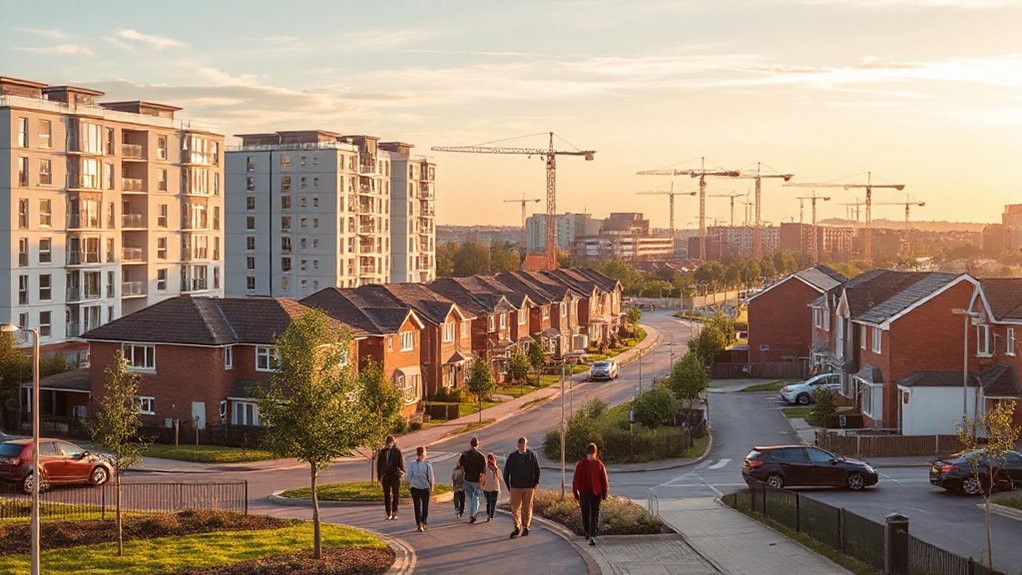
Regeneration plans could strengthen Basildon’s appeal beyond its commuter credentials by improving the town centre, public environment and mix of homes, retail and leisure space. For you as a buyer, this urban renewal may widen the reasons to choose Basildon, particularly if upgraded amenities support stronger daily footfall and local spending.
New-build supply can also reshape price expectations. More modern apartments and family housing may create choice, but limited well-designed stock could command premiums as demand rises. Track planning progress, delivery timetables and developer activity rather than relying on announcements alone.
Community development matters to longer-term value. Projects that improve green space, services and town-centre activity can support buyer confidence and rental demand. You’ll want to weigh potential disruption against the prospect of a more competitive, better-connected market over time.
Best Basildon Areas for Different Buyers
Basildon’s neighbourhoods suit different priorities, so you’ll get better value by matching location to your budget, commute and preferred property type. First-time buyers often target Laindon, Pitsea and Vange, where affordable neighborhoods typically offer smaller houses, flats and better entry prices than central commuter hotspots.
If you need rail access, Basildon town centre and nearby Fryerns put you closer to c2c services, retail and newer apartment stock, although demand can tighten around well-maintained developments.
Families commonly shortlist Langdon Hills, Lee Chapel North and Noak Bridge for larger layouts, schools and green-space access; detached and semi-detached supply commands a premium.
For higher-specification homes, Billericay-facing areas, Dry Street and select Langdon Hills schemes feature luxury developments and executive properties.
Compare sold-price trends street by street, as condition, parking and lease terms can materially affect achievable value.
Is Basildon a Good Place to Buy Property?
Whether Basildon is a good place to buy depends on your time horizon, borrowing position and target area, but it offers a lower entry point than many Essex commuter markets while retaining direct c2c rail links to London.
You can find relative value in established neighbourhoods, regeneration zones and family-oriented locations, particularly when comparing prices with neighbouring Brentwood, Billericay and Southend.
For Property investment, focus on realistic yields rather than headline growth forecasts. Demand from commuters, hospital staff, logistics workers and households priced out of London supports rental potential.
Although landlord returns vary by property type, service charges and licensing requirements, it’s important to consider these factors when assessing investment opportunities.
You’ll need to budget for mortgage costs, maintenance and void periods, then assess sold-price evidence street by street.
If you’re buying for five years or longer, Basildon’s transport access, employment base and ongoing development pipeline can strengthen the case.
Frequently Asked Questions
What Are the Typical Property Conveyancing Times in Basildon?
In Basildon, you’ll typically complete conveyancing in 8–12 weeks, though 30% of transactions face delays. You can accelerate progress by securing a Property valuation early and promptly reviewing Legal documentation with your solicitor.
Are There Flood Risks in Any Basildon Neighbourhoods?
Yes, you’ll find higher flood exposure near the River Crouch, Pitsea Creek and low-lying drainage corridors. Commission Flood risk assessments, review Neighbourhood flood history, and price insurance and resale impacts before bidding.
What Council Tax Bands Apply to Basildon Properties?
You’ll find Council tax bands A–H in Basildon, based on 1991 property valuation. For example, a £70,000 1991-value home falls in Band C. Check your band online; charges vary annually with council budgets.
How Do Basildon School Catchment Areas Affect House Purchases?
School zoning can raise demand and prices near oversubscribed Basildon schools. You’ll need to check admission boundaries, distance rules, and catchment priorities, since they shift annually and don’t guarantee places, affecting resale appeal.
Are There Restrictions on Extending Properties in Basildon?
Yes, you’ll face planning controls in Basildon, particularly for Historic preservation zones, green-belt sites, and larger additions. Check Building height regulations, permitted-development limits, and local planning trends before valuing extension potential or submitting applications.





Leave a Reply