


Camberwell prices still sit above many SE postcodes in 2026, with typical sales clustered in the high £500ks and prime streets pushing higher. You’re buying into Victorian stock, gallery-led culture, and a busy high street, with parks and fast links to the City within easy reach. But you’ll also face lease lengths, service charges, and survey surprises that can swing the numbers—so the street you choose matters more than ever…
Key Takeaways
- Camberwell commands premium 2026 prices near Camberwell Junction and Riversdale Road, driven by period architecture, art culture, regeneration, and limited supply.
- Typical budgets: ~£450k modern one-bed flats, ~£600k larger period conversions, and £850k–£1.1m two- to three-bed Victorian terraces.
- Expect fast-paced sales with minimal discounting; strengthen offers using local comparables, an AIP, chosen solicitor, and a booked survey.
- For flats, prioritise 90+ year leases; scrutinise ground rent, service charges, sinking funds, major works notices, and freeholder or agent responsiveness.
- Check transport and lifestyle factors—Denmark Hill links, buses, parks, schools—while investigating EPC, EWS1, damp, cladding, and title issues.
How Much Does Camberwell Property Cost in 2026?
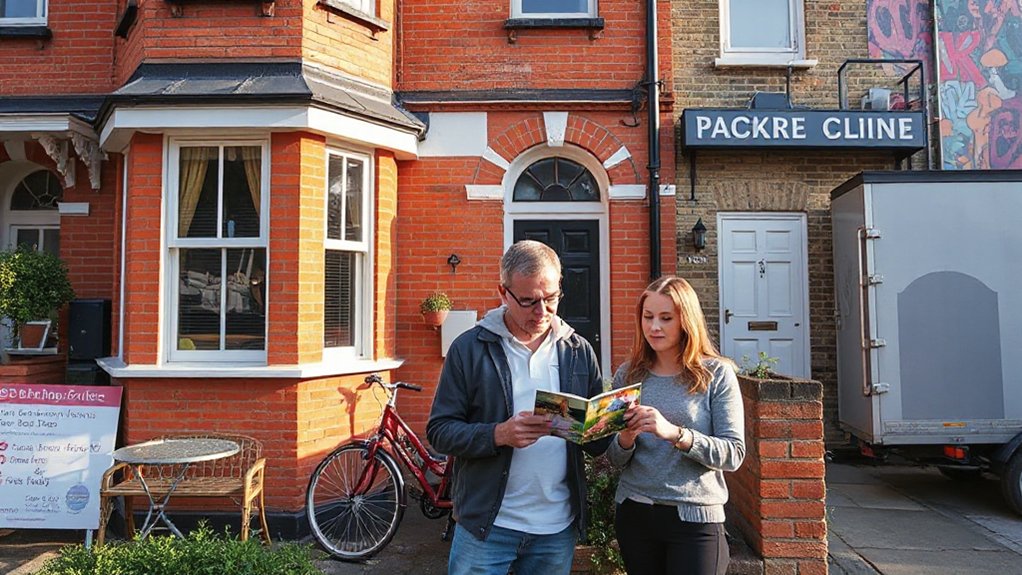
While prices still vary street by street, Camberwell property in 2026 sits at a clear premium thanks to its school zones, period housing stock, and tight supply close to Riversdale Road and Camberwell Junction. You’ll typically see family houses and well-kept conversions priced above nearby inner-south pockets, with the sharpest rates around transport links and cafe strips.
Track the market by watching sold-price data and days-on-market: competitive listings move fast, and discounting is thinner on blocks with strong natural light, parking, or garden access. Buyers also pay extra for Historical architecture—Victorian terraces and Edwardian facades still command a scarcity premium.
Many people looking to buy or sell property in the area turn to estate agents in Camberwell for trusted local expertise and guidance.
The area’s Local art scene supports demand too, helping keep buyer interest resilient through rate cycles and seasonal lulls.
What Do You Get for Your Budget in Camberwell?
Camberwell’s 2026 price premium only matters once you map it to what your money actually buys on the ground. At ~£450k, you’re typically looking at a modern one-bed flat near Denmark Hill, often 450–550 sq ft, with lift access and bike storage.
Push to ~£600k and you can target a larger period conversion, usually 700–850 sq ft, with higher ceilings and a better chance of outside space.
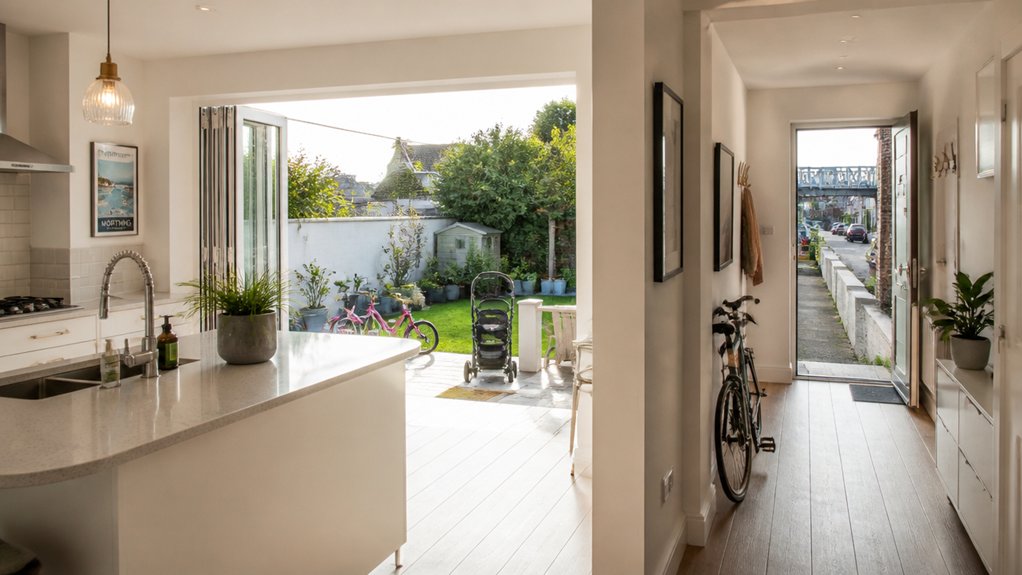
Around ~£850k–£1.1m, you move into two- to three-bed Victorian terraces, where condition drives the spread: turnkey sits at the top end, while refurbishment buys you square footage.
Your postcode choices shape lifestyle: lean toward Camberwell Church Street for Local art, or the weekend Street markets around Peckham Rye edge.
Is Camberwell a Good Place to Buy (Pros and Cons)?
If you buy in Camberwell, you’re paying for a village-like lifestyle—cafés, parks, strong school catchments, and a community feel that supports consistent demand.
You’ll also want to weigh recent price growth, rental competition, and how interest rates or shifting buyer sentiment could affect your downside risk.
Next, you’ll compare the liveability upsides against the numbers so you can judge whether the premium makes sense for your goals.
Lifestyle And Community
How does life in Camberwell stack up when you’re weighing a purchase? You’re buying into a lively, walkable pocket of SE5 where local art isn’t a side note—it shapes the high street, galleries, and murals around Camberwell Church Street.
You’ll get strong café culture, late-night dining, and quick access to green space at Burgess Park and Ruskin Park.
Community feel is a real draw. Regular community events—from markets and open-studio weekends to pop-ups and film nights—make it easy to meet neighbours and plug in fast.
Day-to-day, you benefit from major bus corridors and nearby rail links via Denmark Hill and Peckham Rye.
The trade-offs: busier roads, limited parking, and weekend noise near hotspots.
Price Growth And Risks
While SE5 hasn’t always grabbed the same headline price growth as neighbouring Dulwich or Peckham, Camberwell has generally benefited from the wider South London uplift—driven by regeneration around Denmark Hill, steady rental demand from King’s College Hospital and local universities, and a tight supply of period stock.
You’ll typically see stronger pricing for Victorian terraces near Camberwell Grove and Denmark Hill, with flatter performance on noisier arterial roads or larger ex-local blocks.
On the plus side, you’re buying into improving transport links, a deep renter pool, and ongoing streetscape upgrades.
On the downside, Market volatility can bite if rates stay higher for longer, and stock quality varies street by street.
Your key Investment risks are service charges, cladding or major works, and overpaying for “finished” flips.
Which Camberwell Areas Suit Families, Commuters, Value?
Because Camberwell’s streets shift quickly from leafy, school-zoned pockets to tram-linked commuter corridors, the “right” area depends on whether you’re optimising for family lifestyle, CBD access, or relative value.
If you’re buying for families, target the quieter east and north pockets near Local schools and green spaces; you’ll pay a premium, but resale demand stays deep and days-on-market typically run shorter.
If you’re commuting, prioritise the Burke Road/Toorak Road spine and the station-adjacent grid, where train and tram frequency supports higher rental absorption and tighter vacancy risk.
If you’re chasing value, look to the south-west fringes and main-road-adjacent streets: you’ll often get a lower entry price per square metre, trading some amenity for stronger yield potential.
Should You Buy a Period Home or New Build in Camberwell?
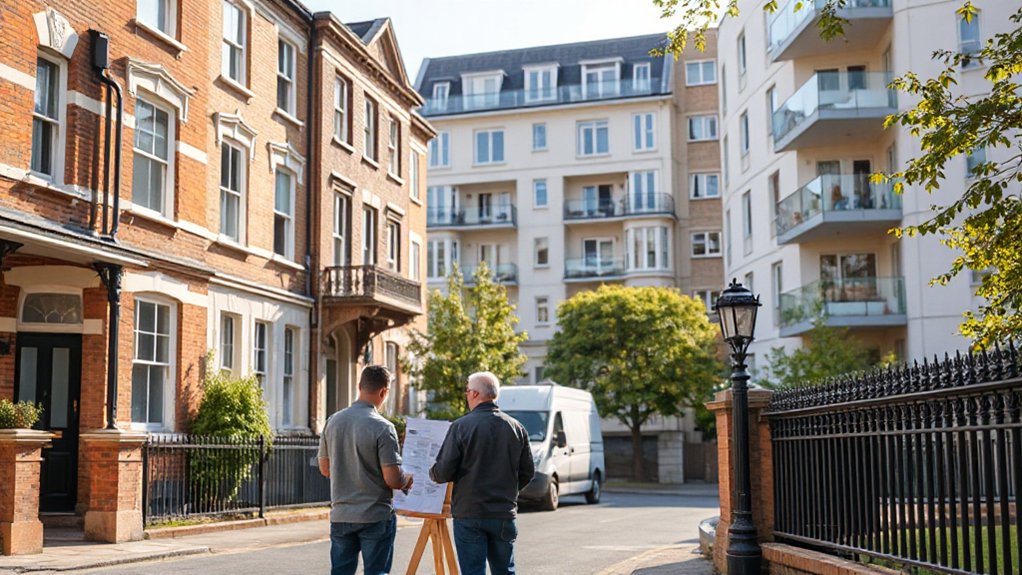
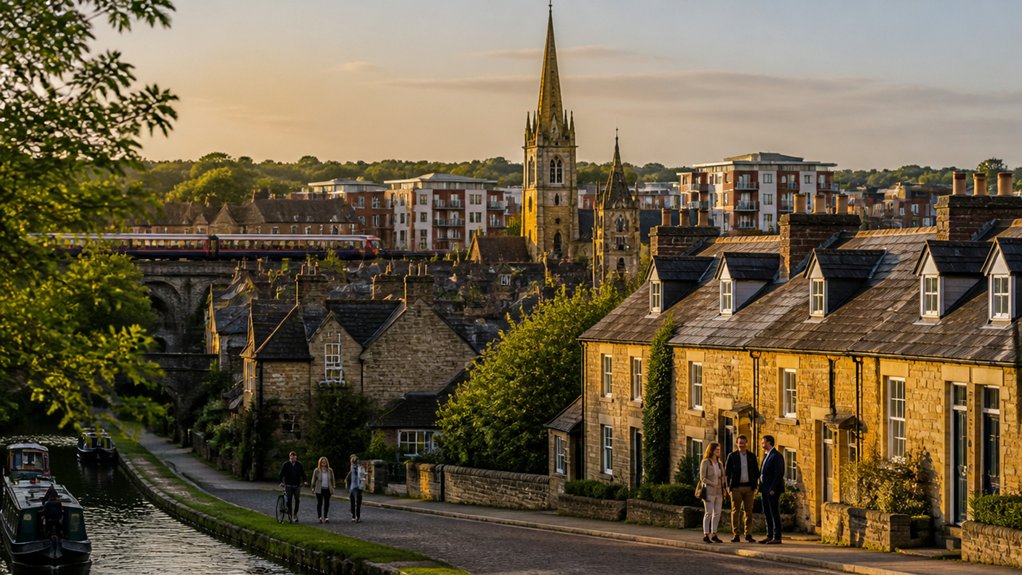
Although Camberwell’s streetscape still leans heavily Victorian, Edwardian and Californian bungalow, you’ll choose between period character and new-build efficiency based on land value, renovation risk, and buyer demand in your specific pocket.
Period houses around Denmark Hill and Camberwell Grove price in Architectural styles and Historical significance, and strong resale premiums often track intact façades, high ceilings, and generous footprints. You’ll budget for EPC upgrades, roof and damp works, and planning constraints, especially near conservation areas, where timelines can stretch and contingencies matter.
New builds typically trade less charm for predictable running costs, warranties, and sharper rental yields, suiting buyers who prioritise cashflow and low maintenance. You’ll compare £/sq ft, serviceable outdoor space, and comps on your street, not the brochure.
Buying a Flat in Camberwell: Lease, Charges, Red Flags
When you buy a flat in Camberwell, you’ll need to price the lease term and any extension into your offer, because short leases can hit mortgage options and resale demand.
You should also stress-test service charges and the sinking fund against what similar SE5 blocks are paying, so you don’t get caught by sudden major works bills.
Finally, you’ll want your solicitor and surveyor to flag red lights early—cladding status, damp, disputed boundaries, or weak management—before you commit.
Lease Terms And Extensions
If you’re buying a flat in Camberwell, the lease term can move the price more than the décor, so check the unexpired years before you negotiate.
In SE5, you’ll see plenty of 90s council and mansion-block leases now drifting toward 80 years, where mortgage choice tightens and valuation discounts can bite. Aim for 90+ years; treat 80 as a trigger for action, not a footnote.
Ask the seller for the lease, deeds of variation, and any Section 42 notice—if served, you can often take over the claim and cut waiting time.
Price in lease extensions early: surveyor valuation, legal fees, and premium. Track Leasehold reform updates too, as rule changes can alter costs and timelines.
Service Charges And Sinking Funds
Because service charges can swing your monthly cost more than the mortgage rate, scrutinise the last 3 years’ accounts, the current budget, and the sinking fund before you offer on a Camberwell flat.
Compare trends: are Maintenance fees rising faster than inflation, and why?
In SE5 mansion blocks and newer builds near Camberwell Green, lifts, concierge, and cycle stores push costs up; smaller conversions can look cheaper but may fund less.
Ask what’s included (cleaning, insurance, managing agent) and price the value of shared amenities you’ll actually use.
Check the sinking fund balance against planned works and block size so you can judge if contributions feel proportionate.
If the fund’s thin, factor likely top-ups into your affordability model.
Common Legal And Building Red Flags
Service-charge accounts tell you what a block costs to run; the next step is spotting the legal and building issues that can turn a “good value” Camberwell flat into a slow sale or a surprise bill.
Start with the lease: if it’s under 90 years, lenders price in risk, and you’ll likely need a lease extension. Check ground rent clauses, especially doubling terms, and confirm the freeholder and managing agent respond quickly.
Then go physical: look for major works notices, cladding or fire-safety defects, damp in converted Victorian stock, and unresolved party-wall disputes. Ask for EPC, EWS1 status where relevant, and recent surveys.
Finally, verify Property taxes and any exemptions, and confirm neighborhood amenities (rail links, parks, hospitals) don’t mask structural or title problems.
How Good Is Camberwell Transport for Commuting?
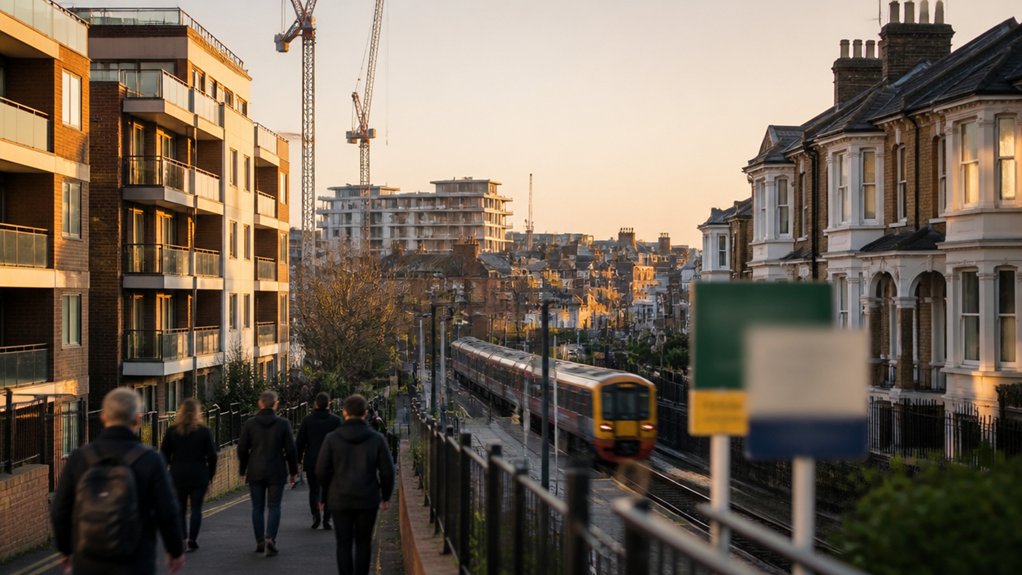
While Camberwell feels pleasantly residential, its transport links work hard for commuters. You won’t get a Tube stop, but you do get dense Public transport: frequent buses from Camberwell Green and Denmark Hill connect you quickly to Elephant & Castle, Oval, Brixton, and central interchanges.
Denmark Hill station adds Thameslink and Overground services, giving you fast access to Blackfriars, Farringdon, and Shoreditch High Street, plus direct links toward Gatwick.
For driving, you’re close to the A202 and A215, though peak-hour congestion can bite.
If you prefer two wheels, Cycling infrastructure keeps improving, with quieter back-street routes into the City and protected sections nearer Oval and Elephant, making a 20–30 minute ride realistic.
What Are the Buying Costs and Timeline in Camberwell?

Even if you’ve already priced up a Camberwell flat or Victorian terrace, you’ll want to budget for the London buying “extras” and a timeline that can stretch if the chain is long. Expect conveyancing fees, survey costs, and mortgage valuation charges; add removal costs and a contingency if you’re planning property renovation on period stock around Denmark Hill or Coldharbour Lane.
Stamp Duty depends on price and whether you’re a first-time buyer, so model scenarios before you commit.
Timelines typically run 8–12 weeks from offer acceptance to completion, but leaseholds and management packs can push it to 12–16. Build in time for searches and insurance, especially if you’re prioritising neighborhood amenities like Camberwell Green and local schools.
How Do You Win a Camberwell Property Offer?
Because Camberwell’s best-stock—Victorian terraces near Denmark Hill and smart flats around Camberwell Green—often attracts multiple bids within days, you’ll win more offers by combining a clean, credible position with a price that matches recent sold comparables, not just the asking figure.
Get your AIP, solicitor, and survey plan ready, and tell the agent you can move fast.
Use Land Registry sold data and same-street premiums: period homes with Historic architecture can outprice “nice on paper” refurbs, while Luxury apartments hinge on service charges and lease length.
Offer with a tight expiry and limit conditions, but keep a survey clause.
If you’re close, add certainty: bigger deposit, flexible completion, or cover a small valuation gap.
Frequently Asked Questions
What Are the Best Primary and Secondary Schools Near Camberwell?
You’ll find top nearby primaries like Lyndhurst Primary and St John’s & St Clement’s, plus secondaries like Ark All Saints and Kingsdale Foundation. Check School rankings, Ofsted, and extracurricular activities to match commute and budget.
How Safe Is Camberwell Day-To-Day, and Which Streets Feel Safest?
Like a well-lit porch, Camberwell feels broadly safe day-to-day if you stay street-smart; Community safety improves around Denmark Hill, Grove Lane, and Camberwell Grove, where Street reputation’s strong and footfall’s steady, especially evenings.
What Council Tax Bands Apply to Typical Camberwell Homes?
In Camberwell, you’ll typically see Council tax bands C–E for most flats and terraces, with larger period houses often in F–G. Your property valuation at the 1991 baseline drives the band; check Southwark’s database.
Do I Need Planning Permission for Loft Conversions or Basement Digs in Camberwell?
You’ll often need permission—like opening a hidden room—though some lofts fall under Loft conversion regulations via permitted development; Basement extension permissions usually require full consent. Check Southwark policies, conservation status, and neighbour impacts before you invest.
What Are the Best Local Amenities—Gyms, Parks, Markets—Within Walking Distance?
You’ll walk to PureGym Peckham, Better Gym Camberwell, Burgess Park, and Ruskin Park, plus Camberwell Green’s Saturday market. You’re also minutes from the local art scene and boutique shopping along Denmark Hill.


Leave a Reply