


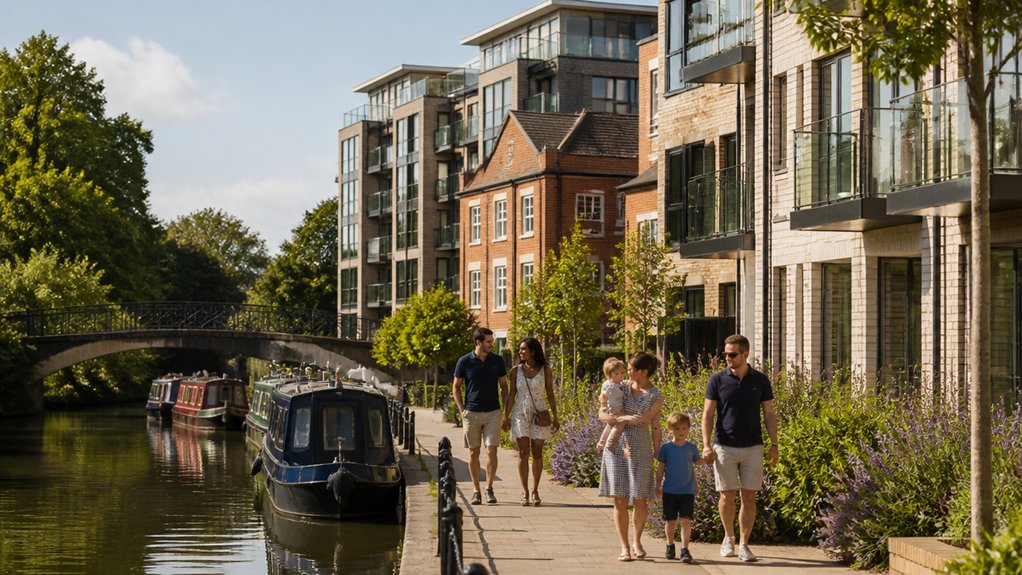
When you compare Richmond’s riverside streets with Harrow’s hilltop neighbourhoods, you can still see how historic Middlesex shapes buyer expectations. Although the county disappeared from official administration in 1965, its former boundaries retain market value through local identity, transport access, schools, and green space. You’ll find demand varies sharply from one historic district to the next—and the reasons reach beyond a postcode.
Key Takeaways
- Middlesex remains a powerful property label, linking northwest and west London homes to familiar history, identity, and geography despite administrative changes.
- Historic Middlesex spans much of today’s outer London, including Hillingdon, Hounslow, Ealing, Harrow, Barnet, Enfield, and Haringey.
- Buyer demand is strongest in locations combining reliable transport, green space, established amenities, and distinctive village or Thames-side character.
- Prices vary sharply by station access, school catchments, property type, gardens, parking, and proximity to parks or employment hubs.
- Families particularly value top-rated schools, walkable stations, step-free transport, playgrounds, sports facilities, and well-maintained local green spaces.
What Middlesex Means in Today’s Property Market

Middlesex no longer operates as a formal county, yet its historic name still shapes how buyers, agents, and sellers describe a broad, high-demand area around northwest and west London. When you see Middlesex in a listing, it often signals a place identity rather than an administrative address.
Its appeal rests on established transport links, suburban housing stock, green space, and connections to central London.
Historical land divisions still influence how communities frame local character, school catchments, and buyer expectations. You’ll find that the name can convey continuity in areas absorbed by modern borough governance, helping sellers position homes within a recognised regional story.
Its Cultural heritage significance also supports demand among purchasers seeking neighbourhood identity alongside practical access. For you, Middlesex remains useful market shorthand: it suggests historic roots, familiar geography, and enduring residential appeal.
Which London Areas Are in Historic Middlesex?
Although modern borough boundaries have replaced the old county, historic Middlesex covered much of today’s west and northwest London, including areas such as Hillingdon, Hounslow, Ealing, Brent, Harrow, Barnet, Enfield and Haringey. You’ll also find historic Middlesex associations in places now administered through parts of Richmond, Westminster, Camden and Islington.
Its boundaries once ran from the Thames northwards towards Hertfordshire, with the City of London forming a separate jurisdiction. When you assess an address, distinguish ceremonial, postal and historic geography from the current borough authority.
That distinction matters because old county identity still shapes local descriptions, conservation narratives and buyer perceptions. Historic landmarks, from parish churches to former coaching routes, help signal continuity.
Cultural influences, including migration, industry and suburban growth, explain why these connected districts retain distinct identities despite London-wide governance today.
Most Sought-After Middlesex Areas
Demand in historic Middlesex concentrates in districts that pair strong transport links with established housing, green space and a clear local identity. You’ll find sustained buyer interest in Richmond, Twickenham, Teddington, Ealing, Chiswick, Hampstead, Highgate, Harrow and Enfield, although their present borough labels can obscure older county ties.
Historical boundary shifts, particularly the 1965 creation of Greater London, changed administration rather than the character buyers recognise. You may be drawn to the Thames-side identity of the south-west, the village atmosphere around Hampstead and Highgate, or the suburban connectivity of Ealing, Harrow and Enfield.
Middlesex cultural heritage remains a practical demand signal: historic high streets, commons, parks, railway-era centres and established community amenities help you assess whether an area offers both continuity and everyday convenience.
Middlesex Property Prices by Area and Home Type

You’ll see Middlesex prices shift sharply across historic town boundaries, commuter corridors, and school catchments.
Compare each area’s demand with the value of its flats, terraces, semis, and detached homes rather than relying on a borough-wide average.
That distinction helps you judge where premiums reflect lasting appeal and where they may be harder to sustain.
Area-by-Area Price Differences
Middlesex property prices vary sharply by area and home type because the historic county spans distinct markets, from high-value commuter districts near London to more affordable towns and villages farther north and west. You’ll generally find stronger pricing in places absorbed into Greater London, where rail links, employment access, and established amenities sustain buyer competition.
Former Middlesex districts such as Harrow, Hounslow, and Enfield often command different levels according to transport connections and local school demand. Beyond today’s London boundary, towns associated with the historic county can offer comparatively lower entry points, though supply remains tight.
Historical boundary changes complicate comparisons: administrative labels have shifted, but buyers still recognise local identities. Track Regional market trends alongside borough-level sales evidence, because a Middlesex address alone doesn’t indicate value.
You should assess each area’s boundary history, connectivity, and current demand before judging prices.
Home Type Value Trends
Within each Middlesex area, home type can shift value as much as location: Victorian and Edwardian family houses often attract premiums where period character, gardens, and school catchments align, while flats provide lower entry prices near rail hubs and town centres.
You’ll see this most clearly along former county boundaries, where historical architecture survives beside later suburban estates. In Richmond and Twickenham, larger period homes command strong family demand; in Wembley, Harrow, and Hounslow, purpose-built flats and terraces widen buyer choice.
Local market trends also reward usable space: loft conversions, off-street parking, and well-kept gardens can lift appeal. You should compare like-for-like homes within the same historic district, not simply across modern borough labels.
A 1930s semi near a station may outperform a larger detached house farther from daily transport links.
Transport Links Shaping Middlesex Buyer Demand
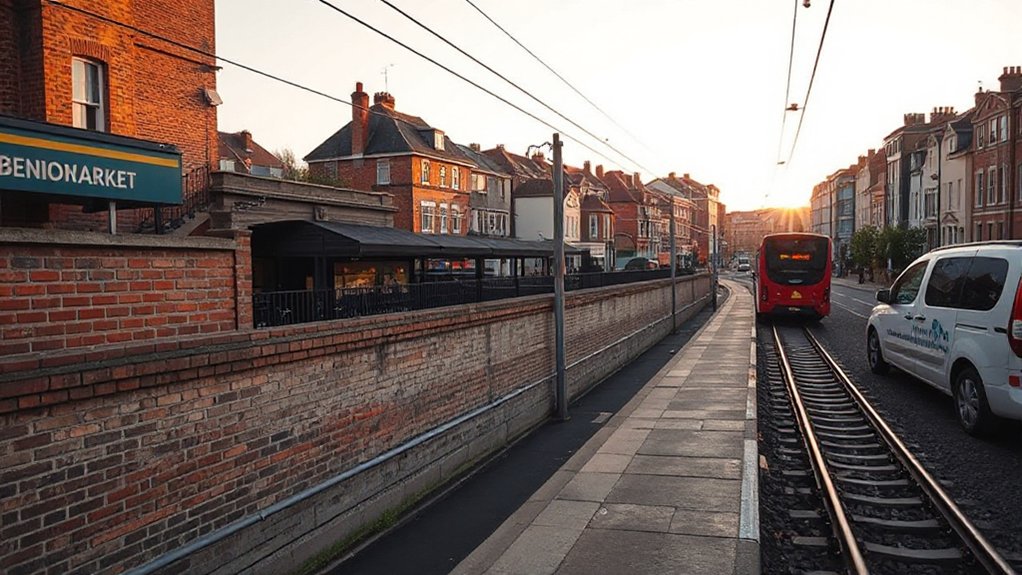
Although Middlesex no longer exists as an administrative county, its historic boundaries still frame buyer demand around fast routes into London and across the capital’s western and northern edge. You’ll see strongest interest where former Middlesex districts connect readily to Underground, Elizabeth line, rail, and major road corridors.
Historical boundaries still help buyers compare places such as Harrow, Ealing, Hounslow, Enfield, and Barnet, even though today’s borough map differs. Modern transportation sharpens those comparisons: you may pay more for walkable stations, dependable interchange options, and shorter journeys to employment centres.
The Piccadilly, Metropolitan, Central, Northern, and Elizabeth lines shape searches differently, while the M4, M40, A40, and North Circular influence road-based demand. If you prioritise connectivity, you’re buying access as much as property.
Schools and Family-Friendly Middlesex Neighbourhoods
In Middlesex’s long-established suburban market, you’ll often see demand concentrate around top-rated school catchments, where boundary lines can materially affect value.
You can also weigh access to parks and green spaces that support family routines, from daily walks to weekend play.
For working parents, reliable rail, Tube and road links remain central to choosing the right neighbourhood.
Top-Rated School Catchments
Families have long treated school catchments as a decisive part of Middlesex’s housing map, and today’s demand still concentrates around strong state-school options in boroughs such as Richmond upon Thames, Kingston upon Thames, Harrow, Hillingdon and Barnet.
You’ll find that historic county identity matters less than current borough admissions boundaries, which can shift street by street and alter buyer priorities. Check each school’s published criteria, distance rules and oversubscription patterns before committing, rather than relying on an estate agent’s shorthand.
In established catchments, competition often supports pricing resilience, particularly for homes within clearly defined admission zones. Local market trends show families timing moves around application deadlines and entry years.
For Property investment, you should weigh catchment demand against tenure, transport links and future boundary reviews, since no address guarantees a place.
Family-Friendly Green Spaces
Where green space sits relative to a borough boundary can shape family demand as sharply as a school catchment. In historic Middlesex, parks often reflect former estate land, parish commons, and municipal planning that later borough lines divided. You’ll find buyers comparing not only garden size, but also access to community parks that feel safely embedded in everyday neighbourhood life.
A home near well-kept local playgrounds can attract families seeking room for children to play, meet friends, and develop routines beyond the school gate. Boundary changes matter: a park may serve one community socially while falling under another council’s maintenance and investment priorities.
When you assess demand, look at paths, play facilities, sports space, and visible upkeep. These details help you judge whether a green-space advantage is enduring or merely a postcode assumption.
Transport Links For Parents
Parks may anchor family routines, but transport determines how easily parents can reach schools, childcare, work, and after-school activities. Across historic Middlesex, you’ll find demand strongest where former county routes meet reliable rail, Tube, and bus connections. Areas near stations in Harrow, Ealing, Enfield, and Hounslow can shorten school-run journeys while preserving access to central London employment.
When comparing neighbourhoods, check borough boundaries carefully: school admissions, parking rules, and transport priorities can change across a single historic Middlesex line. You’ll want practical commuting options for both adults, including step-free stations, frequent buses, and direct road links.
However, assess peak-time traffic congestion around popular schools and high streets. Buyers often pay a premium for homes that make daily logistics predictable, especially where catchment areas and stations align.
The Middlesex Homes Buyers Want Most
Middlesex buyers gravitate toward homes that balance historic character with practical access to Boston, Cambridge, and major employment corridors. You’ll often find the strongest interest in well-kept Colonials, Victorians, capes, and converted mill residences that reflect the county’s layered settlement history.
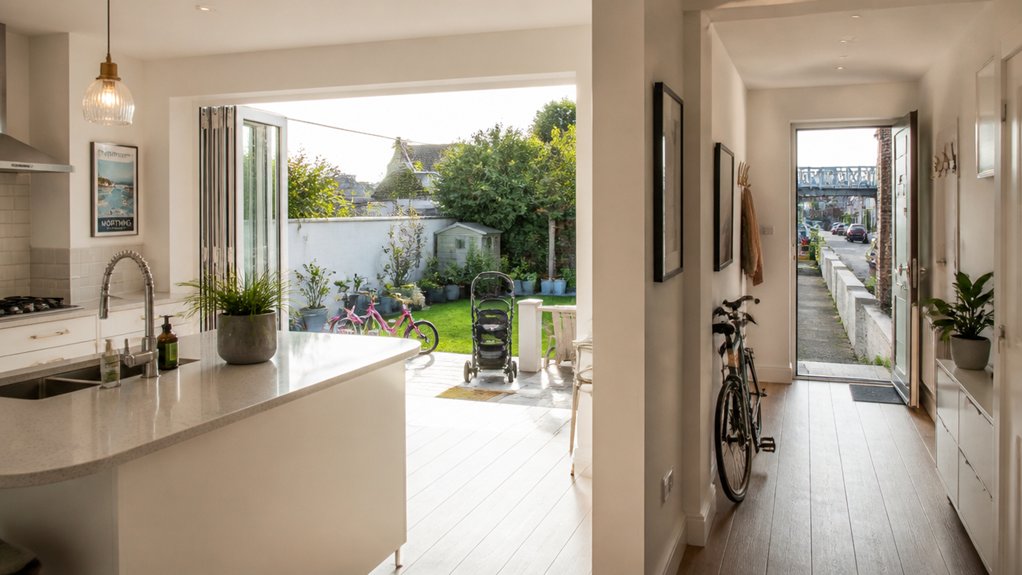
Historical architecture matters when original millwork, wide-plank floors, brick details, or period façades pair with updated kitchens, efficient systems, and flexible living space.
Within established town centers and former village districts, you may also see demand for homes near parks, libraries, shops, and everyday Local amenities. Buyers want usable yards, off-street parking, home offices, and room for changing household needs without sacrificing a recognizable New England streetscape.
Properties that preserve their character while meeting modern expectations tend to attract the broadest pool of interested purchasers across Middlesex communities.
How a Middlesex Address Affects Demand
When you market a home with a Middlesex address, you tap into a name shaped by historic county boundaries and long-standing local identity.
Buyers often read that address as a signal of access, character, and community—even where modern municipal lines differ.
You’ll see demand rise or soften based on how closely the property’s location matches those expectations.
Historic Middlesex Appeal
A Middlesex address still carries weight because it evokes a historic county that once stretched from the City of London to the county’s outer towns, despite its abolition in 1965. When you assess a home, this legacy helps explain why Middlesex remains meaningful across areas now divided among London boroughs and neighbouring counties.
The old county boundary linked places with different modern administrations but shared histories of parish life, coaching routes, industry, and suburban growth. You can see Middlesex traditions reflected in local names, sports clubs, archives, and community institutions.
Local heritage also gives buyers a clear historical frame for understanding an area’s development. Rather than treating Middlesex as a current authority, you should view it as a durable geographic identity that connects distinct neighbourhoods through their common past.
Address Perception and Demand
Although it no longer marks an official county boundary, a Middlesex address can still shape buyer interest by signalling heritage, established suburbia, and proximity to London. When you market a home in former Middlesex districts such as Harrow, Ealing, Enfield, or Hounslow, you can connect it to a recognisable historic geography without overstating its present administrative status.
Property branding often uses Middlesex selectively, especially where buyers associate the name with leafy streets, rail links, and long-established communities. You should match that language to the property’s actual postal address, borough, and transport position.
Market trends show that buyers still weigh identity alongside price, schools, commute times, and neighbourhood character. A Middlesex reference won’t create demand alone, but it can reinforce a location story that helps your listing feel familiar, credible, and distinct.
How to Market a Middlesex Home
Before you list, position your Middlesex home within its exact market boundary—town, neighborhood, school district, and commuter corridor—because buyers often search these lines as closely as they compare price.
Build your listing around verifiable location signals: historic town identity, nearby rail or highway access, walkable village centers, and established civic amenities.
Use marketing strategies that match active demand, highlighting features that matter to commuters, families, and buyers seeking period character or newer convenience.
Apply branding techniques consistently across photography, headlines, property descriptions, and targeted digital ads.
Name the municipality accurately, distinguish the neighborhood without overstating it, and show how the home connects to recognizable local landmarks.
Price against comparable sales within the relevant boundary, not broad regional averages.
Clear boundary-based messaging helps qualified buyers understand value quickly and strengthens confidence before showings.
Choosing the Right Middlesex Area for You
Choosing the right Middlesex area starts with defining the boundaries that shape your daily life: municipality, school district, commute route, housing stock, and local services. Middlesex’s historic towns developed around mills, rail lines, village centers, and later highway corridors, so each boundary still influences access, character, and pricing.
Compare local market trends across adjoining communities rather than treating the county as one market. You may find stronger demand near commuter stations, established downtowns, or highly regarded schools, while larger lots and newer construction often sit beyond older town centers.
Visit at different times of day to test traffic, parking, and noise. Match neighborhood amenities—parks, libraries, shops, trails, and recreation—to your routine. By prioritizing your nonnegotiables, you’ll identify an area that fits both your budget and long-term needs.
Frequently Asked Questions
Are There Conservation Area Restrictions in Historic Middlesex?
Yes, you’ll face conservation area restrictions in designated historic Middlesex locations. You must obtain consent for many external changes, supporting heritage preservation and architectural conservation. Boundaries vary by council, and protected character can influence buyer demand.
How Do Middlesex Council Tax Bands Compare?
Middlesex council tax bands vary enormously by current borough, with valuations based on 1991 prices. You’ll often find higher bands near historic boundaries and transport hubs, where Middlesex property values and buyer demand remain strongest.
Which Solicitors Specialise in Middlesex Property Transactions?
You’ll find specialist conveyancing solicitors in Harrow, Hounslow, Ealing, Enfield, and Barnet, who understand former Middlesex boundaries. Compare Legal fee structures and property transfer processes carefully, especially where high buyer demand affects transaction timelines.
Are Flood Risks Common in Middlesex Neighbourhoods?
Are flood risks common? You’ll find them concentrated near Thames, Colne, and Brent corridors, not across all Middlesex neighbourhoods. Check Flood zone designations, assess climate resilience measures, and weigh buyer demand against historic boundary-specific exposure.
Do Middlesex Homes Qualify for First-Time Buyer Schemes?
You may qualify for Mortgage eligibility and Stamp duty exemptions if your Middlesex purchase meets price and residency rules. Historic county boundaries don’t decide eligibility; demand, property value, and your lender’s criteria do.






Leave a Reply