

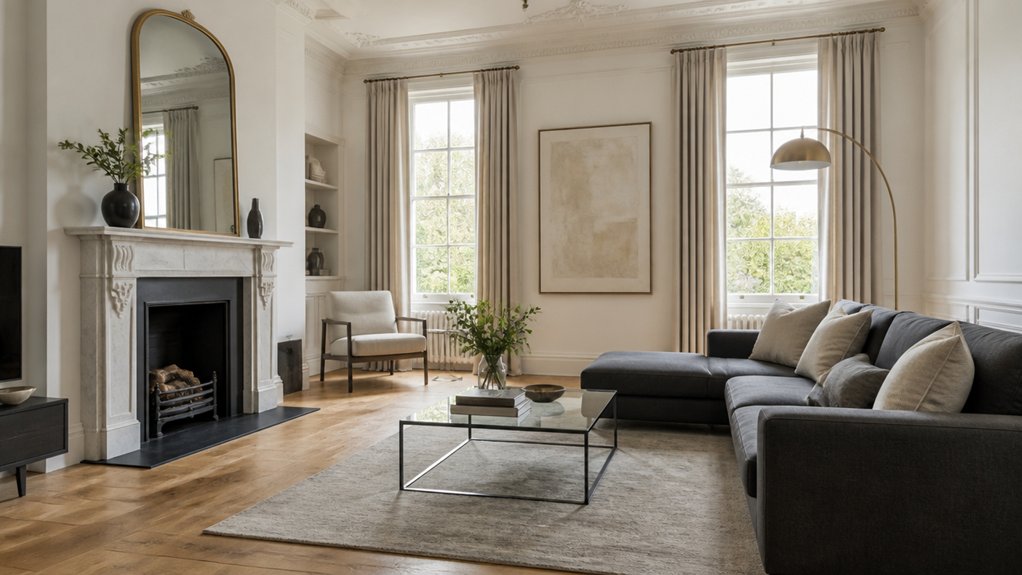
You can pair crisp, contemporary lines with the soft patina of sash windows and worn pine floors. You keep what’s sound—cornicing, original doors, a modest fireplace—then add restraint through cleaner silhouettes and calmer, heritage-leaning neutrals. You layer texture with wool rugs, linen upholstery, and warm metals, and you use lighting to soften contrast rather than shout. But the real shift happens when you decide what not to “restore”…
Key Takeaways
- Preserve and repair key period elements—cornicing, sash windows, shutters, fireplaces, and original joinery—avoiding over-restoration and keeping authentic proportions.
- Create modern-heritage contrast by pairing crisp contemporary silhouettes with aged surfaces, using restraint to keep the architecture as the focus.
- Use a calm heritage-led palette—neutrals, smoky blues, sage, soot accents—with deeper woodwork tones and matte or soft eggshell finishes.
- Limit materials for cohesion: one timber tone, one metal, one stone; choose breathable, sustainable options like FSC timber and unlacquered brass.
- Layer warm lighting—pendants, wall lights, task lamps—with dimmers and linen or opal shades to add softness without altering period fabric.
What Defines Modern British Interiors Today?
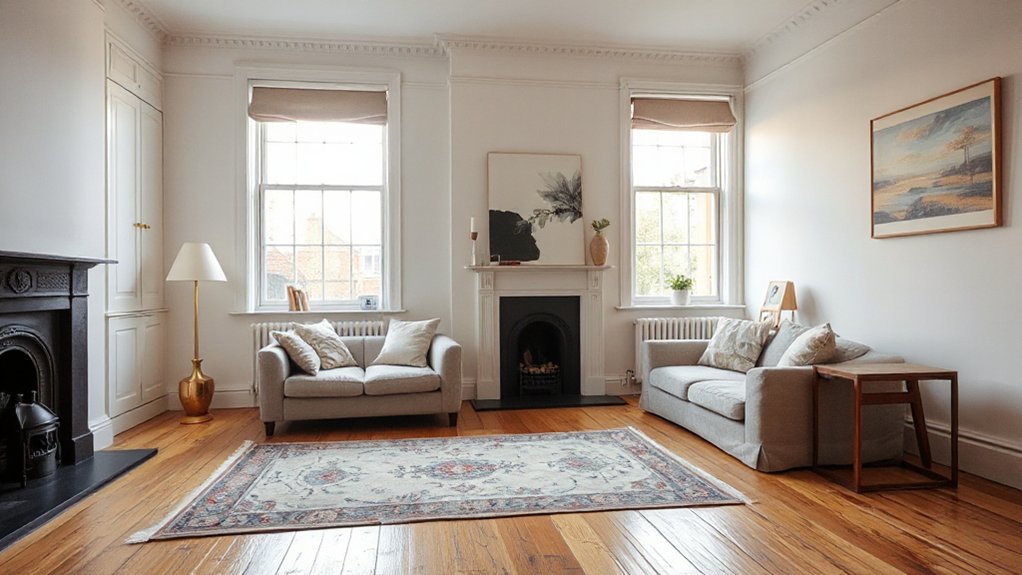
Although modern British interiors keep evolving, they’re still defined by a pragmatic mix of heritage and restraint. You read the bones of the house first: proportions, ceiling height, and how light falls through sash windows.
You keep Georgian symmetry in mind when you plan sightlines, place paired lamps, or centre art above a mantel.
You respect Victorian ornamentation—ceiling roses, corbels, tiled fireplaces—but you repair rather than over-restore, letting patina stay.
You choose joinery that fits: slim skirting, panelled doors, and built-ins that look original yet hide chargers and routers.
You balance hardwearing materials—wool, oak, painted plaster—with a few contemporary pieces that won’t fight the room’s era.
You finish with layered lighting and tidy, purposeful storage.
A Simple Formula: Contrast, Restraint, And Warmth
Once you’ve read the room’s original bones, you can keep the look modern with a simple formula: contrast, restraint, and warmth.
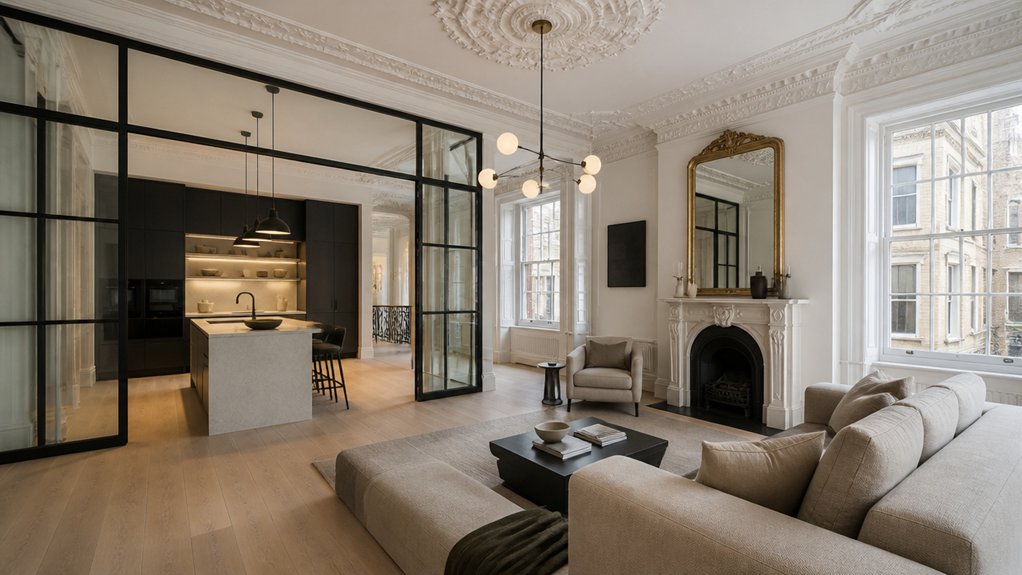
Build contrast by pairing crisp silhouettes with timeworn surfaces: a slim sofa against aged floorboards, matte black fittings beside glazed tile. Let decorative moldings stay legible, then balance them with plain walls and sharp-edged joinery so nothing competes.
Practise restraint by limiting finishes and repeating them: one timber tone, one metal, one stone. Keep patterns disciplined; use Vintage textiles as punctuation—one kilim runner, a single linen Roman blind, or reupholstered dining seats—rather than an all-over scheme.
Add warmth through layered lighting, wool throws, and tactile paint in soft, soot, or clay hues. You’ll get calm, lived-in modernity.
Which Period Features Are Worth Keeping?
When you’re updating a British period home, you don’t strip it back to blank— you choose which original details still earn their keep. Start with the fireplace and surround as the room’s anchor.
Keep crisp cornicing, coving, and ceiling roses where they’re intact, and treat sash windows and shutters as working joinery worth repairing.
The aim is simple: retain the features that add proportion, texture, and function, then let modern lighting and furniture sit cleanly around them.
Original Fireplaces And Surrounds
Because a fireplace often anchors a room’s proportions, you’ll get the most authentic—and usually the most cost-effective—result by keeping the original surround where it still fits the house. Start by checking the opening size, hearth height, and flue position; mismatches often signal later alterations.
Keep original fireplace mantels if their profiles suit the period: slim marble for late Georgian, deeper timber for Victorian, restrained stone for Arts and Crafts.
Assess surround materials carefully—marble can be repolished, slate takes oiling, cast iron grates can be stripped and blacked, and tiled inserts often clean up with gentle, non-acidic methods.
Repair cracks with lime-based mixes where appropriate, and re-bed loose pieces rather than replacing whole sections. If you need a new liner, hide it discreetly.
Cornicing, Coving, And Ceiling Roses
Although estate agents love to call any moulding “character,” you’ll get a truer Modern British interior by keeping cornicing, coving, and ceiling roses only where they match the house’s age and proportions.
In a Georgian or early Victorian room, crisp, shallow profiles suit tall ceilings; chunky 1970s coving will look wrong. Check sightlines: if picture rails, architraves, and skirtings read fine-scaled, choose a fine cornice, not a heavy ogee.
Repair original ornamental plaster where it’s sound: re-fix loose runs, patch hairline cracks, and avoid over-sanding edges. If sections are missing, take a mould from an intact length and cast replacements, or use specialist-made ceiling medallions that echo the original rose.
Paint everything one flat colour for calm modernity.
Sash Windows And Shutters
If your house still has original sash windows and shutters, keep them: they’re the period features that most reliably set the proportions, light, and rhythm of a Modern British interior. Don’t swap them for chunky casements; instead, prioritise Sash window restoration—cords, weights, staff beads, and proper draught-proofing—so they glide, seal, and stay slim in section.
Repair wavy glass where you can, and match glazing bars to the elevation rather than chasing a generic “heritage” profile.
Treat shutters as working joinery, not decoration. Strip back paint carefully, ease sticking panels, and add discreet stops and catches.
With Shutter design options, you can keep full-height for privacy, use café shutters for street-facing rooms, or introduce solid lower panels to balance modern furniture and radiators.
Choose A Calm, Modern British Colour Palette
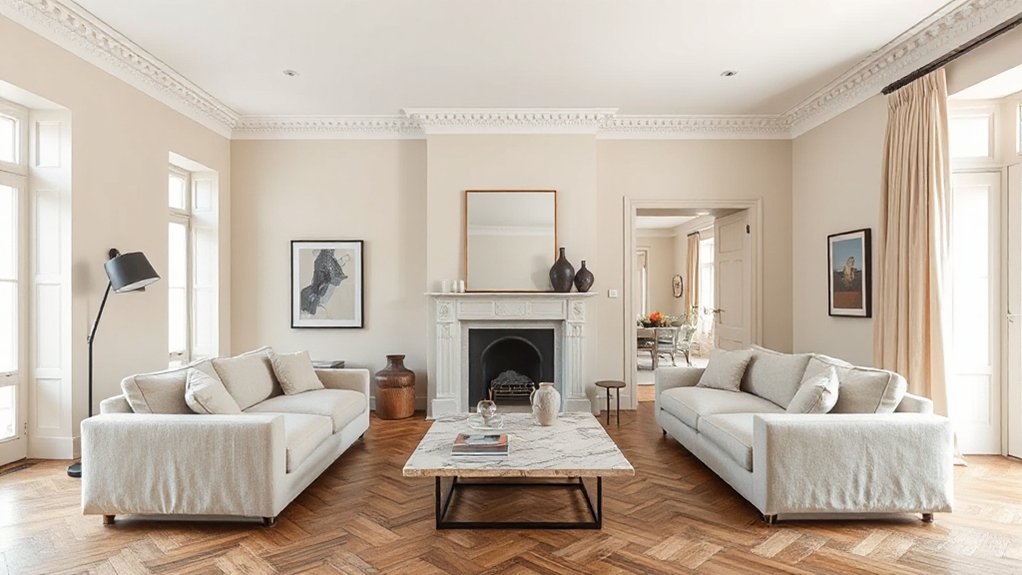
To get that calm, modern British feel, you’ll want to start with a restrained palette that looks lived-in rather than showroom-perfect. Work from heritage neutrals—chalky off-white, putty, and warm stone—then add smoky blue, sage, or soot as quiet accents.
Use Color psychology: cool greens steady busy rooms, blue-greys soften north light, and warm taupes keep period spaces from feeling chilly.
Respect original joinery and plaster by separating tones, not shouting over them. Paint skirting, architraves, and panelled doors a shade deeper than walls to sharpen profiles without high contrast.
Choose paint finish techniques that suit age: matte or soft eggshell for walls to hide waviness, durable eggshell on woodwork, and a careful cut-in to keep edges crisp.
Start From The Ground Up: Floors, Rugs, Texture
Once your palette feels settled, let the floor carry it through the room with materials that suit the building. In a Victorian terrace, restore pine boards, stain them softly, and keep the sheen low so scars read as patina, not neglect.
In an Edwardian flat, consider parquet repairs that respect the original herringbone. Choose hardwearing flooring materials for hallways: encaustic-style tiles or stone-effect porcelain, set with a slim grout line.
Then build textural layering with rugs. Use a flatweave to sharpen modern lines, or a deep wool pile to soften draughty rooms.
Anchor seating with the front legs on the rug, and leave a clear border to show the perimeter. Add a natural underlay for warmth, grip, and sound control.
Quick Lighting Upgrades That Modernise A Room
Although British rooms often rely on a single pendant and a couple of table lamps, you can modernise the feel in an afternoon by tightening the lighting plan and updating the fittings, not the architecture.
Start by layering: keep your central pendant for general glow, then add wall lights to lift cornices and picture rails, and a slim floor lamp beside the sofa for task light.
Swap tired shades for linen drums or opal glass; choose warm LEDs (2700K) to suit older plaster and timber.
Create ambient lighting with dimmers, ideally on separate circuits, so evenings feel calm, not stark.
Add smart technology through retrofit bulbs or a discreet dimmer module, letting you set scenes without chasing switches.
Keep metal finishes consistent with door furniture.
How To Style Fireplaces Without Going “Theme Park
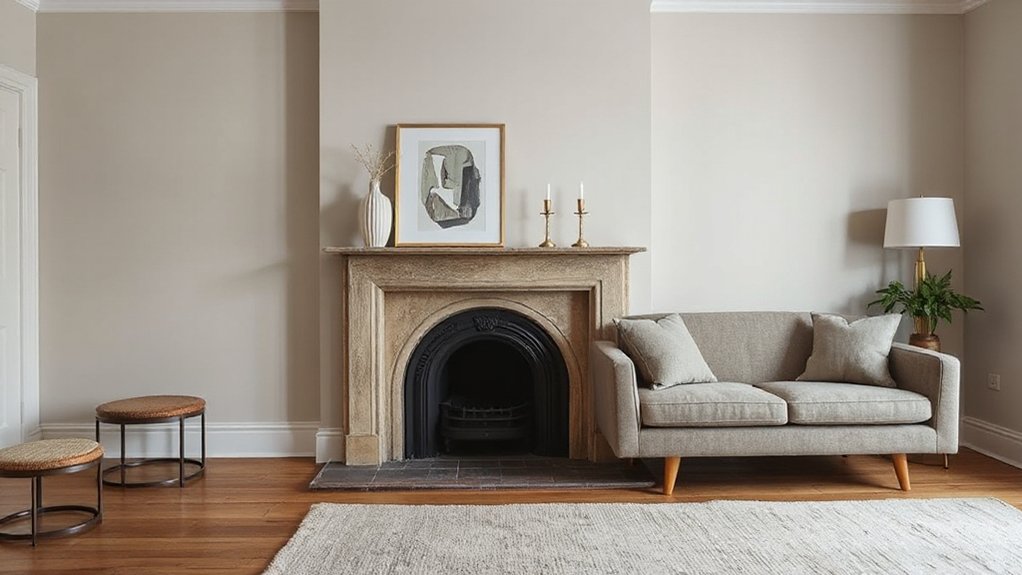
Even if your fireplace is original, you don’t need matching brass dogs, coal scuttles, and a parade of tartan to make it feel “British.” Start by letting the architecture lead: keep decorative surrounds clear so the profile reads, and paint nearby trim in the same finish to avoid a fussy outline.
On fireplace mantels, limit yourself to one strong piece—an oil sketch, a modern print, or a plain mirror—then add a single, low arrangement or a pair of taper holders.
If the hearth is bare, choose a simple log basket, stacked birch, or a blackened steel guard that suits the period.
For tile inserts, repeat one colour elsewhere in the room, then stop. Leave negative space; it looks intentional.
Modern Sofas, Antique Accents: Getting The Mix Right
When you anchor the room with a modern sofa, you can let antiques do the talking without turning the space into a set. Choose a clean-lined piece in wool, linen, or leather so it sits comfortably beside patinated timber and aged brass.
Keep furniture placement disciplined: float the sofa to face the focal point, then flank it with one antique table or a pair of mismatched chairs to add history.
Use accessory layering, not clutter. Place a single gilt mirror, an oil portrait, or a ceramic lamp on a restrained backdrop, then echo its tones in cushions or a throw.
Mix eras by repeating one finish—oak, ebonised wood, or bronze—across modern and old, and you’ll get contrast with cohesion.
Kitchens That Work With Period Features
If your kitchen sits inside a Georgian, Victorian, or Edwardian shell, you’ll get the best result by treating the period fabric as fixed and designing everything else to sit quietly around it. Keep original cornices, chimney breasts, and sash reveals clear, then run cabinetry to respectful stopping points rather than boxing them in.
Choose slim shaker or plain-front doors, and match new skirtings and architraves to existing profiles.
Use sustainable materials such as FSC timber, linoleum, and recycled brassware, and specify lime-friendly paints where walls need to breathe.
Hide modern extraction in a discreet canopy or within a redundant flue.
Layer lighting: task under-cabinet, soft pendants, and a dimmable ceiling circuit.
If you’ve got a rear extension, align sightlines to garden landscaping for calm, practical flow.
Bathrooms, Tiles, And Finishes That Suit Period Walls
Although period bathrooms rarely offer perfect levels or true right angles, you can make them feel calm and coherent by letting the existing plaster, joinery, and window reveals set the rules for your tiles and finishes.
Start by choosing a datum: the top of the skirting, a picture rail, or a window sill, then run tile lines from that. Use a slim pencil trim to disguise small deviations rather than forcing full-height symmetry.
Keep grout warm-grey or bone to flatter aged lime plaster and soften contrasts. Pair Vintage taps with a simple, slab-front basin to avoid fuss.
If you want storage, build tiled vanities that echo chimney-breast depths and allow access panels.
Finish with a soft eggshell on timber and unlacquered brass.
Frequently Asked Questions
How Do Modern British Interiors Affect Property Value When Renovating Period Homes?
Nationwide reports show period homes can command up to a 20% premium, so your modern British upgrades can lift value if you respect original cornices and sash windows. Add contemporary furniture and modern lighting to boost appeal.
What Building Regulations Apply When Altering Listed Interior Features?
You’ll need Listed Building Consent for altering listed interiors, following Heritage guidelines and Preservation standards. You must consult your local planning authority, use like-for-like materials, document changes, and comply with fire, access, and structural regs.
Where Can I Source Authentic Reclaimed Materials for Victorian and Edwardian Homes?
You’ll find authentic reclaimed materials at architectural salvage yards, local reclamation depots, and specialist dealers online; ask for provenance. Source Reclaimed timber from dismantlers, and Vintage fixtures at salvage auctions, antique fairs, and reclamation merchants.
How Can I Improve Insulation Without Damaging Original Walls or Mouldings?
You can boost warmth using Insulation alternatives like sheep’s wool rolls behind breathable linings, or aerogel blankets in discreet zones. Apply wall preservation techniques: avoid adhesives on mouldings, fix to battens, keep lime-plaster breathable, and ventilate.
What’s the Best Way to Budget for a Heritage-Meets-Modern Interior Redesign?
Start with Budget planning: survey existing fabric, list must-save elements, then phase upgrades. Do rigorous Cost estimation with contingencies for hidden repairs, specialist trades, and approvals. Get three quotes, specify materials, and track spend weekly.

Leave a Reply