

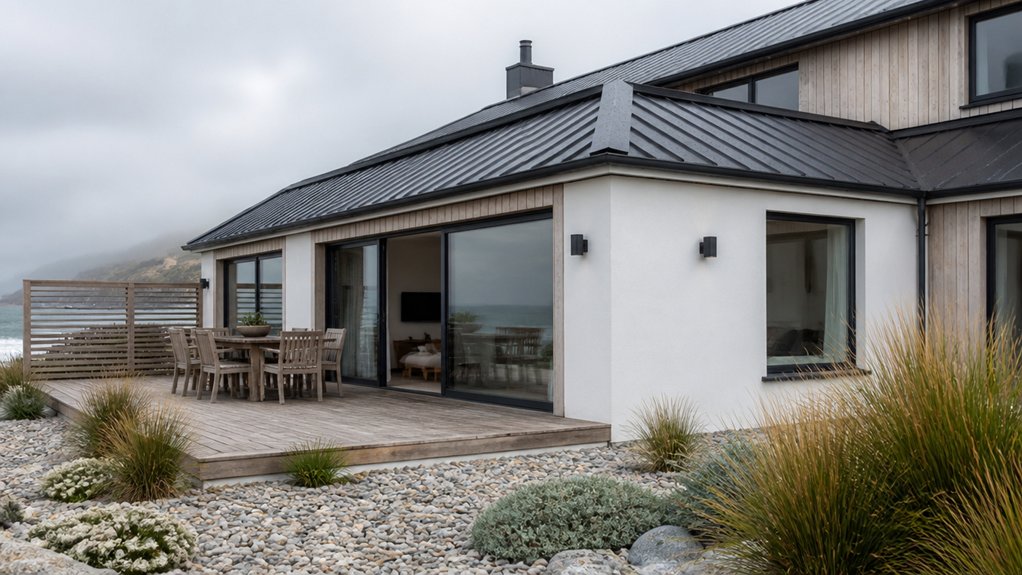
You want sea views, but the sea wants your house. You plan for high winds, salt spray, and sideways rain by orienting glazing to capture daylight while limiting glare, then pairing low‑E, marine‑grade frames with deep overhangs or brise‑soleil. You keep interiors bright with pale, stable palettes and moisture-tolerant finishes, and you choose fibre cement and silicate paints to reduce upkeep. Then you shape sheltered outdoor zones with windbreaks and hardy planting—but the key decision comes next…
Key Takeaways
- Prioritise south/west glazing for brightness, then control glare with deep reveals, overhangs, external shutters, or brise‑soleil.
- Specify high‑performance coastal windows: low‑E glass, warm‑edge spacers, thermally broken frames, robust seals, and secure night‑vent positions.
- Use high‑LRV warm off‑whites or pale greiges inside to boost bounce light; add UV‑stable sea‑glass blues or greens for calm contrast.
- Choose low‑maintenance, salt‑resistant materials: fibre‑cement or composite cladding, marine‑powder‑coated aluminium, and 316 stainless fixings with ventilated cavities.
- Create windproof outdoor zones with 30–40% porous windbreaks, storm‑tolerant planting, hidden fixings, good drainage, and heavy planters as ballast.
UK Coastal Home Design Priorities: Light, Layout, Views
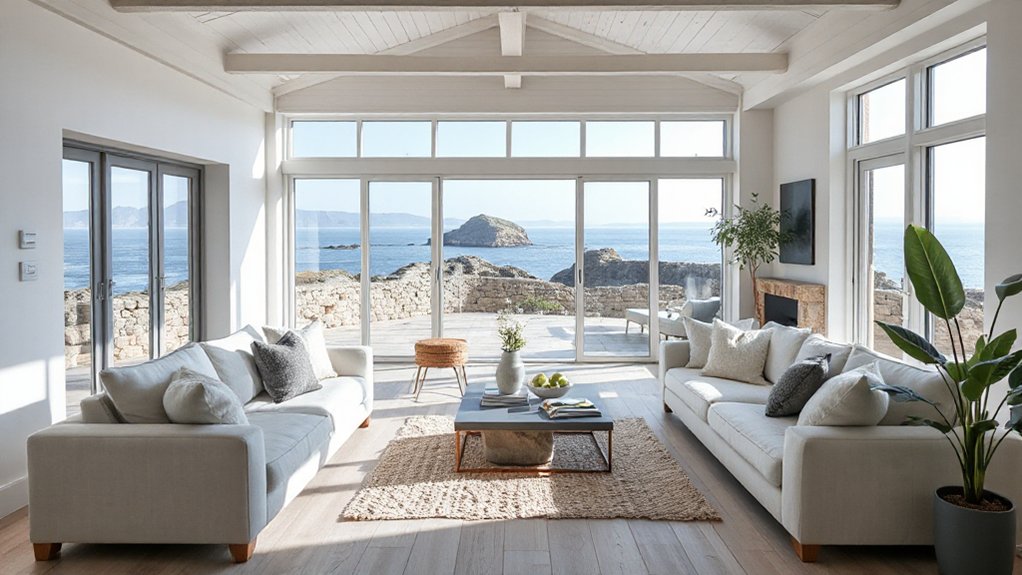
Because the UK’s coastal climate swings between bright glare, wind‑driven rain, and long winter low‑sun angles, your first design priorities should lock in controllable daylight, an efficient plan, and protected views.
Specify high‑performance glazing with low‑E coatings, warm‑edge spacers, and robust seals. Then add external shutters or brise‑soleil to cut summer glare without losing horizon lines.
Align primary living spaces to the best aspect, keep circulation tight, and use pocket doors to reduce drafts.
Frame views with recessed openings and deep sills that shed water; pair them with ventilators that purge humidity without salt spray ingress.
Choose Seaside inspired furniture with washable covers and stainless fixings, and anchor sightlines with Nautical themed decor that doesn’t obstruct glazing.
Coastal Colour Palettes That Stay Bright
Although sea light can make interiors look crisp at noon, salt haze and long grey spells quickly flatten colour, so you’ll get better results by building a palette around high‑LRV (light reflectance value) paints and fade‑resistant finishes rather than chasing “beachy” tones alone.
Start with a warm off‑white or very pale greige (LRV 70–85) to keep rooms readable in overcast weather, then layer mid‑tone blues or sea‑glass greens at lower LRV on sheltered walls to control glare.
Specify wipeable, mould‑inhibiting acrylic eggshell for kitchens and halls, and choose UV‑stable pigments for south‑facing rooms.
Add Seaside inspired accents in ceramics and textiles, and use Bright accent furniture in powder‑coated metal or solution‑dyed upholstery so colour stays clean.
UK Coastal Windows and Finishes to Boost Light
When you design windows for a UK coastal home, you’ll get more usable daylight by balancing glass size, orientation, and salt‑resistant detailing rather than simply adding bigger panes.
Place primary glazing toward south and west, then manage glare with deep reveals, overhangs, or brise‑soleil tuned to low winter sun and high summer angles.
Choose Coastal window styles that suit exposure: picture windows for sheltered elevations, and narrower, repeated lights on windward sides to reduce deflection and improve seal performance.
Specify slim, thermally broken frames and warm‑edge spacers to cut condensation that clouds views.
Improve bounce light with pale internal jambs, high‑LRV wall paints, and Marine grade finishes on hardware, fasteners, and opening gear so operation stays smooth.
Add trickle vents and secure night‑vent positions to keep air moving without losing daylight.
Best Low‑Maintenance Materials for Salty Air
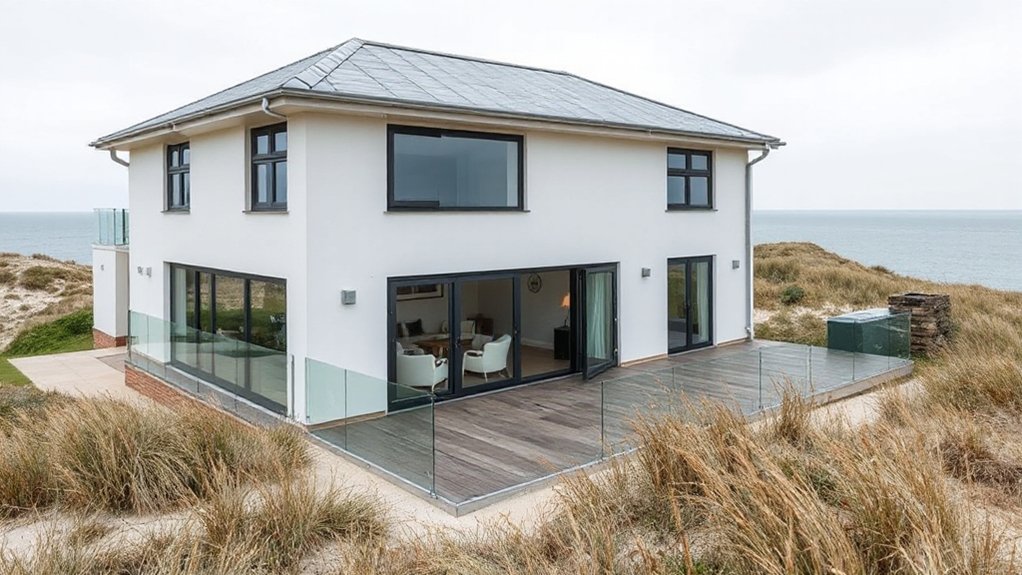
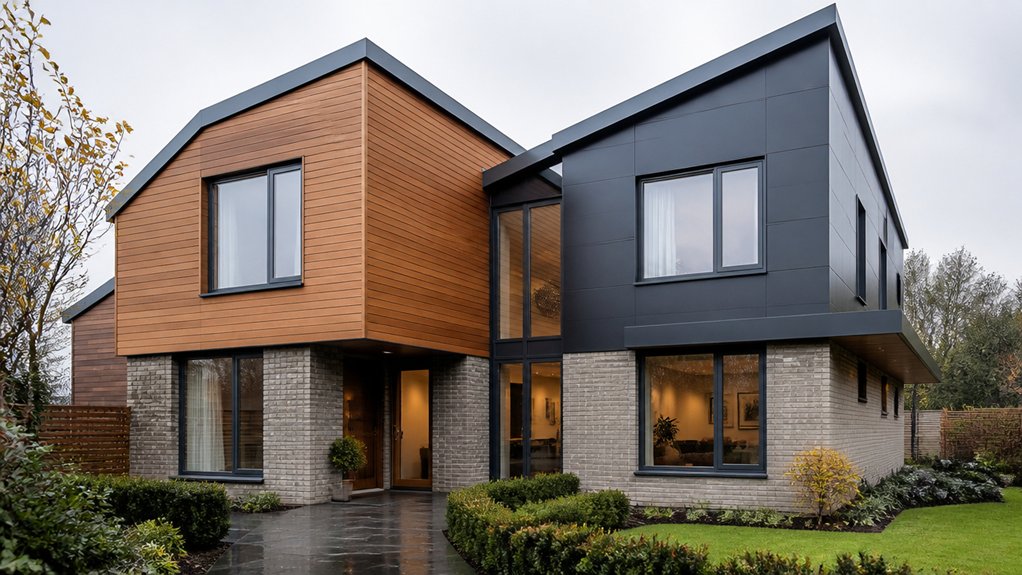
Even if your coastal plot feels mild, salty aerosol and wind‑driven spray aggressively corrode ferrous metals, chalk standard paints, and pit low‑grade aluminium, so you’ll get the lowest maintenance by specifying inherently stable substrates and marine‑rated fixings from the start—think fibre‑cement or high‑quality uPVC/composite cladding, anodised or marine‑powder‑coated aluminium (or GRP) for trims.
316 stainless or silicon bronze should be used for exposed screws and hinges, and closed‑cell insulation and membranes that won’t wick moisture at cut edges are recommended.
Specify A4/316 or duplex grades at balustrades, brackets, and flashings, and isolate dissimilar metals with EPDM gaskets to prevent galvanic attack.
Choose salt resistant finishes: PVDF fluoropolymer coatings, factory‑baked powder systems, and silicate mineral paints on masonry.
Detail drips, capillary breaks, and ventilated cavities so assemblies dry fast, and you’ll rely on corrosion proof hardware, not constant repainting.
Windproof Coastal Gardens, Decks and Patios
Low‑maintenance coastal materials only pay off if your outdoor spaces survive the same wind‑driven salt and abrasion. You’ll cut turbulence by zoning: a low, porous windbreak at the boundary, then denser planting, then a sheltered sitting area. Specify eco friendly fencing in slatted timber, recycled composite, or woven chestnut; keep 30–40% open area to shed gusts, and set posts in concrete below frost depth.
Choose storm resistant plants with flexible stems and waxy leaves—sea thrift, griselinia, escallonia, tamarisk—and plant in staggered rows.
On decks and patios, use hidden fixings, stainless fasteners, and perimeter drainage slots so spray and grit can’t sit. Add heavy planters as ballast, not light furniture.
Frequently Asked Questions
What Planning Permissions Are Needed for Coastal Home Extensions in the UK?
You’ll often need planning permission if your coastal extension exceeds permitted development; about 90% of UK applications get approved. Check planning restrictions (AONB, conservation, flood zones) and comply with building regulations for structure, insulation.
How Can I Insure a Coastal Property Against Storm and Flood Damage?
You’ll insure it by choosing specialist coastal cover, documenting flood history, and adding storm resistant windows and flood barriers. You’ll raise excesses, keep photos/receipts, maintain gutters, and verify insurer accepts local surge-risk mapping.
What Are the Best Ways to Reduce Humidity and Prevent Mould Indoors?
Reduce humidity by running ventilation systems continuously, venting kitchens/baths outdoors, and fixing leaks. Optimise Dehumidifier placement centrally and near damp zones. Keep indoor RH 40–60%, heat evenly, insulate cold bridges, and dry laundry outside.
How Do I Soundproof a Coastal Home From Wind and Sea Noise?
You’ll soundproof wind and sea noise by sealing air leaks, upgrading to laminated double glazing, and adding dense insulation. Use soundproofing techniques like resilient channels; choose noise reduction materials: mass-loaded vinyl, acoustic plasterboard, compressible gaskets.
What Maintenance Schedule Should I Follow for Coastal Roofs and Gutters?
You should do Roof inspection twice yearly and after major storms; check flashings, fasteners, corrosion, and missing tiles. You should schedule Gutter cleaning quarterly, clear downpipes, test flow, and remove salt buildup, always.





Leave a Reply