

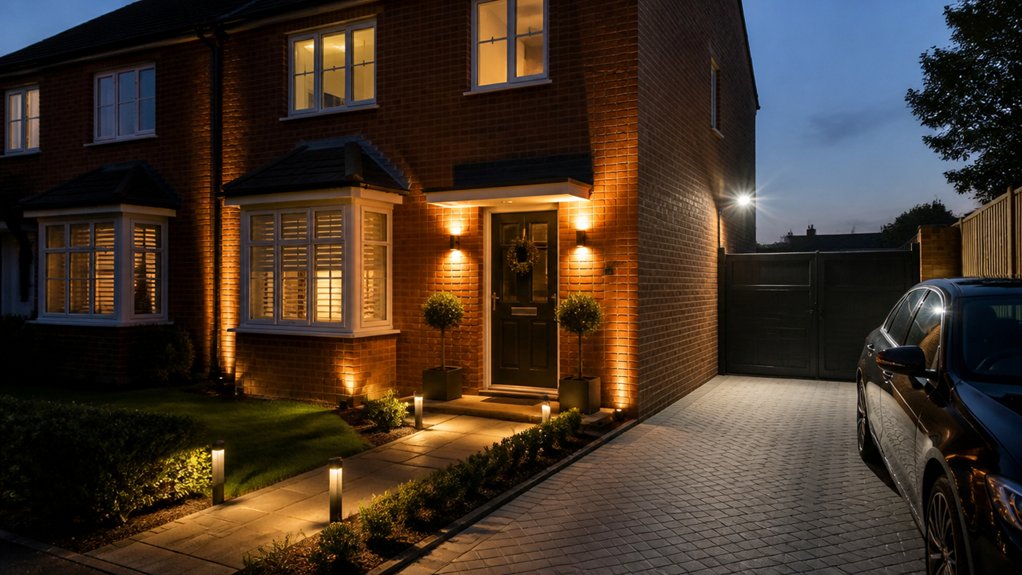
You probably don’t know that poorly aimed outdoor lights can actually make your home less secure by throwing harsh glare that hides movement in the shadows. You can avoid that and still boost kerb appeal by planning lighting for the front, sides, and garden, choosing IP-rated fittings for UK rain and frost, and using sensors or smart timers for control. Place beams downward and keep spill within your boundary, then…
Key Takeaways
- Plan lighting by zone: front for approach and curb appeal, sides for access routes, back for patios, steps, and sheds.
- Combine safety with style using bollards, recessed path markers, and dedicated step lights for clear edges and fewer trip hazards.
- Choose durable UK-ready fittings: IP44 minimum for exposed walls, IP65 for unshielded areas, with stainless steel, brass, or powder-coated aluminium.
- Use security lighting wisely: PIR sensors at 2–2.5m, angled across routes, with warm-white, shielded beams to reduce glare and light spill.
- Add smart control: dusk-to-bed timers, seasonal schedule changes, app/voice grouping by zones, and quick overrides for security or entertaining.
Plan Exterior Lighting by Area (Front, Side, Back)
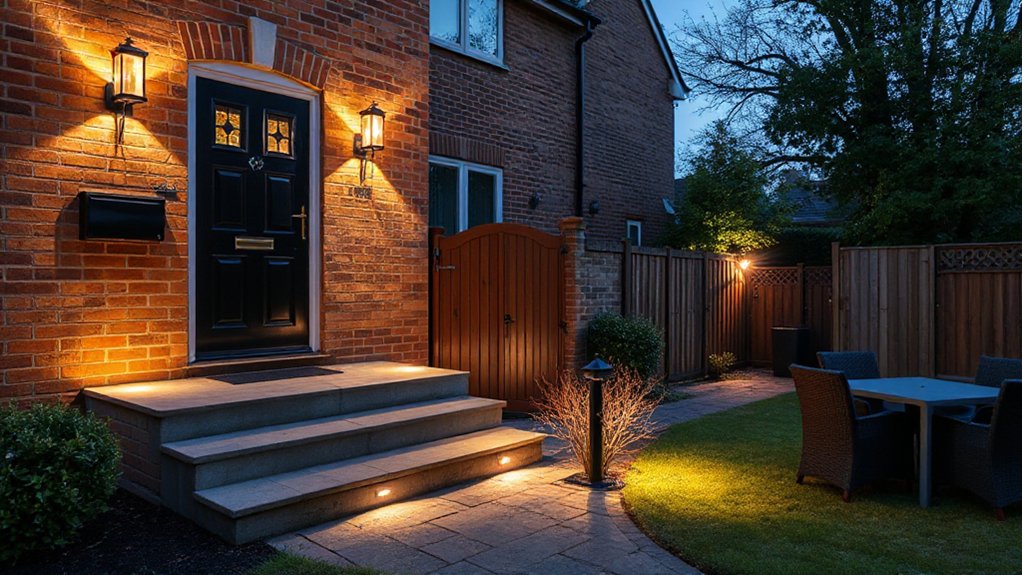
Although it’s tempting to pick fittings first, you’ll get a safer, smarter-looking setup if you plan your exterior lighting by area—front, side, and back—because each zone has different risks, sightlines, and curb-appeal needs.
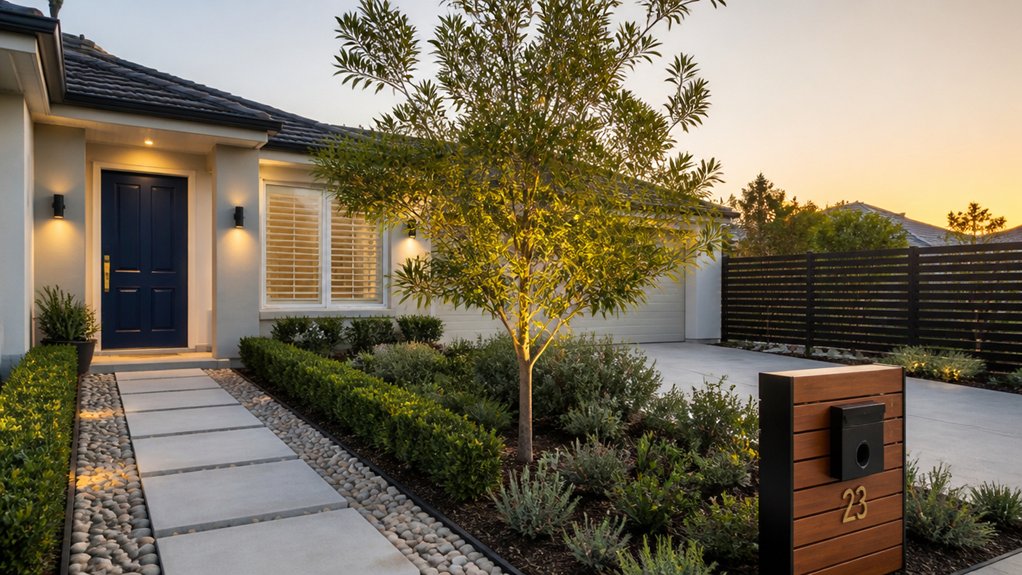
At the front, light the path, doorstep, and door furniture so visitors feel confident and you capture clear footage. Add Landscape illumination to frame planting without creating glare for passing traffic.
Down the side, prioritise the gate, bins, and narrow passages with consistent, shadow-cutting light to deter opportunists and prevent trips.
At the back, cover patio doors, steps, and sheds, then soften edges for entertaining.
Use Solar powered fixtures for low-traffic borders, and mains or PIR lighting for high-risk access points.
Keep beams aimed down, not into neighbours’ windows.
Choose Exterior Lighting Rated for UK Weather
In the UK, you can’t rely on fair weather, so choose exterior lights with the right IP rating to keep rain out and your security coverage consistent.
You’ll also want corrosion-resistant finishes—think stainless steel, marine-grade aluminium, or quality powder coating—so fittings don’t pit or peel on exposed walls.
Get both right and your lighting stays sharp-looking and dependable through wet winters and salty coastal air.
IP Ratings For Rain
Because UK weather can switch from drizzle to driving rain in minutes, you’ll want exterior lights with the right IP rating so your home stays both secure and smart-looking. IP ratings tell you a fitting’s water resistance, so you can place lights confidently on porches, along paths, and by gates without risking failures that leave dark spots.
For exposed walls and open driveways, aim for at least IP44 to handle splashes and windblown rain. If your light sits high and unshielded, or you’re mounting it on a fence line or outbuilding, IP65 gives stronger protection against jets of water.
Near ground level, where puddles and spray kick up, choose higher ratings and sealed housings. Match the rating to the location, and your lighting stays reliable, crisp, and deterrent all year.
Corrosion-Resistant Materials
A solid IP rating keeps water out, but you’ll also want fittings made from materials that won’t corrode when UK rain, road salt, and coastal air hit them week after week. Choose stainless steel (316 for seaside), marine-grade brass, or powder-coated aluminium; these durable metal alloys resist pitting and keep your lights looking sharp.
Avoid bare mild steel and cheap plated fittings that blister fast and leave dark stains on brickwork.
Look for corrosion preventive coatings like anodising, UV-stable powder coat, or quality galvanising, plus sealed gaskets around lenses and cable entries. Specify tamper-resistant screws and solid brackets so fittings stay aligned, keeping PIR sensors accurate and cameras well-lit.
Clean salt spray off occasionally, and you’ll maintain both kerb appeal and deterrence.
Security Lights: Sensors, Brightness and Placement
While you want your exterior lighting to look sharp, security lights need to work first: choose the right sensor, set a sensible brightness, and position fittings to cover doors, side passages and driveways without dazzling you or your neighbours.
Go for PIR sensors for most UK homes; they’re reliable in damp weather and trigger on body heat, not swaying shrubs.
Get sensor placement right: mount at 2–2.5m, angle across approach routes, and keep it away from boiler flues and air bricks to reduce false trips.
Match brightness levels to the space—around 300–600 lumens by doors, 700–1,200 for driveways—then use shields or downward-facing fittings to cut glare and light spill.
Warm white looks smarter and less harsh than cool white.
Add Smart Exterior Lighting for Timers and Control
Add smart exterior lighting so you can run timer-based schedules that switch on at dusk and off at bedtime, keeping your front path and driveway consistently lit.
You can tweak scenes in an app or use voice control to bring lights up instantly when you get home, without sacrificing a clean, modern look.
With timed routines and quick overrides, you’ll make your UK home feel occupied and secure, even when you’re away.
Timer-Based Lighting Schedules
Because winter nights in the UK draw in early, timer-based exterior lighting schedules let you keep your home looking lived-in and well-lit without leaving lights blazing all evening. Set dusk-to-bedtime scenes for your porch and path lights, then a lower-level glow for side access points to deter opportunists.
Use timing optimization to stagger fittings, so the front elevation stays elegant rather than overlit, and so shadows don’t create hiding spots. Pair timers with LED lanterns or downlights that match your brickwork and period details, keeping kerb appeal intact.
Adjust for BST and GMT shifts and for seasonal changes, so lights still switch on at the right moment. You’ll boost energy efficiency while maintaining a reliable, routine security presence nightly.
App And Voice Control
If you want your exterior lighting to stay smart when your routine changes, app and voice control give you instant, security-led control without sacrificing style. You can switch on porch lanterns before you unlock the door, or trigger side-passage lights when a delivery arrives—ideal for dark UK evenings and narrow terraces.
Start with a clean app control setup: group front path, driveway, and garden zones, then set geofenced arrivals, dusk-to-dawn rules, and holiday modes that look lived-in.
Add Voice command integration through Alexa, Google Assistant, or Siri so you can call up “All outside on” from upstairs if you hear movement.
Choose warm-white for heritage facades, cooler tones for contemporary renders, and keep brightness high near gates, low by seating.
Use Exterior Lighting to Mark Paths and Steps
Where do your guests—and you—slow down most after dark? It’s usually the front path, the gate, and the steps to your door. Add pathway illumination to remove trip hazards and to show you’ve got the approach covered.
Low-level bollards or recessed markers create a clean, modern line without glare spilling into neighbours’ windows—a key point on UK streets.
For steps, use dedicated step lighting on risers or side walls so each edge reads clearly in rain, fog, or winter dusk. Aim light downward and keep spacing consistent to avoid shadows that hide uneven slabs.
Put lights on a dusk-to-dawn sensor or motion boost so anyone approaching is visible, while you keep energy use sensible.
Choose Exterior Wall Lights to Match Your Home
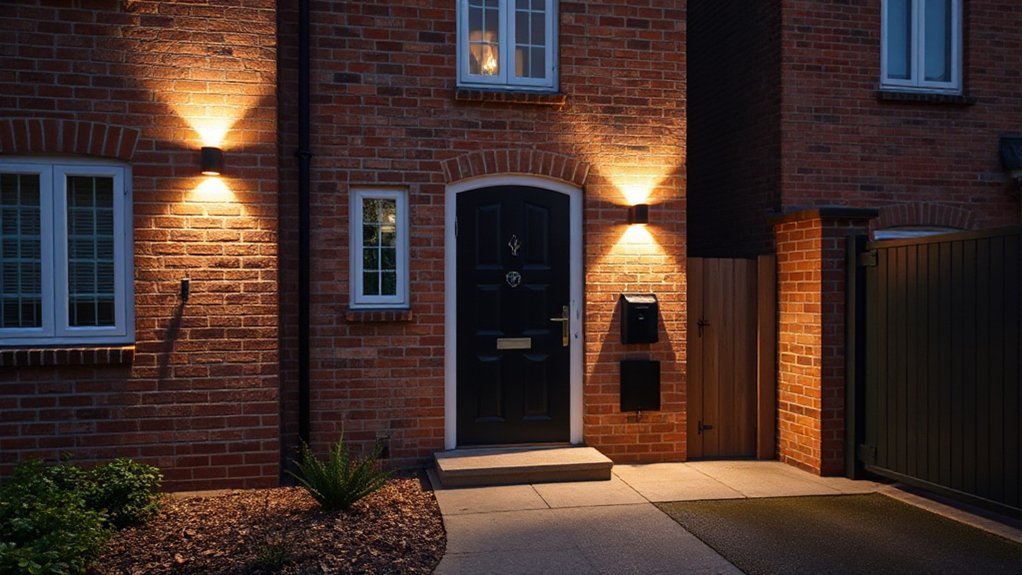
After you’ve made the approach safe, you can use exterior wall lights to reinforce both your home’s style and its security. Pick fittings that suit your property’s era: slim anthracite cubes for new-builds, lanterns for period terraces, and simple bulkheads for coastal homes.
When you choose matching styles across the front elevation, you create a clear, cared-for look that discourages opportunists.
Use color coordination to tie lights to door furniture, house numbers, and window frames; in the UK’s grey weather, consistent finishes read smarter and more intentional.
Fit PIR sensors or smart controls so lights come on when someone approaches, not all night.
Keep glare low with downward beams that illuminate faces and locks, and place lights by entrances and side gates for coverage.
Feature Exterior Lighting for Brick, Trees and Beds
Although wall lights handle the practical routes, feature lighting lets you highlight brick textures, trees, and planting beds in a way that looks premium while reducing hiding spots.
Use discreet spike spots to graze brick textures on Victorian terraces or modern extensions, revealing depth without harshness.
Add low-level uplights at the base of specimen trees to create clean tree silhouettes, so movement is easier to spot from the kitchen or lounge.
In borders, tuck mini spots among shrubs to outline paths and remove dark pockets near gates, bins, and side returns.
Choose warm-white LEDs (around 2700K) for kerb appeal, and opt for IP65 fittings that cope with UK rain and frost.
Put feature zones on separate circuits, so you can run them all evening without overlighting entrances.
Position Exterior Lighting to Avoid Glare and Neighbours
Because badly placed lights can blind you and annoy the neighbours, position every fitting to wash the ground or a surface—not shine outwards—so you keep visibility without creating glare.
Aim bollards and step lights down, then tilt wall lanterns slightly toward your path or doorway for dependable glare reduction.
For security, mount PIR floodlights high under the eaves and angle them steeply down across access points, not over the fence line.
Choose warm-white, shielded fittings and add louvres or snoots to hide the lamp from eye level on the pavement.
Keep beams inside your boundary to protect neighbour visibility and avoid complaints under UK light nuisance guidance.
Test at night from the drive, street, and the neighbour’s window line, then tweak until it’s discreet and effective.
Frequently Asked Questions
Do I Need Planning Permission for Exterior Lights on a Listed UK Home?
Yes—you’ll usually need listed building consent for exterior lights on a UK listed home. You must protect Historic preservation, avoid Light pollution, and choose discreet, secure fittings. Check your local council and conservation officer before installing.
What Is the Average Cost to Install Outdoor Lighting in the UK?
You’ll typically pay £150–£500 for simple outdoor lights, or £800–£2,500+ for a multi-point install in the UK. Like a watchful lighthouse, you’ll boost security with energy efficient bulbs and smart lighting, stylishly.
How Can I Reduce Insects Attracted to My Outdoor Lights?
Reduce insects by switching to Insect repellent bulbs (warm, amber LEDs) and fitting shielded, downward-facing fittings. Use Motion activated lighting so lights run briefly, boosting security while keeping your UK home’s exterior sleek and glare-free.
Which Exterior Light Colour Temperature Suits Traditional Versus Modern UK Homes?
Like a well-cut suit, you’ll pick 2700–3000K Color temperature for traditional UK brick and stone, warming Lighting ambiance. You’ll choose 4000K for modern facades, keeping lines crisp and improving security visibility.
How Often Should Outdoor Light Fixtures and Wiring Be Inspected for Safety?
Inspect outdoor fixtures and wiring every 6–12 months, and after storms, to protect Electrical safety. Do Lighting maintenance quarterly: clean lenses, check seals, tighten fittings. Arrange a UK electrician inspection every 3–5 years.


Leave a Reply