


If you’re making your home greener in the UK, you’ll get the best results by starting with what you already have: audit rooms, set priorities, and budget for heat retention, daylight, and clean airflow before you pick finishes. Then you can choose low‑VOC paints, FSC timber, and durable flooring with safer adhesives, while sourcing locally and favouring repairable furniture or second‑hand upgrades. The tricky part is avoiding hidden toxins and waste—so what should you check first?
Key Takeaways
- Start with a home audit to prioritise repairs, reuse, and draught-proofing before buying new, using a realistic UK budget and timeline.
- Choose low-impact materials: FSC timber, low-VOC paints, and natural fibres, checking EPDs and certifications like EU Ecolabel where possible.
- Source reclaimed furniture and materials from UK salvage yards, charity shops, and marketplaces, then refresh with low-VOC finishes and safe rewiring.
- Improve energy performance with loft and wall insulation, airtightness upgrades, and daylight optimisation, while maintaining planned ventilation to control moisture.
- Select eco-friendly, recyclable flooring and low-emission adhesives (EC1/EC1PLUS), and plan cuts and take-back schemes to minimise waste.
Plan Sustainable Interiors: Audit, Priorities, Budget
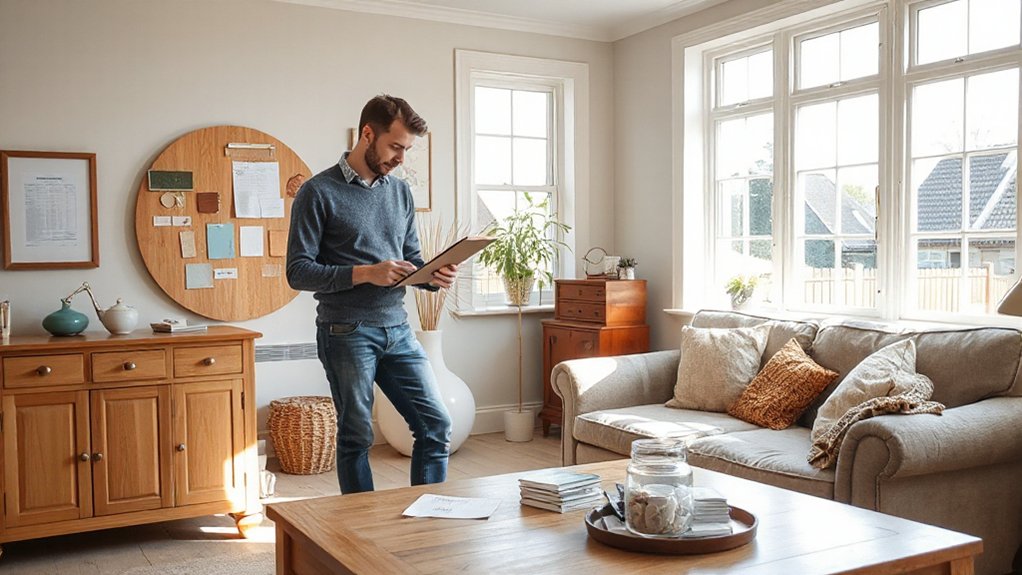
Before you buy anything new, plan your sustainable interior like a mini home audit: walk each room, note what can be repaired, reused, or rehomed, and flag the biggest waste (drafty windows, poor lighting, worn flooring) that drives energy and replacement costs.
Then set priorities: keep what’s serviceable, upgrade what fails often, and schedule the rest.
Build a UK‑realistic budget by pricing reclaimed options (salvage yards, Facebook Marketplace, charity shops) alongside repair quotes from local trades.
For Sustainable interior planning, map a timeline around sales, lead times, and council bulky‑waste collections.
For Eco friendly material selection, shortlist FSC timber, low‑VOC paints, and durable natural fibres, and check EPDs where available.
You’ll cut carbon and avoid impulse buys.
Biggest Wins First: Heat, Light, and Airflow
Start with the biggest wins you can feel in a UK home: better heat retention, smarter use of daylight, and fresh air that doesn’t waste energy.
You’ll prioritise insulation upgrades (loft, walls, and draught-proofing), then maximise daylight with lighter finishes and well-placed mirrors to cut electric lighting.
Finally, you’ll improve natural ventilation through secure trickle vents, cross-breezes, and breathable materials to reduce damp and support healthier indoor air.
Prioritise Insulation Upgrades
If you want the biggest carbon and comfort gains for your money in a UK home, prioritise insulation upgrades first, because stopping heat loss beats trying to “green” the heating system after the fact.
Start with loft insulation to current guidance levels, then tackle cavity walls where suitable, or consider internal wall insulation in solid‑wall terraces.
Seal draughts around skirting boards, floorboards, loft hatches, and letterboxes, but keep planned ventilation so you don’t trap moisture.
Watch for thermal bridging at bay windows, lintels, and around window reveals; detail these junctions carefully to prevent cold spots and mould.
Choose low‑impact insulation materials like wood fibre, recycled cellulose, sheep’s wool, or responsibly sourced mineral wool, and confirm U‑values with your installer.
Maximise Daylight Strategies
Once you’ve reduced heat loss, daylight becomes the quickest route to a lower‑energy, nicer‑to‑live‑in home: you can keep lights off for longer and let passive solar gains do some work on bright winter days.
Start with window placement: prioritise larger glazing on the south side where planning allows, and keep north‑facing windows smaller to limit gloom and losses.
Inside, use pale, matte wall paints and light ceilings to bounce light deeper, and choose slim window dressings that stack back fully.
Add mirrors opposite windows to spread daylight without extra watts.
For rooms that stay dim, consider rooflights or sun tunnels, common in UK lofts.
Finish with shading solutions—external blinds, shutters, or adjustable linen—to stop summer glare and overheating.
Improve Natural Ventilation
Daylight lowers your lighting demand, but fresh air keeps your home comfortable without reaching for fans or turning up extraction.
Start by creating a simple cross-breeze: open windows on opposite sides for 10 minutes morning and evening, especially in spring and autumn. In Victorian terraces or new-build flats, use trickle vents and keep internal doors ajar to move air through the plan.
Add high-level openings (top-hung windows or a stairwell rooflight) to let warm air escape, cutting overheating in UK heatwaves.
Avoid blocking radiators and vents with bulky furniture, and choose breathable blinds over heavy curtains to protect natural light efficiency.
You’ll also curb condensation, mould, and VOC build-up, improving Indoor air quality with zero watts.
Choose Low‑VOC Paint and Safer Sealants
Because indoor air can hold onto chemical emissions long after you’ve finished decorating, choosing low‑VOC paint and safer sealants is one of the quickest wins for a healthier, more eco‑conscious UK home. Look for water‑based paints labelled “low VOC” or “zero VOC” and check the Safety Data Sheet so you can compare VOC emissions, not just marketing claims.
For paint safety, pick brands certified by the EU Ecolabel or with clear UK compliance, and avoid strong‑smelling primers where possible.
Use acrylic, solvent‑free caulks and gap fillers around skirting boards, windows, and built‑ins, and choose silicone only when you need mould resistance in bathrooms.
Open windows while curing, keep lids sealed between coats, and store leftovers for touch‑ups instead of binning.
Sustainable Interior Design Flooring (and Adhesives)
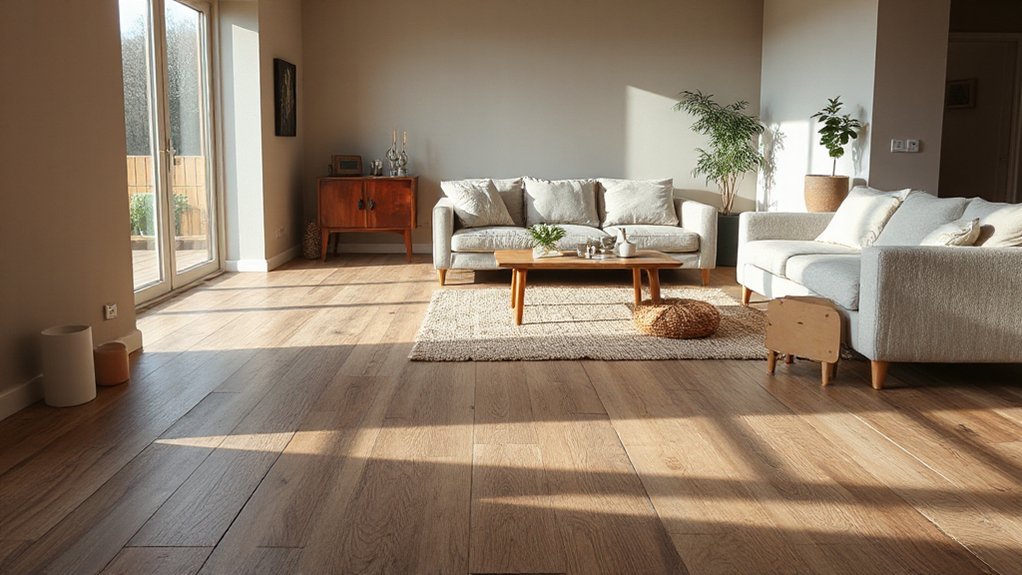
When you’re choosing flooring for a UK home, go for low-impact materials like FSC-certified timber, cork, linoleum, or natural fibres that suit your room’s wear and damp levels.
You can cut waste and embodied carbon by specifying reclaimed floorboards or tiles, or choosing recyclable options with take-back schemes where available.
For the finish, you’ll keep indoor air healthier by using low‑VOC adhesives and grouts and checking product VOC ratings before your fitter starts.
Low-Impact Flooring Materials
Although flooring covers a huge share of your home’s surfaces, you can keep its footprint low by choosing UK-available materials with credible certifications and pairing them with low-VOC adhesives.
Pick FSC- or PEFC-certified engineered wood for stability with less timber, and choose underlays made from natural rubber or wool for healthier acoustics.
For resilient floors, specify natural linoleum (not vinyl) with published EPDs, or cork tiles from responsibly managed sources.
Ask your fitter for water-based, solvent-free adhesives and sealers that meet British Standards for indoor air quality, and schedule ventilation during curing.
Finish timber with Eco friendly finishes like plant-oil hardwax or low-VOC lacquers.
A good subfloor prep and moisture testing supports Sustainable installation and longer service life.
Reclaimed And Recyclable Options
If you want the lowest-embodied-carbon floor you can realistically source in the UK, start with reclaimed and truly recyclable options before you buy anything new. Hunt for reclaimed oak boards, parquet, quarry tiles, or Welsh slate via local salvage yards, architectural reclamation merchants, and demolition resellers. You’ll keep usable materials out of landfill and cut transport miles by buying nearby.
When you can’t source reclaimed, choose floors designed for easy take-back: click-fit linoleum, recyclable carpet tiles with return schemes, or metal thresholds you can reuse. Ask for product passports, EPDs, and proof of closed-loop recycling.
Plan offcuts and transitions so you waste less. Pair these choices with Energy efficient appliances and sustainable lighting, so your whole refit cuts carbon, not just the floor.
Low-VOC Adhesives And Grouts
Because the glue and grout can off-gas for weeks after installation, you’ll cut indoor pollution fast by specifying low‑VOC (or VOC‑free) adhesives and cementitious grouts that meet UK/EU limits. Check product datasheets for EC1/EC1PLUS emissions, or look for EMICODE and the EU Ecolabel where available in UK merchants.
Choose water-based, solvent-free Eco friendly adhesives for timber, vinyl, and carpet, and avoid high‑solvent contact adhesives unless you can ventilate heavily.
For tiles, pick a Non toxic grout: cement-based, low‑chromate, and without added biocides unless the space truly needs mould resistance.
Ask your fitter to open windows, use extraction, and seal waste tubs for recycling. Store leftovers airtight for touch-ups.
Choose FSC Wood and UK‑Made Materials
When you choose FSC-certified wood and UK‑made materials, you cut the risk of hidden deforestation and shrink the carbon footprint tied to long-distance shipping.
Ask suppliers for chain-of-custody paperwork, not just vague “sustainably sourced” claims, and check labels for credible FSC certification on flooring, plywood, cabinetry, and trim.
Prioritise UK manufacturing for joinery, tiles, worktops, and paints so you support local jobs and tighter environmental oversight. You’ll often get quicker lead times, easier aftercare, and fewer packaging miles too.
Choose species and finishes that suit Britain’s humidity swings, and specify durable, repairable details like solid edging and quality hinges.
If your contractor buys materials, put your sourcing requirements in writing and request invoices showing provenance.
Reclaimed and Recycled Materials That Look Intentional
You can make reclaimed and recycled materials look like a deliberate design choice by treating them as feature elements, not afterthoughts. Choose one reclaimed-wood focal piece—like a dining table, mantel, or headboard—sourced from UK salvage yards to add warmth and cut embodied carbon.
Then layer in recycled-metal accents (handles, lighting, shelving brackets) in a consistent finish so the whole scheme feels cohesive.
Reclaimed Wood Focal Pieces
Although reclaimed timber carries its own marks and history, it can still look crisp and deliberate in a modern UK home if you treat it as a focal piece, not an afterthought. Choose one statement element: a chunky mantel, a dining table, or open shelving, then keep surrounding lines clean and colours calm so the grain does the talking.
Source reclaimed wood from UK salvage yards, architectural reclamation depots, or FSC-certified suppliers offering reclaimed stock, and ask about previous treatments. Prep it properly: de-nail, sand lightly, and stabilise splits, but don’t erase character.
Seal with eco-friendly finishes such as low-VOC hardwax oil or water-based lacquer to suit damp British winters and busy kitchens. Add discreet LED lighting to highlight texture without extra clutter.
Recycled Metal Accents
Pair reclaimed timber with recycled metal accents to keep a space feeling modern rather than rustic. Choose powder-coated steel shelf brackets, aluminium splashbacks, or brass cabinet pulls made from post-consumer scrap; they read clean and intentional, not “upcycled”.
Ask local fabricators about offcuts from metal recycling streams, or source from UK salvage yards and architectural reclamation depots for radiators, locker doors, and light fittings. Keep finishes consistent—blackened steel, brushed aluminium, or aged brass—so your industrial decor looks curated.
Prefer low-VOC sealants and rust-inhibiting waxes to extend life without harsh solvents. You’ll also cut embodied carbon by avoiding virgin metal, while supporting regional reuse networks and reducing landfill.
Check provenance and choose fixings you can remove and recycle again later.
Buy Less, Buy Better: Repairable Furniture Staples
When budgets and carbon footprints both matter, buying fewer pieces that you can actually mend beats chasing cheap, disposable trends. Prioritise Furniture longevity by choosing timeless staples: a solid-wood dining table, a well-built sofa with replaceable covers, and a sturdy bed frame with standard fixings you can source in the UK.
Check Material durability before you buy: FSC oak or beech, powder-coated steel, and natural linoleum tops resist wear and refinish well. Look for screwed joints, accessible zips, and modular parts rather than glue-only frames and sealed upholstery.
Ask for spare slats, legs, and fabric swatches, and keep receipts for guarantees under the Consumer Rights Act. Regularly tighten fixings, oil timber, and re-web seats to extend each item’s life.
Second‑Hand Finds and Easy Upcycling Ideas
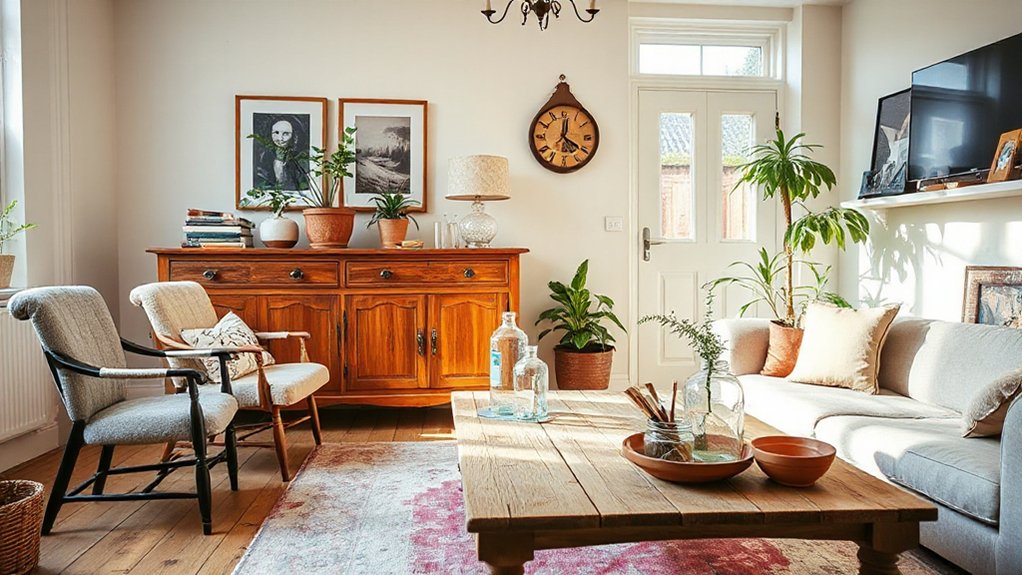
Because the greenest piece of furniture already exists, you can cut both cost and carbon by shopping second‑hand first—try British Heart Foundation furniture stores, local charity shops, Freecycle, Facebook Marketplace, and UK salvage yards for solid-wood tables, sideboards, and chairs that just need a clean and a tighten.
Check for wobble, woodworm holes, and missing fixings, then haggle and collect locally to avoid delivery emissions.
Refresh tired pieces with low‑VOC paint or natural oil, and swap dated handles for reclaimed brass.
Turn offcuts into shelves, or frame leftover wallpaper as upcycled artwork.
Hunt Vintage lamps, then rewire them with a modern, PAT‑tested kit from a UK supplier.
You’ll divert waste, keep character, and spend less.
Natural Fibres: Curtains, Rugs, and Non‑Toxic Fills
Although synthetic soft furnishings often look similar, natural fibres usually breathe better, shed fewer microplastics, and feel nicer underfoot—so start with what touches your skin most: curtains, rugs, and cushion or duvet fills.
Choose linen, hemp, organic cotton, or wool curtains; they regulate temperature in draughty UK homes and can be lined with recycled or wool felt rather than PVC blackout.
For rugs, look for undyed wool, jute, sisal, or coir, and ask for low‑VOC backing or no latex if you’re sensitive.
When replacing fills, pick responsibly sourced British wool, kapok, or feather/down with clear standards, and avoid chemical flame retardants where exemptions allow.
Shop Natural fibres and eco friendly textiles from UK makers with GOTS, OEKO‑TEX, or RWS labels.
Cut Renovation Waste: Take‑Back, Offcuts, Fitters
If you plan for waste before the first tile comes up, you’ll keep tonnes of usable material out of landfill and cut skip costs too. Ask your supplier about Take back programs for unopened packs of tiles, surplus paint, and undamaged sanitaryware—many UK merchants and manufacturers will credit returns or route stock to resale.
Brief your fitter to de-nail timber, lift boards whole, and keep rubble separated (plaster, brick, metal, wiring) so you can use local recycling centres and licensed skip firms correctly.
Push for exact ordering and a cutting plan to reduce waste, then make Offcuts reuse part of the design: turn worktop trims into shelves, tile leftovers into splashback accents, and flooring ends into thresholds or stair nosings.
Donate quality salvage via ReStore, Freecycle, or local charities.
Frequently Asked Questions
How Do I Improve Indoor Acoustics Sustainably Without Adding Toxic Materials?
Soundproofing doesn’t need “mystery fumes”—how shocking. You can use Eco friendly soundproofing with Natural acoustic materials: wool felt panels, cork, hemp, thick curtains, rugs, bookcases, and draught-proofing around doors in UK homes.
Are There Eco‑Friendly Options for Damp and Mould Prevention in Older UK Homes?
Yes—you can prevent damp and mould sustainably by improving ventilation, fixing leaks, and managing ground levels. Add Eco friendly insulation like wood fibre, and use Natural moisture barriers like lime plaster to let walls breathe.
What Sustainable Interior Choices Help Reduce Allergy Symptoms and Asthma Triggers?
Choose Hypoallergenic materials like wool carpets, low‑VOC paints, and solid wood furniture, and add Natural air purification with HEPA filtration and spider plants. You’ll cut dust mites, pollen, and mould spores while keeping UK homes breathable.
How Can I Make a Rented Flat More Sustainable Without Permanent Changes?
Like swapping one bulb, you cut use by 80% overnight—start with reversible moves: draught‑proof strips, LED bulbs, smart plugs, washable curtains, and Reusable decor. Choose Eco friendly paint testers on removable panels; shop UK refill stations.
Which UK Certifications Best Verify Ethical Textiles and Fair Labour Practices?
You’ll trust Fairtrade, GOTS, and OEKO-TEX Made in Green for UK textiles; add Fair Wear Foundation and SA8000 for labour. Check Organic textile labels, look for UKAS-accredited audits, and verify licence numbers online always.





Leave a Reply