

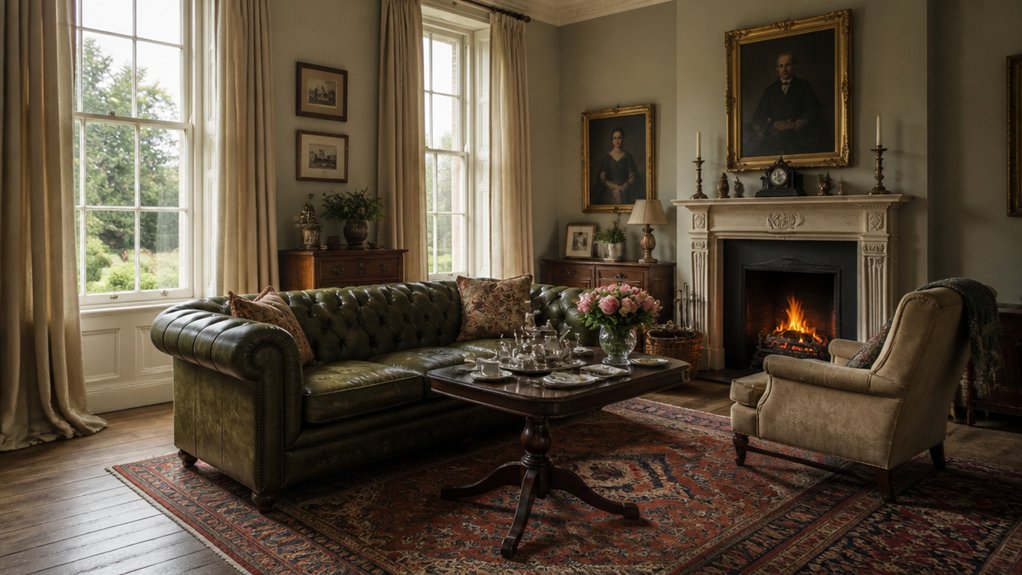
If you get the proportions and patina right, a UK country house room can feel centuries old even when it’s newly finished. You start by planning the layout around a strong focal point, then layer a warm, muted palette with panelling where it matters most. You bring in natural materials, vintage textiles, and furniture that looks collected, not bought in one go. Finish with soft, warm lighting and a proper fireplace—then you’ll notice what still feels missing…
Key Takeaways
- Layer heritage neutrals with muddied country accents, repeating one tone across curtains, cushions, and throws for cohesion.
- Mix timeworn natural materials—oak, wool, linen, aged brass—and embrace patina over perfection for authentic character.
- Combine eras thoughtfully: pair sturdy antique anchors with smaller mismatched pieces to create a collected, lived-in look.
- Use a rule of three for pattern mixing: one dominant print, one secondary, and near-solid textures in related tones.
- Plan around architectural focal points like fireplaces and windows, keeping circulation clear and lighting warm and layered.
Define the UK Country House Look: 5 Elements
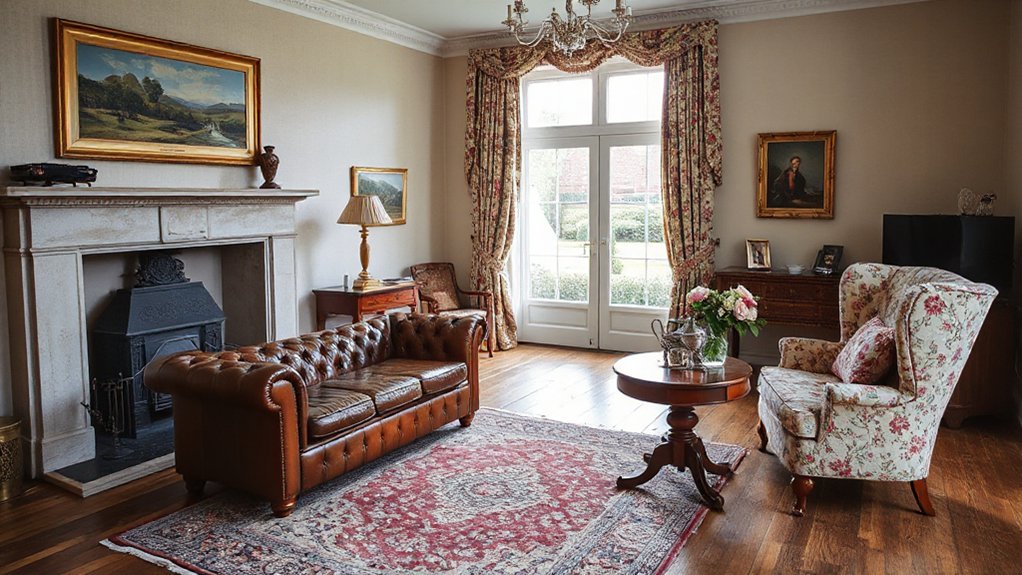
Five details do most of the heavy lifting in a true UK country house look: layered, timeworn textures; heritage pattern and print; thoughtful, slightly mismatched furniture; a grounded, nature-led palette; and well-chosen antiques that feel collected rather than staged.
You’ll get there by mixing linen, wool, and worn leather for Rustic Charm, then anchoring rooms with classic prints—ticking stripe, faded florals, or plaid—used in curtains, cushions, or lampshades.
You don’t match suites; you pair a slipcovered sofa with a spindle chair, an old trunk as a table, and a bookish sideboard.
Keep colours borrowed from hedgerows: moss, clay, cream, soot.
Finish with Antique Accents—brass candlesticks, transferware, framed hunting prints—kept simple and useful.
Plan Your Layout and Focal Points First
Before you choose fabrics or hunt for antiques, map the room’s “bones” and decide what deserves to be seen first. Stand at the doorway and note your natural sightline: a fireplace, a bay window, or a well-made bookcase.
Arrange seating to honour that feature, keeping circulation clear and gracious, like Garden pathways that guide you without fuss. Anchor the plan with one substantial piece, then balance it with smaller, period-appropriate forms.
Place lighting where tasks actually happen: reading by the hearth, tea at a side table, coats near the entry.
Let Window treatments frame views rather than block them; keep them functional for drafts and privacy.
Finally, check proportions—nothing should crowd the skirting or eclipse the focal point.
Choose a Warm, Muted Country House Palette
Once you’ve set your layout and focal points, you can unify the house with heritage neutrals and earth tones—stone, oatmeal, clay, and soft moss.
You’ll get the most authentic depth by keeping walls and larger pieces muted, then letting natural materials like oak, leather, and aged brass carry the warmth.
Finish with layered accents in country-house shades—spiced terracotta, deep oxblood, or faded saffron—so rooms feel lived-in, not loud.
Heritage Neutrals And Earth Tones
Although trends come and go, a timeless UK country house palette stays rooted in heritage neutrals and earth tones that feel quietly settled rather than styled.
Start with chalky off-white, putty, oatmeal, and stone on walls and ceilings to echo limewash and aged plaster. Use warm greige, fawn, and mushroom on joinery to soften light and flatter wood grain.
Bring in clays, moss, and dried-heather browns through wool textiles, leather, and painted furniture so rooms read calm and cohesive.
You can add Modern contrasts by pairing matte paints with burnished brass or blackened iron, and introduce contemporary accents with clean-lined lamps or minimal art, keeping finishes natural.
Test samples in north light and by lamplight to confirm undertones stay gentle.
Layered Warm Color Accents
When you want a country house scheme to feel lived-in rather than staged, layer warm, muted accents over your heritage neutrals so the rooms gain depth without turning loud. Reach for dried-rose, oxblood, saffron, and tobacco rather than bright primaries, and repeat each tone in small doses to keep it settled.
Start with vintage textiles: a faded kilim runner, crewel cushions, or a well-worn wool throw. Then add rustic accessories—brass candlesticks, terracotta pots, and a copper jam pan—so the warmth feels earned, not decorative.
Anchor colour to patina: aged oak, russet leather, and honeyed waxed finishes. If a room runs cool, swap one lampshade to parchment and choose warm bulbs, so evening light flatters every layer.
Add Panelling and Classic Joinery (Where It Counts)
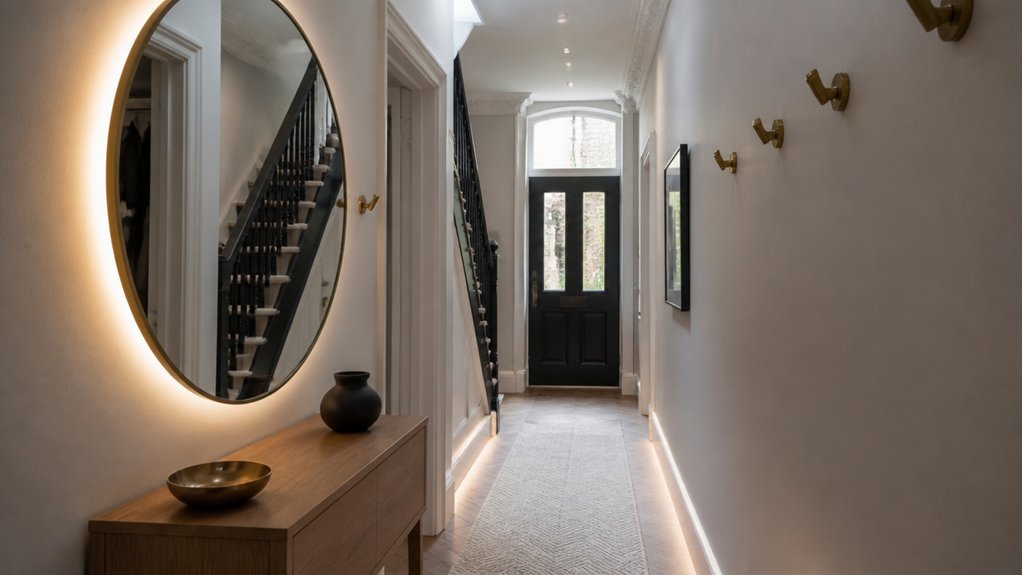
Bring panelling in where it earns its keep—hallways, stairwells, and dining rooms—so you get instant country house character without overworking every wall.
Add period-style mouldings such as dado rails, picture rails, and properly scaled architraves to sharpen the lines and frame your muted palette. Keep each detail in proportion to ceiling height and room size, so the joinery reads as quietly authoritative rather than fussy.
Prioritise High-Impact Panelling
If you want that settled, centuries-old country house feeling, prioritise panelling and classic joinery in the places your eye and hand meet first: the entrance hall, stairwell, and main sitting room.
Keep it disciplined: run panelling to dado height where boots, bags, and chairs scuff, then consider full height only on one feature wall to anchor the room.
For paneling installation, insist on crisp reveals, plumb stiles, and skirting lines that flow through door casings, so nothing looks pasted on.
Choose timber species and profiles that suit your house’s date, because historical accuracy reads instantly, even if guests can’t name why.
Finish with paint in soft, traditional tones and a hand-rubbed sheen that takes light well.
Add Period-Style Mouldings
Although panelling does the heavy lifting, period-style mouldings supply the quiet authority that makes rooms feel properly “built,” not decorated. Use them to frame openings, define connectivities, and tidy junctions where modern plasterboard can look too crisp.
Start with a generous skirting and a simple architrave that suits your house’s age, then add a picture rail if you want heritage character without fussy cornicing. Choose period mouldings with crisp shadow lines, in timber or specialist plaster, and insist on sharp mitres at corners.
Where ceilings are uneven, scribe the moulding rather than forcing it flat. Paint everything in one finish for an integrated look, letting the architectural details read through light and shade, not colour contrast.
Balance Detail With Proportion
Where panelling and classic joinery can so easily tip into fussiness, you’ll get a more authentic country house feel by letting proportion lead every decision.
Keep wall panelling to rooms that benefit from structure: a draughty hall, a stair, a snug, or a dining room. Use simple fielded panels or tongue-and-groove below dado height, and let the rails align with window sills and door heads for calm order.
Treat joinery like architecture, not decoration. Deep skirtings and architraves suit tall ceilings; slimmer sections suit cottages.
Check furniture proportions before you add detail, so a bookcase doesn’t dwarf a fireplace.
Aim for decorative balance: one strong feature per wall, then quieter trims elsewhere.
Bring In Natural Materials for Instant Warmth
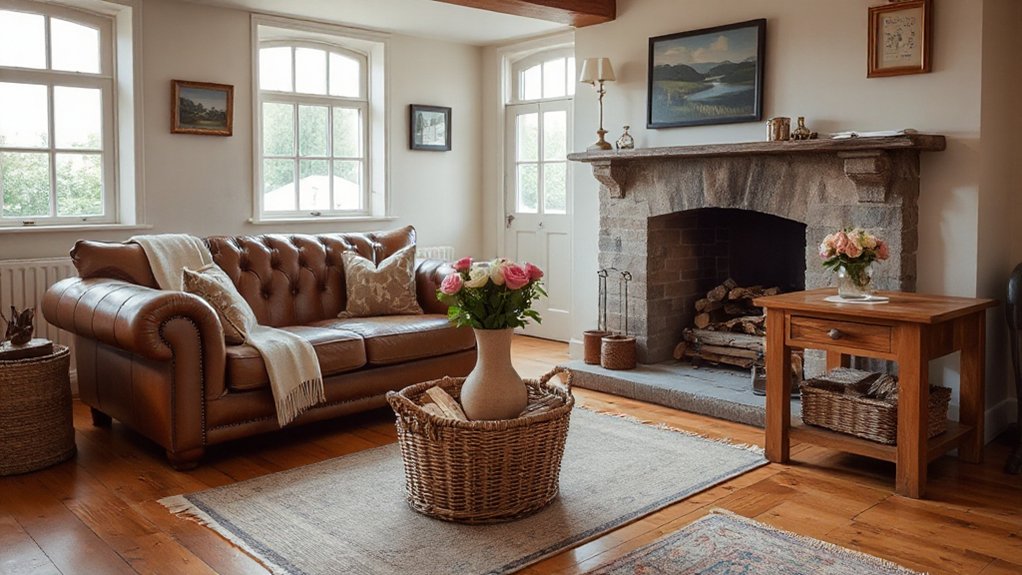
Because the UK country house look celebrates age, craft, and patina, natural materials should lead the scheme. Start with honest timber: oak floorboards, a scrubbed pine dresser, or a dark-stained beam that anchors the room.
Choose Rustic textures—tumbled stone, aged brick, woven rush, and unlacquered brass—so surfaces feel handled rather than showroom-new.
Keep Natural finishes front and centre. You’ll get warmth from limewash, clay paint, and oil-rubbed wood that deepens over time.
Add a single character piece, like a slate hearth or marble-topped side table, and let imperfections stay visible.
Even small swaps help: wool felt pads under chairs, a rattan basket for kindling, or a leather strap pull on cabinetry.
Layer Patterns and Textiles Without Clashing
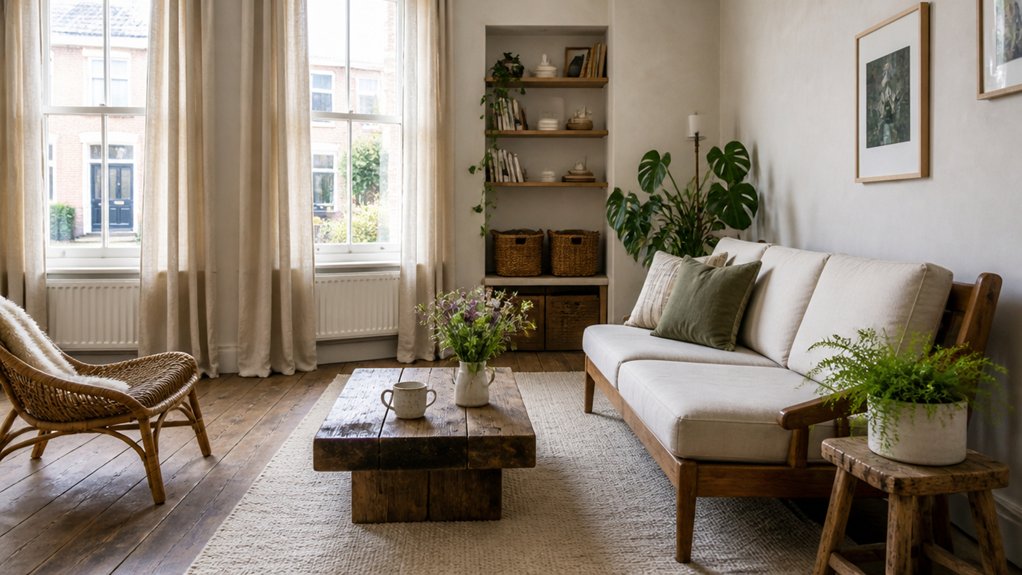
Natural materials set the tone, and textiles are what make a country house room feel properly lived-in. Start with a calm ground cloth: undyed linen, wool, or cotton ticking in oat, stone, or faded sage.
Then build Textile combinations by mixing scales, not moods—pair a large check with a small sprigged floral, or a narrow stripe with a simple herringbone.
Use Pattern coordination like a rule of three: one dominant pattern, one secondary, one near-solid texture. Keep colours related and slightly muddied, as if sun-softened over years.
Repeat one tone in each layer—curtain, cushion, throw—so the eye travels. Add tactility with brushed wool, quilted cotton, and needlework trims, and you’ll get richness without noise.
Choose Furniture That Looks Collected Over Time
You’ll get a true UK country house feel by mixing eras—pair a Georgian side table with a Victorian armchair and a simple Shaker bench.
Choose pieces for patina and craftsmanship: worn edges, solid joinery, and timber that’s mellowed by years of use.
Then layer in found and inherited furniture so each room reads as quietly curated rather than newly bought.
Mix Eras And Styles
If a UK country house feels as though it’s evolved over generations, it’s usually because the rooms don’t match perfectly—they converse. You’ll get that ease by pairing Georgian symmetry with a slightly rustic table, or setting a Regency chair beside a plain linen sofa.
Keep proportions in mind: let one statement piece lead, then support it with quieter shapes.
Bridge centuries with Contemporary accents that nod to the present without shouting—sleek brass picture lights, a clean-lined side table, crisp wool throws.
Hang Modern artworks in traditional rooms to sharpen the architecture; choose restrained palettes or simple frames so they sit comfortably against panelling and stone.
Repeat one linking note—oak tone, ticking stripe, or ironwork—throughout.
Prioritize Patina And Craftsmanship
Because true country house charm comes from objects that have lived a little, prioritize patina and craftsmanship over anything too new or uniform. Choose oak, elm, and mahogany with honest wear: softened corners, rubbed edges, and a glow that only time can teach. Check joinery before you fall for finish. You want pegged mortise-and-tenon, dovetails that lock tight, and hand-turned feet—craftsmanship techniques that signal longevity.
Practice Patina preservation rather than stripping: clean gently, feed timber with wax, and repair with like-for-like materials so scars stay believable. Reupholster well-made frames in wool, linen, or ticking, and keep proportions traditional—deep seats, generous arms, sturdy rails.
If a piece feels over-sanded or overly distressed, walk away.
Layer Found And Inherited Pieces
Patina sets the tone, but a true UK country house look comes alive when the room feels accumulated rather than arranged. Start with one inherited anchor—an oak sideboard, a wing chair, a battered trunk—and let everything else respond to it.
Mix scales and eras so nothing looks bought in one trip. Pair a Georgian table with rush-seated kitchen chairs, then add Antique accents like brass candlesticks, framed hunting prints, or a chipped Staffordshire dog.
Ground the scheme with Vintage textiles: a faded wool throw, ticking stripes, or a mended quilt draped over the sofa. Keep finishes imperfect, but stable—wax timber, tighten joints, reweb chairs.
Leave breathing space; you’re curating a family narrative, not staging a set.
Make the Fireplace the Room’s Anchor
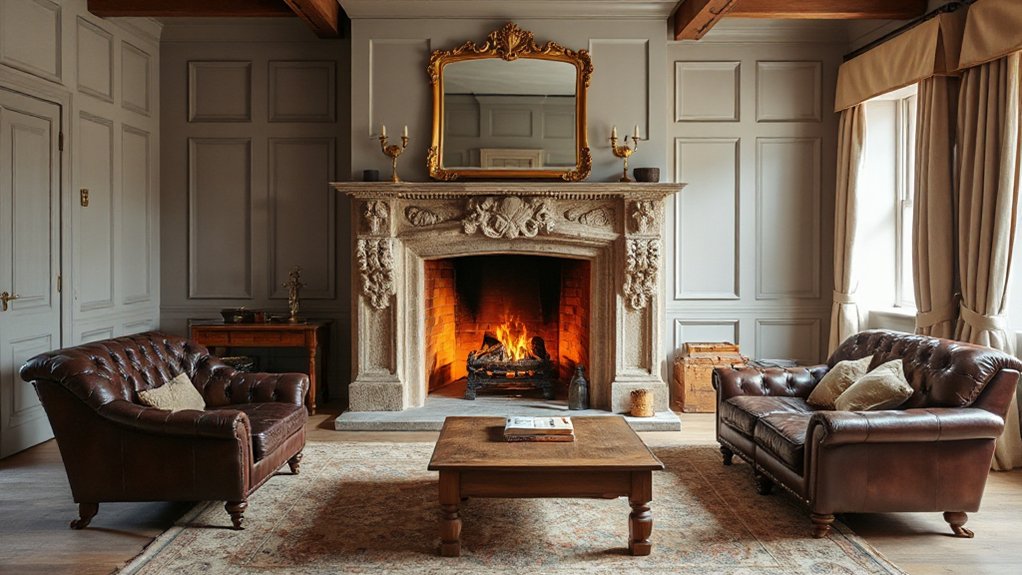
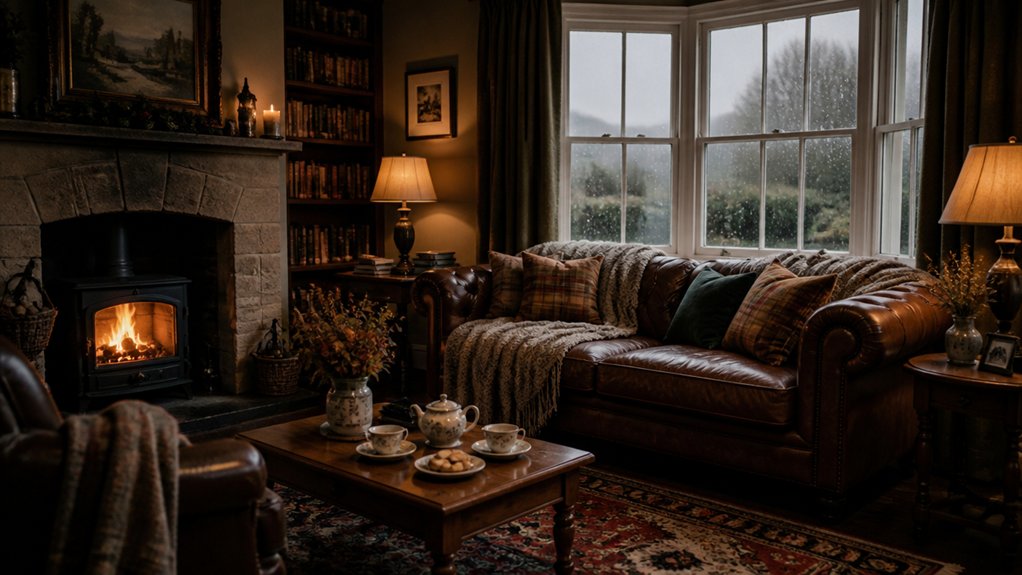
Whether you’re restoring an original inglenook or introducing a new surround with period restraint, the fireplace should read as the room’s clear centre of gravity. Let your furniture acknowledge it: angle sofas toward the opening, keep a clear line of sight, and place a robust coffee table where conversation naturally gathers.
Choose materials that belong—local stone, lime-plastered reveals, or a simple Georgian timber mantel—so the joinery and proportions feel authentic. Treat the surround as one of your key fireplace focal points, then edit everything around it.
For hearth design, favour a generous slab or brick apron with a slight projection, finished with a tidy edge. Dress the mantel sparingly: one mirror, one pair of candlesticks, and nothing flimsy.
Use Warm, Layered Lighting (No Harsh Glare)
Once the fireplace holds the room, your lighting needs to support it rather than compete with it. Aim for a soft ambient glow that flatters timber beams, aged plaster, and worn textiles. Choose warm bulbs (around 2700K) and avoid exposed, high-output spots that throw hard shadows.
Layer light the way a country house does naturally: a shaded table lamp near the sofa for reading, a low wall light to wash a picture rail, and a discreet floor lamp by an armchair. Think through fixture placement so pools of light overlap, leaving corners gently lit, not murky.
Put dimmers on every circuit, and keep shades lined and opaque enough to hide glare. You’ll get comfort without losing character.
Mix Old and New So It Never Feels Themed
Because a true country house evolves over generations, you should mix periods and finishes so the room reads as lived-in rather than styled. Start with one anchor antique—an oak refectory table, a Georgian chest, or a worn Persian runner—then introduce clean-lined pieces that nod to modern minimalism.
Keep the palette quiet so silhouettes do the talking: chalky whites, deep greens, and softened blacks.
Balance patina with restraint: pair brass candlesticks with a simple linen lampshade, or hang contemporary art above panelling. If you want pattern, choose one statement—bold geometric patterns on a cushion or stair runner—then echo it subtly in stripes or checks.
You’ll avoid a themed look and keep the house feeling honestly inherited.
Frequently Asked Questions
How Do I Achieve the Look in a Rental Without Permanent Changes?
You’ll achieve it by prioritising Furniture arrangement, then using removable updates: slipcovers, rugs, and curtain poles. Build richness through Accessory layering—lamps, books, brass, and botanicals. Use peel-and-stick paper sparingly, and protect original surfaces.
What Are the Best Budget Swaps for Antiques and Original Period Features?
Choose Faux antiques and Vintage accessories: reproduction brass pulls, aged frames, and thrifted mirrors. Add peel-and-stick dado rails, clip-on shades, and washable rugs. You’ll get patina, proportion, and period charm without costly originals.
How Do I Blend UK Country House Style With an Open-Plan Modern Home?
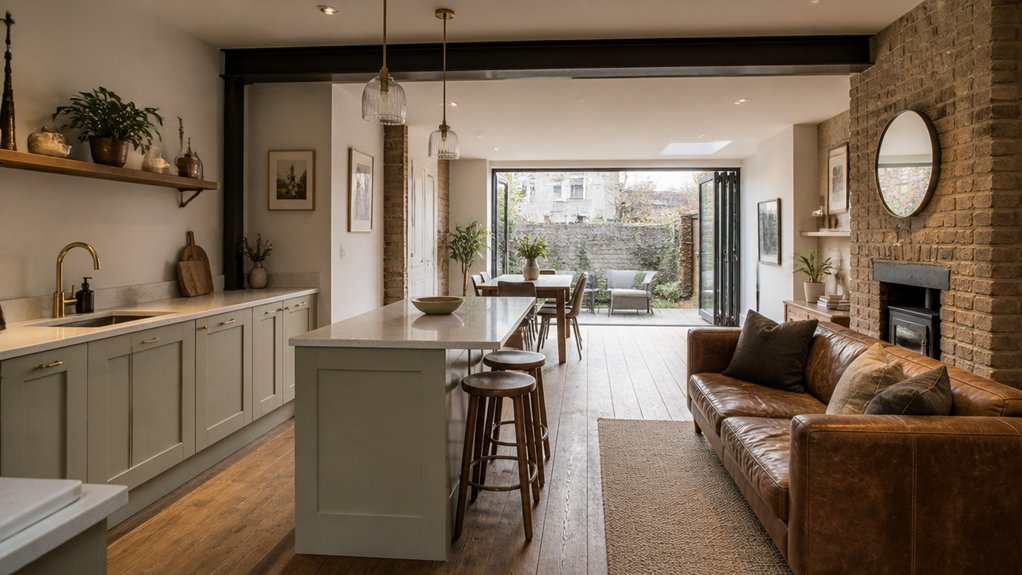
You’ll blend country house style into open-plan spaces by zoning with rugs and lighting, adding Rustic charm through oak, stone, and patina, and softening sightlines with Vintage textiles, curtains, and upholstered seating.
Which Paint Finishes Work Best for Walls, Trim, and Panelling?
You’ll swear your walls transform overnight: choose Matte paint finishes for walls, durable eggshell for trim, and satin or gloss for panelling. Pair with Vintage wallpapers thoughtfully, and you’ll get heritage depth, easy wipe-clean practicality.
How Can I Make the Style Work in Small Flats or Low-Ceiling Rooms?
You’ll make it work by keeping colours light, choosing slim heritage furniture, and hanging curtains high to lift ceilings. Add Cottage decor through checks, wool throws, and Vintage accessories, but edit duplicates and clutter.

Leave a Reply