

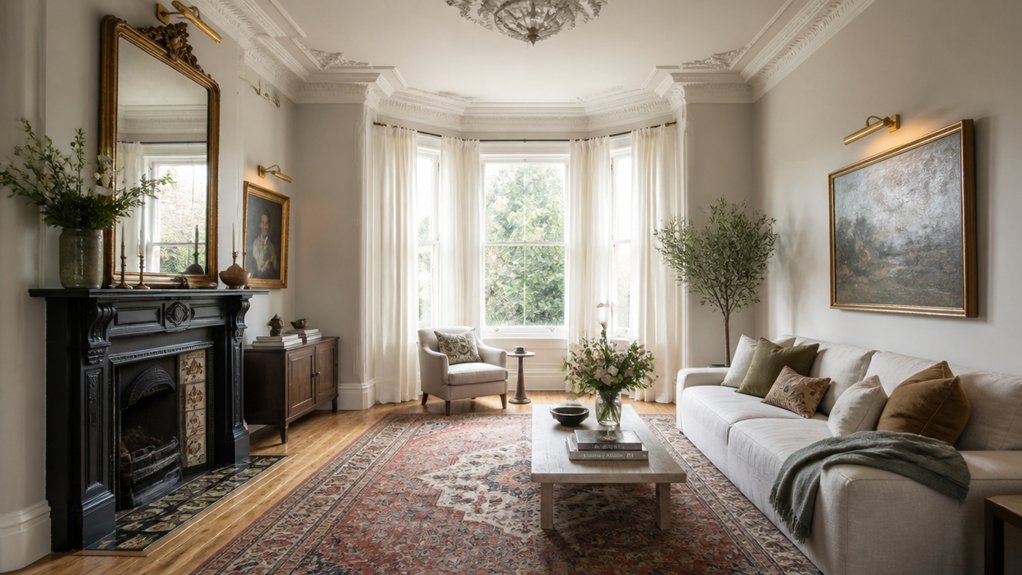
You don’t have to choose between historical character and modern comfort. When you style a period home well, you keep what’s authentic—wavy glass, worn boards, lime plaster—then slip in upgrades that stay quiet, breathable, and reversible. You’ll hide wiring, improve insulation without sealing the house up, and layer warm lighting that suits the rooms’ original proportions. Start with a clear audit of what you’ve got, because the next step depends on it…
Key Takeaways
- Audit original proportions, sightlines, daylight, and services, then plan upgrades that preserve windows, floors, plaster, and other character-defining features.
- Use vapour-open, breathable insulation and seal draughts reversibly, improving comfort while avoiding trapped moisture and damp in solid-walled buildings.
- Install discreet, zoned heating with accurately sized, period-sympathetic radiators under windows, using neat pipe routes and TRVs for efficient control.
- Choose era-appropriate, slightly desaturated colours and low-sheen finishes, and test samples across daylight to avoid modern glare.
- Blend modern needs with period harmony using built-ins that match existing joinery, concealed cables, and matte natural materials like wool, linen, aged brass, and timber.
Audit Your Period Home: Features, Faults, Constraints
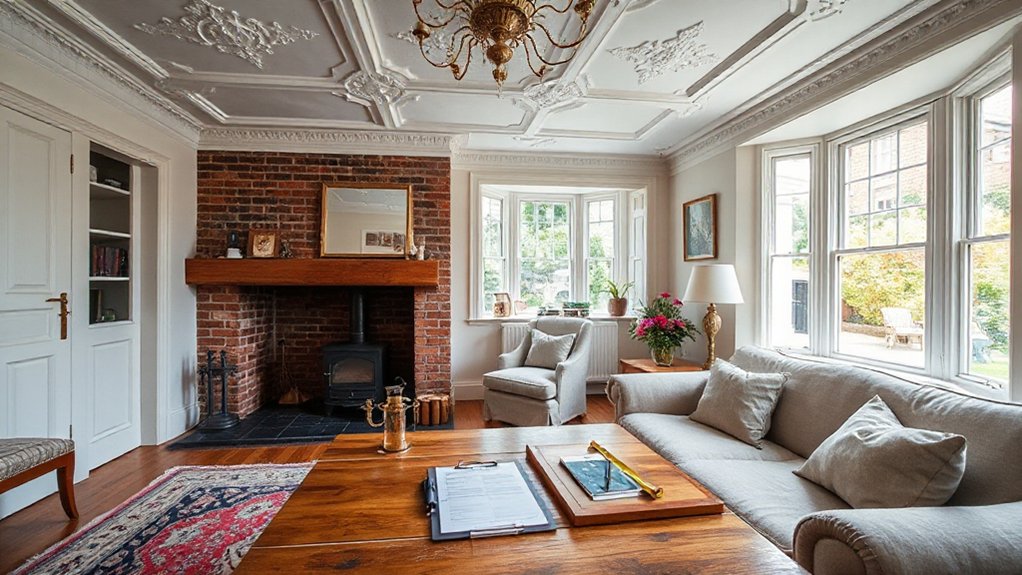
Before you pick paint colours or hunt for antiques, you’ll want to audit what your period home already gives you—and what it quietly demands in return. Walk room to room with a notebook: note proportions, sightlines, ceiling heights, and how daylight moves. Identify damp risks, draught paths, uneven temperatures, and noisy floors, then map where modern comfort upgrades can hide without visual clutter.
Check services: wiring routes, pipe runs, radiator positions, and ventilation, especially around kitchens and baths. Outside, read the plot like a document—drainage falls, prevailing winds, and boundary materials—so landscape gardening supports the house rather than fighting it.
Finally, confirm listing status, local guidance, and fabric sensitivities, so historic preservation decisions stay lawful, durable, and sympathetic.
Restore Original Features (Floors, Plaster, Windows)
Although it’s tempting to rip out and replace, you’ll get a more authentic—and often more comfortable—result by restoring what’s already there: floorboards that only need careful lifting and re-nailing, lime plaster that wants breathable repair rather than hard modern skim, and sash windows that can be overhauled to stop rattles and draughts without losing their fine glazing bars.
Start with floors: label boards, pull nails, fix squeaks, and re-seat with cut nails; finish with oil or wax so they move naturally.
For plaster restoration, patch with lime, use scrim over cracks, and keep edges feathered to match old trowel marks.
With vintage windows, service cords, ease paint-bound sashes, add brush seals, and fit discreet locks, so you keep comfort and crisp sightlines.
Discreet Insulation Upgrades for Period Properties
Once you’ve made floors, plaster, and windows sound again, you can tackle insulation in ways that respect how older buildings breathe and move. Start by mapping damp risk and ventilation routes; solid-walled terraces and farmhouses often need vapour-open materials, not sealed-up systems.
If you’ve got a true cavity wall, check it’s clear of rubble and that exposure isn’t severe, then choose an appropriate fill and keep air bricks and weep holes working.
In lofts, lay loft insulation between joists, then add a second layer across them, keeping eaves vents clear and leaving space around recessed lights and flues.
Draft-proof hatches, pipe penetrations, and skirtings with reversible seals so you improve comfort without trapping moisture or harming historic fabric.
Add Efficient Heating Without Losing Character
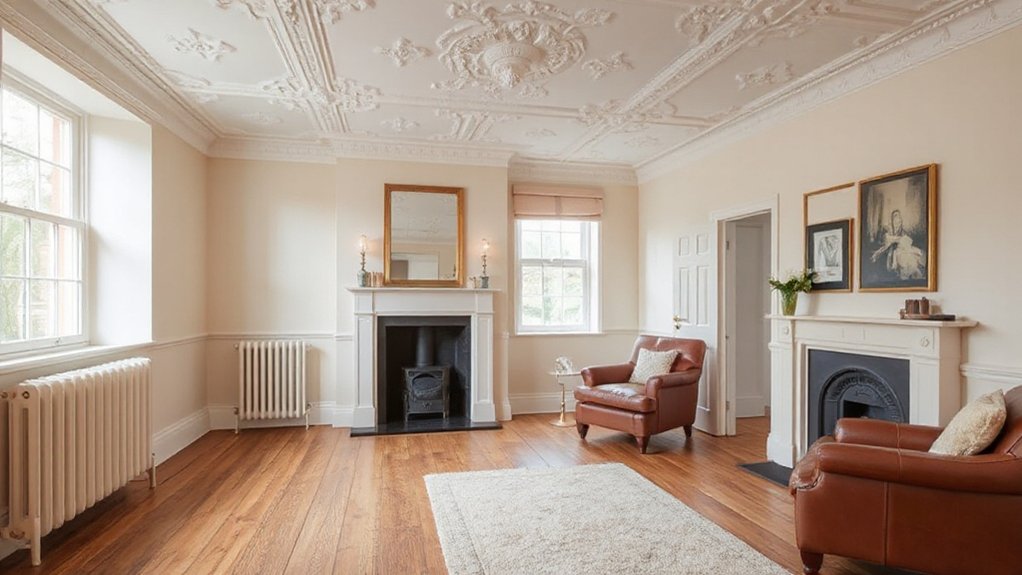
You can warm a period home efficiently without letting modern kit shout over cornices, dados, or original joinery. Choose discreet heating solutions—like low-profile underfloor zones in secondary rooms or carefully routed pipework—that keep sightlines clean while improving comfort.
Where radiators are needed, you’ll get the best result from period-sympathetic cast-iron or column styles, sized for today’s heat loss yet finished to suit your property’s age and palette.
Discreet Heating Solutions
Where can you tuck modern warmth into a period room without advertising it? Start at the floor: underfloor heating slips beneath boards or stone flags, keeping sightlines clear of new kit while delivering even comfort.
Pair it with smart thermostats, so you can zone bedrooms, parlours, and hallways without constant fiddling, and avoid overheating delicate plaster and timber.
Choose controls with simple faces and mount them on secondary walls or inside cupboards to protect historic panelling.
Seal drafts with brush strips, chimney balloons, and discreet secondary glazing, then insulate lofts with breathable materials so cornices and laths stay dry.
You’ll feel steadier temperatures, fewer cold spots, and a house that reads as original, not retrofitted.
Period-Sympathetic Radiators
Although modern boilers and heat pumps do the heavy lifting, the radiator still does most of the visible work in a period room—so choose one that reads as part of the architecture, not an add‑on.
Cast‑iron column radiators suit Georgian and Victorian proportions, while slim, fluted panels can echo Arts and Crafts joinery without shouting “new”.
Prioritise correct radiator placement: under sash windows or on colder external walls to counter downdraughts, while keeping sightlines to skirting and cornice clean.
Match valves and pipework to your metalwork—aged brass, nickel, or painted tails—and run them tight to the wall for a neat line.
For thermal efficiency, size units from proper room heat‑loss figures, then use TRVs and zoning so you stay warm without overheating.
Keep airflow clear for consistent output too.
Choose Period-Appropriate Colours and Finishes
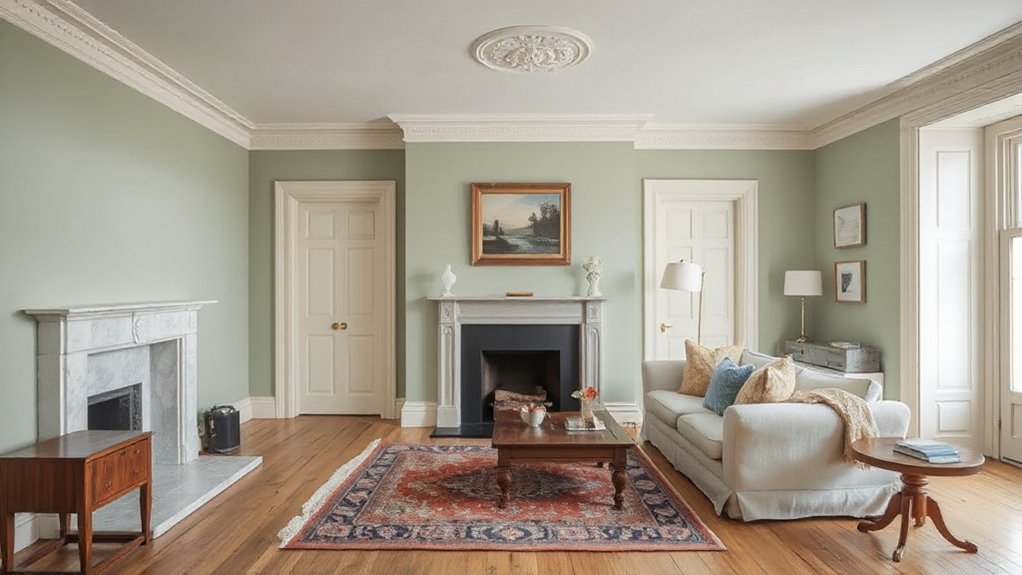
How do colours and finishes make a period room feel convincingly “of its time” while still staying liveable? You start by reading the building’s era: Georgian rooms suit muted stone, sage, and lamp-black accents; Victorian schemes welcome deeper oxblood, bottle green, and warm ochres; Arts and Crafts leans to earthy clays and softened creams. Keep Color palettes slightly desaturated so mouldings and fireplaces look crisp, not harsh.
Choose finish textures that match original materials: chalky limewash or matt emulsion for plaster, eggshell for woodwork, and a low-sheen varnish for floors. Use higher wipeability only where hands touch—skirtings, doors, banisters—so you don’t sacrifice comfort.
Test samples in morning and evening to avoid modern-looking glare.
Layer Period-Style Lighting for Everyday Living
Even if you’re keeping the original ceiling rose and a period pendant, you’ll make the room far more liveable by layering light at different heights. Treat the pendant as ambience, then add task and accent sources that suit the era and your routines.
In reception rooms, choose Vintage chandeliers with warm LED filament bulbs, dimmable to echo gaslight glow without the heat. Flank chimneypieces or bookcases with Candle sconces (wired, not plug-in) to reinforce symmetry typical of Georgian and Victorian schemes.
Add picture lights to wash cornices and plasterwork, and tuck discreet floor lamps beside reading chairs to prevent eye strain.
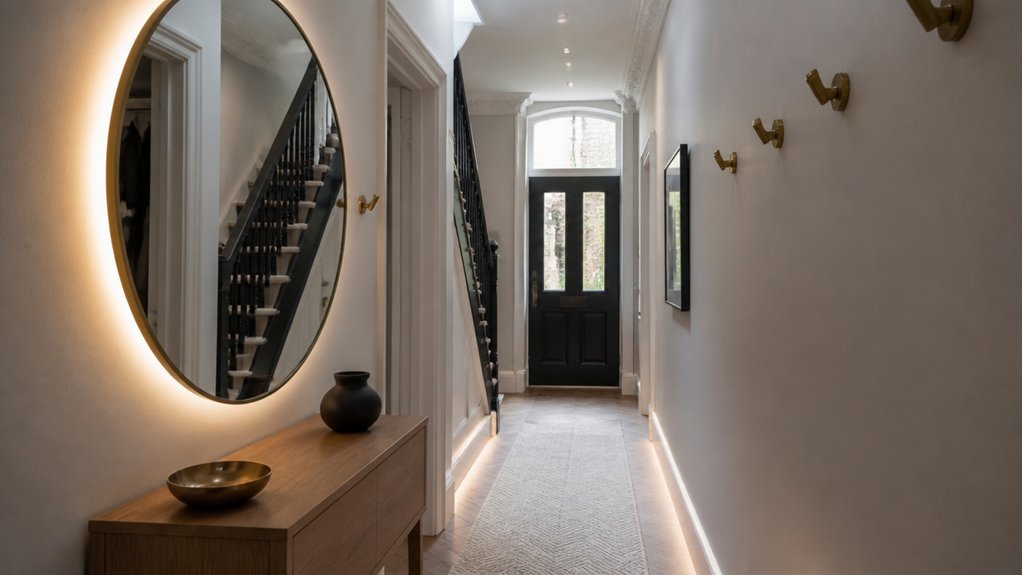
In halls and landings, use wall lights to soften shadows on stairs. Keep colour temperatures consistent, hide drivers, and match metal finishes to existing door furniture.
Mix Modern Furniture With Period Features
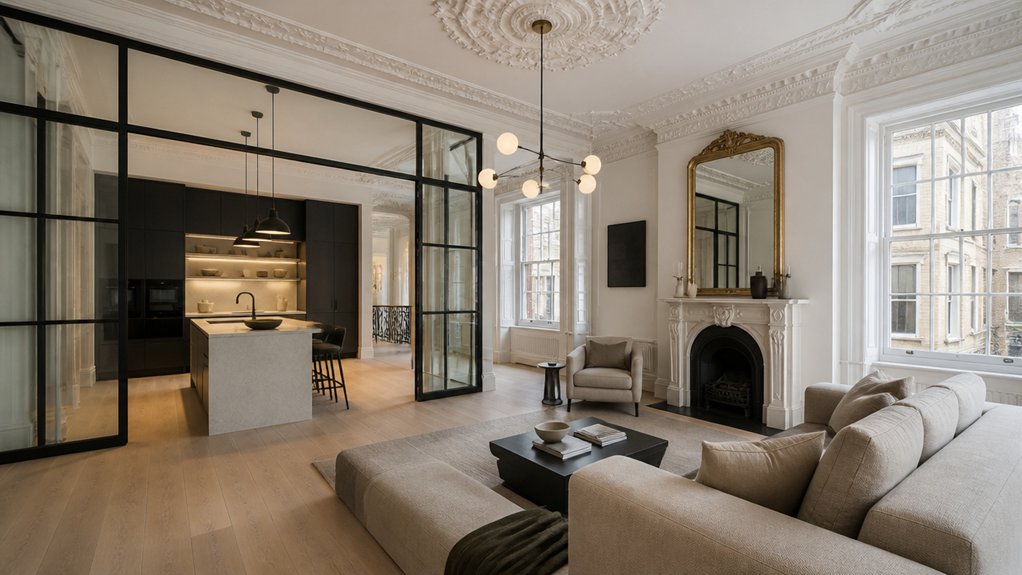
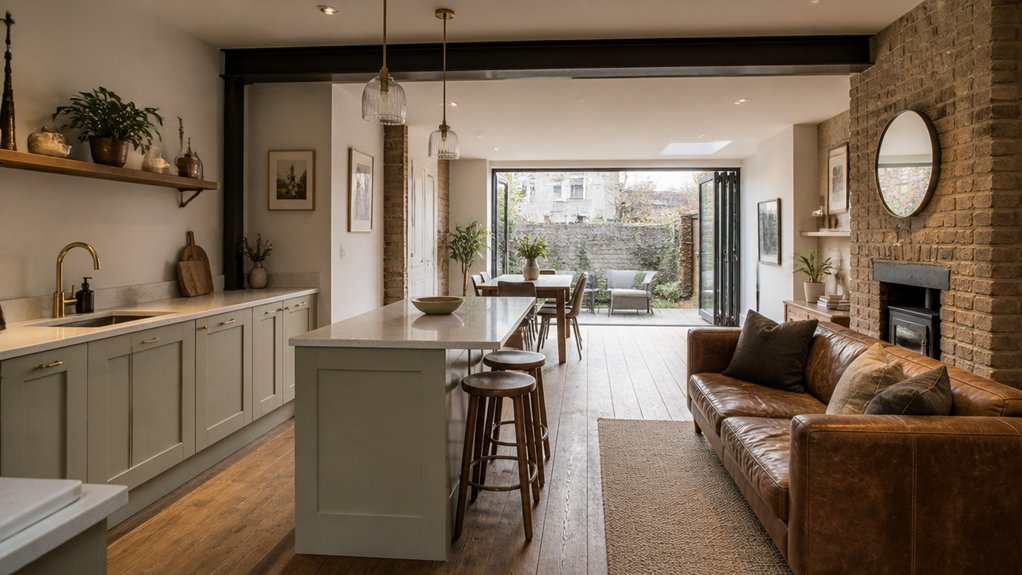
When you mix modern furniture with period features, you’ll get the best results by balancing old and new so neither your cornices nor your sofa steals the whole show.
Anchor the room with the architecture—fireplace, panelling, sash windows—then place clean-lined pieces where you actually lounge, keeping circulation easy and seating comfortable.
Choose complementary materials: pair oak, brass, and linen with matte-painted finishes, wool, and stone so the contrast feels intentional, not jarring.
Balance Old And New
Although your home’s cornices, sash windows, and original floorboards carry decades of character, you don’t have to furnish it like a museum to honour them. Start by letting period features stay visually dominant, then introduce modern pieces that sit quietly in the background.
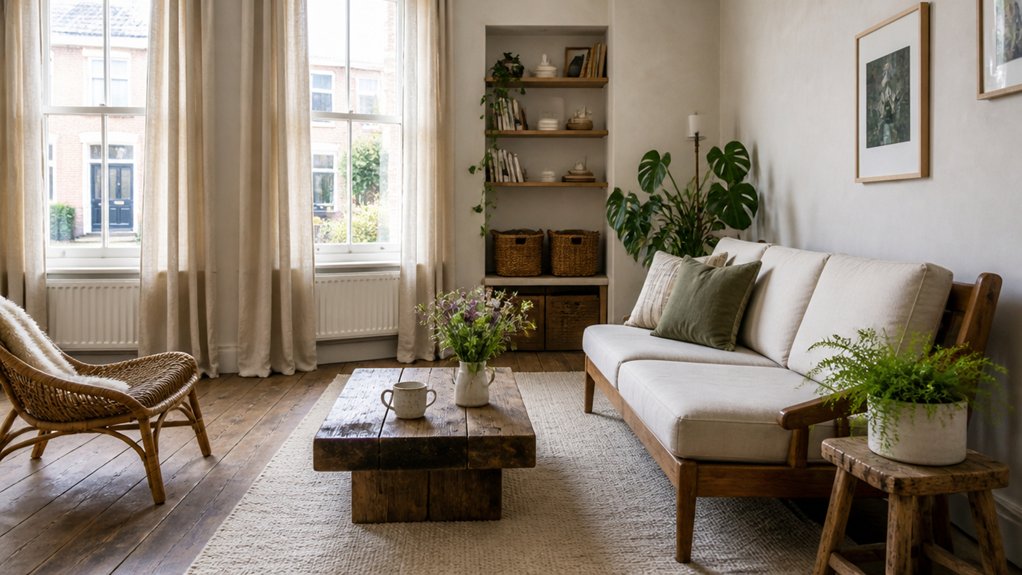
Choose low-profile sofas so skirting lines and fireplaces read clearly, and keep taller cabinetry away from ornate plasterwork. Anchor rooms with one or two antiques that explain the home’s historical significance, then balance them with contemporary lighting and streamlined storage for daily comfort.
You’ll protect architectural integrity by avoiding built-ins that cut across architraves or block shutters. Repeat a restrained colour palette so old and new feel intentional, not competing.
Keep layouts practical for circulation and modern routines.
Choose Complementary Materials
How do you mix modern furniture with period features without making either feel out of place? Start by matching material textures to what the house already signals. In a Victorian room with plaster cornices and dark joinery, choose modern pieces in walnut, smoked oak, or aged brass rather than glossy lacquer.
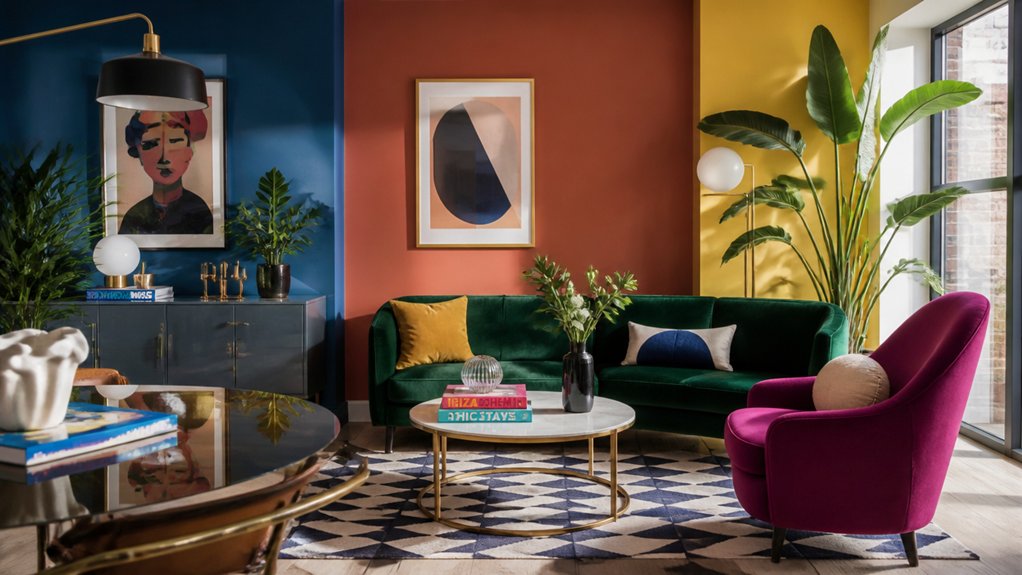
If you’ve got Georgian stone floors or wide pine boards, add upholstery in wool, linen, or leather with a matte finish that feels believable and comfortable. Keep color palettes grounded in historical pigments—chalky whites, ochres, deep greens, ink blues—then introduce one contemporary accent in a controlled shade.
Repeat a metal or timber twice, and let the period feature lead: modern forms can stay clean when the materials echo the past.
Built-In Storage That Looks Original to the House
If you want more storage without breaking a room’s period spell, built-ins should read as part of the original joinery rather than a modern add-on. Study skirting profiles, architraves, and panel spacing, then mirror them so your cabinetry follows the home’s original design language.
Keep face frames flush, match timber grain, and use period-appropriate paint sheens or waxed finishes.
Tuck hidden storage into window seats, under-stair cupboards, and chimney-breast alcoves, and size doors to align with existing rails and stiles.
Choose simple butt hinges, brass knobs, and traditional catches, but add soft-close buffers discreetly to protect fingers and quiet the room.
Ventilate closed sections for linens, and route cables behind panels so modern kit disappears.
Frequently Asked Questions
How Do I Handle Listed Building Consent for Interior Styling Changes?
You’ll need listed building consent before altering fixtures, finishes, or layouts; ask your conservation officer early. Document existing fabric, specify reversible methods, and justify comfort upgrades through Historic preservation and Interior authenticity, submitting detailed drawings.
What Budget Should I Plan for a Full Period-Meets-Modern Refresh?
Plan £10k–£40k; typical UK refresh costs jump 30% with heritage details. You’ll prioritise Vintage furnishings restoration, then add Modern lighting, insulation, and discreet heating, keeping mouldings, floorboards, and breathable finishes comfortable.
Which Tradespeople Specialise in Authentic Period Restoration and Repairs?
You’ll want a conservation builder, joiner for Antique carpentry, and specialist plasterer for Heritage plastering; add a stonemason, sash-window restorer, and period roofer. Choose trades who document methods, match materials, and keep draught-proof comfort.
How Can I Reduce Damp and Mould Without Harming Original Materials?
To slash damp and mould like lightning, you’ll boost ventilation, fix leaks, and keep gentle heat. Use Damp prevention: clear gutters, breathable lime plaster, vapour-open paint. Apply Mould removal strategies: borax wash, careful drying, no bleach.
What Insurance Considerations Apply During Major Restoration Work?
You’ll need specialist renovation cover: notify your insurer, increase rebuild sums, add public liability, and insure materials offsite. Document Historical authenticity and Modern integration, require contractor insurance, manage unoccupancy clauses, and schedule inspections.

Leave a Reply