

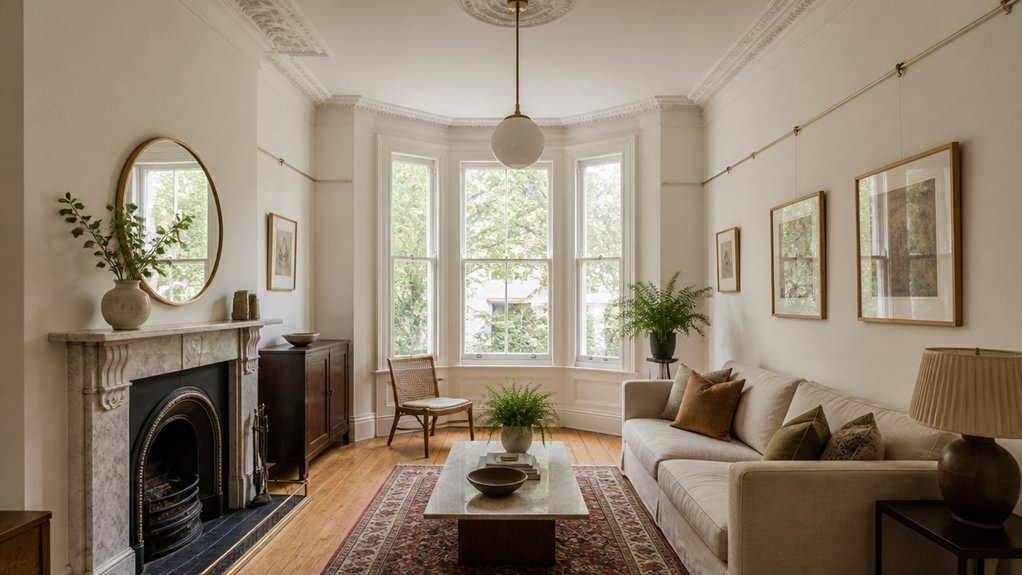
You don’t need to gut a Victorian terrace to make it feel newly composed; you just need to treat its details as the lead. Start with a deep clean, then restore what’s already there—sash windows, cornices, skirting—using calm, period-suited paint and a soft sheen. Add layered lighting to lift the darker corners, and place runners where footsteps naturally fall. Once you’ve done that, the quick wins become obvious…
Key Takeaways
- Deep-clean and declutter, then rearrange furniture to respect Victorian proportions and improve sightlines without structural work.
- Refresh paint with warm off-whites, lighter ceilings, and deeper trim tones using breathable, low-VOC finishes on lime plaster.
- Upgrade lighting in layers—warm dimmable ambient, focused task, and subtle accents—to highlight period features and control mood.
- Preserve and elevate originals: restore sash windows, patch plaster cracks, reseat hearth tiles, and polish brass so heritage details feel intentional.
- Lift kerb appeal cheaply: wash the façade, repaint ironwork and door in period shades, add brass numerals, and use symmetrical pots and warm bulbs.
Victorian Terrace Quick Wins (Low Cost, Low Mess)
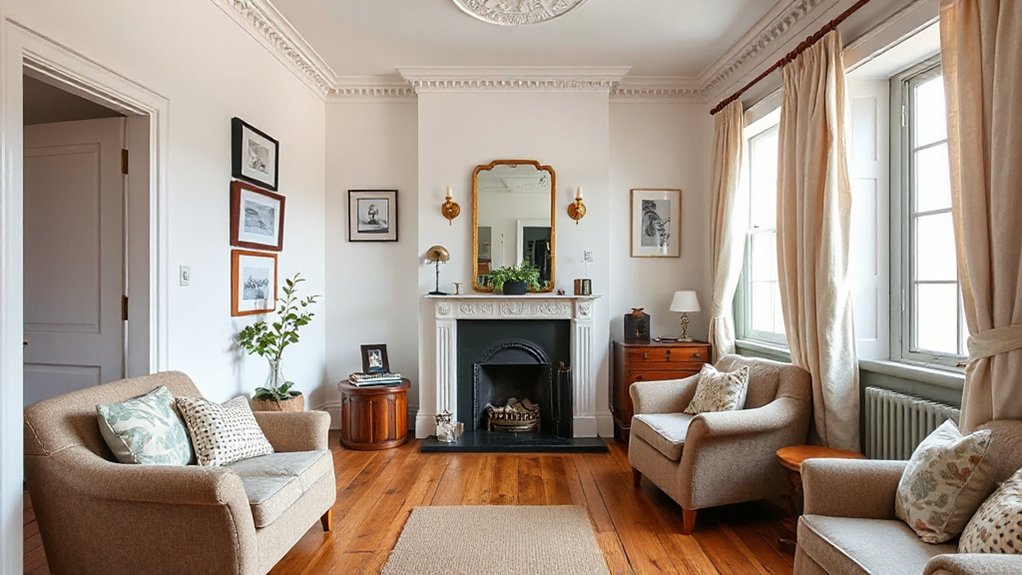
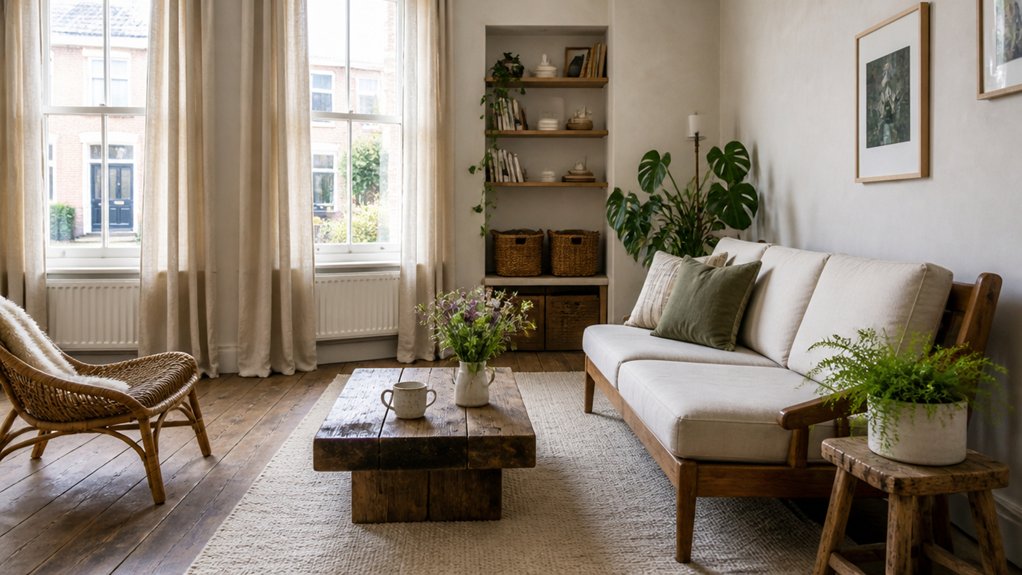
A few small, well-judged tweaks can freshen a Victorian terrace in a weekend without builders, dust sheets, or big spend. Start with a thorough clean: polish brass knobs, lift grime from skirting boards, and revive tiled hearths with a gentle scrub so original details read crisp again. Swap heavy curtains for washed linen, and add a slim Victorian-style runner to sharpen the hall’s axis.
Use furniture rearrangement to respect proportions: pull sofas off radiators, angle an armchair to the bay, and keep sightlines clear to fireplaces and cornices.
For a quick garden transformation, edge beds, top-dress pots, and string warm white festoon lights along the fence; your rear reception instantly feels larger. Finish with fresh flowers and framed prints, rehung at picture-rail height.
Brighten a Victorian Terrace With the Right Paint
Once you’ve polished the brass and cleared the sightlines, paint gives you the biggest lift for the least disruption—especially in a Victorian terrace where light can fall away behind deep reveals and long halls.
Choose a warm off-white with a soft sheen for walls to bounce daylight without looking stark against aged timber. Keep ceilings a half-step lighter to visually raise them, and use a slightly deeper tone on skirting and architraves to sharpen original profiles.
In rooms with ornate cornices or ceiling roses, pick a calm, historically sympathetic palette so the plasterwork reads crisp, not busy. For Victorian architecture, avoid high-chroma modern brights; they flatten detail.
For Heritage preservation, use breathable, low-VOC paints on old lime plaster to prevent trapped moisture.
Lift Dark Victorian Rooms With Layered Lighting
You’ll lift a dark Victorian room fastest by layering light, not just upping the wattage. Start with a warm ambient base, add focused task lighting where you read and work.
Then use accent pools to soften corners and steady sightlines. Finish with discreet highlights on period features—cornices, ceiling roses, and chimneybreasts—so the architecture earns the spotlight.
Mix Ambient, Task, Accent
Because Victorian terraces often rely on narrow plans, tall ceilings, and deep bay windows that don’t always carry daylight to the back, layered lighting makes the biggest difference fastest. Start with ambient lighting: a dimmable ceiling pendant or discreet track gives an even wash, while wall lights soften corners and reduce harsh shadows.
Then define task zones—reading chair, desk, and kitchen run—with focused lamps or under-cabinet LEDs so you’re not overlighting the whole room. Add accent with small, warm sources: a picture light over a print, a shaded table lamp on a console, or LED tape tucked along a shelf.
Keep colour temperature around 2700K, and group circuits so you can shift mood without rewiring.
Highlight Period Features
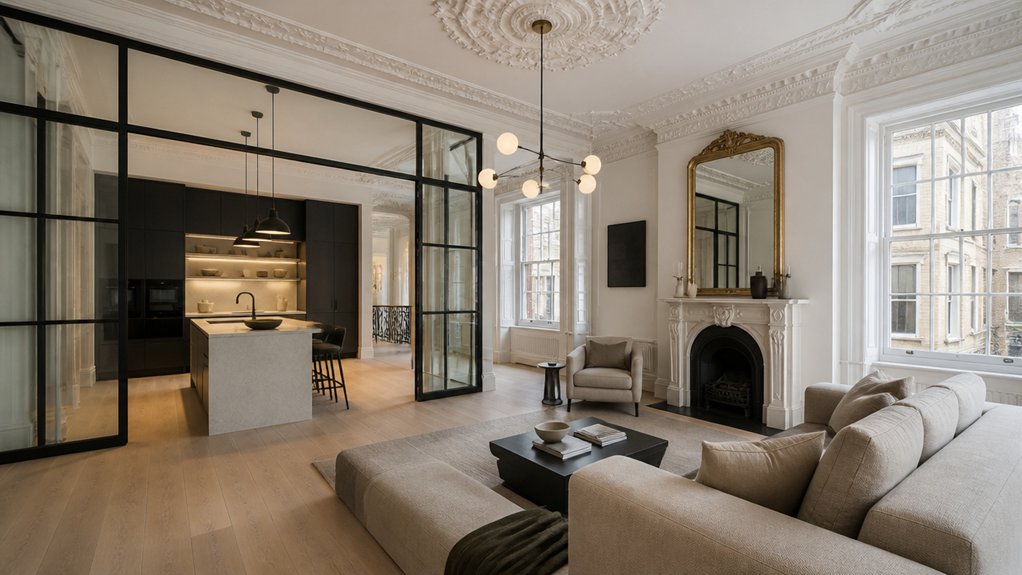
Layered lighting sets the mood, but it also lets you show off what a Victorian terrace does best: its original details. Start with a warm ceiling wash to skim across decorative cornices and reveal their crisp profiles without glare. Then add a pendant or small chandelier centered on the ceiling rose; keep the drop modest so it reads as architectural, not fussy.
Bring ornamental plasterwork to life with adjustable wall lights aimed upward, and place picture lights over framed prints to echo the home’s gallery-like rhythm. In alcoves, fit discreet LED strips on the top shelf to lift shadows and outline joinery.
Finally, use shaded table lamps on sideboards to soften contrasts at eye level. Stick to 2700K bulbs and dimmers so evenings feel rich, not gloomy.
Upgrade Victorian Floors With Rugs and Runners
One well-chosen rug can soften tired Victorian floorboards and sharpen the terrace’s proportions at the same time.
Start by measuring each room’s “furniture island” so you don’t float a tiny mat on expansive Victorian flooring; aim for front legs on the pile and a neat border of timber showing.
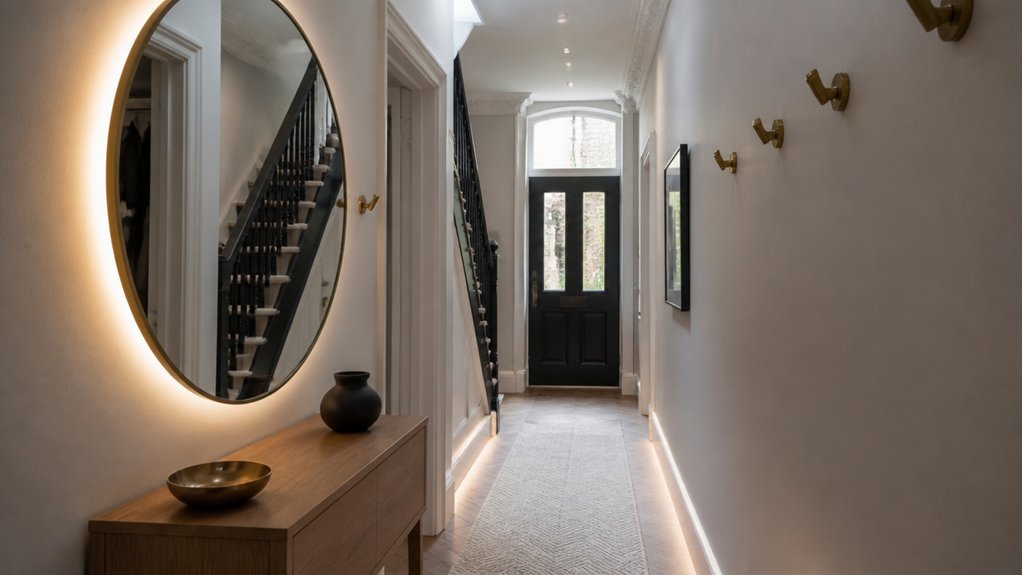
In halls, swap bare boards for a runner that tracks the sightline from fanlight to stair, fixing it with discreet rods or grippers to prevent curl.
Choose patterns that echo the era—Persian-style medallions, indigo ground, or muted florals—while keeping colours slightly dusty rather than loud.
Try Rug layering: a flatwoven jute base steadies worn boards, then add a smaller wool rug for warmth and definition.
Rotate seasonally to even wear.
Make Victorian Period Features Look Intentional
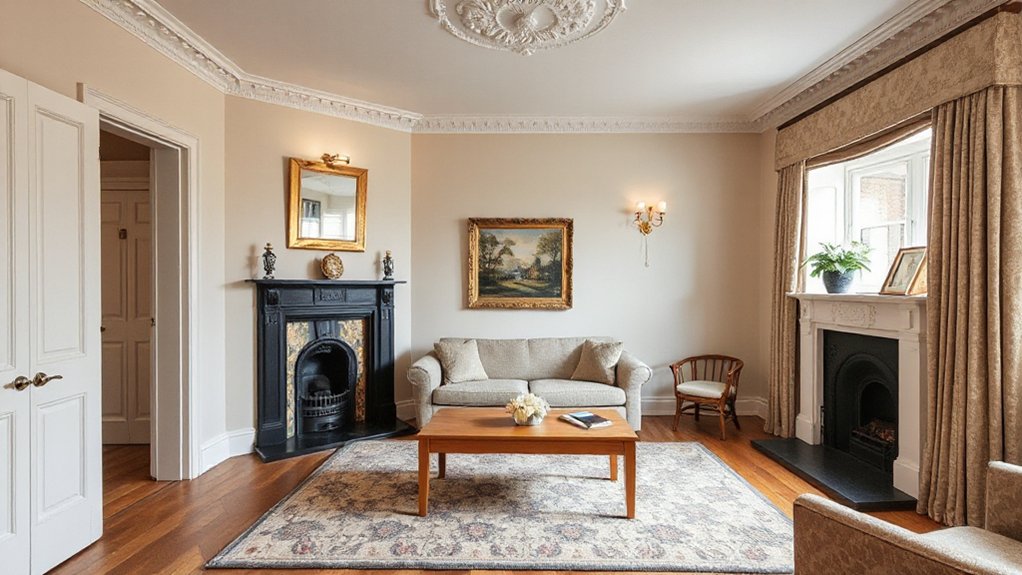
Let your terrace’s original cornices, ceiling roses, and sash windows take centre stage, and keep repairs crisp so they read as chosen, not tolerated.
You’ll make them feel purposeful by repeating a restrained colour palette across walls, woodwork, and metalwork, so old lines and new finishes sit in the same register.
Then mix antiques with modern lighting and clean-lined furniture, and you’ll get a room that honours the period without turning into a set piece.
Celebrate Original Details
Why hide the very elements that make a Victorian terrace feel authentic? You’ll get more impact by framing original features as deliberate centrepieces rather than quirks to disguise.
Strip paint from a stair balustrade, wax it, and let the turning and chamfers show off Victorian craftsmanship.
Keep cornices crisp: patch hairline cracks, then run a fine bead of decorator’s caulk where plaster meets wall so the profile reads cleanly.
Restore sash windows with new cords and brush seals, and retain the old glass where you can for its waviness and historical significance.
Re-seat loose tiles at the hearth, polish brass, and swap bulky fittings for period-appropriate switches.
Let wear remain subtle evidence, not neglect.
Unify With Color Palette
Original features read best when they sit inside a considered scheme, so use a tight colour palette to make cornices, joinery, and fireplaces feel chosen rather than merely inherited. Pick three related tones: one for walls, one for woodwork, one for accents, and repeat them room to room to build color harmony.
Let paint psychology guide you: warm off-whites flatter plasterwork; muted sages and smoky blues calm narrow halls; oxblood or deep green gives fireplaces gravitas without shouting. Keep ceilings a step lighter to lift proportions, and paint skirtings, architraves, and panelled doors in the same finish so the eye reads them as a deliberate frame.
Test samples beside original floorboards and in evening lamplight; Victorian rooms change character after dusk, and your palette must hold together then too.
Mix Antique And Modern
A Victorian terrace feels most current when you treat its period details as the “antique” layer and then add clean, modern pieces that give those features context rather than competition. Keep cornices, ceiling roses, and fireplaces crisp, then choose one statement of Antique furniture—an inlaid sideboard, a mahogany table, or a buttoned chair—as your anchor.
Balance it with Modern accessories that sharpen the lines: a slim black floor lamp, a graphic rug, or clear glass pendants that don’t crowd the plasterwork. Repeat materials thoughtfully—brass against original door knobs, matte paint beside glossy tiles—so nothing looks accidental.
Use modern storage with simple fronts to calm busy skirting boards. Finally, edit: fewer, better objects let the Victorian craftsmanship read as intentional and fresh.
Boost Victorian Terrace Curb Appeal in a Weekend
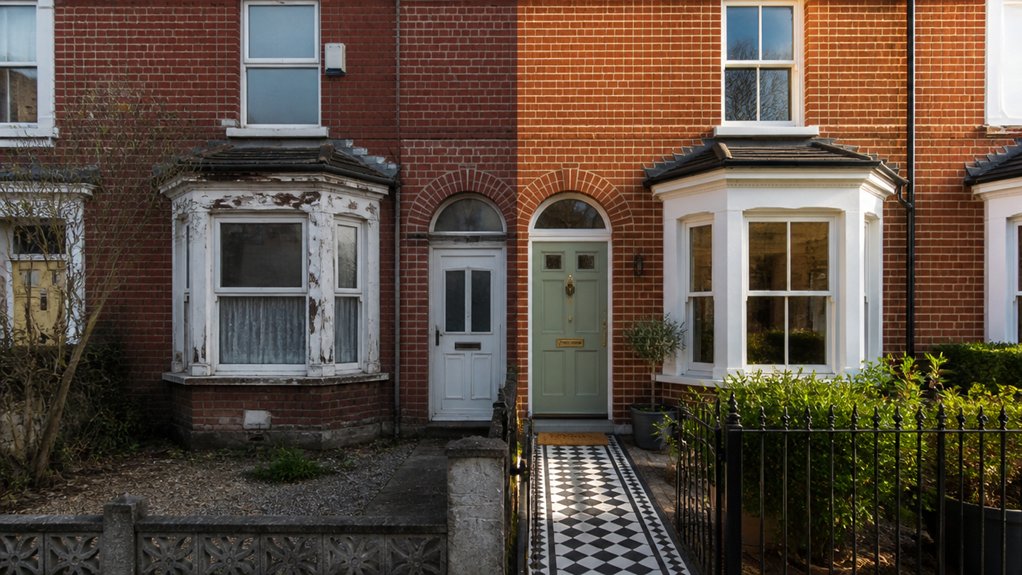
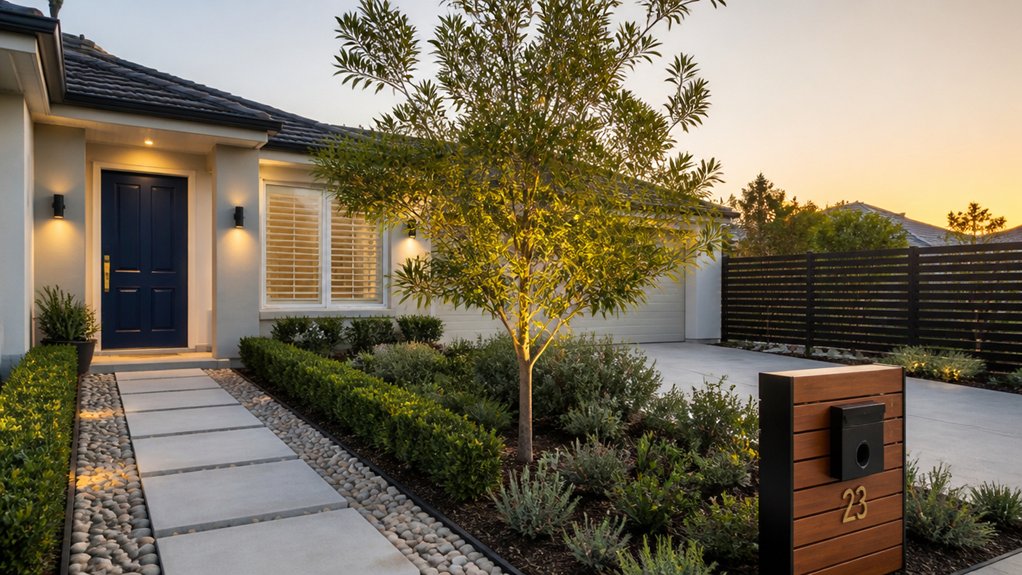
Although your Victorian terrace has endured decades of weather and footfall, you can lift its street presence in a single weekend by focusing on the era’s telltale details: crisp paintwork on timber trim, a freshly polished door in a heritage-appropriate shade, and tidy ironwork that reads sharp against the brick.
Start by washing soot from the façade, then touch up sash frames and cornices with a durable satin that suits Victorian architecture. Strip flaking paint from balustrades, prime, and recoat in deep black for clean contrast.
Swap plastic numerals for brass, and fit a period letter plate. Add two symmetrical pots beside the steps, clipped and understated. Keep signage minimal, and choose warm bulbs so the entry glows.
You’ll honour Historical preservation without overdoing it.
Frequently Asked Questions
Can I Refresh a Victorian Terrace if It’s a Listed Building?
Yes, you can, but you’ll need listed building consent for many changes to guarantee Historical preservation. You can still introduce Modern aesthetics through reversible finishes, gentle repairs, and like-for-like materials that respect period details.
Do I Need Planning Permission for Replacing Victorian Windows or Doors?
It’s not cut and dried: you’ll often need consent, especially if you’re listed or altering façades. Choose Window restoration over wholesale change; for Door replacement, match profiles, glazing bars, and paint, then consult your council.
How Can I Reduce Draughts and Heat Loss Without Changing Original Features?
You can cut draughts and heat loss by adding discreet Draft proofing techniques—brush seals, sash cords, chimney balloons—while keeping joinery intact. Choose reversible Insulation upgrades: loft quilt, suspended-floor insulation, thermal curtains, secondary glazing.
What’s the Best Way to Deal With Damp or Mould in Victorian Walls?
You’ll tackle damp by improving airflow and stopping moisture at the source: check gutters, repoint with lime, and fix leaks. For Damp prevention and Mould treatment, ventilate daily, wipe with vinegar, and dehumidify.
How Do I Safely Update Electrics and Plumbing Without Major Disruption?
Like threading silk through old lace, you’ll update safely by hiring NICEIC and Gas Safe pros, mapping circuits, using surface trunking, and staged shutoffs. Add Smart lighting and Eco upgrades via accessible runs, not chased plaster.


Leave a Reply