

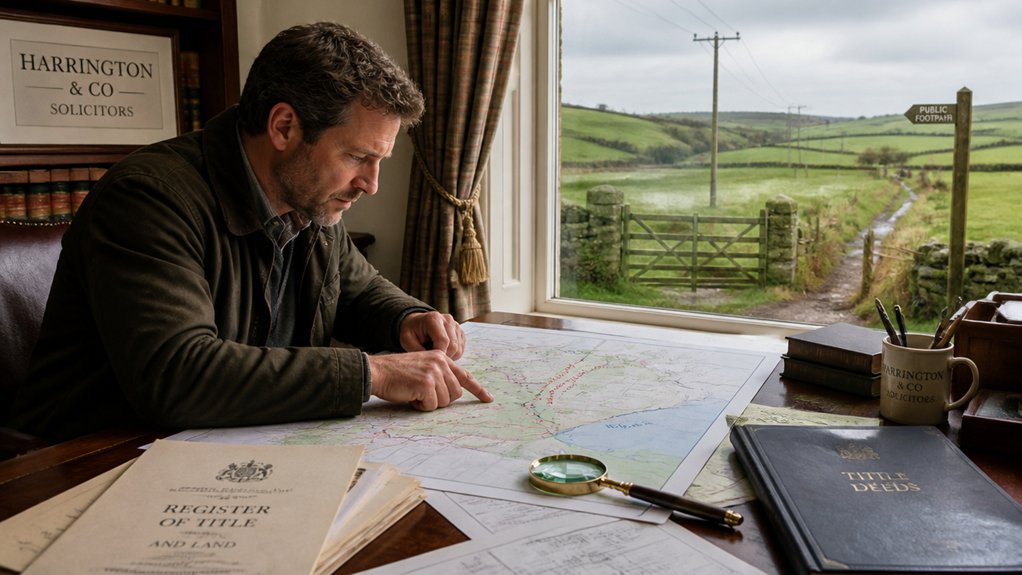
When you buy land in the UK, you must do more than agree a price and sign a contract. You’ll need to confirm ownership, legal access, boundaries, planning constraints and any covenants that could limit your intended use. Searches, surveys and specialist legal advice can expose risks before you commit. Miss one issue, and a seemingly straightforward plot could become costly—so start with the checks that matter most.
Key Takeaways
- Define the intended use, budget, location, access, utilities, and non-negotiable site requirements before searching for land.
- Check planning policy, zoning, flood risk, environmental designations, and planning history; never assume land has development potential.
- Instruct a solicitor to verify title, legal boundaries, public-highway access, rights of way, covenants, easements, and third-party restrictions.
- Commission appropriate searches and surveys, including local authority, drainage, environmental, contamination, ecological, and topographical checks where relevant.
- Exchange contracts only after issues are resolved; completion, Stamp Duty Land Tax, and Land Registry registration secure your legal ownership.
Define Your Use, Budget and Land Criteria
Before you search for land, define exactly how you intend to use it, whether for a home, agriculture, development, woodland, recreation, or investment. Your intended use determines the location, acreage, access, services, title requirements, and acceptable restrictions.
Set a total budget that includes the purchase price, legal fees, surveys, taxes, finance costs, insurance, fencing, access works, and ongoing maintenance. Don’t assume inexpensive land will remain inexpensive once essential works are included.
Create clear criteria before viewing sites. Specify your minimum and maximum plot size, preferred region, road access, water supply, drainage, boundaries, and proximity to utilities.
Review Zoning regulations and local policy constraints that could limit your intended activities.
Factor in Environmental considerations, including flood risk, protected habitats, contamination, trees, and public rights of way.
Keep your requirements realistic and document non-negotiables.
Find UK Land and Check Planning Potential
Search through specialist land agents, rural estate agents, auction houses, property portals, local networks and direct approaches to owners, but treat every listing as a lead rather than proof of development potential.
Compare asking prices with recent local land sales and investigate why a plot remains unsold.
Check the local planning authority’s planning map, adopted Local Plan, neighbourhood plan and planning history.
Identify settlement boundaries, allocated sites, green belt designations, flood risk zones and likely policy support or resistance.
Pre-application advice can clarify whether your proposal is realistic before you commit.
Assess whether the land’s size, location and physical characteristics suit your intended use.
Environmental restrictions, protected habitats, trees, contamination and drainage constraints can materially affect prospects and costs.
Historical land rights may also influence what development is acceptable.
Don’t assume nearby building guarantees permission on your plot.
Check Title, Access, Boundaries and Restrictions
Once you’ve identified a viable plot, obtain the Land Registry title register and title plan to confirm the seller’s ownership, any mortgages, rights of way, covenants, easements and restrictions affecting use. Verify that the title covers the land you expect to buy and that no adjoining owner has rights that could limit development, access or privacy.
Inspect the site boundaries against the plan and physical features, but don’t assume fences or hedges mark the legal line. Confirm you have permanent, enforceable vehicle and pedestrian access from a public highway; a private track may require maintenance contributions.
Review restrictive covenants carefully, as they can prohibit building, business use or subdivision despite favourable zoning regulations. Establish whether rights benefit neighbouring land and whether third-party consent is required.
Clear Land ownership and workable access are essential before you commit.
Arrange Searches, Surveys and Land Finance
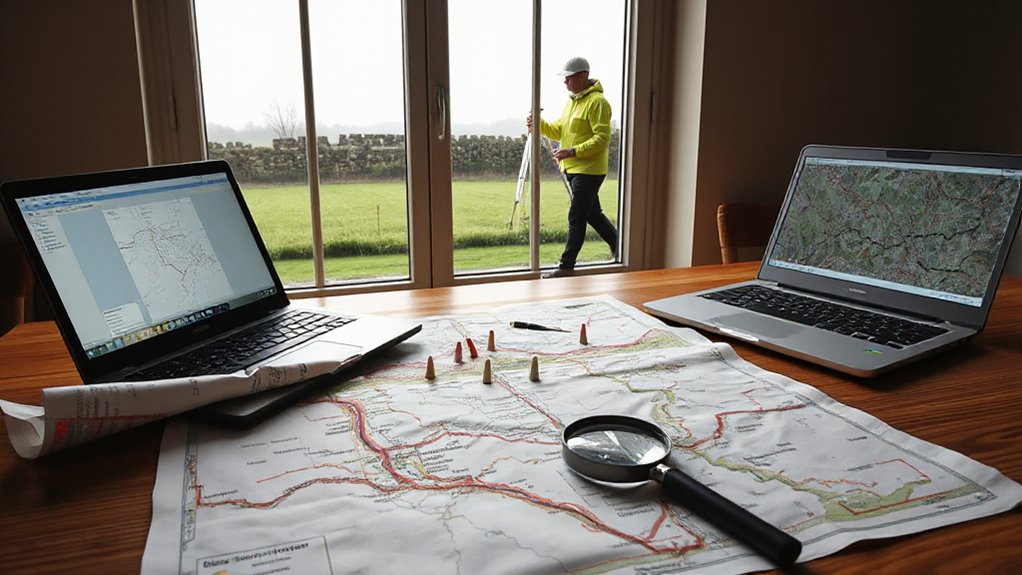
With title, access and boundaries checked, instruct your solicitor to order the searches and arrange surveys that match the plot’s risks and intended use. Local authority, drainage and water, environmental and mining searches can reveal planning history, contamination, flood exposure, sewer routes and ground instability.
Environmental considerations may affect both development costs and mortgage availability. Confirm applicable zoning regulations, local-plan policies and any designations, such as Green Belt, conservation areas or protected habitats, before relying on a proposed use.
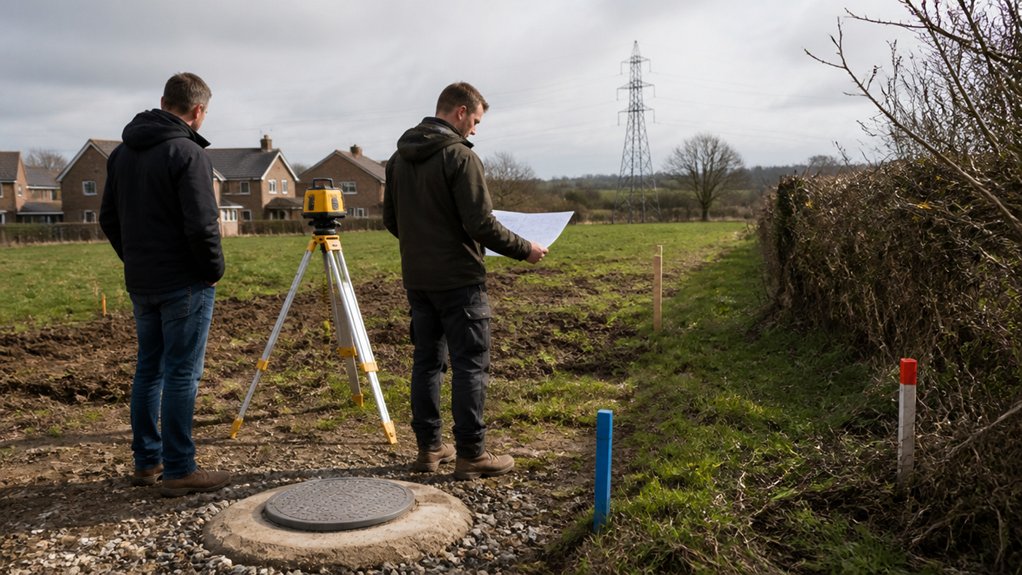
Commission a measured boundary or topographical survey where features, levels or encroachments matter. For development land, obtain geotechnical and ecological advice where appropriate.
Arrange finance early: lenders often require a valuation, clear access and evidence of planning prospects. Compare loan terms carefully, including deposit requirements, interest rates, fees and conditions.
Don’t treat lender approval as proof that the land suits your plans.
Exchange Contracts, Complete and Register Ownership
After your solicitor has resolved the key legal and survey issues, agree a completion date and exchange contracts only when you’re ready to commit. Contract exchange makes the agreement legally binding, so you’ll usually pay a deposit and risk losing it if you withdraw without a contractual right.
Confirm the contract accurately identifies the land, includes any agreed conditions, and states responsibility for insurance, boundaries and access.
On completion, your solicitor sends the balance of the purchase price, receives the transfer documents and confirms that you can take possession. You should retain all signed paperwork, including plans and rights affecting the land.
Your solicitor must then deal with Stamp Duty Land Tax, where payable, and submit the application for ownership registration at HM Land Registry. Registration protects your legal title and records relevant restrictions, easements and charges.
Frequently Asked Questions
Can Overseas Buyers Purchase Land in the UK?
Yes, you can generally purchase UK land as an overseas buyer. Foreign ownership is permitted, but land restrictions, planning rules, tax obligations, anti-money-laundering checks, and registration requirements may affect your purchase and ongoing responsibilities.
Are There Taxes on Buying Land in the UK?
Yes, you’ll usually pay Stamp Duty Land Tax in England and Northern Ireland, with different rules in Scotland and Wales. Land valuation affects liability, while ownership rights don’t remove tax obligations. Check applicable surcharges carefully.
Can I Buy Land Through a Limited Company?
Yes, you can buy land through a limited company, placing ownership behind a corporate gate. You’ll need Land registration, may face Planning permissions requirements, and should consider tax, finance, liability, and ongoing company compliance.
What Happens if the Seller Pulls Out Before Exchange?
Before exchange, Seller withdrawal usually ends negotiations without Contract penalties, unless you’ve signed a separate agreement. You can’t force completion, but you may seek recovery of documented costs only where a binding arrangement permits it.
Do I Need Insurance for Vacant Land?
You don’t legally need insurance for vacant land, but you should consider public liability cover. For example, if someone injures themselves trespassing, you could face claims. Check Land valuation and Zoning regulations before choosing cover.





Leave a Reply