

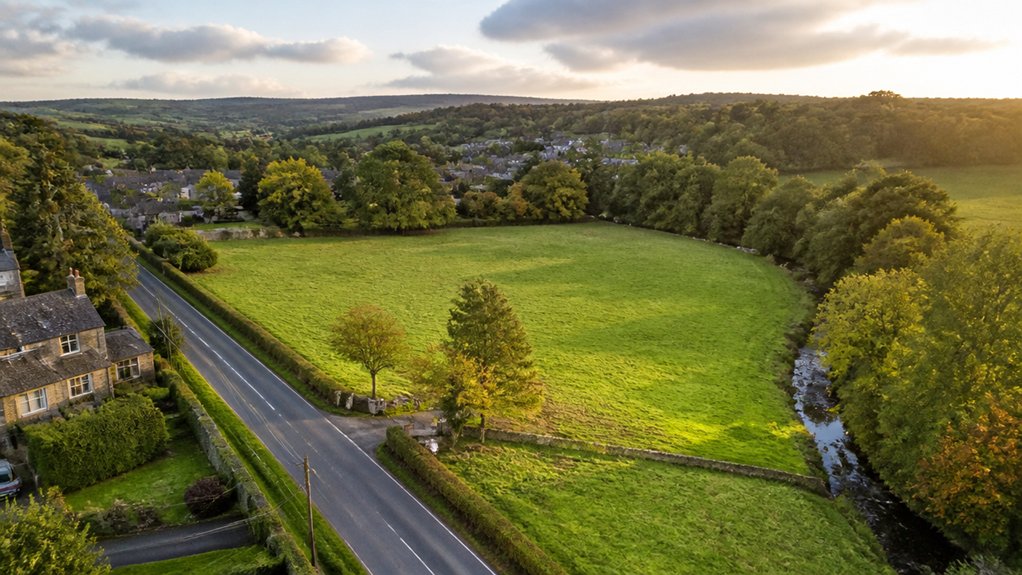
In England, around 90% of land is outside built-up areas, yet only a small share is realistically available for development. You should assess more than the asking price when judging a UK plot: planning status, access, utilities, flood risk, ground conditions and local demand can each change its true value. A cheap site may carry costly constraints, while a higher-priced plot may offer clearer potential—if you know where to look next.
Key Takeaways
- Planning permission, local plan allocation, and realistic development potential usually have the greatest impact on a UK plot’s value.
- Location matters: transport links, schools, amenities, broadband, local demand, and comparable plot sales influence price and resale appeal.
- Secure legal access, clear boundaries, registered easements, and no restrictive title issues are essential for financing, development, and sale.
- Usable buildable area matters more than acreage; shape, frontage, topography, flood risk, and environmental constraints can reduce capacity.
- Assess total costs, including utilities, drainage, surveys, legal fees, remediation, infrastructure upgrades, and ongoing maintenance liabilities.
The Main Factors That Affect UK Land Value
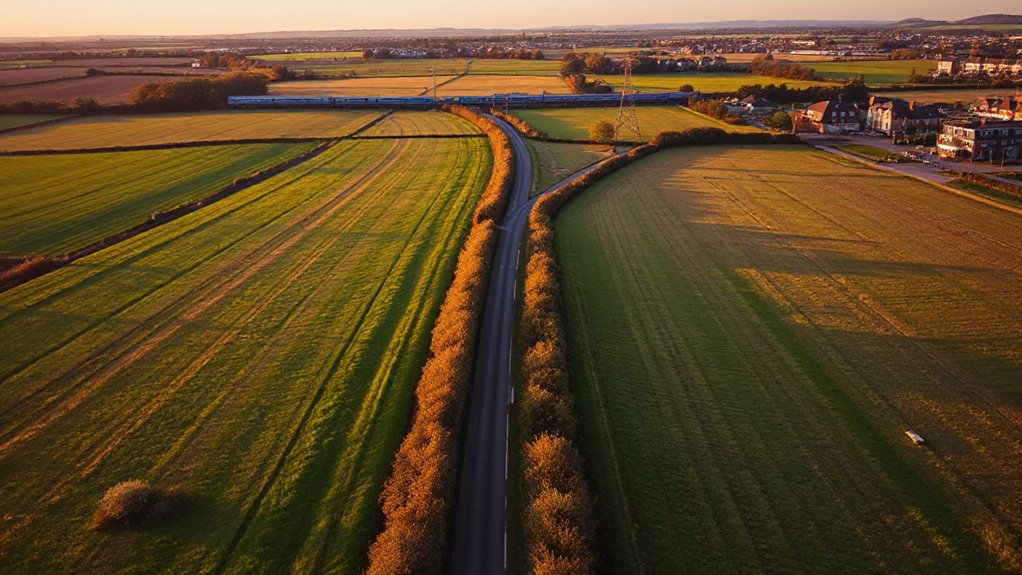
UK land value depends primarily on location, planning potential, permitted use, access, and local market demand. You should assess each factor before treating an asking price as evidence of worth.
Planning permission can materially increase value by allowing housing, commercial space, or other development, while restrictive designations can limit viable uses. Agricultural zoning generally constrains residential development unless policy changes or consent is secured.
Legal access, utility connections, drainage capacity, boundaries, and title conditions also affect development costs and saleability.
Physical characteristics matter: flood risk, contamination, slope, soil quality, and protected habitats may require surveys, mitigation, or specialist approvals.
Historical significance can create appeal but may impose listed-building, archaeology, or conservation constraints.
You should verify policies, rights, and technical risks through official records and qualified professional advice before committing funds.
Location, Demand and Comparable Land Prices
You should assess how proximity to transport, schools, shops and other amenities affects a site’s appeal and likely value.
Strong buyer demand and credible development potential can increase land prices, particularly where planning policy supports future use.
Compare recent sales of similar nearby plots to establish evidence-based pricing benchmarks.
Location and Local Amenities
Location shapes land value because it determines access to employment, transport links, schools, shops, and other services that buyers consider essential. You should measure journey times, service frequency, school catchments, broadband coverage, and proximity to healthcare rather than relying on broad postcode assumptions.
A plot near a railway station or established town centre may command more because daily convenience is demonstrably stronger.
Compare recent sold prices for similar plots within the same local authority area, adjusting for road access, utilities, plot size, topography, and nearby nuisances such as traffic or industrial activity.
Check whether Historical land grants restrict rights, access, or use, as these can affect value.
Ecological considerations also matter: flood zones, protected habitats, mature trees, and drainage constraints can alter a site’s practical appeal and associated costs.
Demand and Development Potential
Demand determines whether a site’s advantages translate into a higher land price, so assess the depth of the local buyer and developer market rather than relying on asking prices. You should examine housing demand, rental absorption, population change, employment growth and planned infrastructure, as these indicate whether future homes or commercial space will attract occupiers.
Check local planning policy, allocation status, density expectations and constraints that affect deliverable units. A plot with realistic consent prospects, suitable access and service capacity can command stronger interest than land requiring costly mitigation.
Track market trends through new-build sales rates, vacancy levels and developer activity. Your investment strategies should reflect the site’s likely end use, development timetable, finance costs and exit options.
Strong demand supports value only when you can convert planning potential into a viable, marketable scheme.
Comparable Land Sale Prices
Comparable land sale prices test whether a site’s planning potential and market demand support the value being sought. You should compare recent, completed transactions for plots with similar location, size, access, services, topography and permitted use.
Asking prices provide context, but sold prices reveal what buyers actually paid.
Adjust each comparable for material differences. A plot with outline consent, road frontage or utility connections may justify a premium over land without them.
Agricultural zoning usually limits development value unless policy changes or a credible planning route exists.
Check transaction dates carefully: shifting interest rates, local housing supply and planning decisions can quickly alter pricing.
Historical land value data helps you identify whether current expectations reflect sustained demand or a temporary spike.
Use several verified comparables, not one exceptional sale, to establish a defensible range.
Planning Permission and Development Potential
Planning permission can materially increase land value because it converts uncertain potential into a legally defined development opportunity. When you assess a plot, distinguish between full permission, outline permission and speculative potential.
Full consent usually provides the clearest valuation evidence, since it confirms the approved use, scale, access and conditions. Outline consent can still add value, but reserved matters may affect achievable density, design and costs.
You should review planning conditions, Section 106 obligations, Community Infrastructure Levy liability and required surveys. Zoning regulations influence permitted uses and development intensity, while environmental restrictions may limit building footprints, require mitigation or prevent development altogether.
Check whether permission remains valid, whether conditions have been discharged and whether the proposed scheme is financially viable after construction, infrastructure and professional costs. A consented plot isn’t automatically profitable; its value depends on deliverable net development value.
Local Plans and Future Land Value
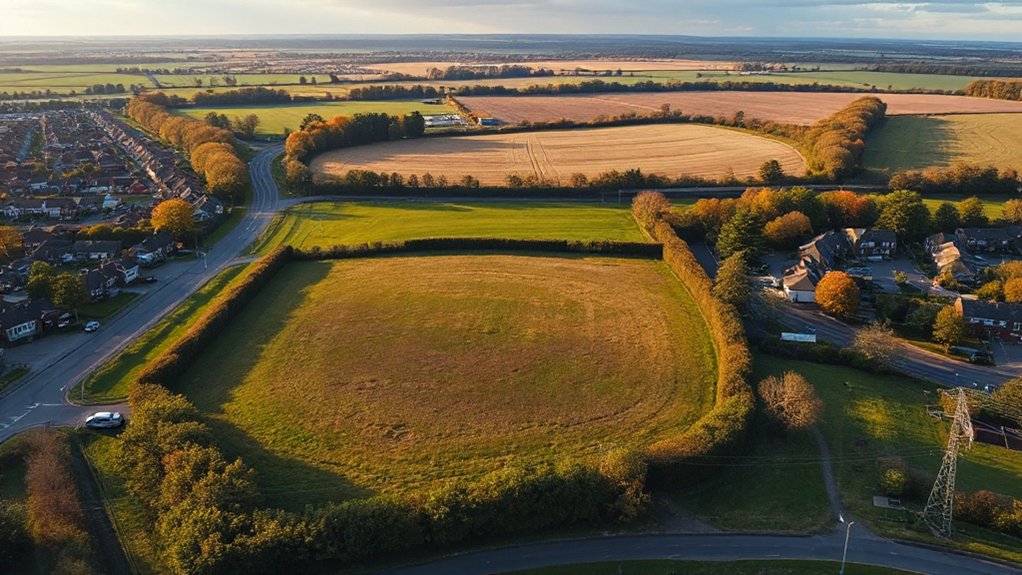
Local plans shape future land value by identifying where councils expect housing, employment, infrastructure and environmental protection to occur over the plan period. You should check the adopted plan, proposals map and supporting evidence before pricing a plot.
Land allocated for housing or mixed use may attract stronger demand because policy support reduces uncertainty, although delivery constraints still matter. Conversely, land outside settlement boundaries may face limited prospects where zoning regulations direct growth elsewhere.
Examine planned roads, schools, utilities and town-centre investment, as these can improve market appeal and development viability. You should also assess environmental restrictions, including flood-risk designations, protected habitats, green belt policy and landscape designations.
Emerging plans can signal future change, but they carry less weight than adopted policy. Compare consultation stages, inspector findings and housing targets to judge whether proposed allocations are likely to survive examination.
Access Rights and Legal Entry
Access rights can materially affect land value because a plot without secure, practical legal entry may be difficult to finance, develop or sell.
You should confirm that the title includes a clearly defined right of way from an adopted highway to the land. Check the route’s width, permitted users, vehicle access, maintenance obligations and whether gates or restrictions limit use.
Easement rights must be registered, accurately mapped and sufficient for your intended use; informal arrangements with neighbours rarely provide equivalent security.
Review the Land Registry title, any historic conveyances and planning documents for conflicting obligations.
Leasehold issues can also reduce value where access depends on a landlord’s consent, a short remaining term or restrictive lease covenants.
If access crosses third-party land, obtain legal advice before agreeing a price, as remedial rights may be costly or unavailable.
Utilities and Services That Affect Land Value
Secure entry alone doesn’t make a site usable or valuable: you must also establish whether it has reliable connections to water, electricity, drainage, gas, telecommunications and broadband. Confirm capacity, connection points, ownership and quoted installation costs with the relevant network operators, rather than relying on agent descriptions or nearby properties.
Utility infrastructure can materially alter your development budget and timetable. A visible electricity line, for example, doesn’t prove sufficient supply for new homes or commercial use. Likewise, mains water or foul drainage may require off-site upgrades, easements or pumping arrangements.
Obtain written estimates for service connections, including reinforcement charges, metering, road-opening works and lead times. Check whether broadband provision meets likely occupier requirements.
If services are already connected, verify account status, pipe and cable routes, and whether any private systems impose maintenance liabilities.
Ground, Flood and Contamination Risks
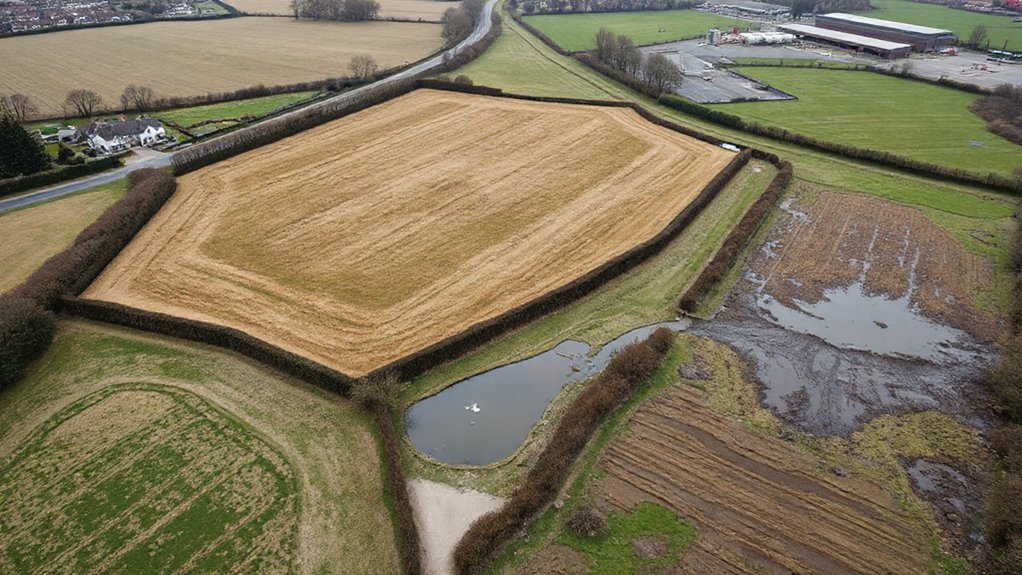
Ground conditions, flood exposure and contamination can affect both a site’s buildability and its market value, often creating costs that aren’t apparent from a surface inspection. You should commission a desk study and, where indicated, intrusive ground investigation before agreeing a price.
Assess soil stability, including shrinkable clay, made ground, landslip history and mining legacy, as these can require deeper foundations or ground improvement. Check Environment Agency flood maps, local drainage records and historic flood events; insurance availability may also signal practical risk.
Review past industrial, landfill and agricultural uses, which can leave hydrocarbons, asbestos, heavy metals or groundwater contamination. Remediation, waste disposal and monitoring obligations can materially alter development viability.
Surveyors, geotechnical engineers and environmental consultants can quantify these risks, helping you compare likely mitigation costs against the land’s expected value.
Plot Size, Shape and Buildable Area
You should assess usable area, not just total acreage, because setbacks, easements, and irregular boundaries can reduce development capacity.
A regular shape and adequate frontage typically support efficient layouts, while narrow or fragmented parcels raise construction and access costs.
You’ll also need to confirm legal and physical access, as constrained entry can limit both buildable area and market value.
Plot Dimensions And Usability
Plot dimensions influence land value because they determine how efficiently a site can accommodate permitted development. You should compare gross acreage with the net developable area after allowing for required setbacks, parking, drainage, utilities and landscaping considerations. A larger plot doesn’t automatically justify a higher price if only a small proportion can support buildings or compliant external works.
Measure frontage, depth and internal proportions against the likely development layout. Adequate dimensions can improve unit numbers, floor-area efficiency and construction logistics, while limited usable space may reduce design options and increase costs per dwelling.
Review local planning policy, site surveys and preliminary drawings to test realistic capacity rather than relying on estate-agent descriptions. Environmental restrictions can further reduce usable land through protected buffers, habitat retention or flood-mitigation areas.
Value the plot on its evidenced buildable yield, not its headline size alone.
Shape, Access And Constraints
Irregular shape, constrained access or physical encumbrances can reduce a site’s effective buildable area even where its gross size appears adequate. You should test whether the plot can accommodate a compliant dwelling, parking, turning space, gardens and required separation distances.
Narrow frontages, triangular corners and long rear strips often create unusable land rather than valuable development capacity.
Assess access width, visibility splays, highway authority requirements and rights of way before pricing the site. A shared drive may limit vehicle movements or impose maintenance liabilities.
Review land topography for steep gradients, retaining-wall costs, drainage problems and safe construction access.
Confirm boundary delineation through title plans, surveys and physical markers, since discrepancies can shrink the usable footprint or trigger disputes.
You’ll value a plot more accurately when you calculate its net developable area, not its headline acreage.
Costs Beyond the Land Purchase Price
Although the purchase price sets the baseline, your total land investment also includes closing costs, title insurance, survey fees, legal review, financing charges, and initial taxes or assessments. In the UK, budget for Stamp Duty Land Tax where applicable, Land Registry fees, conveyancing, lender valuation costs, and broker charges. These expenses can materially alter your effective acquisition cost, particularly on smaller plots where fixed professional fees represent a larger proportion of the price.
You should also investigate recurring liabilities before completing Land ownership. Service charges, drainage contributions, restrictive-covenant compliance, insurance, and maintenance obligations may affect long-term affordability.
Commissioning proportionate due diligence can reveal contamination, flood exposure, protected habitats, or other Environmental impact risks. Remediation, specialist reports, and indemnity policies can add substantial costs.
Compare a plot’s all-in cost against equivalent sites, using written quotes and documented liabilities rather than estimates.
Match the Plot to Your Planned Use
Once you’ve established the all-in cost, assess whether the land can support your intended use in practice. For housing, verify planning policy, settlement boundaries, access, utilities, drainage capacity, flood risk and ground conditions. A low purchase price rarely offsets a site that can’t secure consent or requires major engineering.
For agricultural, equestrian or commercial uses, examine soil quality, topography, water supply, road access and nearby constraints. Check Land ownership carefully: title plans, rights of way, restrictive covenants, overage clauses and access rights can limit how you use or develop the plot.
Review local authority records, Environment Agency mapping and planning history. You should also quantify Environmental impact, including protected habitats, trees, contamination and biodiversity requirements. Match evidence to your proposed scheme before valuing potential, rather than assuming that acreage alone creates usable land value.
Frequently Asked Questions
Can Overseas Buyers Purchase Land in the UK?
Yes, you can purchase land in the UK as an overseas buyer. Generally, no land ownership restrictions apply, though anti-money-laundering checks, tax rules, registration requirements, and foreign investment scrutiny may affect certain transactions or entities.
How Long Does a Typical Land Purchase Take?
You can typically complete a land purchase in 8–12 weeks, though complex zoning regulations, title issues, financing, or a delayed land appraisal can extend it to several months. Your solicitor’s due diligence usually determines the timeline.
Do I Need a Solicitor When Buying a Plot?
You don’t legally need a solicitor, but you should use one. They manage legal processes, verify title, check restrictions, handle Land registration, and reduce risks from defective boundaries, access rights, or planning obligations.
What Taxes Apply When Buying UK Land?
You’ll usually pay Stamp Duty Land Tax in England or Northern Ireland, Land and Buildings Transaction Tax in Scotland, or Land Transaction Tax in Wales. Land valuation affects liability; assess Tax implications, VAT, and ongoing rates.
Can I Finance Land Purchase With a Mortgage?
Yes, you can finance land with a mortgage, but lenders apply stricter criteria than for homes. Your mortgage options depend on planning permission, intended use, deposit size, and land valuation. Specialist lenders commonly require larger deposits.






Leave a Reply