

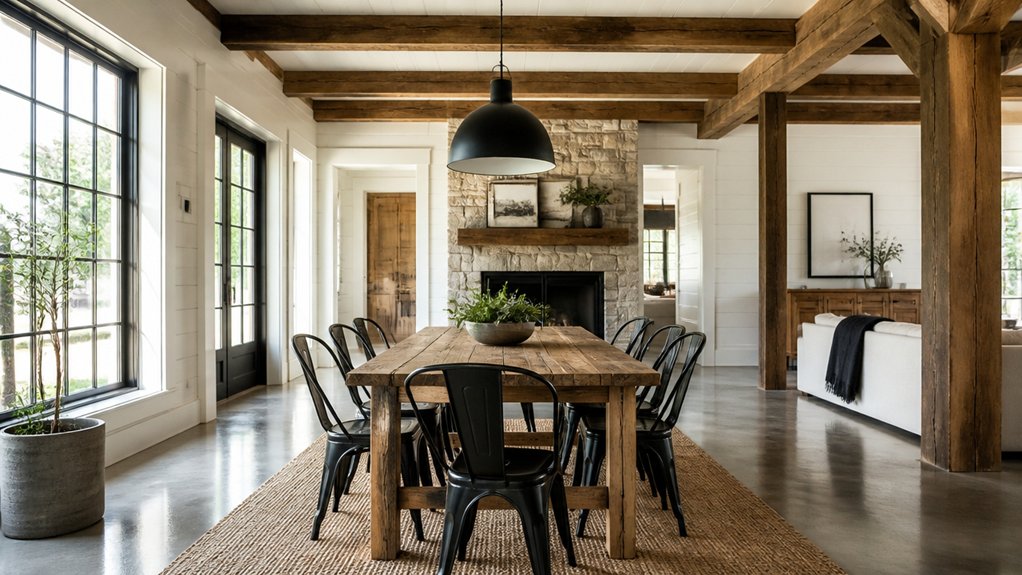
You want weathered beams and a seamless smart-home routine in the same room. Start by setting clear priorities, because every saved detail affects your budget and your layout. You’ll decide what stays, what gets replaced, and what simply gets reinforced, then tackle structure and systems before finishes. As you open sightlines, pull in more daylight, and choose durable, honest materials, one early choice will quietly determine whether the whole house feels effortless or patched together…
Key Takeaways
- Preserve original character—beams, floors, stone foundations—repair only damaged elements with matching species and salvaged timber.
- Renovate in order: structural fixes, roof/openings, then electrical/plumbing/HVAC upgrades, followed by insulation and air sealing for comfort.
- Improve flow by mapping traffic, widening openings, adding pocket doors/transoms, and using slim islands or built-in benches to remove pinch points.
- Choose durable, authentic finishes: wide-plank oak or reclaimed pine, matte hardwax oil, breathable limewash/mineral paint, and dense stone or brick in high-traffic zones.
- Modernize kitchens and baths with efficient layouts, deep-drawer Shaker cabinets, layered task lighting, vintage-style fixtures, and easy-clean surfaces like soapstone or matte porcelain.
Farmhouse Renovation Ideas: Set Goals and Priorities
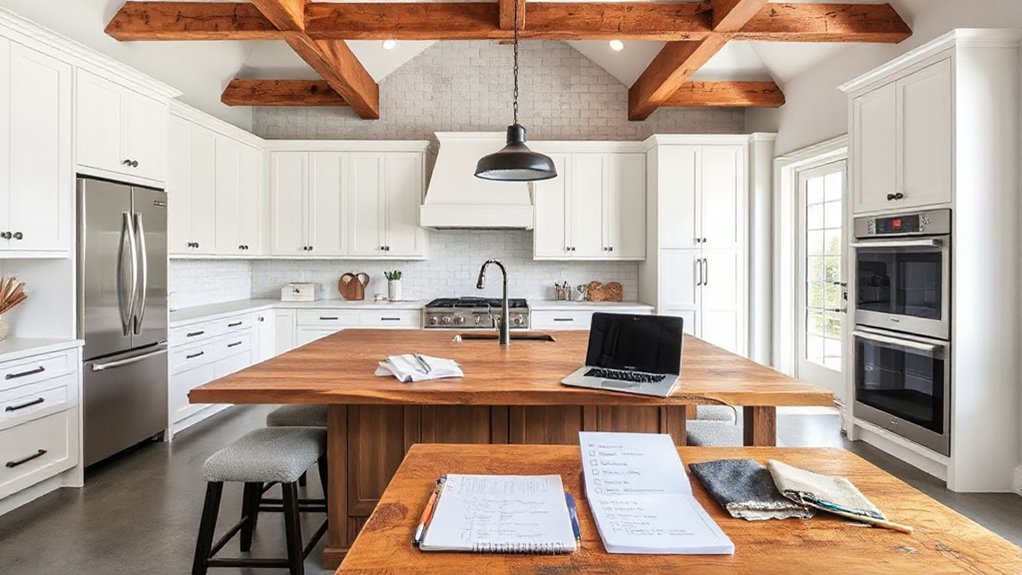
Before you pick up a hammer, decide what you want this farmhouse to do for you day to day—host big family dinners, add a mudroom that actually catches the mess, or carve out a quiet office without stealing square footage from the kitchen.
List must-haves, then rank them by daily impact and budget reality.
Measure every room, map traffic paths, and note pinch points like tight door swings or dead corners.
Set one “anchor” upgrade per zone: a hardworking island, a built-in bench, or a linen wall.
Tie interior decor to function with layered lighting, durable textiles, and storage that looks like furniture.
Don’t forget garden landscaping; plan entry paths, drainage, and a small patio to extend living space outdoors.
What to Save vs Replace in an Old Farmhouse
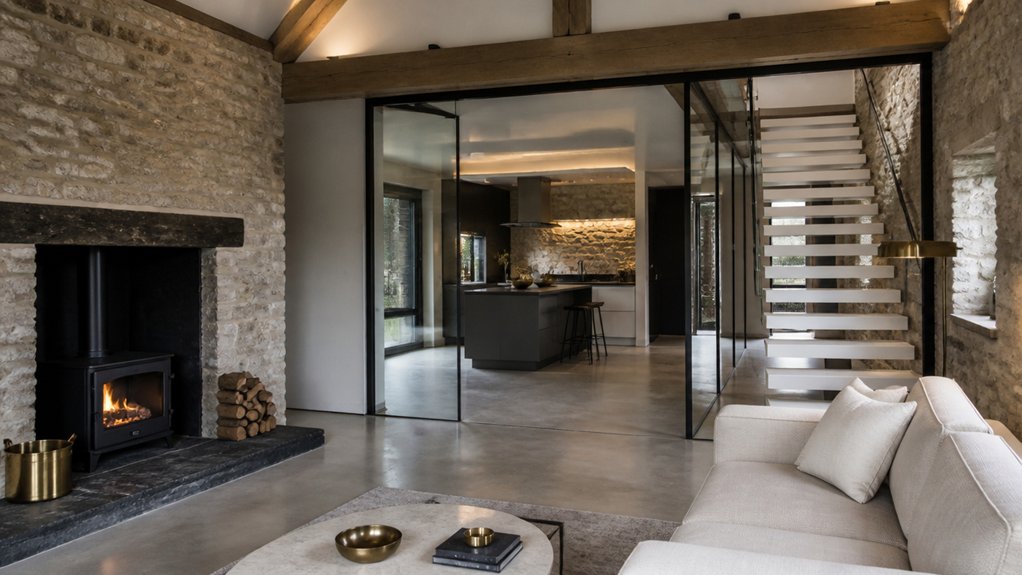
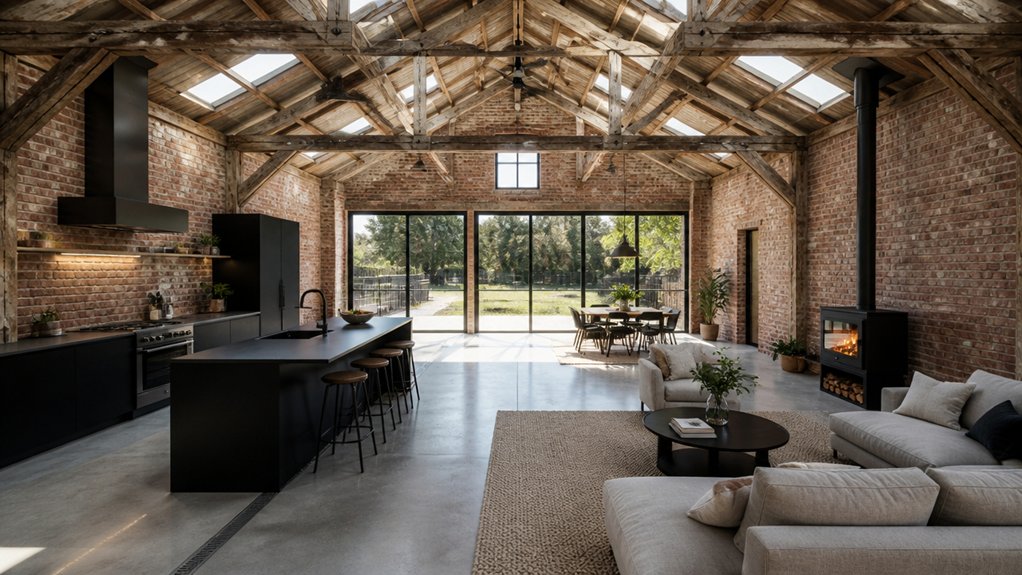
You’ll get the most character per square foot by saving original structural elements like hand-hewn beams, solid joists, and true plank floors whenever they’re sound.
You should replace outdated mechanical systems—wiring, plumbing, HVAC—so the house runs efficiently without stealing closet or wall space.
Then you’ll upgrade safety and insulation with grounded circuits, proper venting, and tight, well-placed air sealing and batts that keep the old shell comfortable year-round.
Preserve Original Structural Elements
Although a full gut feels tempting, an old farmhouse earns its character from the bones you can’t buy new—hand-hewn beams, original floor joists, stone foundations, and solid plank subfloors that still carry the load.
Keep them exposed where you can: clean, sister, and seal rather than conceal, so every inch works double as structure and interior decor.
Replace only what’s compromised beyond repair: punky sill plates, insect-eaten posts, or sagging joists that won’t level even after reinforcement.
Patch with matching species, reuse salvaged timbers, and size new members to disappear beside old ones.
Outside, let landscaping design echo what you saved—stone edging, reclaimed barn wood borders, and paths that frame the foundation instead of hiding it.
Replace Outdated Mechanical Systems
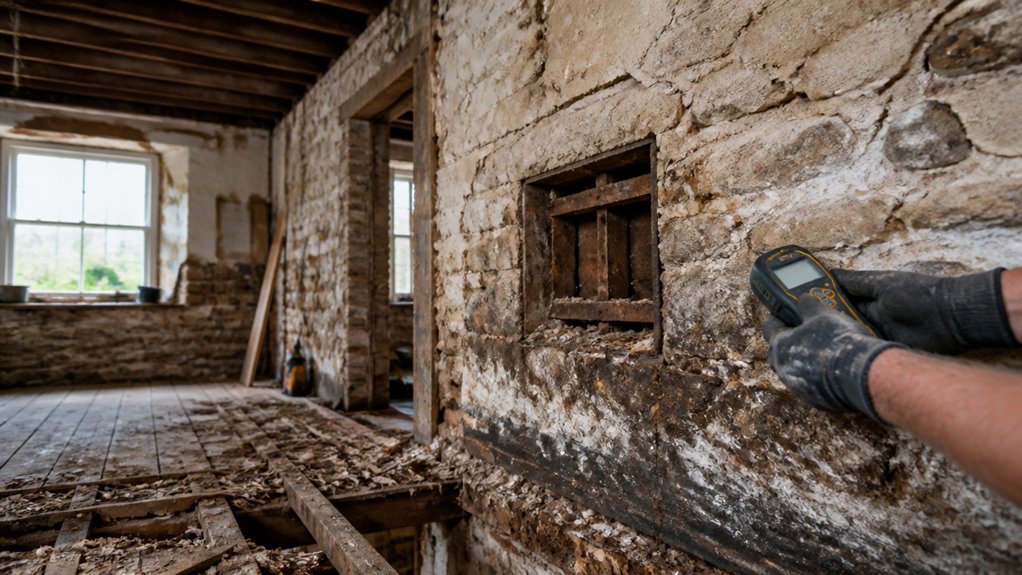
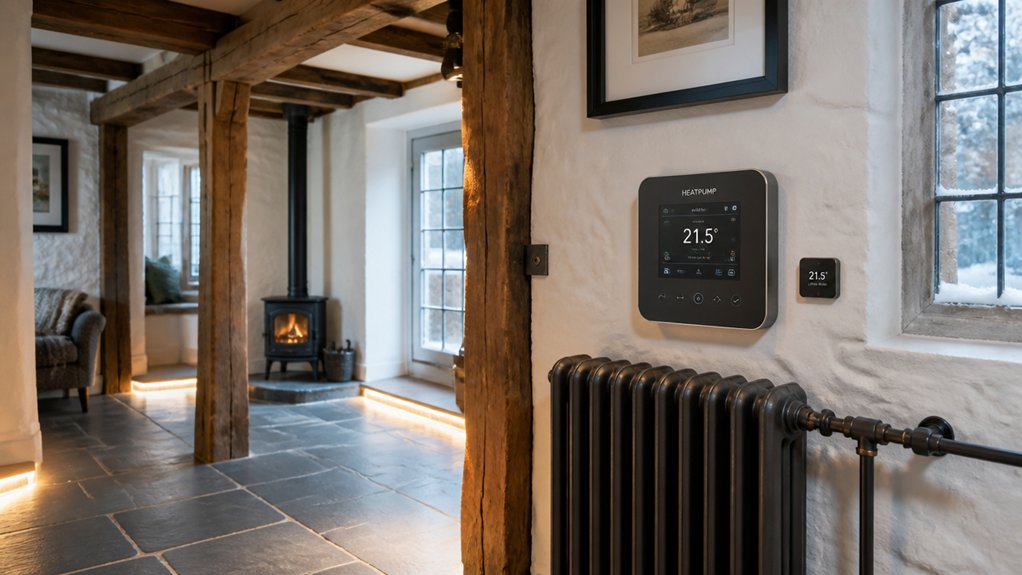
When you peel back plaster and floorboards, the mechanical systems tell you what’s vintage charm and what’s a future headache. Keep the cast-iron radiators or old grates if they still perform, but replace failing boilers, undersized panels, brittle wiring, and corroded supply lines. You’ll gain steadier heat, better water pressure, and fewer midnight surprises.
Route new ducts, pipes, and conduit through closets, soffits, and basement runs so you don’t steal headroom or disturb original beams. Add Smart thermostats for room-by-room control without cluttering walls, and choose quiet, high-efficiency equipment that won’t overpower the house’s calm.
Finish with advanced security wiring while everything’s open, then tuck sensors and hubs into a pantry cabinet for a clean look.
Upgrade Safety And Insulation
Before you hang fresh drywall or lay wide-plank floors, lock in the safety and insulation upgrades that keep an old farmhouse warm, dry, and sound. Keep solid plaster where it’s tight, but replace crumbling lath, knob-and-tube wiring, and undersized breaker panels for true fire safety. Add hardwired smoke/CO alarms, seal chimney gaps, and install metal heat shields behind stoves without stealing precious inches.
For comfort, save original trim and beams, yet swap drafty single panes for tight storms or high-performance sashes that match the profile. Use smart insulation techniques: air-seal rim joists, dense-pack cellulose in walls, and spray-foam only tricky pockets. Ventilate the attic, add baffles, and insulate the hatch so heat stays put.
Tighten doors with bronze weatherstripping.
Farmhouse Renovation Order: Structure, Systems, Then Finishes
Start your farmhouse renovation by locking down the bones: shore up the foundation, straighten framing, and stop water where it enters.
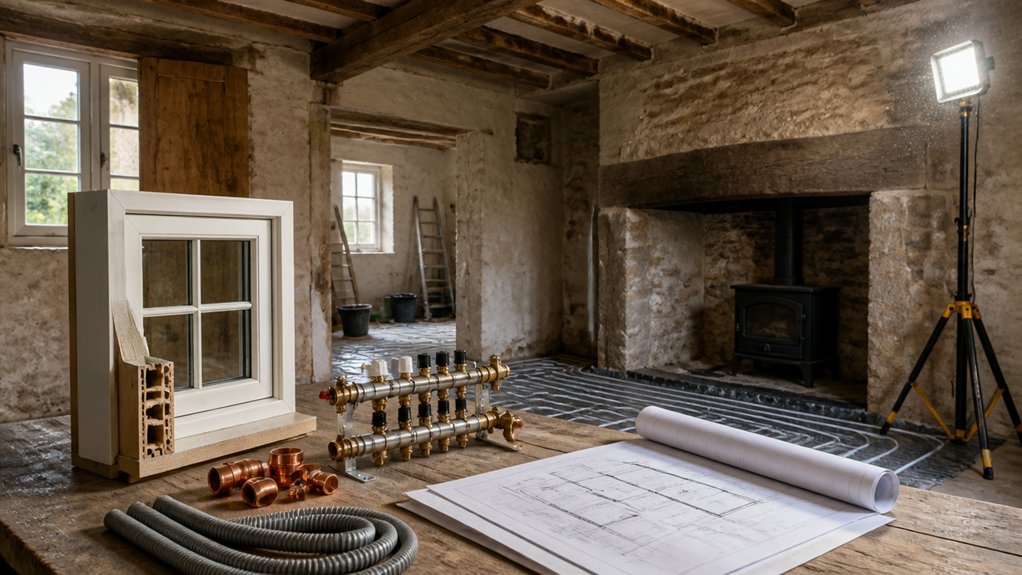
Next, upgrade core systems—wiring, plumbing, HVAC, and insulation—so every square foot works efficiently and safely.
Once structure and systems are solid, you can spend confidently on finishes that feel rustic-modern without wasting time or budget on rework.
Prioritize Structural Repairs
Although it’s tempting to jump straight to shiplap and paint, you’ll get a better farmhouse renovation—and spend less fixing mistakes later—by tackling structural repairs first. Start with the bones: check the foundation for cracks, sill plates for rot, and floor joists for sagging that steals headroom and throws doors out of square.
Sister weak members, replace compromised beams, and tighten framing so your future built-ins sit flush and every inch counts.
Next, address the roof line and sheathing, then square openings before you order windows or hang new doors. Seal rim joists, shore up porch posts, and stabilize chimneys so vintage decor doesn’t rattle on shelves.
Outside, grade soil and add simple landscaping ideas to move water away, protecting everything you’ve just repaired.
Upgrade Core Home Systems
Once the framing feels solid and true, turn your attention to the core systems that hide behind walls and under floors—electrical, plumbing, HVAC, and insulation—because they dictate where you can place cabinets, run beadboard, and carve out storage without boxing yourself into awkward chases.
Map every run before you close anything up: add dedicated circuits for the kitchen, laundry, and workshop, and tuck outlets into toe-kicks or sconce-ready boxes. Replace galvanized lines, center drains, and set shutoffs where you can reach them.
Right-size heat and air, seal ducts, and pack cavities with high-performance insulation for real Energy efficiency. Layer in Smart technology—zoned thermostats, leak sensors, and smart breakers—so comfort stays steady and the old house stays protected.
Farmhouse Layout Renovation Fixes for Better Flow
When your farmhouse feels charming but choppy, a few layout fixes can restore the easy, lived-in flow you expect. Start by mapping daily paths from mudroom to kitchen to living space, then remove pinch points like awkward half-walls or misplaced doors.
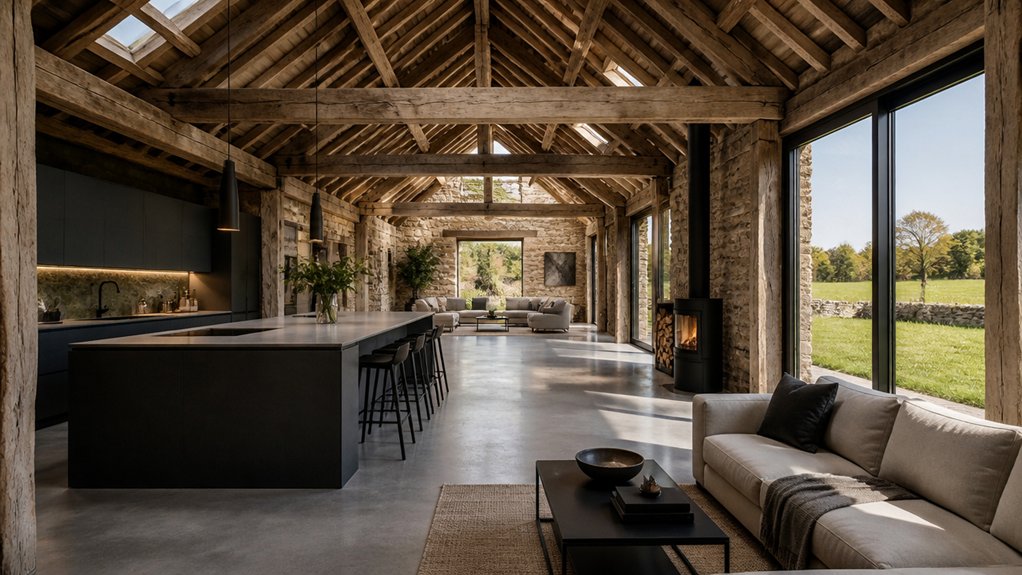
If full open floor plans aren’t possible, widen cased openings and align sightlines so spaces borrow function without losing cozy zones.
Tighten room passages with consistent flooring thresholds, trimmed openings, and built-in benches that double as drop zones. Rework the kitchen triangle and shift the pantry or fridge to clear traffic from the range.
Add pocket doors where swings collide, and define circulation with a slim island or console, not bulky furniture. Keep every change measured, so you gain flow without sacrificing storage.
Farmhouse Renovation Ideas for More Natural Light
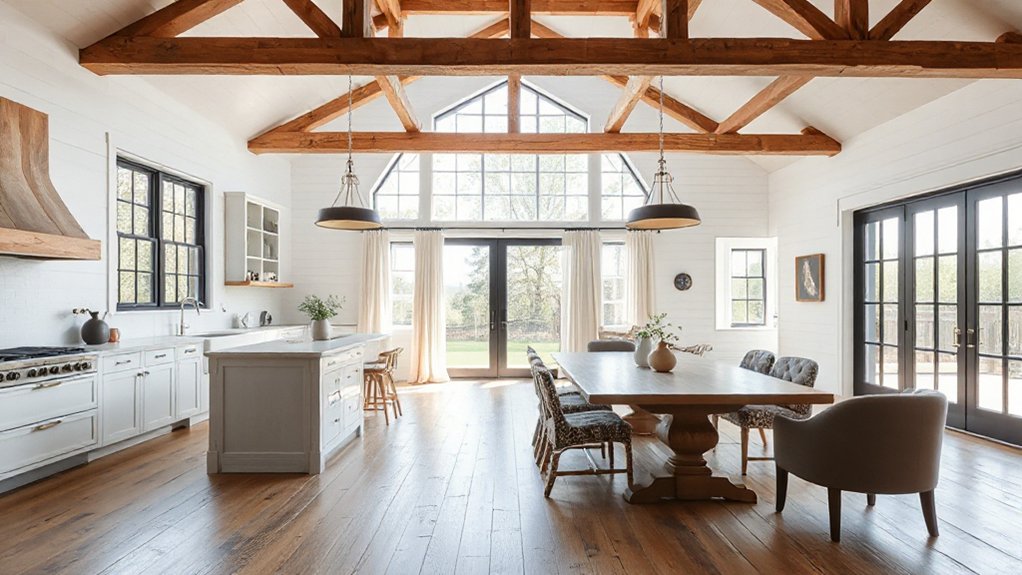
If your farmhouse reads a little dim even on bright days, you can pull in more natural light with a few space-smart upgrades that keep the rustic bones intact. Start by widening existing window openings where structure allows, or swap to taller units that reach closer to the ceiling to boost daylight maximization.
Add a slim transom above interior doors to share light down hallways without losing privacy. In the kitchen, replace bulky uppers on one wall with open shelving and a light-toned backsplash so sun can bounce deeper.
Use pocket or glass-panel doors to prevent dark corners while saving swing space. Finally, place mirrors opposite windows and choose matte, pale wall paint for subtle Natural light enhancement without glare. Keep sightlines clean.
Authentic Farmhouse Materials and Finishes That Last
More daylight helps your farmhouse feel bigger, but the surfaces it hits need to work just as hard—authentic materials and long-wearing finishes keep the look grounded and the maintenance low. Choose wide-plank oak or reclaimed pine, sealed with a matte hardwax oil that spot-repairs easily.
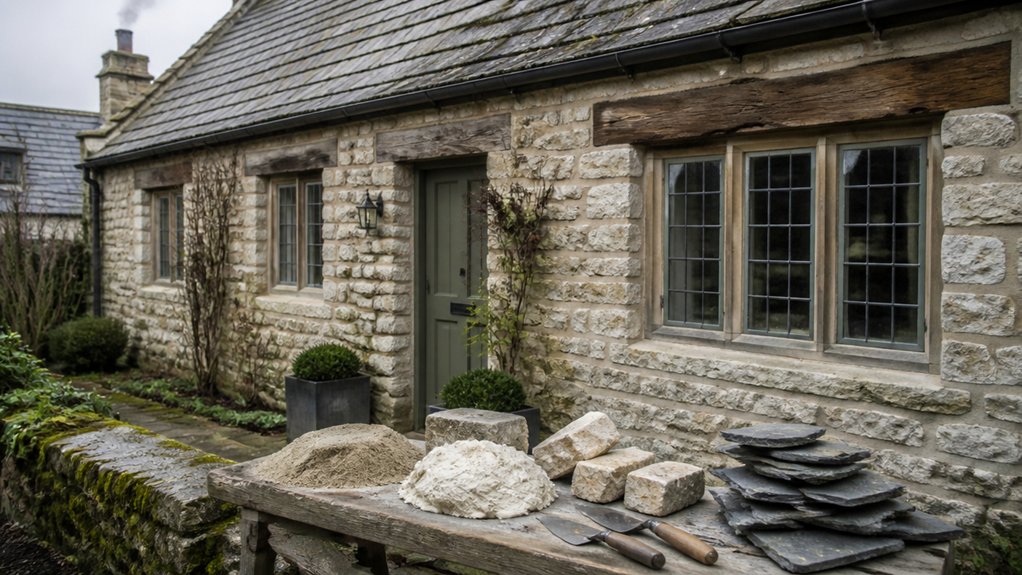
For high-traffic areas, use dense brick, soapstone, or honed limestone; their quiet texture hides scuffs and adds weight without visual clutter.
Keep walls breathable: limewash, mineral paint, or plaster softens glare and resists peeling. Add trim in clear-coated fir instead of glossy enamel so grain stays honest.
Layer Vintage textiles—linen grainsack pillows, wool runners—for warmth without bulk, and hang Antique lighting with aged brass or blackened iron to balance the clean, modern lines.
Farmhouse Kitchen Renovation Ideas With Real Character
Although a farmhouse kitchen thrives on daylight and honest materials, real character comes from the working details you touch every day—layout, storage, and patina-ready surfaces. Keep the work triangle tight, then add a slim island with seating that tucks in. Choose inset or Shaker fronts, but upgrade with soft-close hardware and deep drawers for pots. Mix open shelves with a single tall pantry so you don’t waste wall space.
Layer durable surfaces: honed stone, sealed butcher block, or soapstone that wears gracefully. Install Vintage lighting over the sink and island to warm up clean lines. Swap bulky uppers for rail-mounted hooks, magnetic strips, and under-shelf baskets. Finish with restrained farmhouse decor—woven runners, crocks, and a few antique boards—so function stays first.
Timeless Farmhouse Bathroom Renovation Ideas
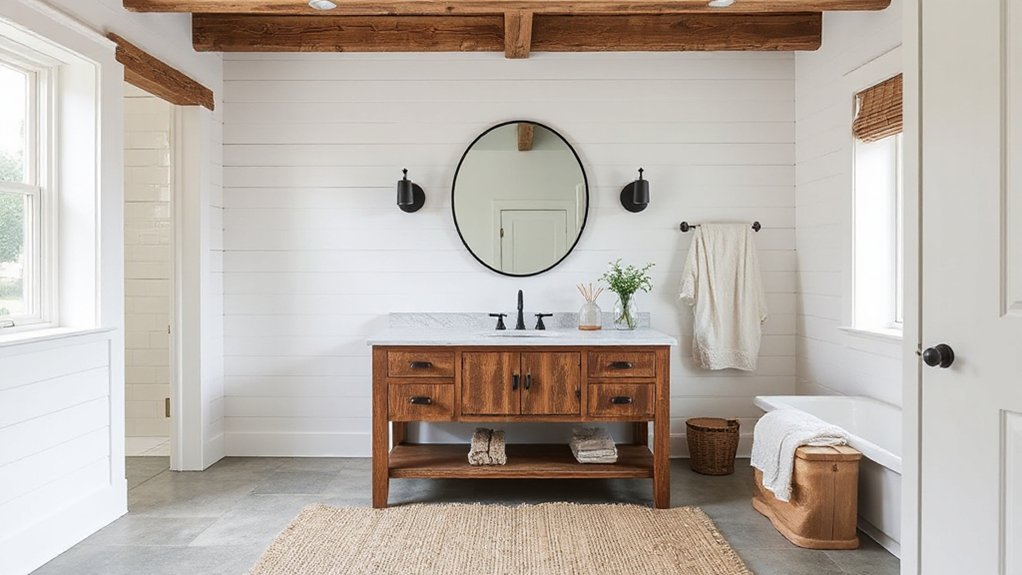
A character-rich farmhouse kitchen sets the tone, but the bathroom is where you feel the craftsmanship up close—every handle, tile edge, and fixture finish.
Choose a tight layout that keeps circulation clear, then anchor the room with Vintage fixtures: a bridge faucet, porcelain lever handles, and an apron-front or trough sink.
Pair them with Rustic color palettes—warm whites, clay, soot black, and weathered oak—to soften hard surfaces without darkening the space.
Use beadboard or limewashed shiplap on the lower walls, and run simple subway tile to the ceiling in the shower for height.
Add a frameless glass panel to keep sightlines open.
Select honed stone or matte porcelain floors for grip, and finish with a recessed niche, lantern sconce, and slim linen cabinet.
Farmhouse Renovation Ideas on a Realistic Budget
Three budget levers move the needle fastest in a farmhouse renovation: keep the footprint, reuse what’s solid, and spend where your hands land. Hold walls, plumbing, and window openings unless they’re failing; you’ll save thousands and preserve the home’s honest proportions.
Refinish pine floors, limewash brick, and repair trim instead of replacing it. Choose stock cabinets, then elevate them with a butcher-block top, black pulls, and a single statement light over the work zone. Hunt Vintage decor that earns its keep: an enamel pendant, a pantry hutch, or a sturdy bench with hidden storage.
For garden integration, add a back door mud area, a hose-friendly threshold, and simple paths to herbs and raised beds. Your daily routes stay tidy and efficient.
Frequently Asked Questions
How Do I Make a Farmhouse Renovation More Energy-Efficient Year-Round?
You’ll boost year-round efficiency by sealing drafts, adding an Insulation upgrade in attic and walls, and installing Energy saving windows. You’ll size HVAC for tight spaces, use smart thermostats, and add ceiling fans and LED lighting.
Do I Need Permits for Structural Changes in an Old Farmhouse?
Yes, you’ll usually need permits for structural changes in an old farmhouse. You must meet Building codes and address Historical preservation rules. Check your county office early; you’ll save space, time, and costly rework.
How Can I Prevent Mold and Moisture Problems in Farmhouse Basements?
Seal, slope, and ventilate to stop moisture before it starts. You’ll boost moisture control with gutters, grading, and a vapor barrier, then run a dehumidifier, insulate pipes, and spot-fix leaks to block basement mold.
What Insurance Coverage Should I Update During a Major Farmhouse Renovation?
Update your builder’s risk, dwelling, and liability limits before work starts, and add endorsements for new systems. Document materials for Insurance claims, and schedule Coverage updates for valuables, tools, permits, and temporary living.
How Do I Choose a Contractor Experienced With Historic Farmhouse Renovations?
You’ll find a qualified pro faster than a lightning bolt: verify Historic preservation projects in their portfolio, confirm contractor credentials, tour tight-space jobs, call past clients, and insist on itemized bids, timelines, and permits experience.

Leave a Reply