

You can’t modernise a cold British cottage properly until you quantify heat loss and moisture risk to current UK standards. Start with an EPC-style fabric assessment, thermal imaging, and blower-door testing to locate drafts, thin spots, and thermal bridges. Specify breathable insulation and controlled ventilation so airtightness upgrades don’t drive condensation. Then size emitters for low-flow temperatures and zone control around awkward rooms. The key decisions come next, and they’ll lock in performance for decades…
Key Takeaways
- Start with a heat-loss and draught survey, prioritising sealing gaps at sash windows, doors, loft hatches, and service penetrations.
- Add vapour-open insulation: loft at ceiling level, breathable internal wall systems, and insulated suspended floors with windtight, permeable membranes.
- Upgrade ventilation alongside insulation, using background vents or MEV/MVHR to control humidity and prevent condensation and mould.
- Choose emitters wisely: correctly sized radiators for minimal disruption, or insulated underfloor heating for lower-temperature, even comfort.
- Consider an air-to-water heat pump after fabric improvements, designed from heat-loss calculations and run with low flow temperatures and weather compensation.
Find Where Your Cottage Loses Heat Fastest
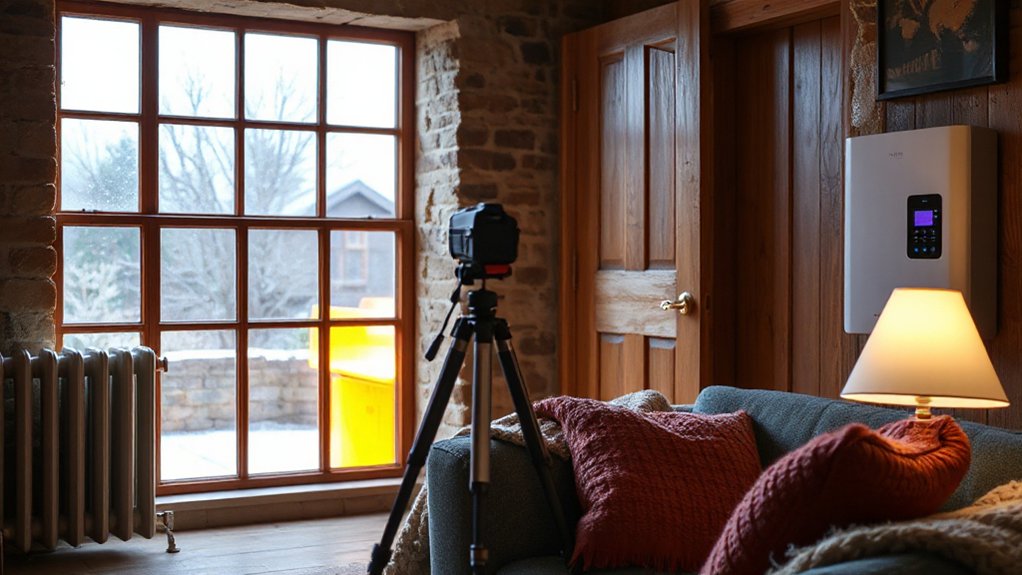
Although older British cottages feel draughty everywhere in winter, you’ll get the best results by pinpointing the highest heat-loss paths first—typically uncontrolled air leakage through gaps around sash windows, external doors, loft hatches, and suspended timber floors, plus conduction through uninsulated roofs and solid walls.
Start with a room-by-room survey and sketch openings, junctions, and service penetrations using drafting techniques so you can reference locations consistently.
Run a heat loss analysis: estimate fabric U-values and areas, then calculate transmission losses and compare them to ventilation/infiltration losses.
Use smoke pencils or incense to trace air paths, and log external temperature, wind, and heating state.
If possible, book a blower-door test with thermography to verify leakage routes, then prioritise measures by watts lost per component.
Cottage Insulation That Won’t Trap Damp
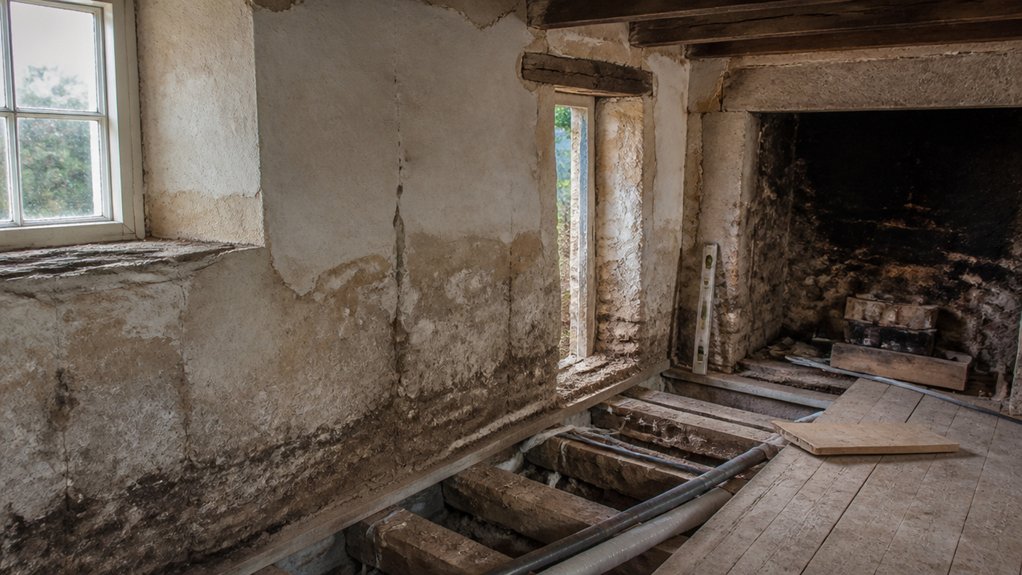
Where do you add insulation in a traditional British cottage without driving moisture into timbers and solid masonry? Start by treating the building as vapour-open. Insulate lofts at ceiling level, maintain eaves ventilation, and seal loft hatches.
For solid walls, use breathable internal systems (wood fibre, calcium silicate) with lime plaster, and avoid foil-backed boards unless you’ve designed to BS 5250 moisture control. Keep thermal continuity at reveals and around joist ends, and don’t bridge the damp-proof course line.
Under suspended floors, fit mineral wool or Eco-friendly insulation between joists with a windtight, vapour-permeable membrane, and keep airbricks clear.
Pair upgrades with ventilation solutions: background vents plus MEV/MVHR sized to Part F, and verify with humidity logging.
Radiators or Underfloor for Cottage Heating?
Once you’ve improved insulation and ventilation without trapping moisture, the next decision is how you’ll emit heat: radiators or underfloor heating (UFH). That choice should align with your heat source flow temperatures, floor build-ups, and fabric risk.
Radiators suit minimal disruption: you can size to BS EN 442 outputs at your actual ΔT, then balance using lockshields and TRVs. Avoid bulky Radiator covers; they cut convective output and can drive localised surface mould if placed on cold external walls.
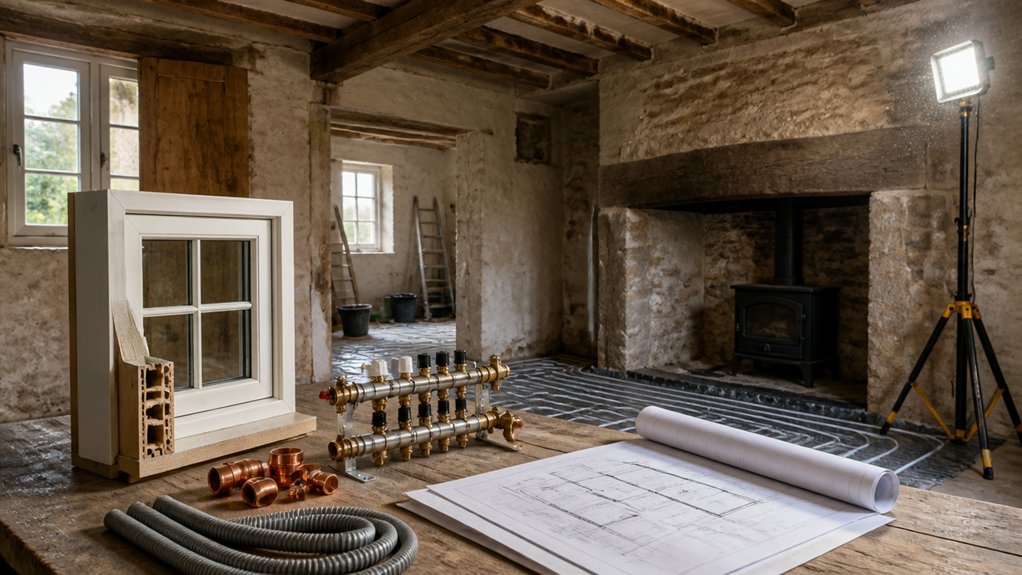
UFH gives even comfort at lower surface temperatures, but you must check floor U-values, insulation continuity, and vapour-open build-ups to avoid interstitial condensation.
Use Wireless thermostats with zoning and setback, and commission to CIBSE guidance with documented design temps.
When a Heat Pump Suits Cottage Heating
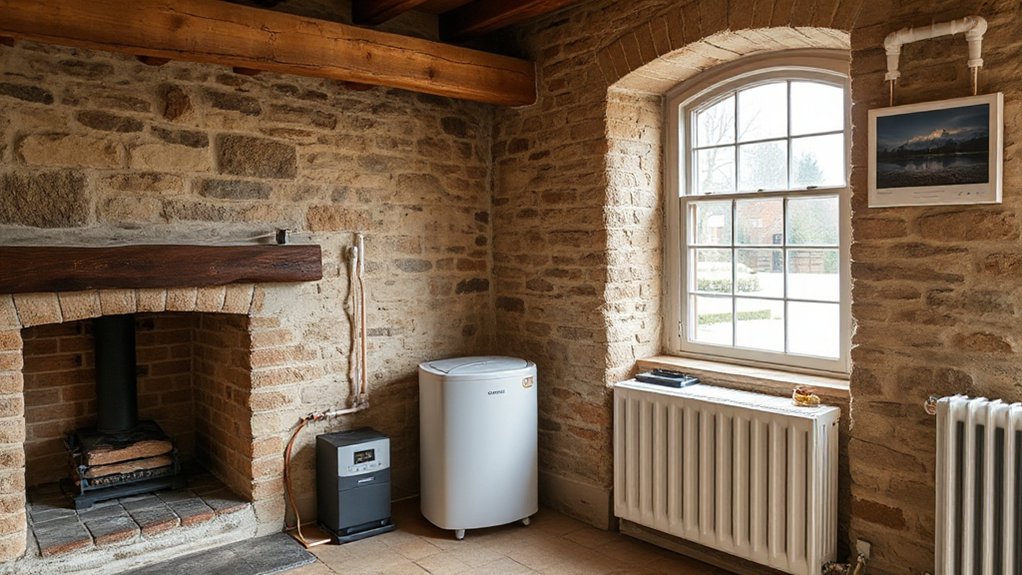
When does a heat pump actually suit a cold British cottage? It suits you when the building fabric meets PAS 2035 expectations: airtightness improved, loft and wall insulation upgraded, and draughts controlled.
You’ll get reliable comfort if you can run a low flow temperature system (typically 35–45°C) and size the unit to a heat-loss calculation (BS EN 12831), not a rule of thumb.
Choose an air-to-water unit if access is limited; consider ground source only if you’ve got land for collectors.
You’ll benefit most where oil, LPG, or direct electric is expensive and you can prioritise Energy efficient upgrades.
Pairing with Renewable energy sources can further cut running costs and emissions.
Smart Heating Controls for Awkward Cottage Layouts
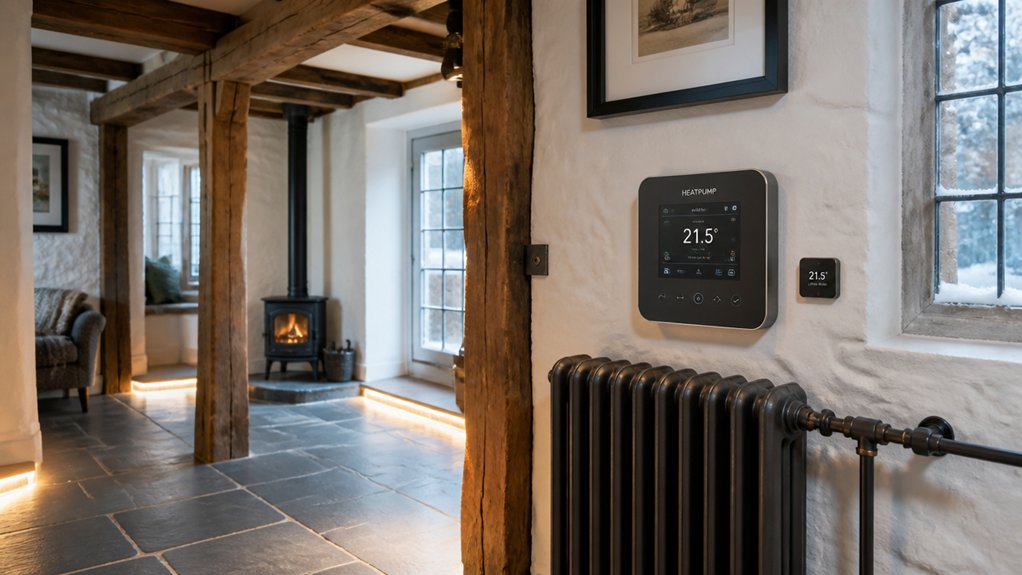
Although quirky room connections and thick internal walls make heat distribution uneven, you can stabilise comfort in an awkward British cottage by specifying smart controls that deliver true zoning and verified temperature feedback rather than relying on a single hallway thermostat.
Choose a Smart thermostat system that supports multiple wireless room sensors, then assign each space to a heat “zone” that matches doorways, stairwells, and solar gains.
Use zoning control via smart TRVs or manifold actuators so each zone gets its own setpoint, schedule, and boost.
Verify sensor placement away from fireplaces, draughts, and external walls to align with BS EN ISO 7726 good practice.
Enable weather compensation and flow-temperature limits where you’ve got a heat pump.
Commission by checking valve stroke, signal strength, and fail-safe defaults.
Frequently Asked Questions
Do I Need Planning Permission for Heating Upgrades in a Listed Cottage?
Yes, you’ll likely need listed building consent—because “minor” heating upgrades always stay minor. Prioritize Historical preservation; specify Modern technology to LBC/Planning. Document fabric impact, routes, ventilation, flues, noise, and reversibility to meet standards.
What Grants or Incentives Are Available for Cottage Heating Improvements?
You can access Boiler Upgrade Scheme grants, Energy Company Obligation support, and local authority retrofit funding; eligibility varies. Specify renewable energy systems, meet MCS/PAS2035 standards, and include ventilation measures to protect indoor air quality.
How Can I Reduce Heating Bills Without Changing the Entire Heating System?
You’ll cut bills like a careful steward sealing a drafty ship: set Energy efficient thermostats to zoning schedules, calibrate sensors. Prioritise Insulation enhancements—loft to code, seal gaps to standards, fit thermal curtains, reduce standby losses.
Which Fuel Is Cheapest for Cottage Heating: LPG, Oil, Electricity, or Wood?
Wood’s usually cheapest per kWh if you’ve high Fuel efficiency, then oil, then LPG, with electricity priciest. You’ll need certified appliances and metering. You can lower costs using Renewable options like seasoned biomass.
How Often Should Cottage Boilers, Stoves, and Chimneys Be Serviced?
Like clockwork, you’ll service boilers annually to maintain Boiler efficiency, sweep wood stoves and flues at least yearly (twice if heavy use), and schedule a Chimney inspection annually; you’ll comply with manufacturer guidance and local regulations.


Leave a Reply