

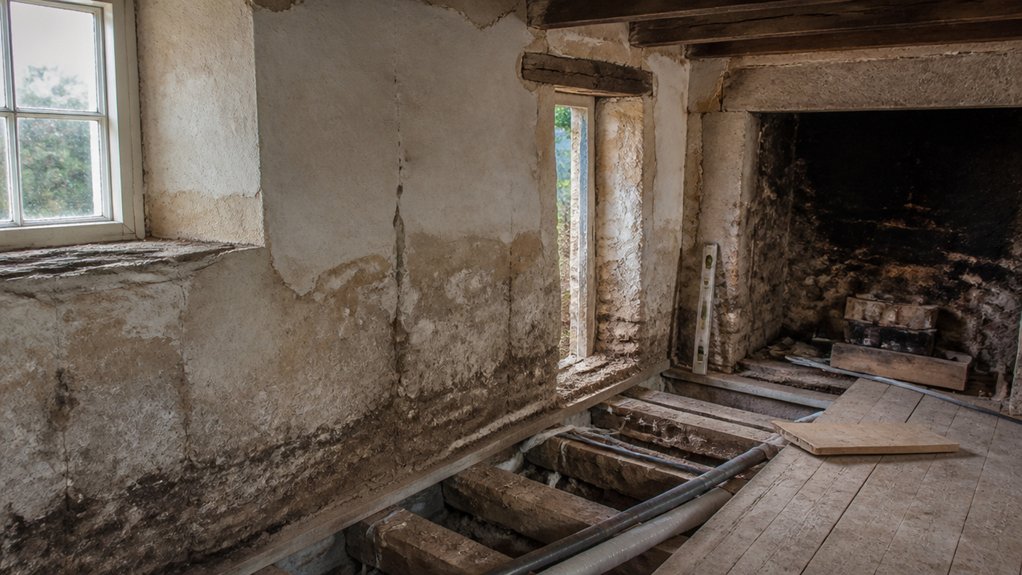
If you’re renovating a rural UK property in 2026, you can’t rely on what you see on the surface. You’ll need targeted surveys to flag concealed damp, timber decay, and structural movement before costs lock in. You should also verify planning status, listings, flood exposure, and ecology constraints that can stop work overnight. Then you’ll test electrics, heating, drainage, septic, and water supplies—because the first “upgrade” often reveals the real defect.
Key Takeaways
- Commission a RICS Level 3 survey with damp, timber, roof, chimney, and wall diagnostics, plus moisture mapping and borescope inspections.
- Check planning history, listing/conservation status, and restrictive conditions early to avoid costly redesigns and enforcement during renovation.
- Assess flood risk, surface water routes, and high water tables, and confirm insurability; some sites now trigger Flood Risk Assessments.
- Verify ecology constraints—bats, nesting birds, barn owls, protected hedgerows—and schedule seasonal surveys to prevent work stoppages and licensing delays.
- Test services: EICR electrics, water pressure/flow, plumbing leaks, and CCTV drainage; ensure septic tanks and treatment plants meet current regulations.
Get the Right Rural UK Surveys and Checks
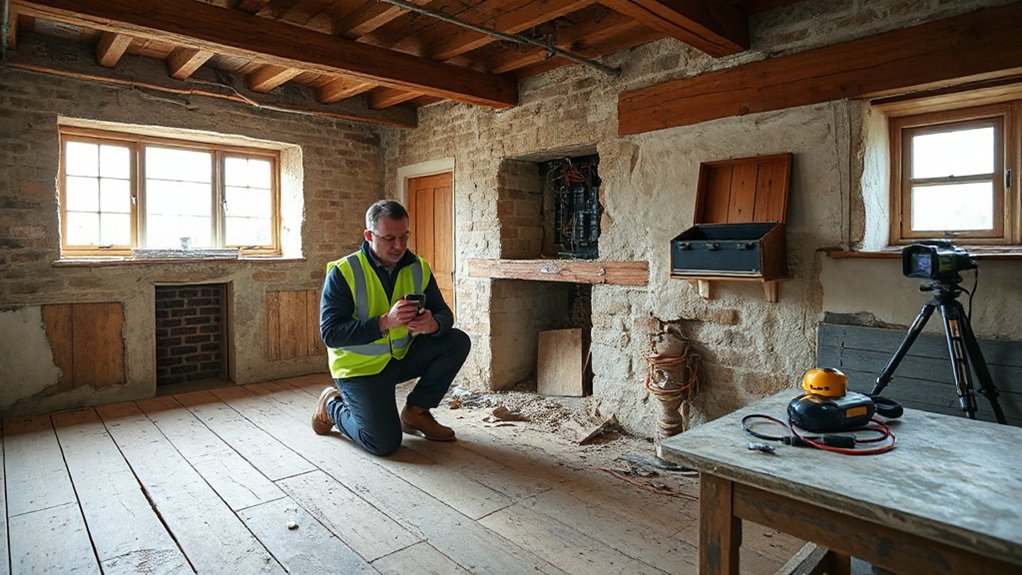
Before you commit to renovating a rural UK property, you’ll need surveys and due-diligence checks that reflect countryside-specific risks—non-standard construction, hidden damp and timber decay, aging services, private drainage, and access or boundary constraints—that a basic mortgage valuation won’t reliably detect.
Commission a RICS Level 3 survey plus specialist inspections: timber and damp diagnostics (moisture mapping, borescope checks), roof structure and chimney stability, and stone/earth wall condition testing to support Historic preservation decisions.
Verify services with EICR electrics, pressure/flow tests, and CCTV drainage surveys for septic tanks or treatment plants, then confirm maintenance records and discharge routes.
Add Wildlife considerations early: check lofts, barns, and outbuildings for nesting birds or roost indicators to prevent stoppages and redesign costs.
Document defects, quantify remediation, and renegotiate.
Confirm Planning, Listings, Flood and Ecology Limits
Although the building survey tells you what’s failing, only planning, designation, flood and ecology checks tell you what you’re legally allowed to change—and what could halt works mid-project.
Start with Rural planning history: search the LPA portal for refusals, enforcement, and restrictive conditions tied to materials, windows, access, or occupancy.
If it’s listed or in a conservation area, assume you’ll need listed building consent and conservation input, and budget for heritage-spec details and longer lead times.
Check flood risk via EA maps, local SFRA, and past insurance claims; flood zones can trigger FRA requirements, raised floor levels, or drainage limits.
Finally, verify ecological restrictions: bat roost potential, barn owl habitat, protected hedgerows, and nutrient neutrality constraints; you may need surveys timed to seasons and mitigation licences.
Find Damp, Ventilation and Insulation Problems Early
If you identify moisture pathways and airflow weaknesses early, you’ll avoid the most common rural retrofit failure: trapping water vapour in cold fabric and creating persistent damp.
Start with a moisture survey: check gutters, downpipes, ground levels, and bridging at thresholds; log internal RH and temperature to spot condensation risk.
Use a thermal camera and borescope to find cold bridges, wet insulation, and void bypasses.
Prioritise Moisture management: keep walls breathable, repair pointing, and capillary breaks before adding insulation.
Assess Air circulation room-by-room: verify trickle vents, chimney closures, and underfloor cross-vent paths, and confirm extract rates in wet rooms.
When you insulate, model dew-point migration and specify vapour-open layers where appropriate.
Retest after works.
Check Rural Electrics, Plumbing and Heating Upgrades
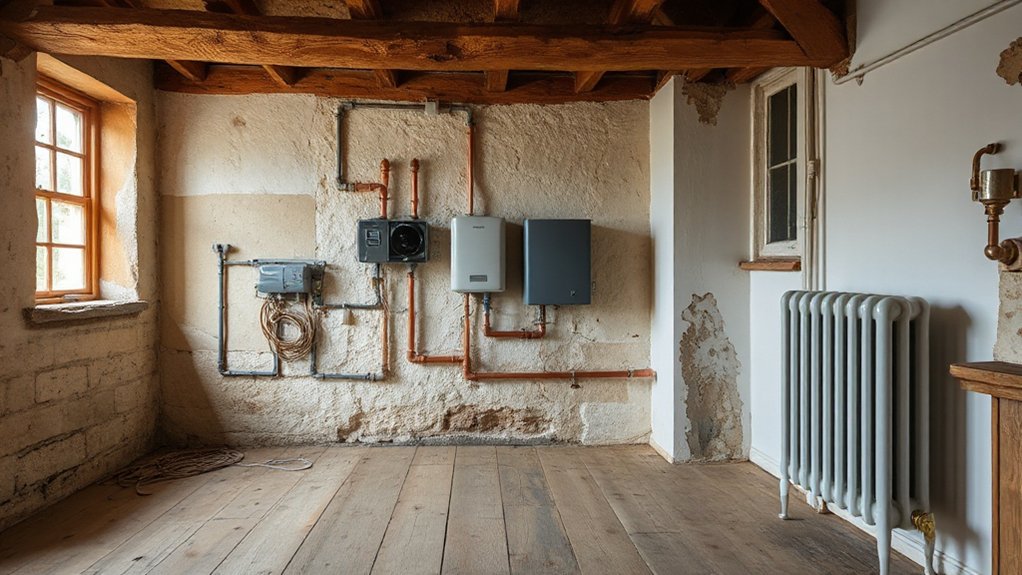
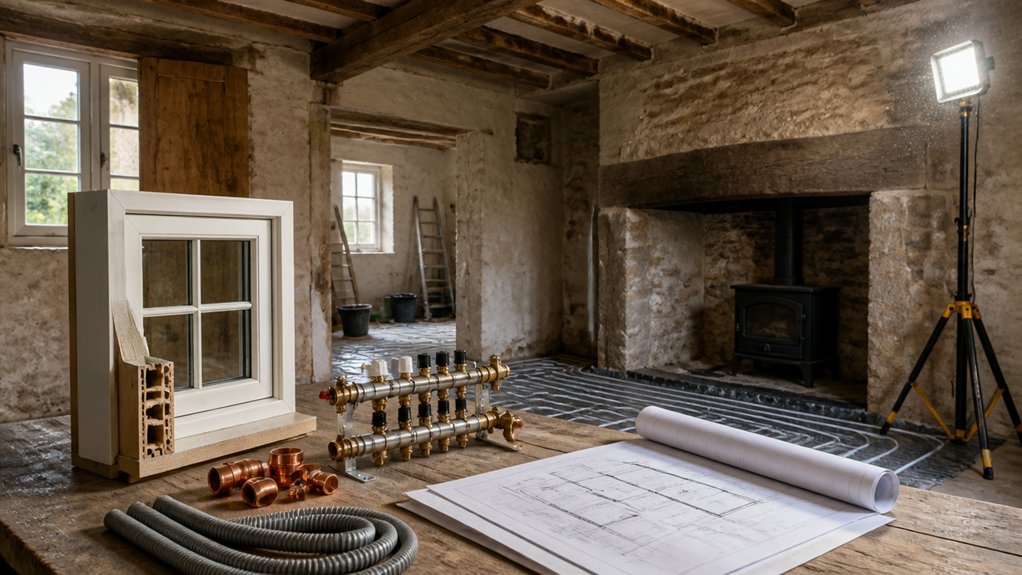
Where do rural services usually fail first—at the meter, the stopcock, or the boiler? Start with Electrical safety: get an EICR, verify earthing and bonding, and check for aged consumer units, undersized tails, and RCD coverage on sockets, showers, and outbuildings.
Confirm supply capacity and voltage drop before you add heat pumps, EV chargers, or induction hobs; overheating and nuisance trips signal overloaded circuits.
Next, run plumbing inspections: pressure-test for hidden leaks, assess pipe material (lead, galvanised, microbore), and check stopcocks, PRVs, and lagging for freeze risk.
For heating, inspect boiler age, flue routes, condensate discharge, and system water quality; sludge and low flow kill efficiency.
Budget for controls, balancing, and full certification.
Check Septic Tanks, Wells and Site Drainage
Before you commit to a rural renovation, verify how the property handles wastewater, potable water, and runoff, because failures here trigger enforcement action, contamination risk, and expensive groundworks.
Start with the Septic system: confirm discharge compliance, tank capacity, and whether a drainage field exists, percolates, and isn’t waterlogged. Request service records, locate inspection covers, and scope inlet/outlet baffles for collapse or root ingress. Check alarms and pumps on package plants and test for power resilience.
For wells, assess Well integrity: inspect headworks, sanitary seal, casing, and backflow prevention, then sample for E. coli, nitrates, pesticides, metals, and hydrocarbons.
Finally, map surface water routes, soakaways, and culverts; look for ponding, silted ditches, or high water tables that’ll undermine foundations.
Frequently Asked Questions
Can I Live in the Property During Renovations Without Invalidating Insurance?
Yes, you can, but it’s a tightrope: tell your insurer first. Temporary living often changes risk class; insurers may require endorsements, inspections, and safety controls to keep insurance validity. Don’t assume standard occupancy clauses.
How Do I Estimate Renovation Costs Accurately When Using Local Rural Trades?
Build an itemised scope, get 3–5 like-for-like quotes, and benchmark against recent local jobs. Apply Budget planning with 10–20% contingency, validate rates via references, and tighten contractor selection using written variation rules.
What Rural Materials Shortages or Delivery Access Issues Could Delay the Project?
Expect delays from limited stock of lime, heritage timber, aggregates, and bespoke glazing; Supply chain disruptions lengthen lead times. You’ll also face transportation challenges: narrow lanes, weight limits, tides, and weather that block HGV deliveries.
How Can I Protect Against Theft and Vandalism on an Isolated Building Site?
You’ll reduce theft and vandalism by deploying Security cameras with motion alerts, installing fencing barriers, and using locked containers. You should audit access points, log deliveries, mark tools, and schedule frequent patrols with contractors.
What Tax Reliefs or VAT Rules Apply to Renovating Older Rural Homes in 2026?
You’ll usually pay 20% VAT on renovations, but you can claim VAT exemptions/zero-rating for qualifying empty homes, conversions, or listed-building work; you can’t offset most Tax credits. Verify eligibility, invoices, and HMRC guidance to reduce audit risk.


Leave a Reply