

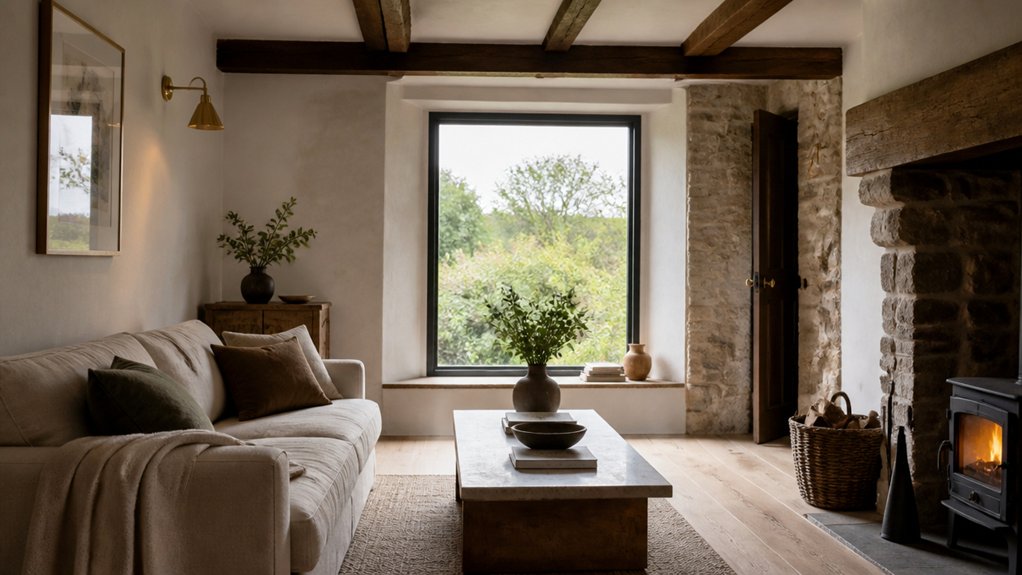
You move into a stone cottage where the sitting room stays gloomy even at noon, thanks to heavy curtains and sooty beams. You don’t need to strip out the character to gain light; you can keep the hearth, the timber details, and the uneven plaster while updating what’s reversible. Start by deciding what must stay, then tackle daylight, paint, and lighting in that order—because one choice you make first will quietly limit every other improvement…
Key Takeaways
- Preserve original features first—beams, hearths, skirting, latch doors—and clean gently to keep tool marks and patina.
- Boost daylight by clearing glazing, pruning outside growth, and replacing heavy drapes with simple light linen window treatments.
- Use period-friendly paint tones—chalky stone, oatmeal, warm whites, muted pastels—and test large swatches in changing light.
- Update furniture and finishes subtly: lighter wood refinish, simple brass hardware, tighter upholstery weaves, and fewer bulky display pieces.
- Add layered warm lighting (2700K): dimmable lamps, low pendants, picture lights, and discreet uplighters on separate switches for flexible ambiance.
Decide What to Keep (and What to Update)
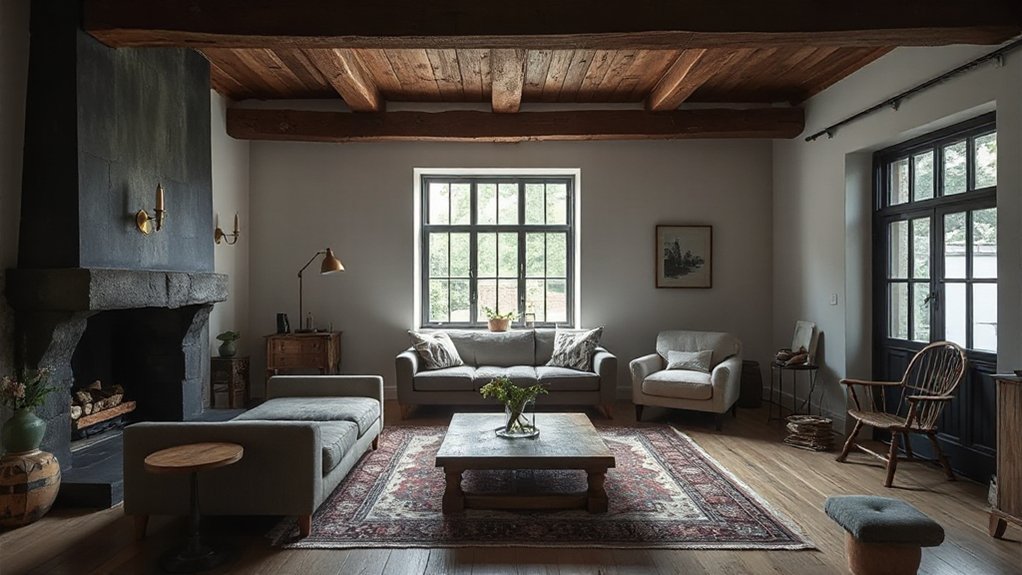
Before you pick up a paintbrush, take a hard look at what gives your cottage its soul—and what’s simply making it feel dim and dated.
Walk room by room and list the original architectural features you must protect: beams with honest tool marks, deep skirting, stone hearths, old latch doors, wavy glass. Clean, repair, and celebrate these first; they’re your character anchors.
Then decide what’s dragging things down. Keep antique furniture with sound frames and good proportions, but retire heavy reproduction pieces, mismatched dark stains, and bulky display units.
Reupholster cherished chairs in tighter weaves, refinish tables to a lighter, warmer tone, and swap fussy hardware for simple unlacquered brass. You’ll modernise the feel while keeping the story intact.
Brighten Your Dark Cottage With Daylight Tricks
You can brighten a dark cottage without losing its period charm by making every window count: keep glazing clear, trim back outside growth, and choose light, well-fitted linens that don’t block the panes.
Then bounce what daylight you have by placing mirrors opposite windows and adding reflective touches—aged brass, glazed tile, or pale painted wood—where they’ll catch the light.
With a few careful adjustments, you’ll lift the rooms while keeping the cottage’s original character intact.
Maximize Natural Light
A few well-judged daylight moves can lift a dark cottage without dulling its original character. Start by freeing the glass: swap heavy drapes for simple window treatments that stack back neatly and sit outside the reveal, so you don’t steal precious panes. Keep shutters if they’re original, but repair louvers and refit so they open fully.
Clean frames, de-gunk painted-over catches, and refresh putty to stop shadowy, grimy edges.
Then look beyond the walls. Outdoor landscaping often blocks more light than you realise: prune overgrown climbers, lift low branches, and thin dense hedges that press against windows.
Choose lighter gravel or stone near the façade to bounce daylight inward, and keep sills clear of clutter.
Use Reflective Surfaces
Daylight matters most when it has something to bounce off, so once you’ve opened up the windows, put reflective surfaces to work. Hang an aged gilt or ebonised mirror opposite the brightest opening, and you’ll double the glow without touching the cottage’s bones.
Choose slightly mottled glass if you want patina, or a slim metal frame for a quieter, modern edge.
Use high-sheen but heritage-friendly finishes in small doses: polished brass picture lights, a lacquered side table, or glazed tiles at the hearth return light to shadowy corners.
Keep reflections purposeful—aim them at a favourite beam, stone wall, or artwork—so the room feels curated, not flashy.
Done well, you’ll gain an illusion of space while keeping the cottage’s character intact.
Choose Historic-Feeling Light Paint Colours
You’ll brighten a dark cottage without losing its soul when you choose light paint colours that feel rooted in the period. Start with period-true neutral palettes and warm whites with depth—think softly chalky, stone, or linen tones that flatter old plaster and timber.
Then introduce muted heritage pastels in small doses to lift shadowy corners while keeping the overall scheme calm and authentic.
Period-True Neutral Palettes
Because cottages were often finished with limewash and pigment-rich distempers, a period-true neutral palette starts with softened, light-reflective tones rather than stark modern whites. To keep things period true, build your neutral palettes from chalky stone, putty, oatmeal, pale clay, and gentle greige that mimics aged plaster.
Test large swatches in north and south light, then check them beside timber beams, brick hearths, and original floorboards; the right neutral should calm contrast without bleaching the patina.
Choose matt or soft-matt for walls to hide uneven substrates, and consider breathable, mineral-based paints where damp is a concern. Use one main tone through connected rooms for flow, then shift a half-step darker in snug areas to retain a cosy, cottage scale.
Warm Whites With Depth
Once you’ve landed on a chalky neutral base, you can lift a dark cottage further with warm whites that still feel rooted in age rather than showroom-bright. Choose shades with a touch of ochre, stone, or cream so they echo limewash, aged plaster, and smoke-softened timber.
Test swatches beside beams, fireplaces, and original joinery; the right white should calm the contrast, not bleach it. Use a deeper warm white on ceilings to avoid a stark lid and to make low rooms feel gentler. Reserve the cleanest white for trim only if you want Modern contrasts against worn floorboards.
Pair these paints with Vintage accents—brass latches, rush seats, framed etchings—so the light reads authentic, not newly renovated. Apply matte or soft eggshell for believable, wipeable depth.
Muted Heritage Pastels
Where can a dark cottage pick up light without losing its soul? Choose muted pastels drawn from heritage inspiration: chalky celadon, dusty rose, smoke-blue, and soft stone-lilac. They brighten like daylight on limewash, yet they keep a period hush that suits low beams and aged floors.
Use them where shadow gathers: hallways, stairwells, north rooms, and alcoves. Pair a pale green with worn oak, a blush with terracotta, or a misty blue with blackened ironwork. Keep trims slightly lighter, not stark, so doorframes still read as original joinery.
Test large swatches morning and lamplight; these colours shift gently. Finish in matte or eggshell to flatter uneven plaster and old timber grain.
Refresh Timber Beams Without Losing Warmth
Although those hefty cottage beams carry decades of character, you don’t have to live with a heavy, sooty finish to keep their warmth. Start by testing a small patch: some “black” beams are just smoke residue, while others were stained for age.
For gentle timber beam restoration, dry-brush with a stiff natural bristle, then vacuum; follow with a damp wipe using a pH-neutral wood soap, never soaking joints. If the surface feels tacky, use a mild solvent recommended for historic finishes and work with the grain.
Keep tool marks, adze scars, and softened edges—those are your provenance. For warmth preservation, finish with breathable hardwax oil or a traditional wax, buffed thinly, so the grain reads lighter without looking bleached or new.
Pick Flooring That Makes Rooms Feel Bigger
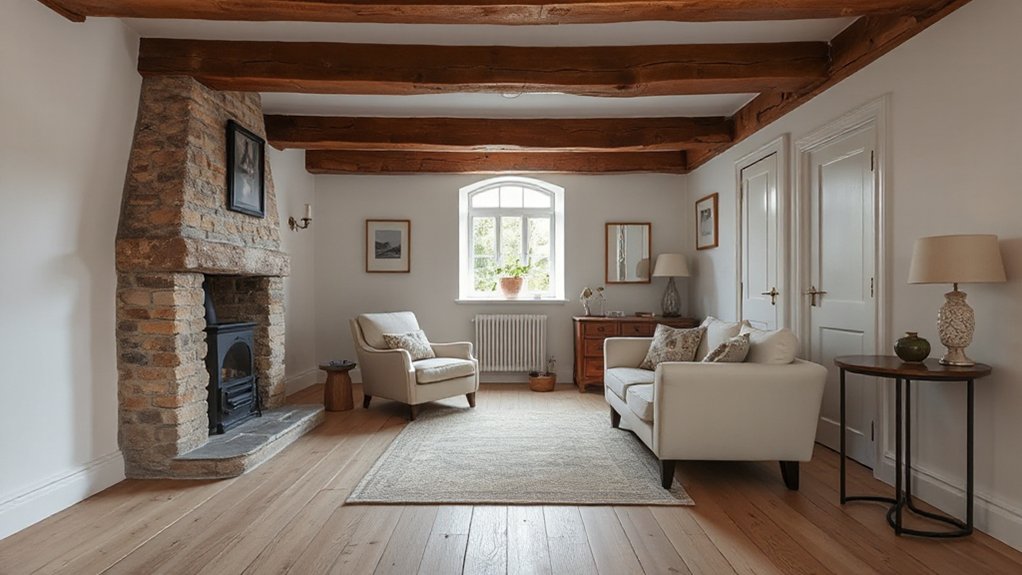
How do you make a snug cottage room feel more generous underfoot without stripping away its age? Start by choosing fewer floor breaks. Run the same finish through hall, kitchen, and sitting room so sightlines stretch.
If original boards survive, repair and refinish them in a lighter, matte tone; keep grain visible, not bleached. Where you need a tougher surface, luxury vinyl in a mellow oak or aged stone look gives continuity and warmth, and it’s kinder on uneven subfloors than brittle tiles.
Lay planks lengthways with the longest wall to pull the room outward. Keep thresholds slim, and match skirting to reduce contrast. Use patterned rugs sparingly—one larger piece reads calmer than several small ones. Choose low piles so edges disappear.
Mix Vintage Charm With Cleaner Modern Shapes
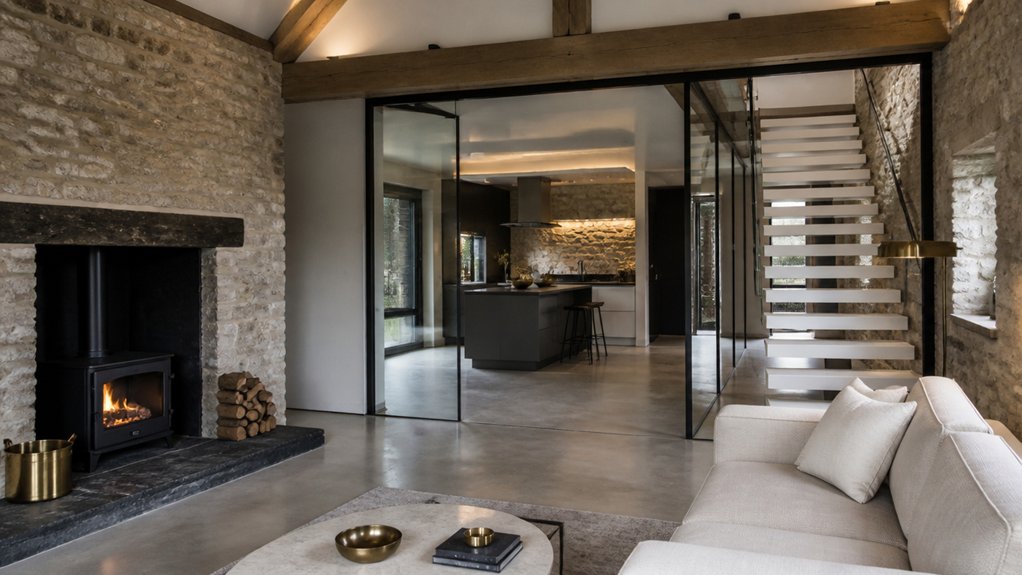
When you pair a few clean-lined pieces with the cottage’s older bones, the whole room feels lighter without losing its history. Start with one modern anchor: a slim sofa, a Shaker-style sideboard, or a simple dining table that respects the room’s proportions and low ceilings.
Then let patina do the storytelling. Choose Antique accessories with purpose—one brass candlestick, a worn oak tray, a framed botanical—so the mantel or shelf reads curated, not cluttered.
Ground the cleaner shapes with Vintage textiles: a faded kilim runner, linen curtains, or a small-check wool throw that softens sharp edges. Keep finishes honest and tactile, like oiled timber and matte black hardware, and repeat one metal tone so old and new feel intentionally related throughout.
Add Layered Lighting That Suits Cottage Style
Because dark cottages often rely on small windows and deep alcoves, you’ll get the biggest shift by layering light at different heights rather than chasing one brighter ceiling fitting. Start with warm, dimmable bulbs (around 2700K) to keep that soot-and-oak richness flattering, not stark.
Add a low table lamp on a sideboard to glow across panelled walls, then tuck a small picture light above a print or plate rack to lift the eye.
Use discreet uplighters behind a settle or in a hearth recess to soften beams and stone. If you need a pendant, choose an enamel, glass, or aged brass shade and hang it low over the table.
Put each circuit on separate switches so you can tune cottage ambiance nightly.
Frequently Asked Questions
Can I Modernise a Cottage Interior on a Small Budget?
Yes, you can modernise a cottage interior on a small budget by repainting in soft heritage tones, reworking Vintage furniture, and adding Colorful accents through textiles, lampshades, and art, while keeping original trim and hardware intact.
Do I Need Planning Permission for Interior Changes in a Listed Cottage?
Yes, you’ll usually need listed building consent for many interior changes, not standard planning permission. Surprise—your “tiny tweak” can trigger Listed building regulations and interior alteration restrictions. Talk early to conservation officers; document everything, choose reversible details.
How Do I Reduce Damp and Musty Smells in an Old Cottage?
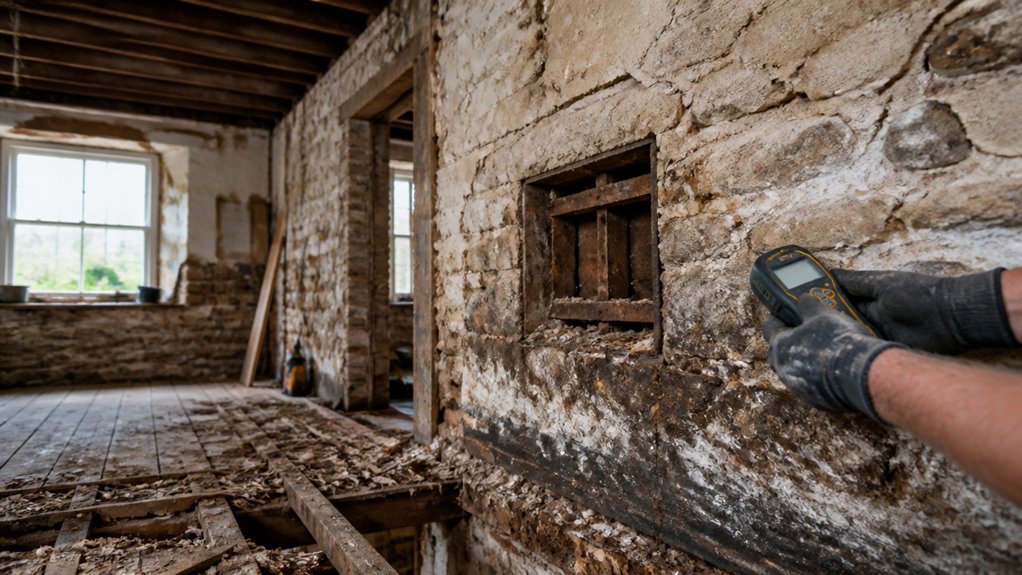
You’ll reduce damp and musty smells by boosting ventilation improvements, keeping gentle background heat, and tackling moisture sources. Use lime plaster, breathable paints, and mold prevention techniques: wipe condensation, clear gutters, improve drainage, avoid sealing old walls.
What Window Treatments Balance Privacy With Brighter Rooms?
Choose Sheer curtains for daylight while obscuring views, then add Smart blinds for evening privacy. You’ll keep cottage charm with linen textures, slim timber rods, and fitted frames that sit neatly within original reveals.
Which Modern Heating Options Suit a Traditional Cottage Aesthetic?
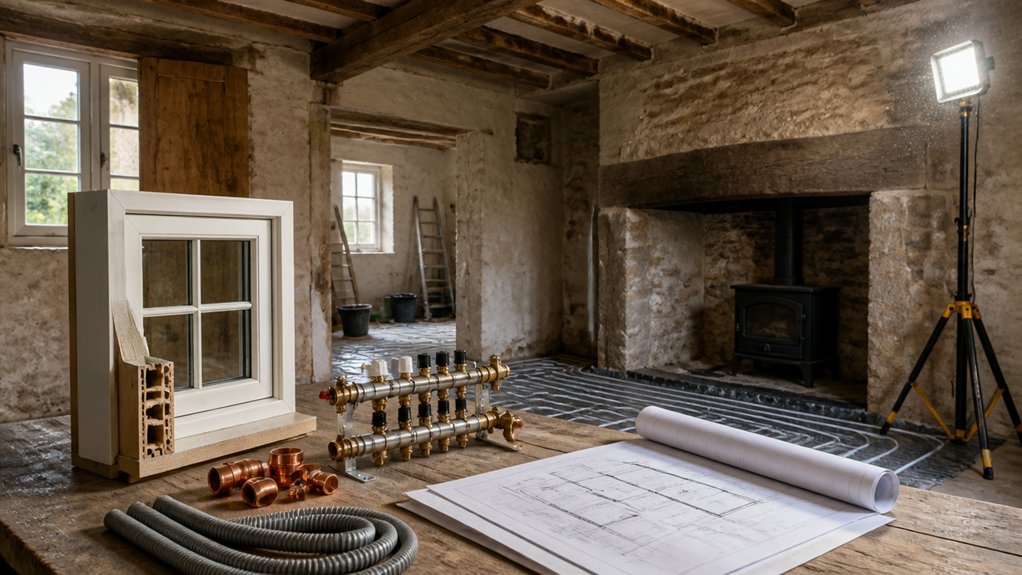
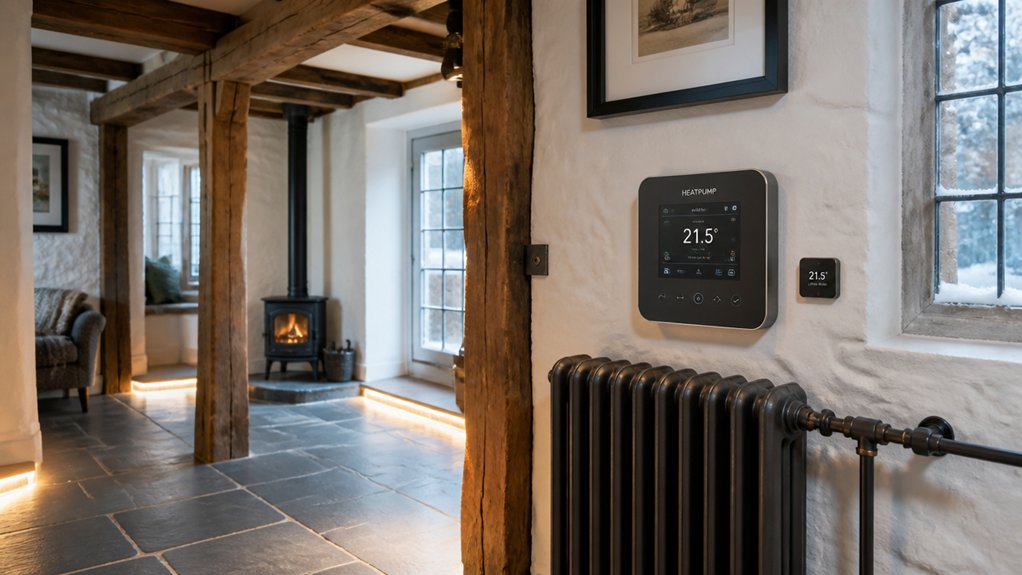
Why not choose Modern heating with aesthetic compatibility? You’ll suit a cottage best with cast-iron-style radiators, underfloor heating under stone flags, or a compact heat pump with discreet grilles; you’ll keep hearth-like warmth without visual fuss.

Leave a Reply