

If you’re considering rewiring an older British home, you can’t start with guesswork—you need a clear safety case and a plan that meets BS 7671 and Part P. You’ll check warning signs like brittle insulation, mixed earthing, and undersized consumer units, then map access routes before any floors or plaster come up. You’ll also decide circuits and future loads early, because once the first chase is cut, changes get costly…
Key Takeaways
- Get an Electrical Installation Condition Report (EICR) to confirm BS 7671 compliance, earthing, bonding, and whether a full rewire is necessary.
- Plan circuits and socket locations upfront, including dedicated appliance circuits, outdoor feeds, and spare consumer unit capacity for future upgrades.
- Use a NICEIC/NAPIT/ECA electrician experienced with older buildings, and demand a detailed written scope, timeline, access needs, and exclusions.
- Expect disruption: isolate supplies, lift floors, chase walls, control dust, protect furniture, and keep escape routes clear throughout the 5–10 day job.
- Insist on full testing and certification, receiving an Electrical Installation Certificate with test results and Building Control notification where required.
Do You Need a Rewire in an Older UK Home?
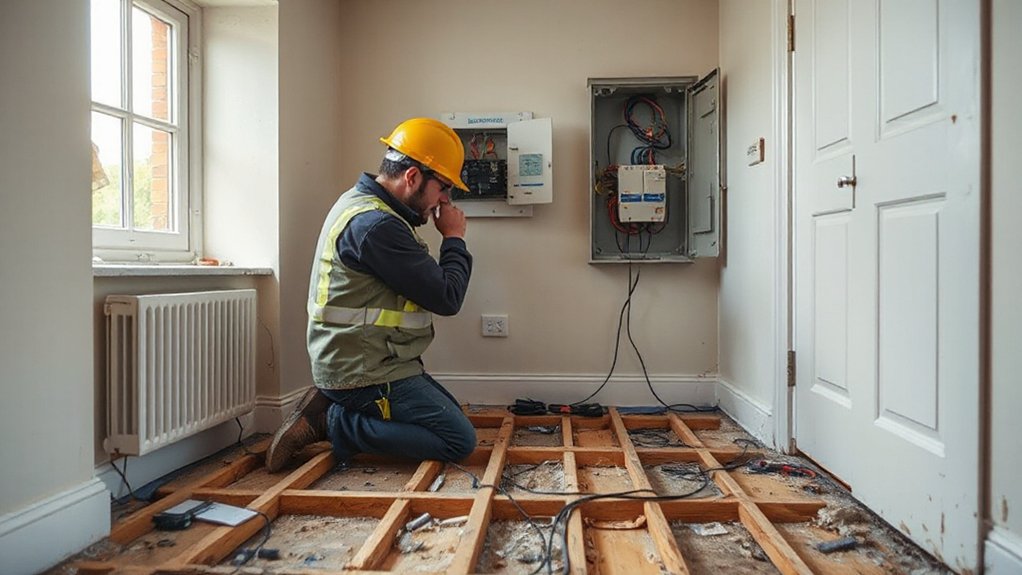
If your house still relies on original wiring from the 1960s or earlier—or you can’t confirm it’s been upgraded to current BS 7671 standards—you should assume it needs a formal condition check and may need a full rewire. Arrange an EICR with a qualified electrician and treat C1/C2 observations as immediate action items.
Watch for signs linked to Historical wiring: rubber or fabric insulation, aluminium conductors, rewirable fuses, no RCD protection, poor earthing, or bonding that’s missing at gas/water services.
Don’t rely on “it works” as proof of compliance.
Renovation challenges—moved kitchens, added sockets, DIY lighting spurs—often leave undocumented junctions and overloaded circuits. If the consumer unit lacks modern protection, you’ll likely need upgrades too.
What a Full House Rewire Involves (Time, Mess, Access)?
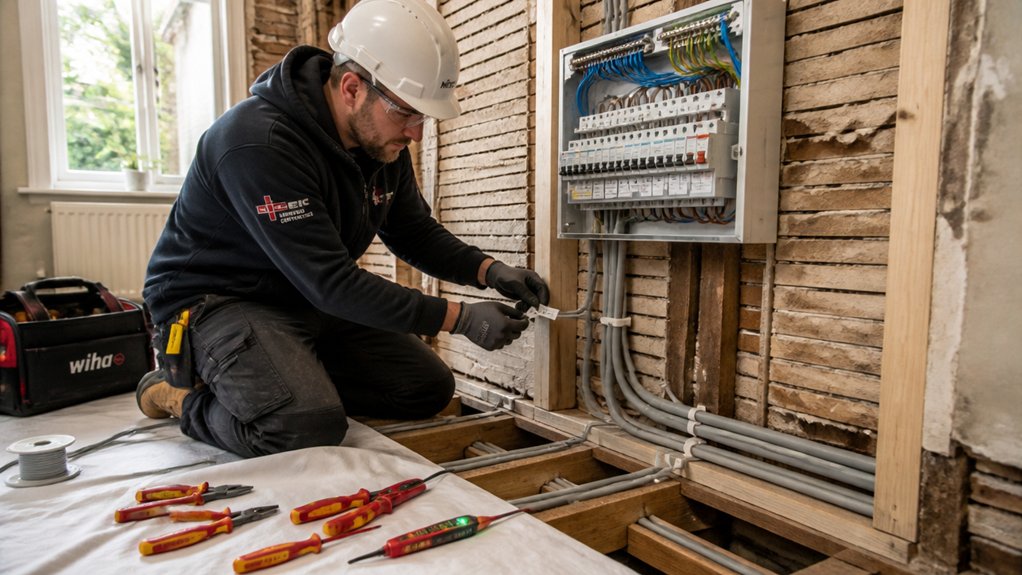
Once an EICR flags C1/C2 issues or you can’t evidence compliance with BS 7671, a full rewire stops being a “nice to have” and becomes a controlled safety job. You’ll isolate supplies, agree safe shutdowns, and remove or abandon unsafe cabling before new runs go in, then carry out required inspection and testing for certification.
Expect 5–10 working days in a typical occupied house, longer for lath-and-plaster, solid walls, or listed features. The mess comes from lifting floorboards, chasing plaster, drilling joists, and making good; you’ll need dust control, furniture protection, and clear escape routes.
Access challenges matter: locked rooms, boarded lofts, cramped voids, or shared risers slow progress and may require staged works. Circuit planning dictates cable routes and temporary power arrangements throughout.
Plan Your Rewire: Circuits, Sockets, Lighting, Future Needs
Because a rewire gives you one clean chance to define how power flows through the house, you should lock down the circuit schedule before any cables are pulled. Start with circuit planning: separate lighting, ring/radial socket circuits, cooker, immersion, boiler, and outbuildings, and allow spare ways in the consumer unit for later.
You’ll need RCD/RCBO protection, correct cable sizing, and safe zones for all runs to meet BS 7671.
Map socket placement room by room, prioritising kitchens, desks, and TV points, and avoid relying on extensions. Add dedicated feeds for EV charging, heat pumps, or solar/battery gear, even if you don’t install them yet.
Plan lighting zones, two-way switching, and fire-rated fittings where required. Include smoke/heat alarms and data cabling routes.
How to Choose a Rewire Electrician and Compare Quotes
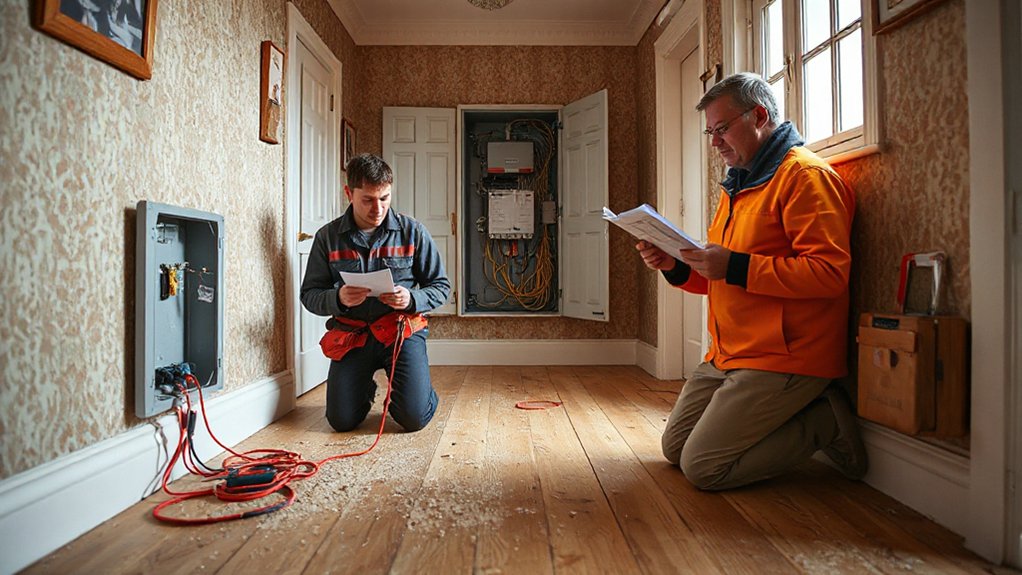
Although a full rewire looks like a straightforward “rip out and replace” job, you need an electrician who can prove compliance with BS 7671 and deliver the correct certification at handover (EIC, schedules, and Part P Building Regulations notification where applicable).
Check they’re NICEIC, NAPIT, or ECA affiliated, insured, and experienced with older fabric like lath-and-plaster and mixed earthing arrangements.
Ask how they’ll maintain electrical safety during works: temporary supplies, isolation, and safe routing to avoid hidden services.
When comparing quotes, insist on a written scope: number of circuits, accessories, consumer unit type, RCD/RCBO strategy, bonding upgrades, and making-good assumptions.
Confirm materials meet current wiring standards, and get a programme, access requirements, and exclusions in writing too.
After the Rewire: Testing, EIC Certificates, Part P Compliance
Your quote and scope only matter if the finished installation passes formal inspection and testing to BS 7671, and you walk away with the right paperwork. You’ll expect dead tests (continuity, insulation resistance, polarity) and live tests (Zs, RCD trip times, prospective fault current) recorded against every circuit, with any departures justified. This is core Electrical safety, not admin.
You should receive an Electrical Installation Certificate (EIC) for a full rewire, plus a schedule of inspections and test results, and confirmation of the earthing and bonding arrangements. Under Part P, the work must be notified to Building Control unless your electrician self-certifies via a competent person scheme.
The Certification process ends only when you’ve got the EIC and Building Regulations Compliance Certificate. Keep both for insurers and future sale.
Frequently Asked Questions
Can I Live in the House During a Full Rewire?
You can, but you shouldn’t unless you maintain safe temporary power and segregate work areas. You must meet Electrical Safety Standards and manage dust, access, and isolation, protecting Vintage fixtures and Historic preservation.
Will a Rewire Damage Plaster, Coving, or Original Floorboards?
Like Theseus’ ship, yes—you’ll likely disturb finishes: expect some plaster damage from chasing and back boxes. You can prioritise coving preservation by isolating circuits, marking routes, lifting boards carefully, and insisting on compliant reinstatement.
How Much Will My Electricity Bill Change After Rewiring?
Your electricity bill likely won’t drop much just from rewiring; expect small energy savings unless you fix faults and add efficient controls. You must test and certify circuits to regulations; rewiring costs outweigh bill reductions.
Do I Need to Inform My Home Insurer Before and After Rewiring?
Yes—you should inform your insurer before and after rewiring. Submit an insurance notification with contractor details, permits, and dates, then provide completion certificates to maintain liability coverage, avoid invalidating terms, and guarantee compliant, safe documentation.
Should I Upgrade to Smart Switches and Home Automation During a Rewire?
Yes—upgrade during the rewire. Like laying rails before the train arrives, you’ll futureproof circuits. Specify Smart technology rated components, segregate loads, meet BS 7671, verify RCD/AFDD protection, and test for energy efficiency.










Leave a Reply