

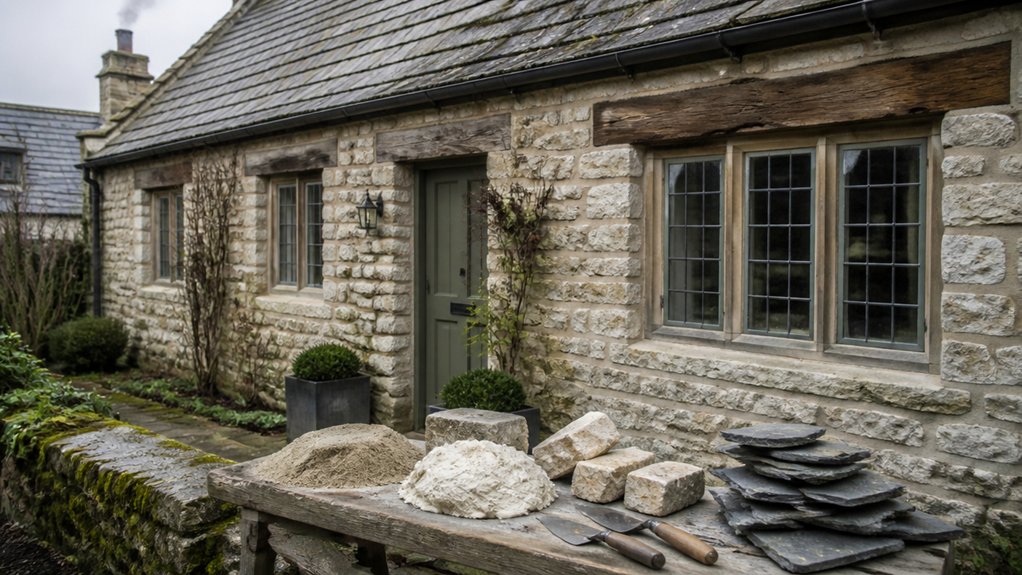
When you restore a UK stone cottage, you can’t treat it like a modern cavity-wall build. Solid stone moves, and it needs materials that stay breathable so moisture can evaporate instead of driving salt crystallisation and frost damage. You’ll get better long-term performance when you match local stone and use lime-based mortar, plaster, and finishes that flex and weather naturally. The next choice you make—starting with what you repoint with—will decide what fails first.
Key Takeaways
- Prioritise breathable, capillary-active materials so moisture can escape, reducing salts, timber decay, and frost spalling in solid stone walls.
- Repoint with lime mortar (NHL2/NHL3.5) matched to original aggregate, colour, and joint profile; avoid cement that traps moisture.
- Use lime plaster internally to stay vapour-permeable and buffer humidity, limiting condensation and salt damage on cold stone walls.
- Finish with limewash or compatible mineral silicate paint for durable, vapour-open protection that weathers naturally and preserves patina.
- Repair with locally matched stone and reclaimed timber, using traditional bedding, minimal cutting, and scarf repairs to maintain authenticity and longevity.
Why Stone Cottages Need Breathable Materials
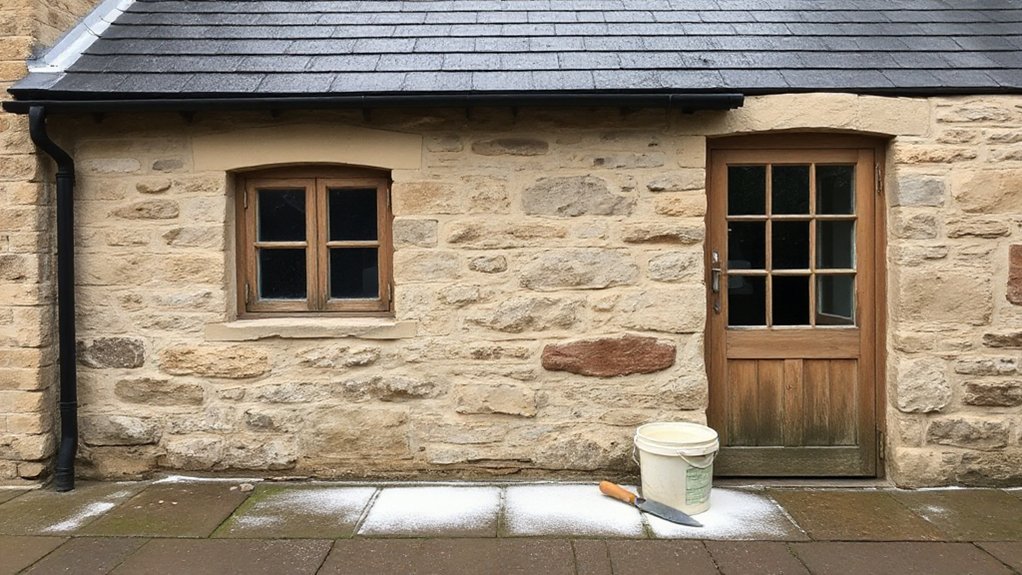
Why does “breathability” matter so much in a UK stone cottage? You’re dealing with solid walls, irregular rubble cores, and moisture loads from wind-driven rain, rising damp, and everyday living.
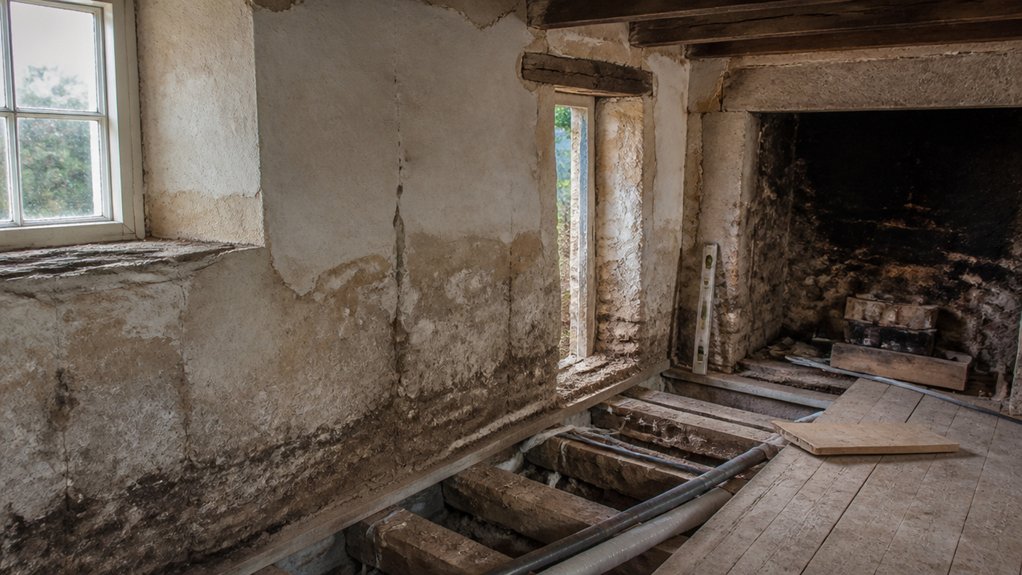
If you trap vapour, salts crystallise, timbers stay wet, and frost can spall faces—failures commonly recorded in retrofit surveys of pre-1919 masonry.
You protect the building by letting moisture move outward and dry between wetting cycles, not by sealing it shut. Choose permeable plasters and paints, and pair them with Weather resistant finishes that shed rain yet still allow diffusion.
When you add Modern insulation techniques, you’ll keep vapour pathways clear: use vapour-open boards, capillary-active materials, and continuous ventilation so internal humidity doesn’t condense inside the wall build-up.
Lime Mortar for Stone Cottage Repointing (vs Cement)
Although cement mortar looks like a quick, durable fix, a UK stone cottage almost always performs better with lime for repointing because lime matches the way traditional solid masonry manages movement and moisture.
Lime mortar stays comparatively flexible, so it accommodates thermal and settlement movement instead of cracking stone arrises. It’s also vapour-permeable: moisture can evaporate through the joint, reducing salt crystallisation and frost damage in the masonry face.
Hard cement, by contrast, can trap water and force it through weaker stones, leading to spalling and widened joints. You’ll also find lime sacrificial: it weathers first, making future maintenance simpler and less invasive.
Specify an appropriate lime (often NHL2 or NHL3.5) and match aggregate, colour, and joint profile for a period-correct cement alternative.
Lime Plaster for Healthy Stone Cottage Interiors
If you plaster your stone cottage with lime, you keep the wall system vapour-permeable, so moisture can move out instead of being trapped behind hard gypsum or cement. That breathability typically leaves rooms drier and reduces condensation and salt damage, which aligns with how these buildings were originally finished.
When you repair, you can patch with compatible lime plaster in thin coats, matching aggregate and finish so the new work bonds and cures without stressing the old stone.
Breathable Walls, Drier Rooms
Because old stonework constantly absorbs and releases moisture, your interior finishes need to move water vapour too—otherwise damp gets trapped and rooms start to smell musty, salts bloom on the surface, and timbers stay wetter for longer.
Lime plaster helps by staying vapour-open, buffering indoor humidity and letting walls dry to the room, not just to the outside. That reduces condensation risk on cold stone, especially in winter when you heat intermittently.
Pair it with sensible ventilation strategies: keep background air change steady, extract moisture at source in kitchens and bathrooms, and avoid blocking fireplaces and air bricks without alternatives.
For moisture control, watch for hard cement skim coats, vinyl paints, and dense gypsum that can choke evaporation and shift damp higher. Choose limewash or clay paints to keep permeability.
Repairing With Lime Plaster
When you repair a stone cottage with lime plaster, you match the material the building was designed to work with: a flexible, vapour-open finish that accommodates small seasonal movement and lets the wall shed moisture instead of trapping it behind a hard skin.
Strip failing gypsum and cement, then rake back to sound masonry and dampen the substrate so lime cures by carbonation, not rapid drying.
Use haired base coats to bridge uneven stone, then finish with fine lime putty or feebly hydraulic lime where exposure demands it.
Keep coats thin, well-keyed, and protected from frost and sun.
This Breathable finish reduces mould risk and salt damage.
Proper mixing and curing drive Lime plaster durability, giving you reparable, period-correct interiors.
Limewash vs Mineral Paint on Stone Cottage Walls
Although both limewash and mineral paint can give a stone cottage that soft, matte historic finish, they behave very differently on traditional breathable masonry.
Limewash chemically carbonates with the surface, so it stays vapour-open and sacrificial; it powders gently instead of trapping salts, which suits Historical preservation. You’ll need multiple thin coats, dampened substrate, and periodic reapplication, but you get subtle variation and easy patching.
Mineral (silicate) paint uses potassium silicate to bond into mineral substrates, offering higher abrasion resistance and longer intervals between redecorations. It remains permeable, yet it’s less forgiving of weak, friable stone or residual cement, so you must assess soundness and follow primer specs.
Among Modern paint alternatives, choose mineral paint when you want durability without sealing.
Local Stone Repairs That Match Your Cottage
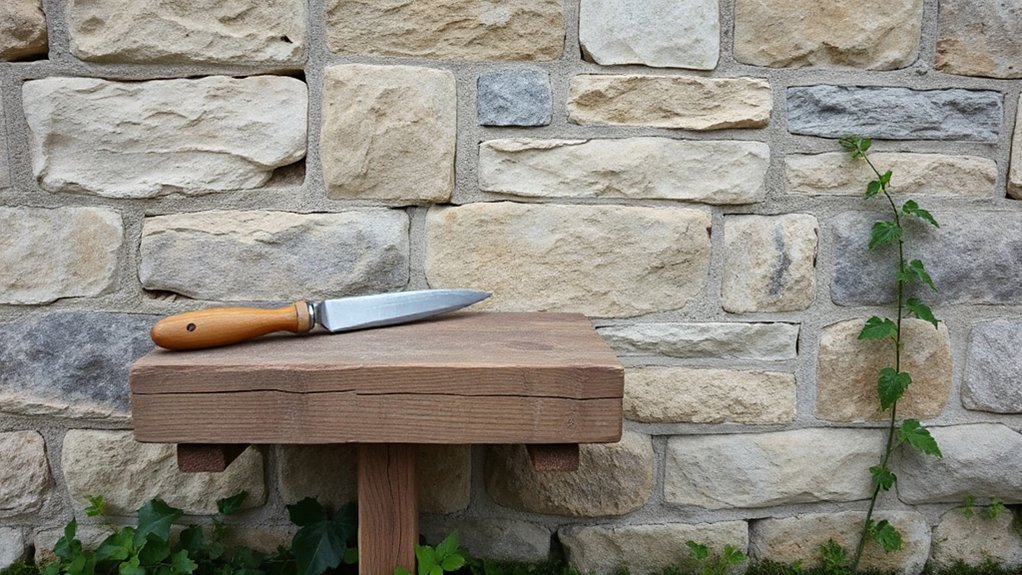
You’ll get the most durable, period-accurate repair when you source stone from the same local geology as your cottage, matching bed orientation, grain, and colour range rather than relying on a single “close” sample.
You should then use traditional masonry methods—like lime mortar bedding, minimal cutting, and pinned or indented repairs where appropriate—so the wall can move and shed moisture as it always has.
To make the work disappear, you’ll match tooling marks, joint profiles, and mortar texture, then let the finish weather naturally so the new stone’s tone and patina settle in without artificial staining.
Sourcing Matching Local Stone
How do you source replacement stone that disappears into your existing wall rather than standing out for decades? Start with stone matching: identify the original geology (limestone, sandstone, slate), then check colour, grain, bedding planes, and visible fossils or mica under consistent light. Measure porosity and hardness where possible; mismatched density can accelerate decay at the repair line.
For quarry sourcing, ask local quarries for the same seam or bed, not just the same “type.” If the historic quarry is closed, request reclaimed stone from nearby demolished buildings of similar date and exposure. Take a sample to suppliers and compare when wet and dry, because weathered faces read differently.
Document provenance for conservation records and future maintenance planning.
Traditional Masonry Repair Techniques
Once you’ve sourced a close geological match, traditional masonry repair focuses on fitting new stone so the wall continues to shed water and move as it always has. You’ll start by recording joint widths, bed angles, and tooling so replacements follow existing load paths and drip lines.
Cut out failed stone back to sound arrises, avoiding over-enlarged pockets that weaken surrounding work. Bed the new piece on lime mortar matched for strength and permeability, not cement, so moisture can evaporate and salts don’t spall faces.
Use stainless or non-ferrous pins only where structurally necessary, and isolate them from damp paths. Keep joints slightly recessed and well-compacted to resist driving rain.
This approach supports Heritage preservation and long-term Material durability in exposed UK conditions.
Blending Texture And Patina
With the replacement stones bedded and jointed to perform like the originals, the next challenge lies in making the repair read as part of the same wall under UK light and weather.
You’ll get there by matching geology, tooling, and exposure, not by staining everything to one colour.
Choose like-for-like stone from a nearby seam, then dress it with the same hand tools: punch, chisel, and dragged point to recreate textured surfaces that catch rain and shadow similarly.
Avoid over-smooth sawn faces; they telegraph new work. Set the arrises slightly eased, reflecting historic wear.
Keep mortar slightly recessed so stone dominates, as on many pre‑1900 cottages.
Let limewash or shelter-coat unify tone, but allow moisture to move. Over seasons, salt and algae will soften contrasts into a weathered patina.
Reclaimed Timber for Floors, Doors, and Joinery
Although reclaimed timber can look like a purely aesthetic choice, it often performs better than fresh-sawn wood in a UK stone cottage because decades of seasoning reduce movement and help floors, doors, and joinery stay true through damp winters and heated interiors.
Choose boards with tight growth rings and known provenance (barn oak, pitch pine), then check moisture content before fixing.
For floors, you’ll get fewer cupped boards and less gapping if you acclimatise on-site and use secret nailing or screws into sound joists.
For doors and frames, reuse stable stiles and rails, and repair with scarf joints and hide glue where appropriate.
Match mouldings to surviving profiles so new work sits comfortably beside vintage furniture and handcrafted fixtures without looking contrived.
Frequently Asked Questions
What Permissions Are Required for Renovating a Listed Stone Cottage in the UK?
You’ll need Listed Building Consent for any works affecting character, often Planning permissions too for extensions or alterations. Check conservation area rules, follow Historic preservation guidance, consult your local authority early, and keep detailed method statements.
How Can I Improve Insulation Without Causing Damp in Solid Stone Walls?
Use breathable, vapour-open systems: lime plaster and woodfibre or cork modern insulation inside, plus airtightness detailing and controlled ventilation. Fix defects, manage rainwater, and keep external masonry permeable for robust damp prevention.
What Are Typical Costs and Timescales for a Full Stone Cottage Restoration?
You’ll typically spend £2,000–£4,000/m² and 6–18 months for full restoration; major structural, roofing, and services work pushes higher. Historic preservation surveys, consents, and Traditional craftsmanship extend programmes but reduce risk.
How Do I Find Qualified Tradespeople Experienced With Traditional Stone Buildings?
You’ll find qualified tradespeople by using SPAB and IHBC directories, then checking portfolios and references for Historic craftsmanship and Traditional techniques. Over 70% of UK homeowners struggle sourcing trusted trades—so verify insurance, lime experience.
Will My Home Insurance Cover Restoration Work and Structural Repairs?
Your policy might cover structural repairs only if sudden insured damage caused them; planned upgrades usually won’t. You need written insurer approval, clear Insurance coverage terms, and a defined Restoration scope, plus listed-building and contractor documentation.


Leave a Reply