

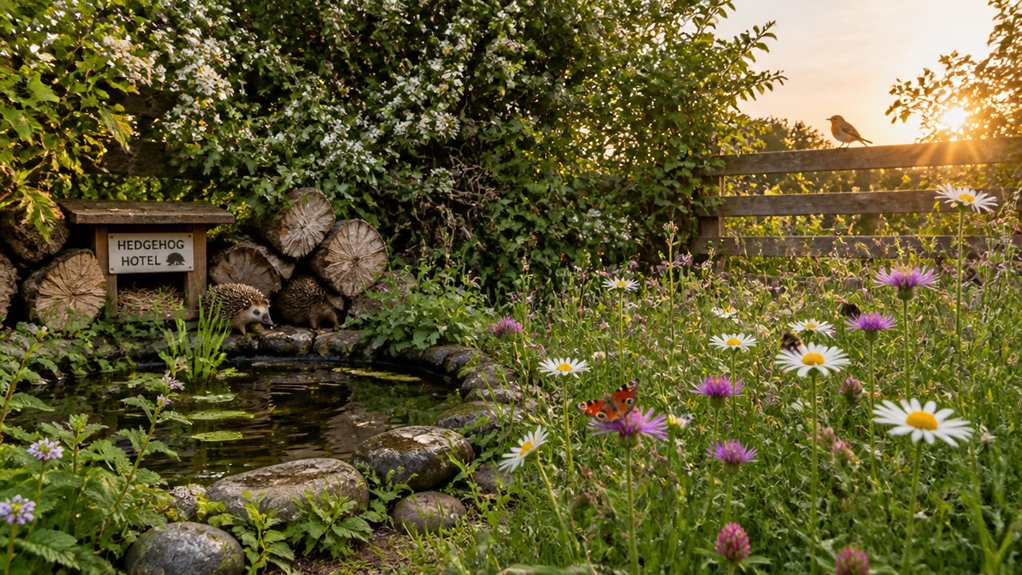
You can turn an ordinary UK garden into year‑round habitat if you match plants and structures to local species needs. Start by checking sun, soil, and available cover, then choose native flowers and shrubs that provide nectar, pollen, and berries across seasons for bumblebees, hoverflies, thrushes, and blackbirds. Add hedges, log piles, and nest sites, and include shallow, safe water. The key trade‑offs come next…
Key Takeaways
- Map sun, shade, drainage, and soil pH to match habitat features and native plants to your garden’s conditions.
- Plant UK natives for continuous nectar, pollen, and seed from spring to autumn, including early willow and late ivy.
- Create layered structure with hedges, grasses, and wildflower patches, leaving some areas undisturbed for overwintering insects.
- Add shelters like log piles, leaf litter, and bird or bat boxes, positioned to provide dry, shaded refuges year-round.
- Provide safe, clean water using shallow pebble dishes, sloped birdbaths, or wildlife ponds, and avoid pesticides and excess fertiliser.
Assess Sun, Soil and Space for a UK Wildlife Garden
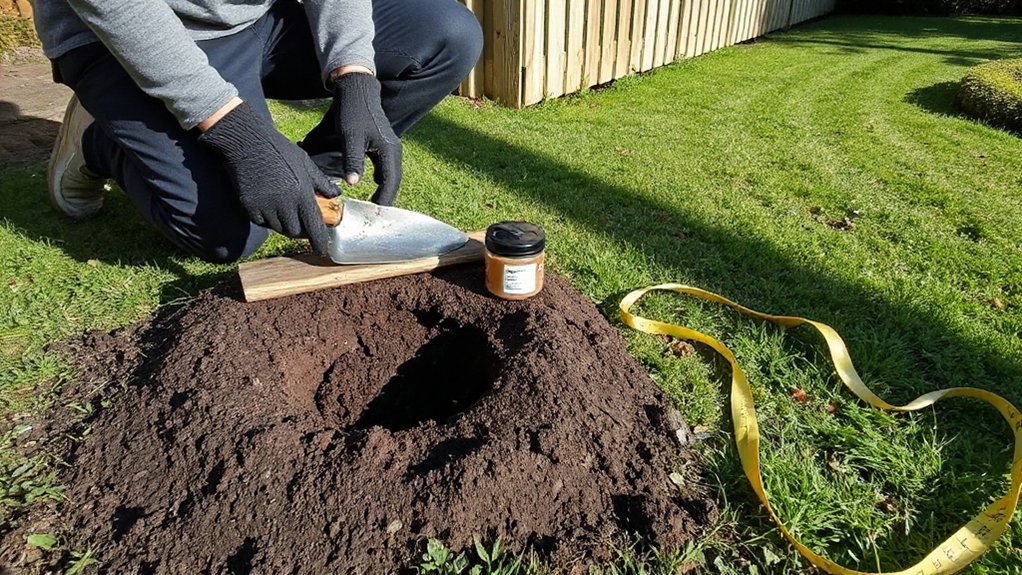
Before you buy plants or put in a pond, map what you’ve already got: note where sun falls through the day (full sun, dappled shade, deep shade), test your soil texture and pH, and measure the space you can realistically leave as habitat. This baseline guides Garden design that actually fits UK wildlife needs.
Keep the warmest, sunniest edges for basking insects and slow-warming amphibians; keep cool, shaded corners for refuges and fungi-rich leaf litter.
Check drainage after heavy rain: waterlogged clay suits wet scrapes; free-draining soils suit dry banks for solitary bees.
Keep some areas un-dug to protect overwintering larvae.
For Pest control, plan resilience: diverse structure, rough grass, logs, and dense cover support ladybirds, hoverflies, and hedgehogs that reduce aphids and slugs.
Pick Native Plants With Blooms From Spring to Winter
Because most garden wildlife depends on nectar, pollen, leaves, and seeds at specific times, you’ll get the biggest boost by choosing UK native plants that “hand over” resources from early spring through winter.
Start with willow (Salix) and blackthorn (Prunus spinosa) for March nectar that fuels queen bumblebees.
Add hawthorn (Crataegus monogyna) and cowslip (Primula veris) for late spring.
Then, plant bird’s-foot trefoil (Lotus corniculatus) and knapweed (Centaurea nigra) to feed summer bees and butterflies.
In autumn, plant ivy (Hedera helix) for vital late nectar and berries, plus teasel (Dipsacus fullonum) for seed-eating finches.
Mix grasses with wildflowers to raise Plant diversity, improve Pollinator attraction, and sustain specialist larvae, including UK moths.
Build Shelter: Hedges, Log Piles and Nesting Sites
When you add shelter as deliberately as you add flowers, you turn a garden into year-round habitat rather than a temporary feeding stop.
Prioritise Hedge design that mimics woodland edge: mixed native shrubs, layered heights, and a dense base for wrens, robins, and overwintering insects. Let some stems and seedheads stand through winter so small birds can forage under cover, and prune outside the main nesting season.
Plan Log pile placement in shade or dappled light, on bare soil, with varied log sizes and some upright sections to hold moisture. That structure supports woodlice, beetles, and fungi, which feed hedgehogs, thrushes, and amphibians.
Add bird and bat boxes on mature trees or walls, facing away from prevailing rain and strong sun.
Add Safe Water Features for Birds, Bees and Hedgehogs
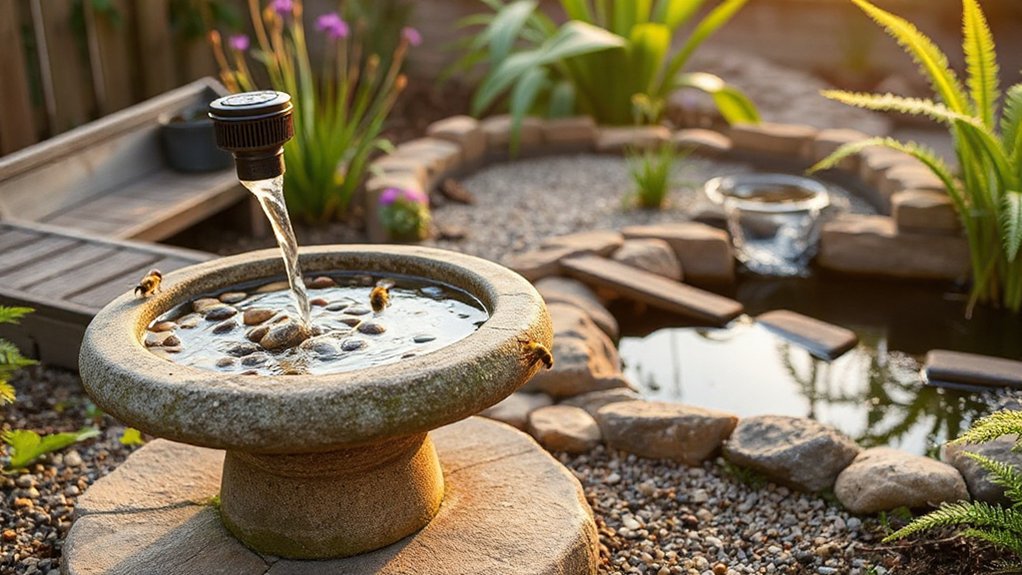
Although even a small garden can look “wildlife-friendly,” it won’t function as reliable habitat unless you add clean, accessible water that animals can use without getting trapped or exposed.
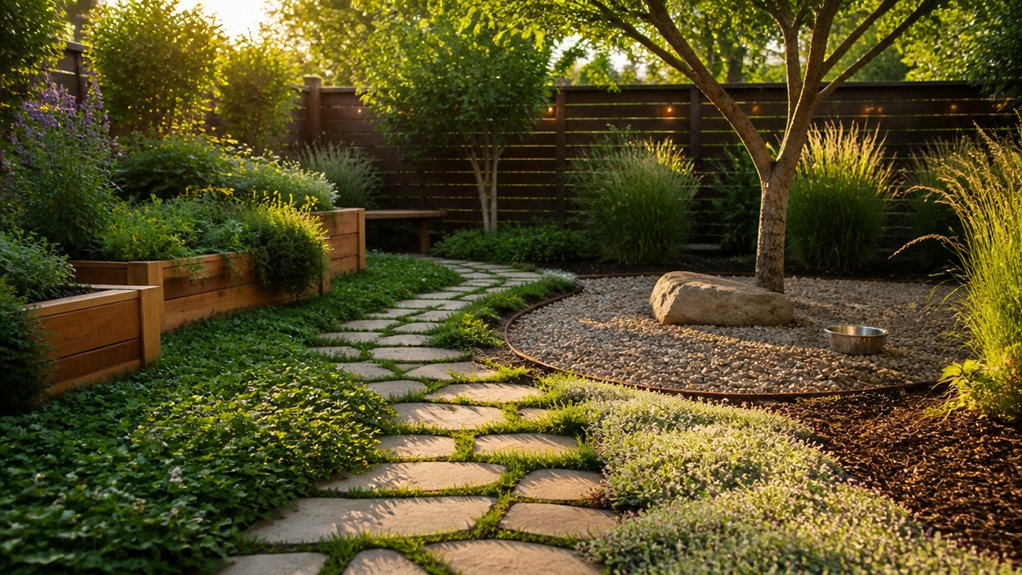
Put out a shallow dish with pebbles so bees and hoverflies can drink without drowning, and top it up daily in dry spells.
For Bird bathing, use a rough‑textured basin 3–5 cm deep with a sloping edge; place it near cover but with a clear view to reduce ambush risk.
If you add a pond, include a beach‑like shelf and a firm escape ramp.
Keep Hedgehog pathways open to water: set a ground‑level saucer nearby, and avoid steep sided containers.
Empty, scrub, and refill regularly.
Maintain Your Wildlife Garden With Low‑Chemical Methods
Clean water features work best alongside gardening practices that don’t contaminate them or strip away food sources.
For Pest control, prioritise prevention: grow diverse native plants, keep some leaf litter, and tolerate minor damage so hoverfly larvae, lacewings, and ladybirds can suppress aphids.
Hand-pick slugs at dusk and use copper barriers around seedlings instead of pellets, which can harm hedgehogs and song thrushes indirectly.
If you must spray, spot-treat with fatty-acid soap and avoid flowering plants to protect bees.
Keep Fertilizer use light and targeted. Overfeeding boosts soft growth that fuels pests and can wash into ponds, reducing oxygen for newts and invertebrates.
Feed soil with homemade compost, mulch, and slow-release organic amendments.
Frequently Asked Questions
How Do I Keep Cats From Hunting Birds in My Wildlife Garden?
Fit your cat with a Birdsbesafe-style collar or bell, use Cat deterrents like motion sprinklers, and add dense bird friendly plants (hawthorn, holly) near feeders so tits and robins can escape. Keep cats indoors dawn/dusk.
Will a Wildlife‑Friendly Garden Increase Rats or Other Pests?
You’ll rarely boost rats if you manage food and cover. Like a banquet with closed doors, habitat stays balanced: curb pest attraction, secure bins, compost right, avoid grain, prune dense ivy, and prioritise rodent control.
Do I Need Planning Permission for a Pond or Wildflower Meadow?
You usually don’t need planning permission, but you must check local Pond regulations and Meadow planting permits, especially near boundaries, drains, or protected habitats. You’ll support amphibians and pollinators by avoiding runoff, invasives, and disturbance.
How Can I Make My Garden Hedgehog‑Friendly if I Have Solid Fencing?
Turn your solid fence into a gateway: cut 13cm x 13cm gaps or fit tunnels—key Garden fence modifications for hedgehog movement. You’ll add Hedgehog shelter options like leaf piles and log stacks, plus pesticide-free feeding zones.
What Are the Best Wildlife‑Friendly Ways to Control Slugs and Snails?
You’ll control slugs and snails by hand‑picking at dusk, using beer traps sparingly, and applying Natural repellents like wool pellets or copper rings. Improve Composting techniques to reduce hiding spots, and encourage thrushes, frogs, hedgehogs.

Leave a Reply