

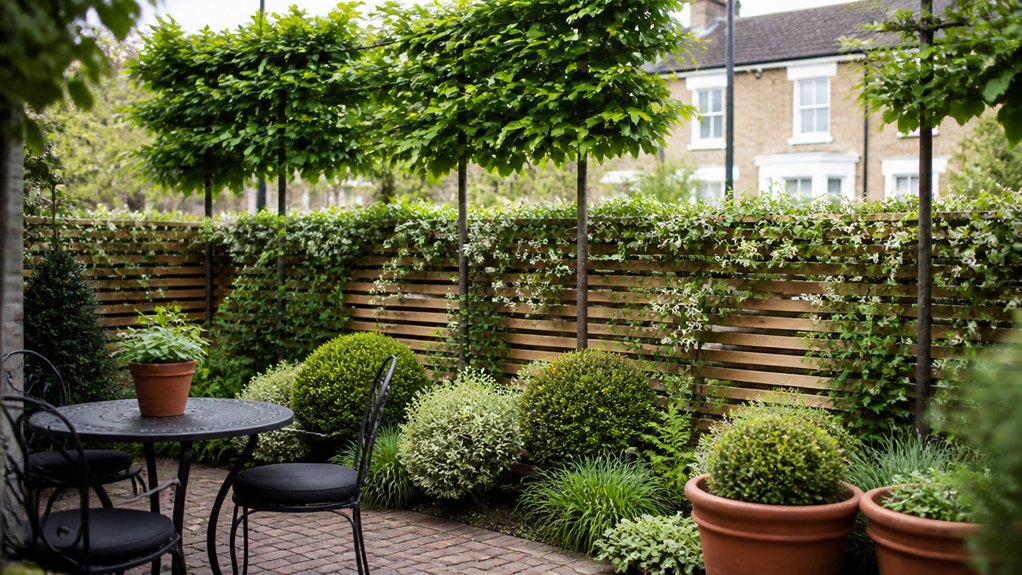
If you want more privacy in a UK garden without pushing fence heights, you’ve still got plenty of workable options. You can soften sightlines with layered evergreens like yew or holly, then add quick cover with climbers on a slim trellis or slatted screen that keeps air moving. For overlooked patios, you can use a pergola or shade sail to block upstairs views. The key is choosing what fits your plot and planning limits—starting with…
Key Takeaways
- Map neighbour sightlines from windows and patios, then target privacy fixes to those view cones rather than raising fence height.
- Plant evergreen screening (yew, holly, Portuguese laurel, Griselinia) sized to your aspect, using ground or large pots where space is tight.
- Add fast cover with clumping bamboo or dogwood, then layer with lower shrubs and perennials for dense, year-round visual blocking.
- Fix trellis or modern slatted screens to existing boundaries for height and airflow, then train jasmine, honeysuckle, or clematis through them.
- Block overlooking from above using pergolas or UV-stable shade sails, and soften structures with climbers like Trachelospermum or grapevine.
How to Choose the Right Garden Privacy Idea
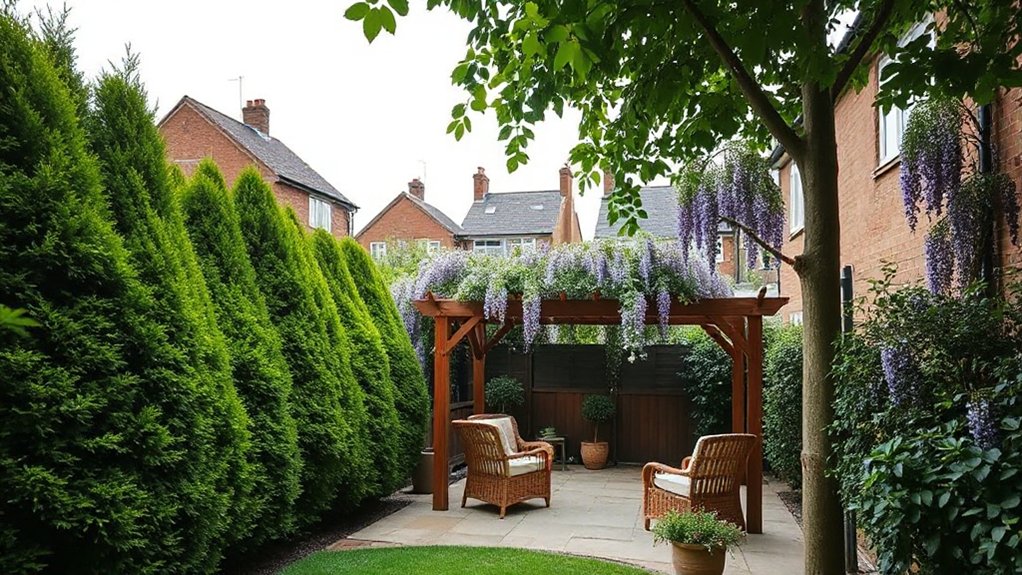
Before you buy a trellis or start planting, stand in your garden and work out exactly where the overlooking comes from—upstairs windows, a raised patio next door, or a footpath behind the fence. Then match the fix to that sightline and your site: check how much sun and wind the spot gets, how deep and free-draining the soil is, and whether you can plant in the ground or need pots.
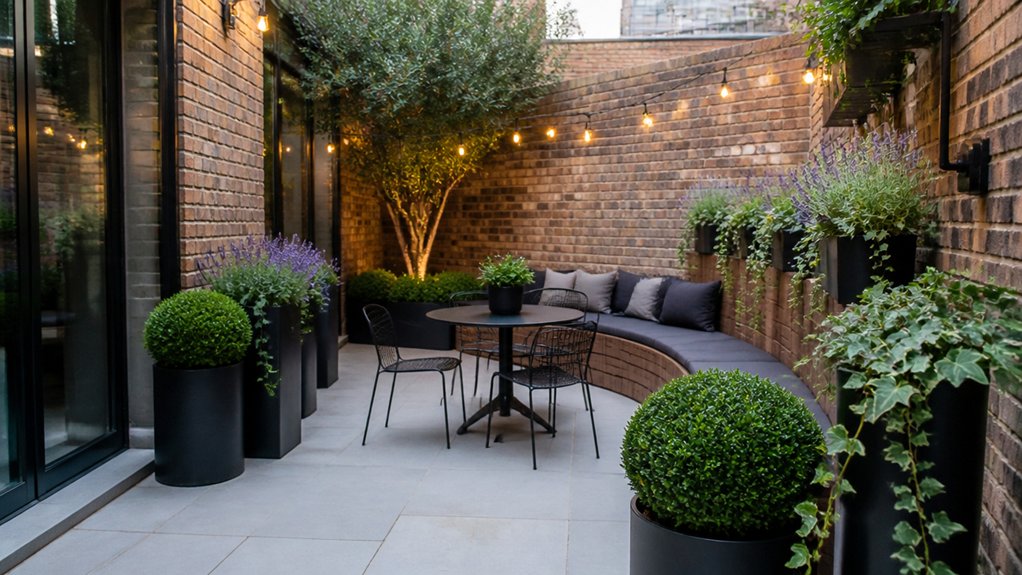
Because a clipped evergreen screen (like yew or Portuguese laurel) suits sheltered borders, while airy climbers on a low trellis or a line of tall containers with grasses and bamboo (only clumping types) can solve privacy fast in tighter, paved UK gardens.
Next, map your garden layout: decide if you need height, a side screen, or a movable block. Choose privacy materials that suit planning limits and maintenance. Prioritise durable fixings and access for watering.
Planting for Privacy: Evergreen, Fast-Growing, Layered
Although a trellis or screen can buy you time, planting gives you the most natural, year-round privacy in UK gardens if you combine an evergreen backbone with a few fast fillers and a layered edge.
Start with tough evergreens that suit your aspect: yew or holly for shade, Portuguese laurel or Griselinia for milder, coastal spots.
For quick cover, tuck in clumping bamboo (Fargesia) or dogwood and coppice it hard each spring.
Then layer the front with shrubs and perennials to block low sightlines: sarcococca for winter garden scent, lavender for sun, and hardy geraniums as ground cover.
Add climbers on existing structures, not new boundaries: honeysuckle for scent and a wildlife habitat, plus berries for birds.
Trellis and Slatted Screens for Stylish Boundaries
If you need privacy quickly but can’t (or don’t want to) go taller with fencing, trellis panels and slatted screens let you lift the boundary line without the heavy, boxed-in feel. Fix Decorative lattice on top of existing panels to blur sightlines from upstairs windows while keeping light for borders.
In windy UK plots, choose thicker battens or framed trellis and bolt into posts, not just rails. For a contemporary terrace, Modern slats set with 10–20mm gaps block direct views yet keep airflow, ideal beside bins or a seating nook.
Plant-wise, run wires and train jasmine, honeysuckle, or climbing roses through the grid; add clematis for quick cover. On shady boundaries, go for ivy alternatives like hydrangea petiolaris. Keep access for pruning.
Pergolas and Shade Sails for Overlooked Patios
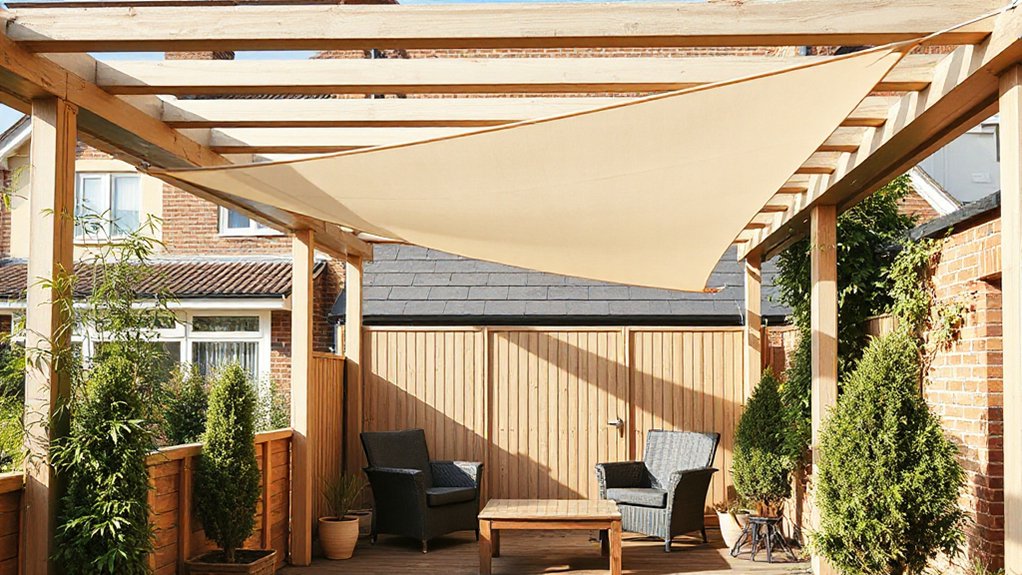
Screens and trellis soften boundary views, but for patios overlooked from upstairs windows you’ll often get better cover by putting privacy overhead with a pergola or a well-anchored shade sail. Site it to block the neighbour’s sightline: stand where they look down from and mark the “view cone” across your seating area.
A pergola suits exposed, windy UK gardens because posts and rafters take climbers—evergreen Trachelospermum, ivy, or a grapevine for summer leaf cover. Add side wires to train jasmine or clematis into a leafy soffit.
If you need faster shade, tension outdoor fabric or shade cloth between walls or posts, sloping it for rain run-off. Choose UV-stable, mildew-resistant fabric and stainless fixings, and keep edges clear of guttering.
Rent-Friendly Privacy Screens You Can Move or Remove
Two easy wins for renters are freestanding planter screens and weighted, fold-away panels you can shift with the sun. Fill trough planters with bamboo in pots (clumping Fargesia) or evergreen sarcococca, then mulch to stop splash on paving. Add a slim trellis panel behind the pots and train jasmine or honeysuckle up coir ties for quick cover without drilling.
For Portable screens, choose slatted timber or willow hurdles on parasol bases, or use a clothes-rail frame with outdoor curtains you can unclip before storms.
Try DIY privacy hacks like cable-tying reed rolls to a freestanding ladder shelf, then layering ferns, hostas, and heucheras at the base to soften lines. Move everything to chase privacy as neighbours step out.
Frequently Asked Questions
Do I Need Planning Permission for Privacy Screens in the UK?
You usually don’t need planning permission if privacy screens stay under 2m (1m by a road), but check your council and any Article 4 rules. Use temporary screens, decorative screens, and climbers in pots.
How Can I Block Neighbour Noise as Well as Views?
Kill two birds with one stone: combine soundproofing barriers with dense evergreens (laurel, yew) and climbing ivy on trellis. Add staggered decorative screens near patios, seal gaps, and layer shrubs to soften sound.
What Privacy Options Are Safest for Gardens With Pets and Children?
Choose non-toxic, thornless hedging (hornbeam, beech) with sturdy mesh behind for garden security. Use wildlife friendly barriers like dense shrubs and climbers on trellis. Avoid sharp wires, poisonous plants, and splintering screens.
Which Privacy Solutions Work Best for Very Windy UK Gardens?
In a gusty garden, you’ll want wind resistant barriers that breathe, like slatted trellis and willow hurdles, plus flexible screening options such as tough climbers on wires and mixed hedging; they bend, not break.
How Much Do Non-Fence Privacy Ideas Typically Cost in the UK?
You’ll typically spend £50–£1,500+ in the UK: £50–£200 for trellis/screens, £200–£800 for pergolas, £150–£600 for planters, £100–£400 for hedging. Use cost comparison sites and affordability tips: buy bare-root, mulch well.


Leave a Reply