

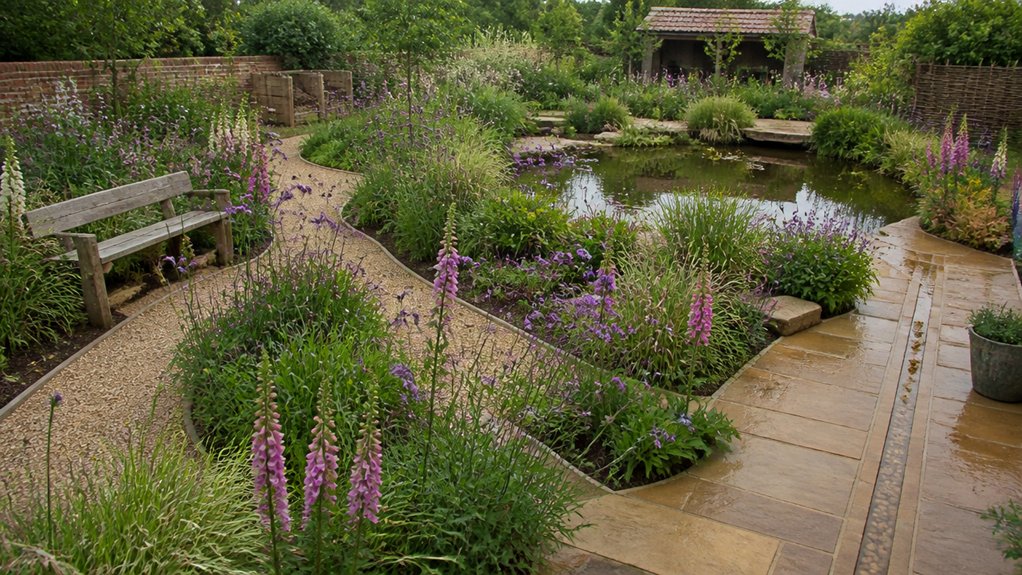
Coincidentally, just as you start planning next season’s upgrades, UK gardens in 2026 are shifting toward warmer, tactile materials like sandstone, reclaimed brick, and corten steel. You’ll soften the whole layout with curved paths and relaxed zoning, then back it up with native, drought-tough planting, peat-free compost, and smarter, lower-water irrigation. You can even add wildlife features that look designed, not improvised—but the real impact often comes from one budget swap you’re probably overlooking…
Key Takeaways
- Warmer, natural hardscaping like sandstone, buff limestone, clay pavers and reclaimed brick is replacing cold grey finishes.
- Soft lines lead: curved paths, low edging and overlapping zones create calmer flow between seating, dining and fire-bowl areas.
- Climate-resilient planting is rising, mixing UK natives with Mediterranean drought-tolerant shrubs and airy grasses for long-season structure.
- Gravel mulch and mat-forming groundcovers are trending to reduce evaporation, suppress weeds and keep borders crisp with less watering.
- Sustainability features expand: peat-free soils, drip/olla irrigation, wildlife corridors and discreet nesting sites, paired with low, warm lighting.
UK Garden Trends 2026: Warmer, Natural Hard Landscaping
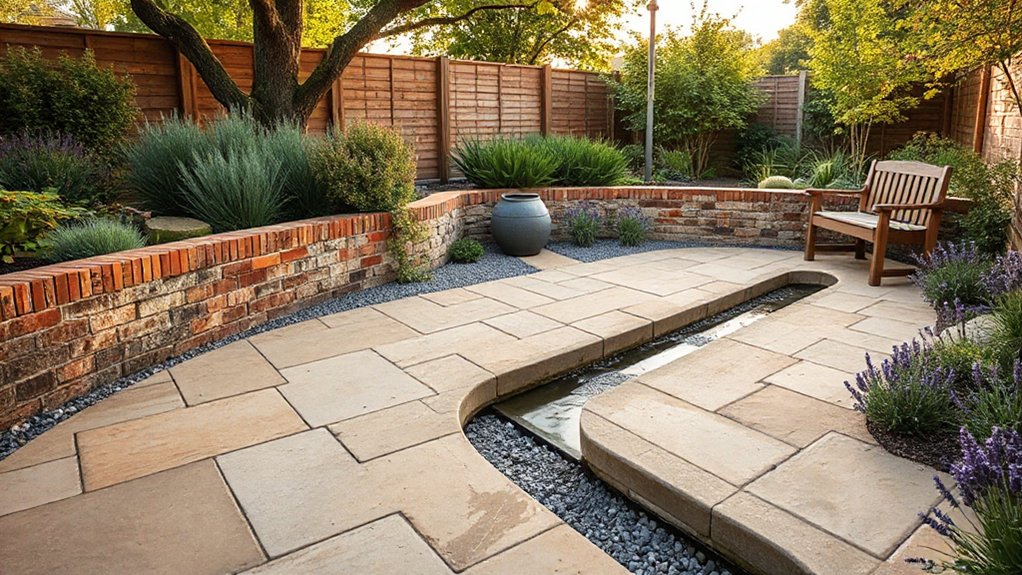
As UK gardens adapt to hotter summers and longer shoulder seasons in 2026, you’ll see hard landscaping shift toward warmer, more natural finishes that look sun-baked rather than showroom-new. You’ll choose sandstone, clay pavers, and buff limestone over cold greys, letting subtle colour variation read as intentional patina.
You’ll specify matte sealers, brushed surfaces, and tumbled edges for Natural textures that grip underfoot and hide dust and water marks. You’ll pair pale grout lines with mixed-size setts to reduce glare and keep patios visually calm at noon.
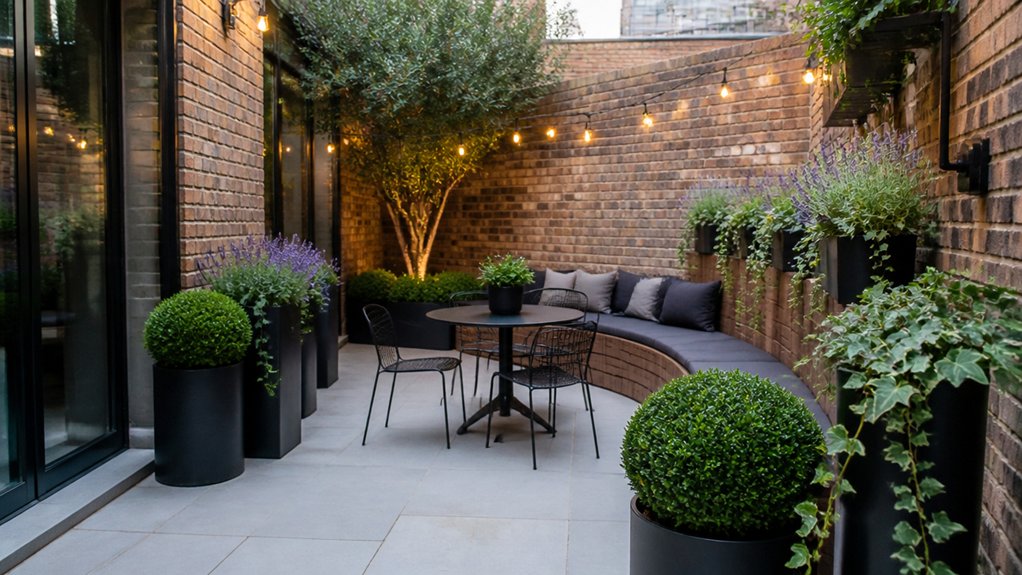
You’ll favour reclaimed brick, charred timber sleepers, and corten accents for heat-friendly tones that age well. Detail matters: you’ll align joints to planting beds, and you’ll repeat Soft curves in edging to soften hard gradations.
UK Garden Trends 2026: Curved Paths and Relaxed Zoning
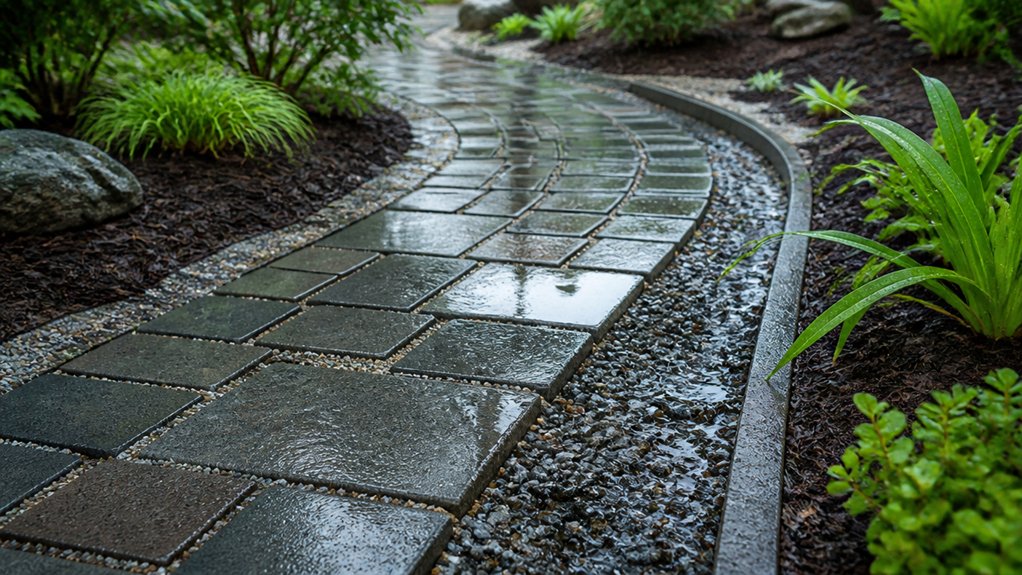
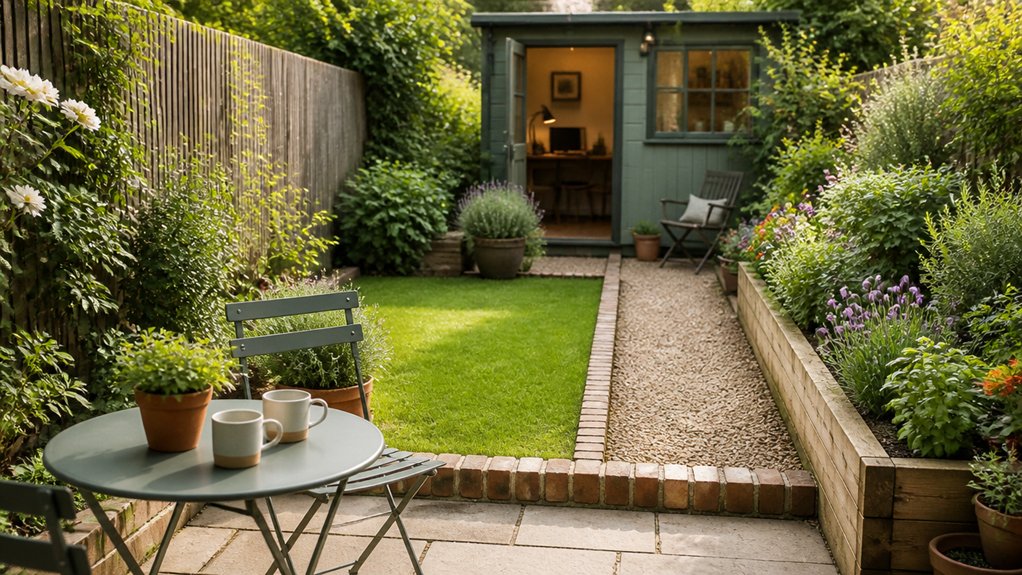
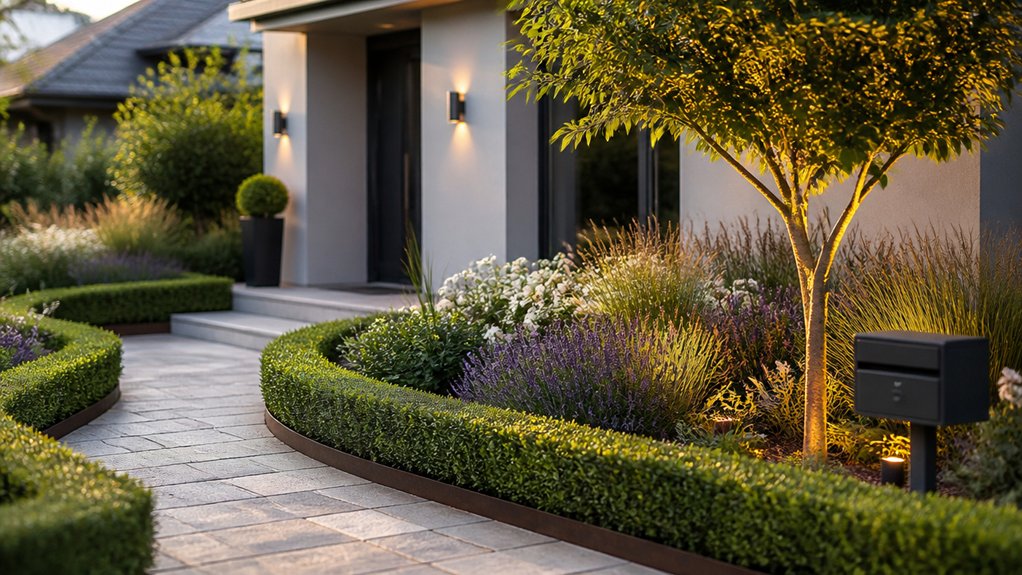
Although clean, straight axes still suit formal plots, 2026 UK gardens increasingly lean into curved paths and relaxed zoning that let you move in slower, more intuitive loops. You’ll see Curved pathways in resin-bound gravel, reclaimed brick setts, or sawn stone with a tight radius that subtly reveals views.
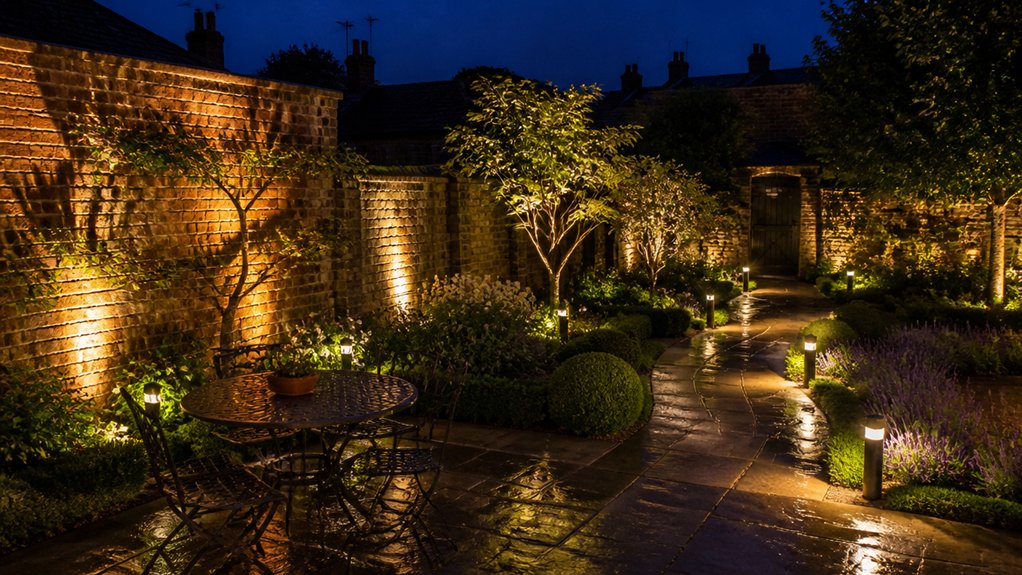
Relaxed zoning replaces rigid “room” edges with overlapping thresholds: a bench tucked off the main line, a dining spot that borrows space from the lawn, or a fire-bowl circle that doubles as a turning node. You can soften gradients with low edging, flush kerbs, and lighting that traces the bend rather than spotlighting a destination.
The effect feels calmer and more usable, because you’re guided by flow, not a diagram.
UK Garden Planting Trends 2026: Drought-Tough, Lower-Water Borders
In 2026, you’ll build UK borders around climate-resilient performers that shrug off heat spikes and dry spells without losing structure or colour.
You’ll lock in moisture and cut weeding by pairing gravel mulch with tight, flowering groundcovers that knit the soil surface.
You’ll finish with layered Mediterranean-style planting—silver foliage, aromatic shrubs, and airy grasses—to get a sun-baked look that stays low-water and high-impact.
Climate-Resilient Border Plants
With hotter summers, drier springs, and hosepipe bans cropping up more often, you can’t rely on thirsty, high-maintenance borders to look good through 2026. You’ll get better results by building borders around deep-rooted, heat-steady perennials and structural shrubs that hold form in wind and sudden downpours.
Start with native species selection where it suits your site: yarrow, betony, scabious, and knapweed cope once established and support Pollinator diversity across a longer season.
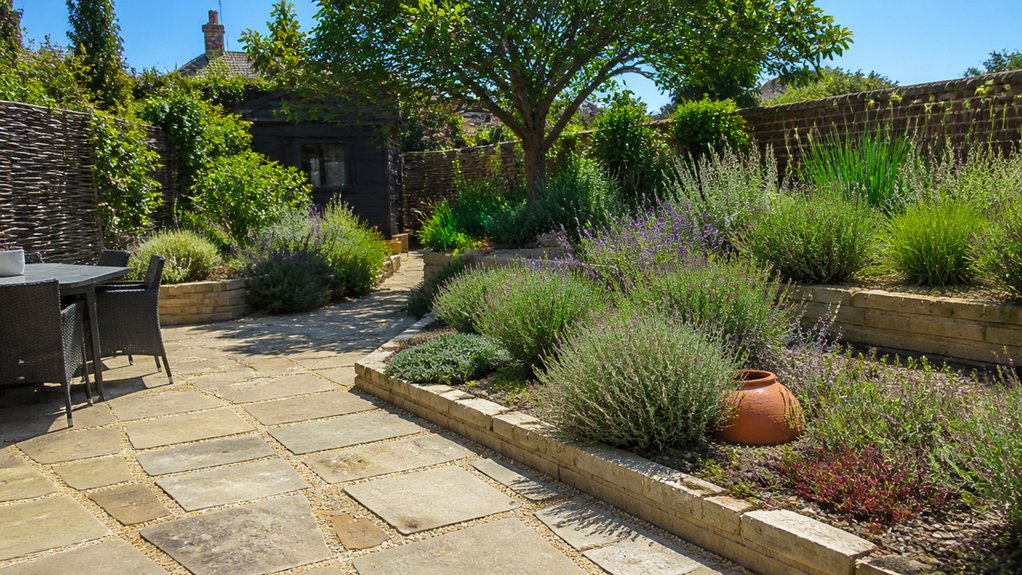
Then layer in Mediterranean-style performers for leaner soils—lavender, rosemary, santolina, and euphorbia—plus airy grasses like stipa to keep movement without extra watering.
Choose plants with silver, aromatic, or hairy foliage for reduced transpiration, and group by similar moisture needs so every litre counts.
Gravel Mulch And Groundcovers
Once you’ve shifted the plant palette toward heat-steady perennials and shrubs, gravel mulch and low-spreading groundcovers become the 2026 upgrade that keeps borders looking intentional through dry spells and sudden cloudbursts.
You’ll see designers swapping bark for natural gravel to stop splashback, reduce evaporation, and sharpen the look of soft, curving edges. Pick a consistent stone size (6–14mm) so it knits surfaces together, then lay it 5–7cm deep over a permeable membrane where weeds are persistent.
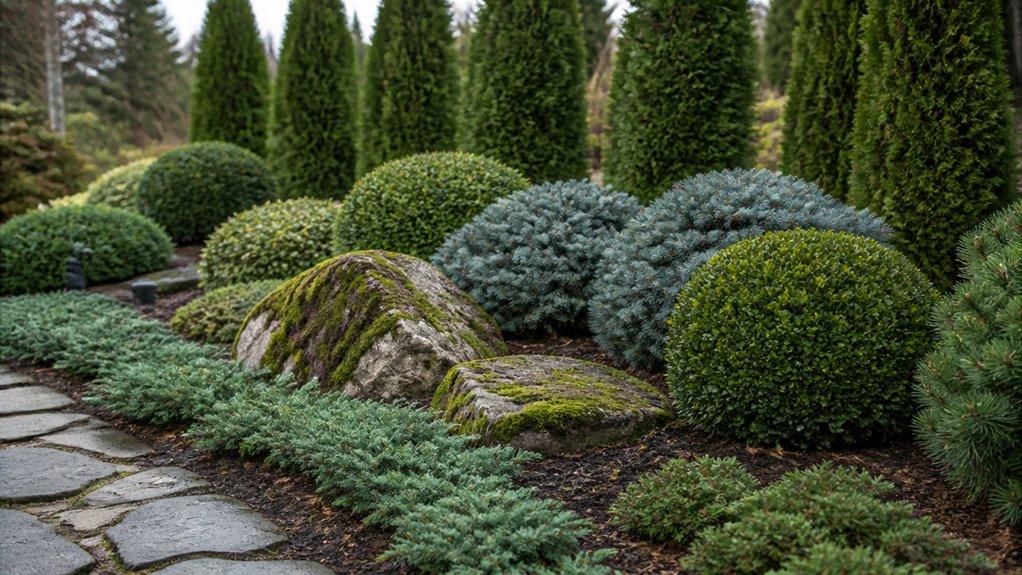
Thread in groundcover plants between clumps to lock soil, cool root zones, and prevent bare patches. Choose low, mat-forming options that tolerate lean soil, and you’ll cut watering and weeding while keeping borders crisp year-round.
Layered Mediterranean-Style Planting
As UK summers swing hotter and drier, layered Mediterranean-style planting is showing up as the 2026 blueprint for borders that stay full without constant watering. You build depth by stacking drought performers: silvery shrubs (lavender, santolina) for structure, aromatic mids (rosemary, teucrium) for bulk, then Herbaceous layers like salvias, verbena bonariensis, and eryngium to keep movement and pollinator pull.
To modernise the look, you thread in Tropical foliage accents—phormium, cordyline, and hardy banana—used sparingly so the scheme reads sun-baked, not jungle. You group plants in repeat drifts, leave breathing space between clumps, and edge with gravel or crocus-like bulbs for spring lift.
The result feels lush, yet you water deeply, less often, all season.
UK Garden Trends 2026: Peat-Free Soil, Mulch, and Smarter Watering
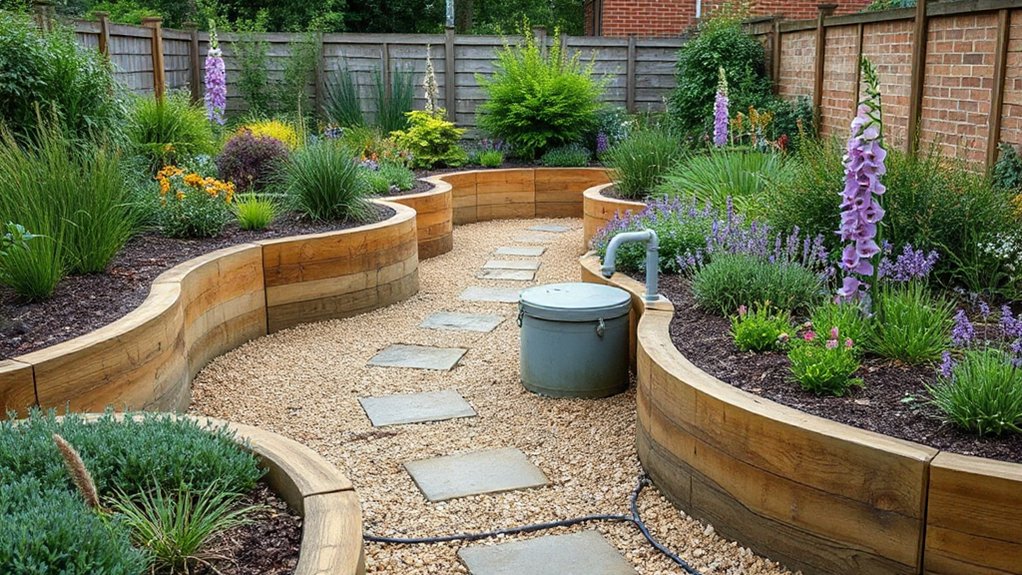
Whether you’re invigorating pots on a balcony or revamping a full border, 2026’s UK garden trend playbook puts peat-free growing, moisture-smart mulching, and targeted watering at the centre of better results with fewer resources.
Choose peat free soil blends built on coir, bark fines, and green compost, then match them to plant needs: finer for seedlings, chunkier for shrubs. Top-dress with 5–7cm of leaf mould, compost, or chipped bark to buffer heat swings, suppress weeds, and keep irrigation where roots can use it.
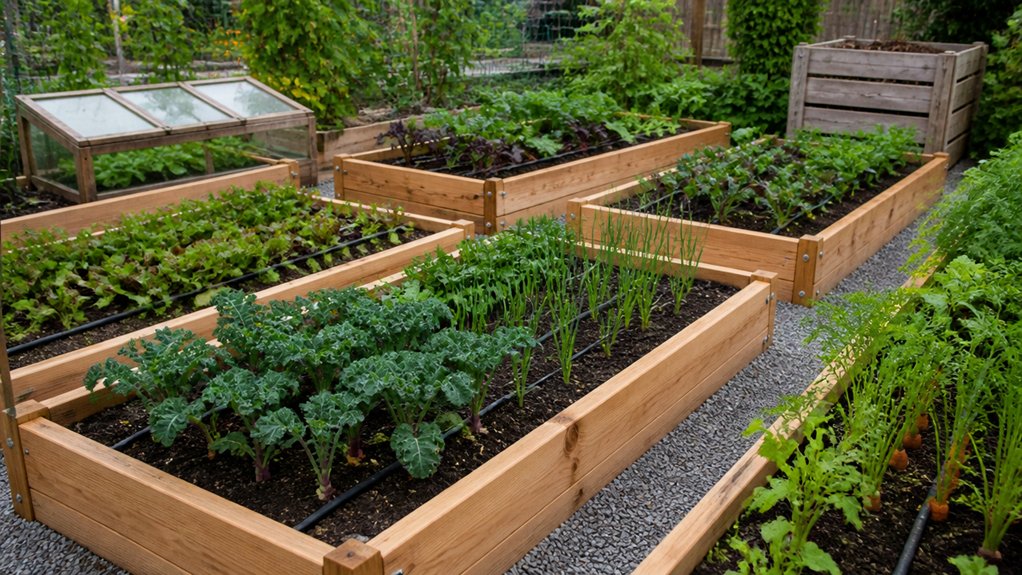
For smarter watering, swap daily sprinkles for deep, timed soaks at dawn, and add ollas, drip lines, or simple reservoir troughs for containers. You’ll cut run-off, reduce disease pressure, and keep growth steady through dry spells.
UK Garden Trends 2026: Wildlife Features That Look Intentional
Because gardens now pull double duty as living spaces and local habitat, 2026’s wildlife-friendly trend in the UK focuses on features that read like deliberate design moves—not worthy add-ons.
You’ll frame ecology with structure: clipped yew or hazel edges guiding Wildlife corridors, and layered planting that looks curated yet functions like cover. Swap random “bee bits” for repeating drifts of native species—oxeye daisy, knapweed, red campion—so pollinator value comes with a designer rhythm.
You’ll integrate water as an object: a shallow rill or dark bowl set into stone, paired with marginal plants for landing pads.
Nesting gets discreet: swift bricks in walls, bat boxes stained to match fencing, log stacks recessed behind seating.
Your lighting stays low and warm, preserving night movement.
UK Garden Trends 2026: Budget Swaps With the Biggest Impact
Even if your 2026 garden budget feels tight, a few smart swaps will make it look sharper and work harder fast. Start by replacing new paving with reclaimed bricks or local gravel: you’ll get that relaxed, natural-material look without premium labour.
Swap pricey timber edging for corten-style recycled steel strips or flexible recycled-plastic borders to create the soft, sinuous lines trending now.
For planting, buy smaller perennials and plug plants, then repeat them in drifts; massing reads designer and settles quickly.
Use budget friendly alternatives like seed-grown meadow mixes instead of instant turf, and top-dress beds with compost to lift colour and reduce watering.
Finally, choose warm 2700K solar spikes to extend evenings.
These are impactful cost saving tips that still feel curated.
Frequently Asked Questions
Do I Need Planning Permission for a Garden Makeover in the UK?
You don’t usually need planning permission for a UK garden makeover, but you’ll need it for tall fences, decking height, outbuildings, or driveway changes. Check Local regulations, especially if you’re boosting Garden privacy and boundaries.
What Are the Best Low-Maintenance Garden Designs for Small UK Gardens?
Choose paving-and-planting grids, gravel with edging, and layered borders—small UK gardens stay sleek. UK households average 56 minutes weekly gardening; cut it using native plants and container gardening, plus drip irrigation and mulch.
How Can I Make My Garden Safer for Children and Pets?
Make your garden safer by installing child proof fencing with self-closing gates, choosing pet safe plants, covering ponds, securing tools and chemicals, adding non-slip paths, and avoiding toxic mulches or sharp edging. You’ll prevent accidents.
Which Garden Lighting Options Work Best for UK Weather and Winter Darkness?
UK winters bring up to 16 hours of darkness daily, so you’ll want weatherproof LEDs. Choose solar pathways with IP65-rated fixtures and backup batteries, then add 12V LED spotlights for reliable, stylish, winter-proof highlights.
When Is the Best Time to Start a Garden Renovation for 2026?
Start your 2026 garden renovation in late winter to early spring, so you’ll nail soil preparation before growth surges and align hard landscaping with seasonal planting windows. You’ll avoid summer disruption and establish plants faster.

Leave a Reply