

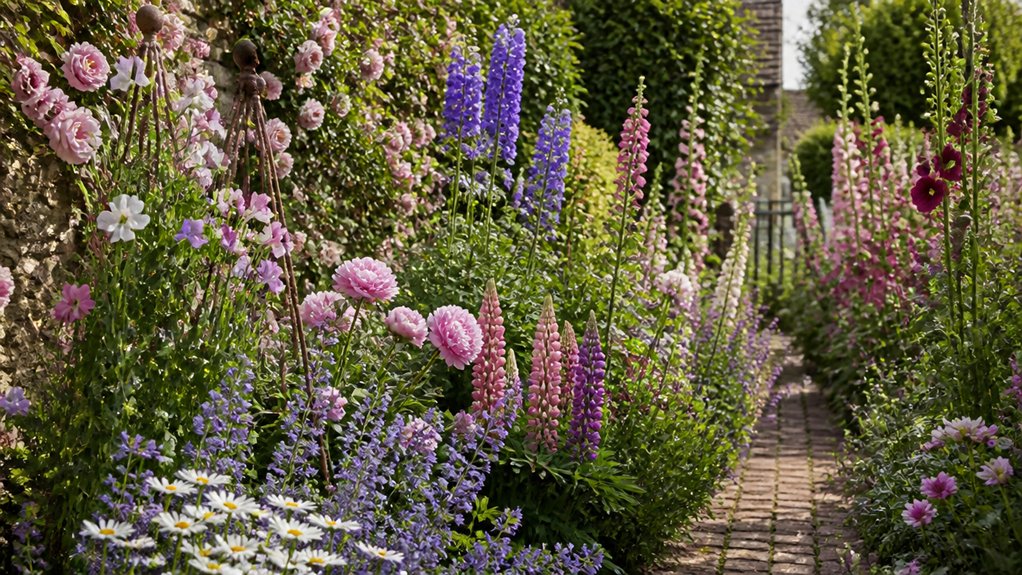
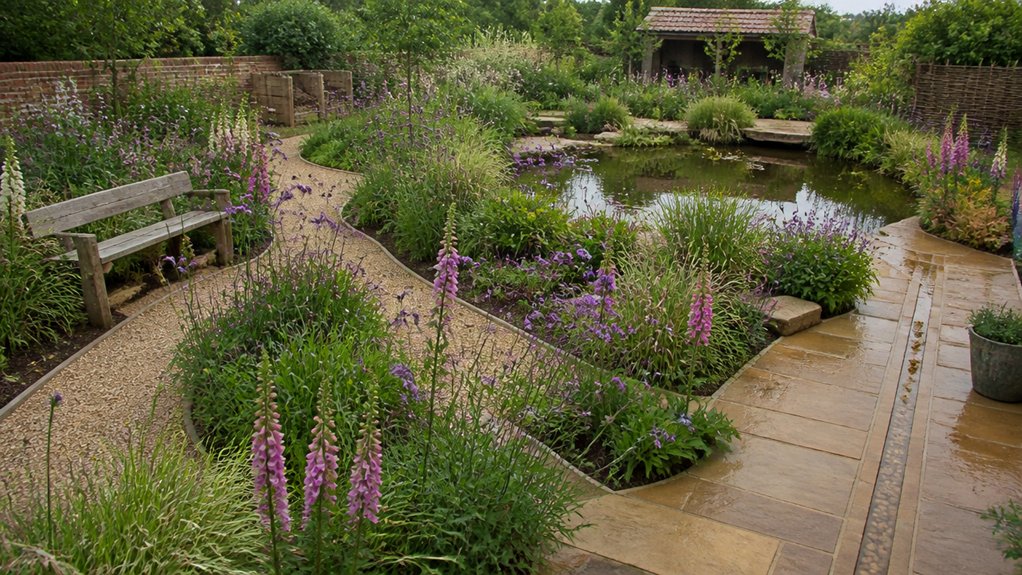
You could plant a cottage border with your eyes closed and still end up with something in bloom. You won’t, though—you’ll map sun and soil, then stack plants in layers: bulbs at the front, airy spires behind, and a loose grid of repeat drifts to stop it looking messy. Add a climber for height and scent, and keep seedheads for structure. Next, you’ll choose the exact classics that never fail in your space…
Key Takeaways
- Sketch a scaled border with tall backbones, mid fillers, and low edging; repeat perennials in drifts to create classic cottage structure.
- Match plants to site conditions: track sun, improve soil with compost, and choose by pH (campanula for alkaline, hydrangea for acidic).
- Rely on proven British staples: foxgloves, lupins, aquilegia, delphiniums, hollyhocks, phlox, daisies, lavender, and hardy geraniums.
- Plan continuous bloom with succession: spring bulbs and primroses, summer roses and salvias, then asters, sedum ‘Autumn Joy’, and ornamental grasses.
- Add vertical scent and wildlife value using climbers on obelisks or wires: roses and clematis in sun, honeysuckle in part shade.
Start With a Cottage Garden Planting Plan Template
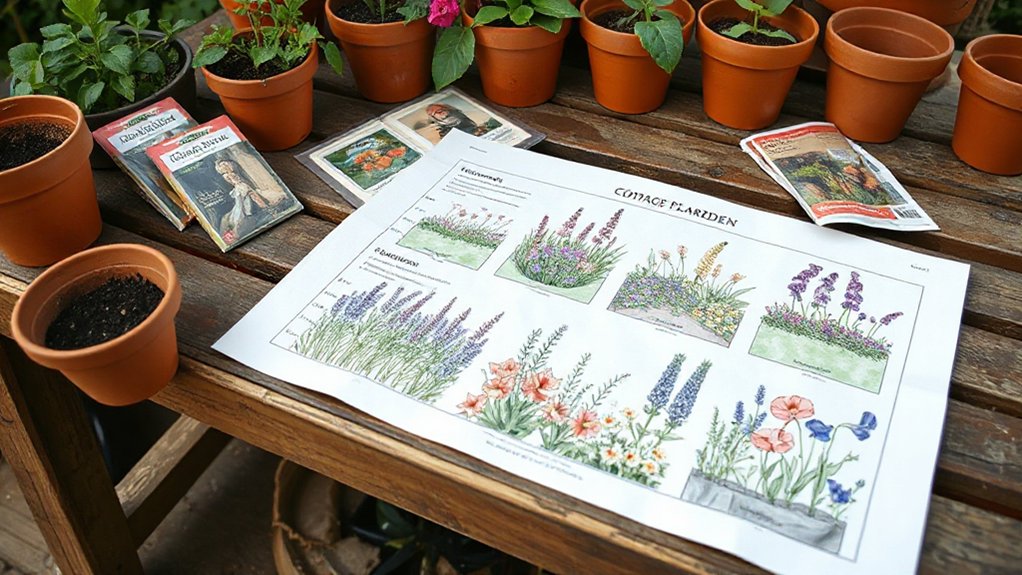
Before you buy a single plant, start with a cottage garden planting plan template that gives your borders a clear structure—beds, paths, and anchor plants—so the final look feels lush without turning chaotic.
Sketch your garden layout to scale, then block in “rooms” of planting: a backbone of shrubs, small trees, or obelisks, plus repeated drifts of perennials for rhythm.
Assign each border a front, middle, and back layer, and reserve pockets for seasonal fillers.
Use plant spacing as a design tool: tighter spacing knits a tapestry quickly, while standard spacing improves airflow and highlights individual forms.
Mark key sightlines from gates, windows, and paths, so focal plants land where you’ll actually see them.
Match Your Planting Plan to Sun, Soil, and Size
Once your template sets the beds, paths, and anchor points, let your site conditions choose the plant list. Track sun hours in midsummer and note reflected heat from walls; these cues steer you toward roses, salvias, and lavender in full sun, or foxgloves, astrantia, and hardy geraniums where light is dappled and shade tolerance matters.
Next, read your soil. Do soil preparation before you buy: loosen to spade depth, add compost for structure, and correct drainage with grit or raised areas if water sits.
If your soil is alkaline, lean into campanula and dianthus; if it’s acidic, consider heathers and hydrangea.
Finally, match mature size to bed depth so plants won’t swamp paths or windows.
Sketch Your Cottage Border: Layers and Spacing
After you’ve noted sun and soil, sketch the border in three readable layers—tall “backbone” plants at the rear, mid-height fillers through the middle, and low edging at the path. Then space everything by mature width, not pot size, so the planting knits together without collapsing into a thicket.
On paper, block in drifts, not singles, and repeat shapes to calm cottage exuberance. Give uprights room for airflow, and let mounding plants overlap lightly like shingles. Keep a narrow access gap behind the edging for deadheading and weeding.
Mark seasonal “windows” where bulbs and self-sowers can emerge without being smothered. Tuck garden art where sightlines end—at a bend or focal pause—so the border reads intentional.
Finally, leave small pockets of nectar-rich continuity and seedheads so the whole design doubles as wildlife habitat year-round.
Spring Cottage Garden Planting Plan (Plant List + Layout)
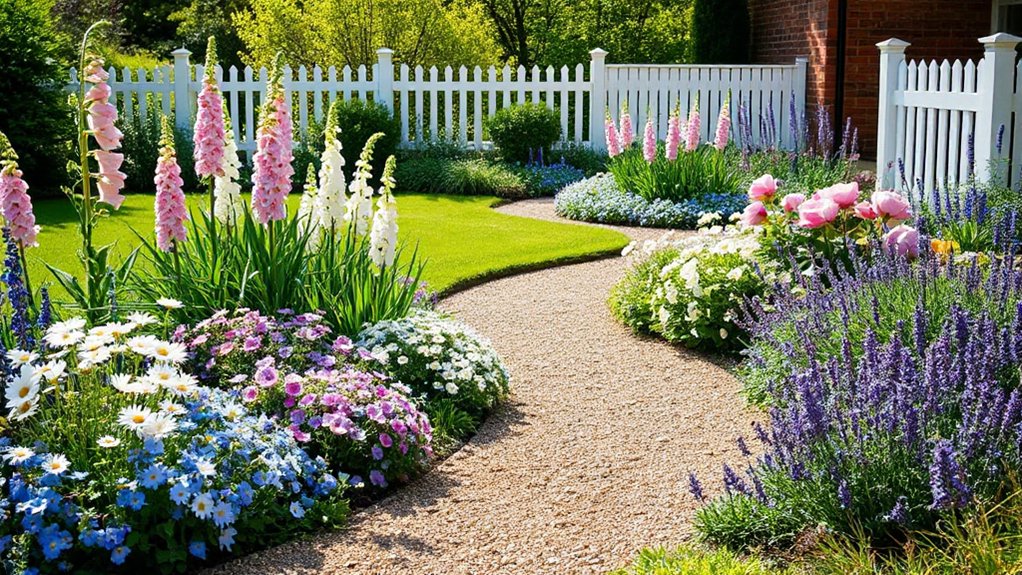
With your three-layer sketch and spacing marks in place, you can now choose spring performers that slot neatly into those blocks—tall spires to anchor the back, buoyant mid-border bloomers to weave color through the center, and low edging plants plus bulbs to stitch the path line.
Back layer: plant 3–5 clumps of foxglove (Digitalis) or lupin, 45–60cm apart, against your fence.
Mid layer: repeat drifts of aquilegia, primrose, and forget-me-not, using 5–7 plants per drift for a soft, natural rhythm.
Front edge: run hardy geranium or sweet violet in a continuous ribbon, then underplant with snowdrops, crocus, and narcissus in clusters of 7–15. Leave small gaps for self-seeders and mulch with compost—better Garden sustainability and richer Wildlife habitats.
Summer Cottage Garden Planting Plan (Layers + Repeats)
For your summer cottage border, you’ll build a layered structure: tall spires and airy shrubs at the back, midsize bloomers through the middle, and low edging plants to knit the front.
You’ll keep the composition coherent by repeating the same plants in measured intervals, letting foliage and flower form echo from one end to the other.
Then you’ll sweep repeating color drifts—warm or cool—across those layers so the planting reads as one unified, long-season tapestry.
Layered Border Structure
Although cottage borders feel spontaneous, you’ll get that lush summer look by building a clear three-tier structure and repeating key plants in drifts.
Start with a back layer of airy height: delphiniums, hollyhocks, and climbing roses on supports, spaced to allow light and airflow.
In the middle, anchor your flower bed with rounded, reliable forms—phlox, shasta daisies, lavender, and catmint—so the border holds together through heat.
Up front, edge paths with low, long-blooming fillers like lady’s mantle, hardy geraniums, and thyme to soften hard lines.
Keep your border design readable by grading plant heights, mixing spires with mounds, and leaving small access gaps for deadheading and staking.
Mulch well, then water deeply.
Repeating Color Drifts
Once you’ve set your back–middle–front layers, tie the whole summer cottage border together by repeating color drifts: plant the same 2–4 key bloomers in loose, staggered clumps every few feet so your eye reads rhythm instead of chaos.
Choose one warm drift (apricot rose, peach foxglove) and one cool drift (lavender nepeta, blue salvia), then echo each at least three times. Keep clumps odd-numbered and sized to scale: 3–5 perennials, 7–9 smaller fillers.
Let drifts overlap slightly to soften edges, but maintain clear gaps for air flow and access. Use foliage as a bridge—silver artemisia or chartreuse alchemilla—to lock in color harmony when flowers shift.
This plant repetition steadies the border from June through August.
Late-Season Cottage Garden Planting Plan (Autumn Finish)
For an autumn finish, you’ll set the scheme with autumn color anchor plants—think asters, sedums, and ornamental grasses placed where they can carry the view from key paths and windows.
Then you’ll weave in a late-blooming perennial mix for staggered flowering and tight color repeats that keep the planting cohesive as days shorten.
Finally, you’ll let seedheads and foliage texture stand in for flowers, using dried umbels, spires, and bronzing leaves to hold structure well past first frost.
Autumn Color Anchor Plants
As summer bloomers fade, you can lock in a strong autumn finish by choosing a few anchor plants that carry saturated color, sturdy structure, and reliable performance into the first hard frosts. Build your scheme around shrubs and grasses that read well from a distance, then let smaller plants weave between them.
For Autumn foliage, lean on viburnum, cotinus, or acer for wine-red and apricot tones, and site them where low sun backlights leaves. Add structural seedheads with sedum ‘Autumn Joy’ and ornamental grasses like miscanthus for upright lines that won’t collapse in rain.
To steady seasonal shift, repeat one anchor every 2–3 metres, echoing color in nearby containers or edging. Mulch now, water deeply during dry spells, and stake early if exposed.
Late Blooming Perennial Mix
Although your anchor shrubs and grasses hold the framework, you’ll get the richest autumn finish by stitching in a late-blooming perennial mix that keeps fresh color and nectar moving through the border.
Pair Aster (A. novi-belgii or A. amellus) with Hylotelephium ‘Herbstfreude’, Japanese anemone, and Salvia uliginosa for blues, pinks, and airy movement.
Thread in Verbena bonariensis to echo wildflower meadows and bridge heights without blocking sightlines.
For resilience, lean on native plantings where appropriate: Solidago, late-flowering Echinacea, and Achillea extend pollen while handling dry spells.
Plant in repeating drifts of 3–7, spacing to meet at maturity, and deadhead lightly to keep buds coming until frost arrives.
Seedheads And Foliage Texture
Once the last flush of flowers starts to fade, you can shift the border’s emphasis to seedheads and foliage texture to keep the cottage garden looking intentional through autumn.
Let echinacea cones, rudbeckia buttons, and scabiosa drums stand; they read as structure and feed birds. Thread in ornamental grasses like Deschampsia or Molinia so their panicles catch low light and link planting groups.
For foliage contrast, pair silver Artemisia with deep-green geranium leaves, or burgundy heuchera against airy fennel.
Keep a few stout stems uncut, then selectively shear floppers to maintain clear sightlines.
Repeat two or three seedhead forms across the bed, and mulch gaps with leaf mould so late-season textures look designed, not tired.
Add Climbers to Any Cottage Garden Planting Plan
Even a small cottage border feels richer when you train a climber through it, because vertical growth adds height, scent, and bloom without stealing ground space.
Choose climbing plants that suit your light and support: roses and clematis for sun, honeysuckle for part shade, ivy for deep shade.
Set sturdy garden trellises, wires, or obelisks before planting so roots aren’t disturbed later.
Space the base 20–30cm from a wall to keep crowns dry, then angle new shoots outward and tie in loosely to spread flowering along the framework.
Prune by group: cut repeat-flowering roses after flushes, and clematis according to type.
Underplant with mounding perennials to hide bare stems and knit the border together visually.
Build a Scent + Pollinator Cottage Garden Planting Plan
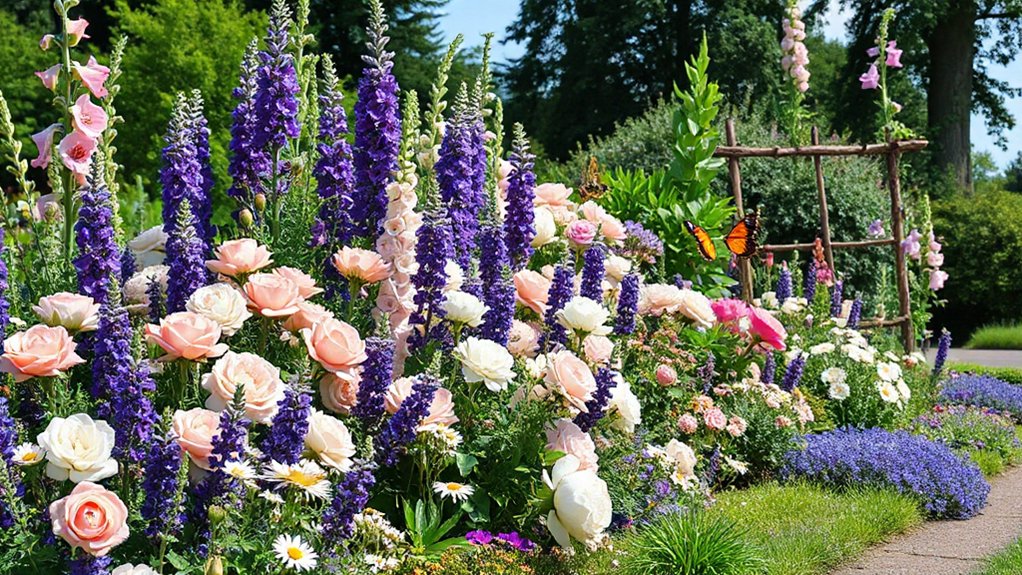
Climbers give your cottage border height, but fragrance and pollinator traffic give it heartbeat and movement at ground level.
Start with a sunny, sheltered strip and mass scent-makers in drifts: sweet peas near paths, lavender edging, and old roses set back as anchors.
Thread nectar plants between them—nepeta, salvias, and foxgloves—so bees move in a continuous line, not scattered stops.
Add Herb combinations for both aroma and forage: thyme with oregano in gravelly pockets, chives with parsley at the border’s front, and mint contained in a sunk pot.
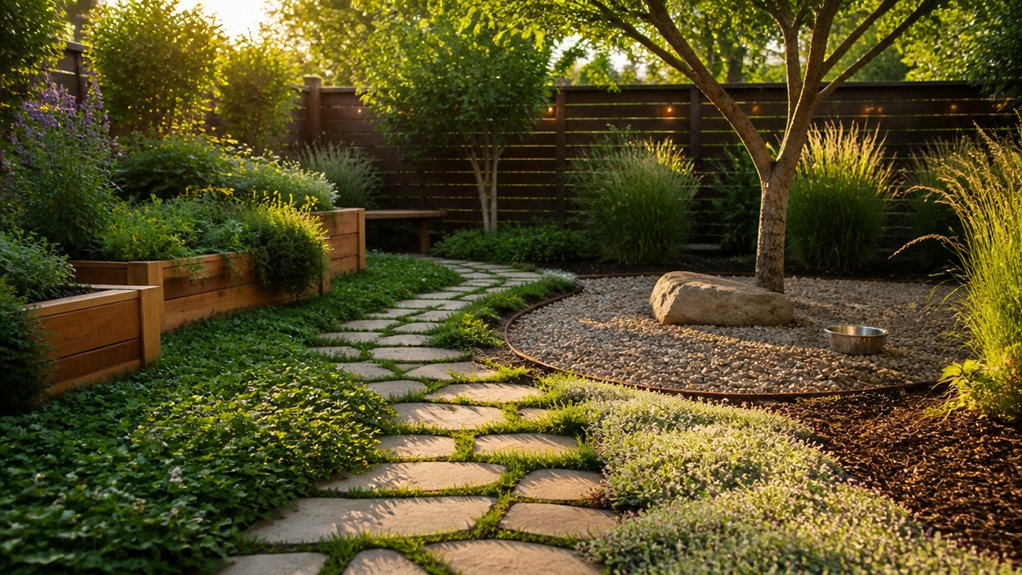
Leave a small patch of hollow stems, seedheads, and leaf litter as Wildlife habitats, and add a shallow water dish with stones for safe sipping.
Keep Your Cottage Garden Planting Plan Blooming Yearly
Because cottage borders peak fast and fade just as quickly, you’ll keep your planting plan blooming yearly by building succession into every layer: start with bulbs and early perennials (snowdrops, tulips, pulmonaria), follow with late-spring and summer workhorses (geraniums, salvias, nepeta, roses), and finish with late-season structure (asters, sedum, ornamental grasses) that holds color into autumn.
Tie it together with repeating drifts and evergreen punctuation (box, yew, or clipped holly) so gaps never read bare. Deadhead, lift, and divide on a schedule, and you’ll turn Garden maintenance into a light, regular rhythm instead of a rescue job.
Underplant roses with catmint to shade soil and suppress weeds. Leave some seedheads and hollow stems through winter to strengthen Wildlife habitat, then cut back in early spring before new growth pushes. Rotate compost top-dressings yearly.
Frequently Asked Questions
Which Cottage Garden Plants Are Safest Around Pets and Children?
Pick non-toxic classics: snapdragons, sunflowers, nasturtiums, marigolds, and roses (mind thorns). They’re like soft-edged brushstrokes in your beds. Use Pet safe plant alternatives and Child friendly garden features like paths, fences.
How Can I Adapt Cottage Garden Plans for Containers and Balconies?
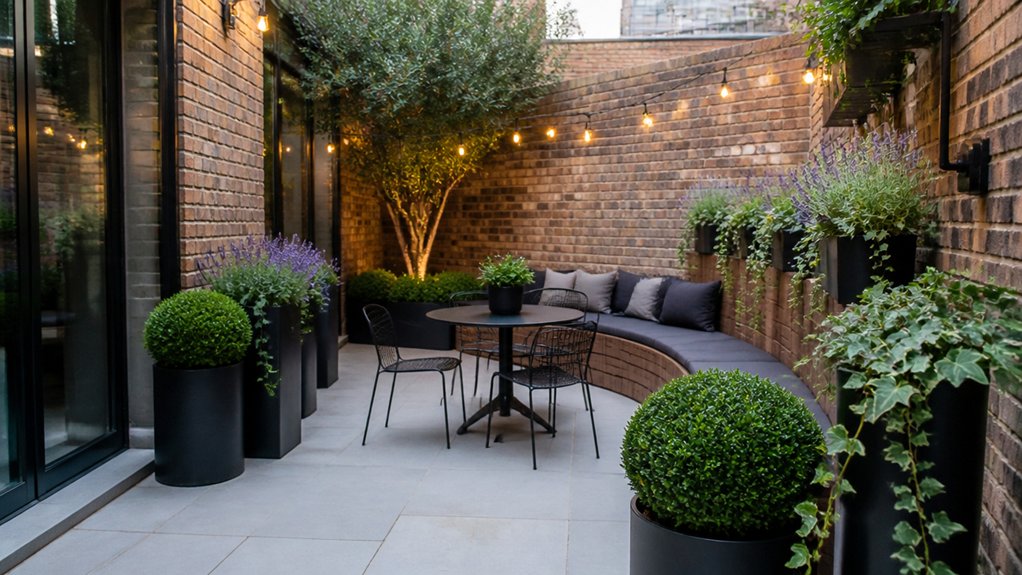
Adapt plans by scaling layers: you’ll combine tall, mid, and trailing plants in deep pots, then repeat groups for cohesion. Use Container planting tips: airy soil, drainage, slow-release feed. Map a Balcony garden layout for sun and wind.
What Are the Best Deer-Resistant Plants for a Cottage-Style Border?
Deer “love” tidy borders—so you’ll plant Deer resistant perennials like nepeta, salvia, lavender, and foxglove. Edge with Aromatic herbs: rosemary, thyme, sage. You’ll layer in alliums and euphorbia for structure and scent.
Which Classic Cottage Flowers Thrive in Coastal, Windy Gardens?
You’ll get reliable coastal cottage flowers with sea thrift, calendula, achillea, lavender, and hardy geraniums; add Wildflower mixtures for gaps. In Coastal planting schemes, mass them, shelter with grasses, and stake taller blooms early.
How Do I Prevent Cottage Garden Plants From Self-Seeding Everywhere?
Cut seedheads before they ripen—one plant can drop 10,000 seeds in a season. Use Soil preparation with mulch, edge beds crisply, and try Companion planting to outcompete seedlings. Deadhead weekly and lift volunteers early.


Leave a Reply