

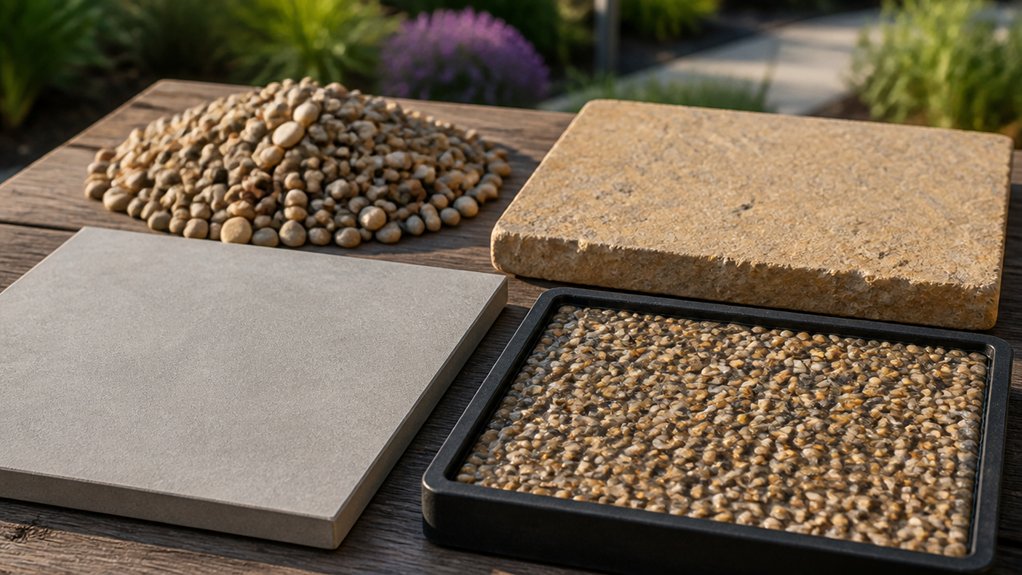
Pick the wrong hardscape and your patio can fail spectacularly—puddles, wobbles, weeds, and stains. You’re not just choosing a look; you’re setting drainage paths, slip risk, and maintenance cycles for your exact site conditions, from clay subgrades to shaded thresholds. Gravel trades stability for easy install and infiltration, slabs bring repairable structure, porcelain locks in color and grip, and resin-bound gives seamless permeability—if the base is right. But which spec actually fits your layout?
Key Takeaways
- Gravel is the most cost-effective; choose graded 6–10mm for paths and 10–20mm for drives, avoiding single-size pea gravel.
- Paving slabs are durable when laid on a well-compacted Type 1 sub-base, full mortar bed, and correct falls for drainage.
- Porcelain paving is dense and stain-resistant; specify exterior-rated, R11+ or PTV-tested finishes for reliable slip resistance.
- Resin bound surfaces are smooth and permeable, draining through into a permeable base; installation needs a stable, well-draining substrate.
- Compare maintenance and lifespan: gravel needs topping and raking, while well-laid slabs, porcelain, and resin bound can last decades.
Choose a Hardscaping Material (Quick Checklist)
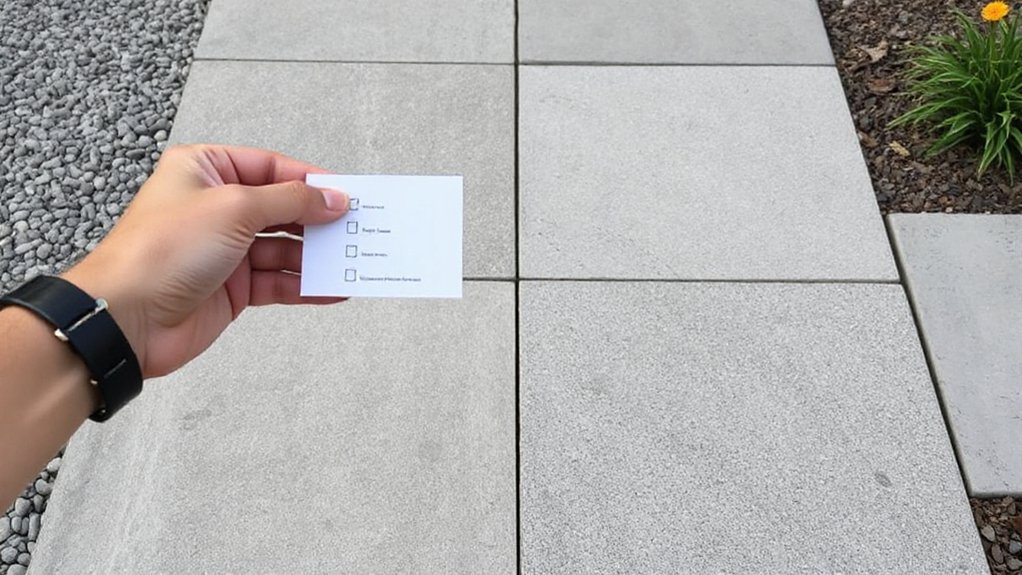
Before you spec anything, match the hardscape material to your site conditions and performance targets. Check exposure: freeze–thaw, coastal salts, and peak summer heat all change your tolerance for porosity, slip rating, and thermal gain.
Confirm subgrade and falls: clay needs robust build-ups; tight gradients may push you toward thinner systems and accurate edge restraint.
Map loads and usage: vehicle overrun, furniture point loads, and maintenance access dictate thickness, bedding, and jointing strategy.
Align appearance with layout: module size, joint rhythm, and colour consistency drive design versatility across thresholds, steps, and drainage details.
Screen for environmental impact: recycled content, local sourcing, binders, and end-of-life recoverability.
Finally, coordinate interfaces—door thresholds, linear channels, lighting sleeves—before you finalise levels and tolerances.
Gravel Hardscaping: Cost, Drainage, Upkeep
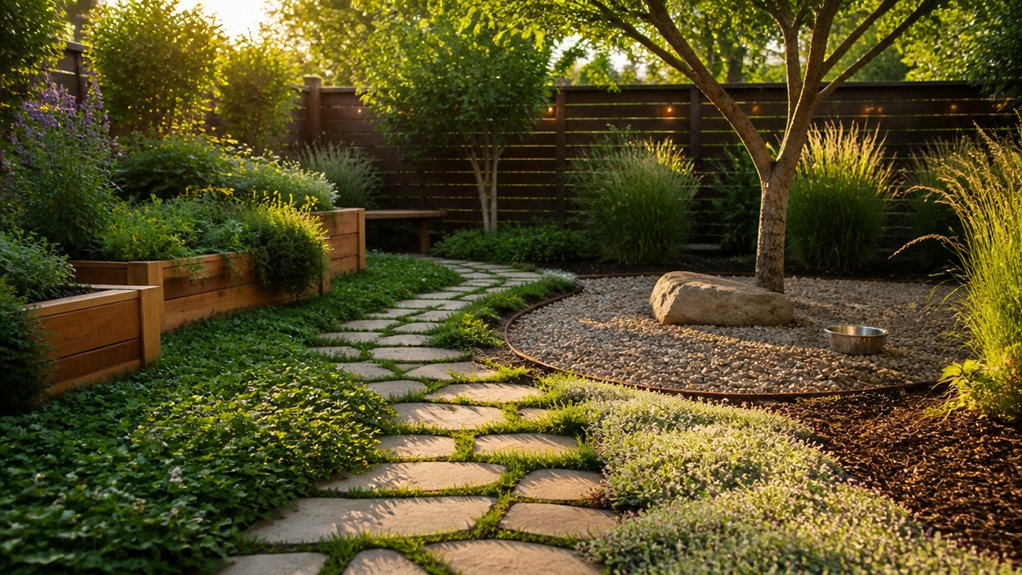
Although gravel reads as the simplest hardscape on the plan, its real performance comes down to three spec decisions you control: aggregate grading (for stability and walkability), base and separation (for drainage and subgrade protection), and edge restraint (to hold lines and levels).
Cost stays low when you match stone size to use: 6–10mm for paths, 10–20mm for drives, and avoid single-size “pea” where you need firm footing.
Build fall away from thresholds, use a geotextile over clay, and choose a free-draining sub-base to prevent pumping and ruts.
Upkeep is predictable: top up fines, rake back to profile, and spot-treat weeds.
For Garden aesthetics, coordinate colour with planting.
Your environmental impact improves when you source local aggregate and keep runoff on-site.
Concrete & Stone Paving Slabs: Durability and Repairs
Gravel gives you permeability and easy rework, but paving slabs lock a terrace, landing, or main path into a fixed level and finish, so durability comes down to what happens under and between the units. Specify a well-compacted Type 1 sub-base, then set falls to drains or lawn edges so water can’t sit on joints or the bedding.
For Concrete durability, choose air-entrained, low water-cement slabs and lay them on a full mortar bed, not dabs, to avoid rocking and point loading. Keep joints consistent, use a flexible jointing compound where movement’s expected, and detail edges with haunching to stop spread.
With stone repair, lift and relay cracked units if the base has failed; for surface chips, resin-tint and dress, then re-point to seal.
Porcelain Paving: Stain Resistance, Grip, Fade-Proof Color
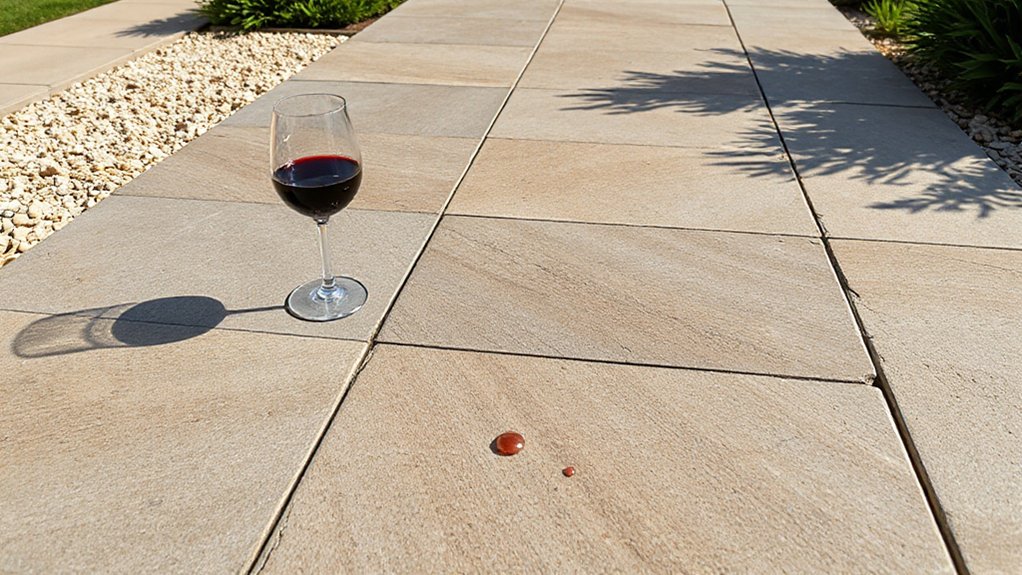
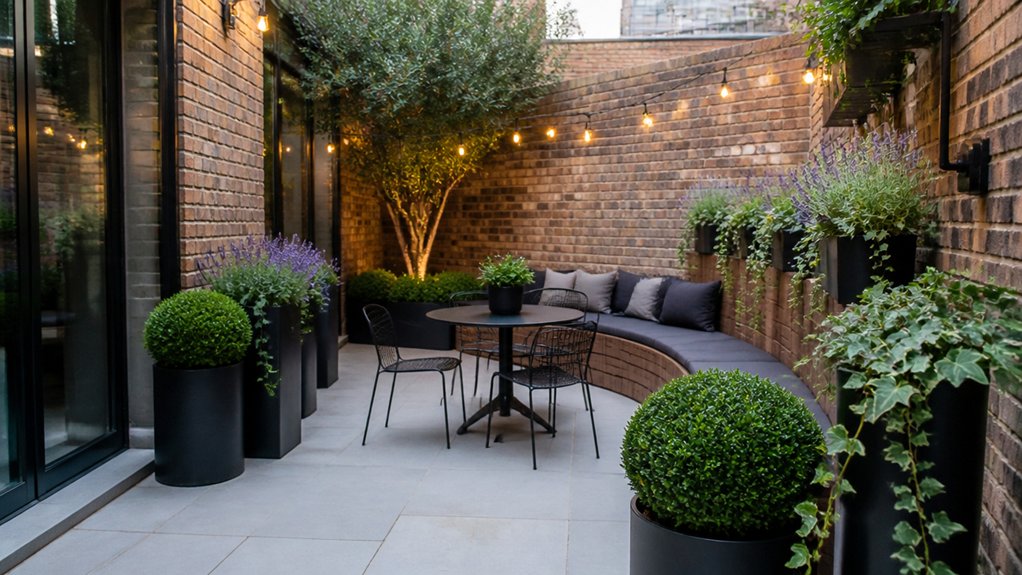
When you need a terrace or main route that stays visually crisp under BBQ grease, planters, and winter grime, porcelain paving gives you a dense, vitrified surface that resists staining and won’t take on algae as readily as more porous stone.
You’ll specify it where you want sharp joint lines, consistent tone, and low-maintenance detailing around dining zones, thresholds, and pool surrounds. Choose an exterior-rated, R11+ or PTV-tested finish so you keep grip in rain, leaf-fall, and morning frost without over-texturing the scheme.
Because pigments are fired through the body, UV exposure won’t bleach your layout, so bands, borders, and large-format fields hold their intended contrast. Porcelain durability supports tighter tolerances, while stain resistance keeps sealing optional, not mandatory.
Resin Bound Hardscaping: Smooth Finish and Permeability
When you specify resin bound surfacing, you get a seamless, smooth plane that reads crisp across paths, courtyards, and threshold details. You’ll also gain permeability, letting rainfall drain through the aggregate matrix to reduce surface runoff and puddling where grades are tight.
You need to pair it with a stable, well-draining base and set a cleaning and recoat plan so the finish stays even, bonded, and free of clogging fines.
Seamless Smooth Surface
Although many hardscape finishes force you to choose between a refined look and functional drainage, resin bound surfacing delivers both by troweling kiln‑dried aggregate into a UV‑stable resin matrix to create a seamless, smooth plane that remains permeable.
You specify the surface texture by selecting aggregate grade and blend, then lock in consistent colour across patios, paths, and pool surrounds. Because the binder coats each stone, you avoid loose scatter, ruts, and the visual “patchwork” common with unit paving.
You can run clean lines to steel edging, thresholds, and linear slots, keeping joints out of wheel tracks and seating zones. Detail falls to door sills and steps with crisp nosings, improving safety while preserving aesthetic appeal in tight, high-traffic footprints.
Permeable Drainage Benefits
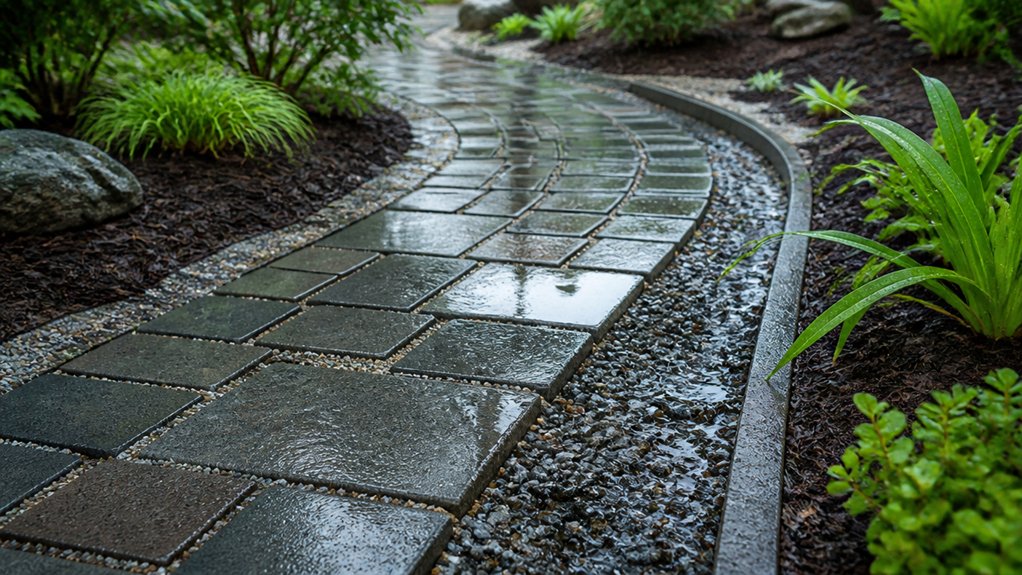
Because the resin matrix bonds each kiln‑dried stone without sealing the void structure, resin bound surfacing drains vertically through the finish and into a correctly designed permeable base. So you can manage runoff at source rather than pushing it to gullies and channels.
You’ll reduce peak discharge on small plots, protect thresholds and garage aprons, and limit splashback along elevations. Specify the sub-base depth and infiltration rate to suit clay, chalk, or made ground, and you can keep SuDS performance without visual compromises.
On sloping drives, you can control flow paths with falls and permeable restraints, maintaining traction while avoiding ponding. Pair the system with rainwater harvesting tanks or soakaways, and you’ll support eco friendly landscaping by recharging soil moisture and reducing mains demand.
Installation And Maintenance
If you want resin bound surfacing to stay smooth, permeable, and crack-free, you’ve got to treat installation as a system build-up rather than a decorative topcoat. Start with a stable, free-draining base: well-compacted Type 3 sub-base over geotextile, then an open-graded asphalt or porous concrete binder course.
Set edging to finished levels so the resin can’t creep. Mix washed, kiln-dried aggregate to the specified resin ratio, then trowel in consistent lifts (typically 15–18mm) and close the surface without overworking it.
For maintenance, keep pores open: sweep quarterly, power-wash lightly, and vacuum silt after storms. Don’t salt heavily; use resin-safe de-icers. Patch damage promptly to match current landscaping trends and eco-friendly options.
Hardscape Materials Compared: Cost, Lifespan, Grip, Drainage
When you’re dialing in a patio, walk, or driveway, you need hardscape materials that match your site’s loads, moisture, and freeze–thaw exposure—not just your color palette. Start by balancing Material aesthetics with environmental impact: locally sourced gravel lowers embodied carbon, while porcelain offers tight tolerances and consistent tone.
On cost, gravel wins upfront but needs periodic top-ups; concrete pavers sit mid-range; porcelain and resin bound typically cost more due to base prep and detailing. For lifespan, well-laid pavers and porcelain can run decades; gravel depends on edging and traffic; resin bound lasts well if the sub-base stays stable.
For grip, specify textured porcelain or tumbled pavers; avoid polished finishes on slopes. For drainage, choose permeable gravel or resin bound, or set pavers on a permeable sub-base.
Frequently Asked Questions
Do I Need Planning Permission for a New Driveway or Patio?
You might not need permission, but it’s a compass for your plot: Driveway regulations hinge on permeable surfacing, drainage, and kerb alterations; Patio permit requirements depend on listed status, levels, and boundary works—check your council.
How Do Hardscape Choices Affect Garden Wildlife and Biodiversity?
Your hardscape choices shape Wildlife habitat and drive Biodiversity impact by altering permeability, heat gain, and refuge. You’ll support insects and birds by specifying permeable joints, varied textures, planting pockets, shaded edges, and untreated materials.
Can Existing Paving Be Reused or Recycled During a Renovation?
Yes—you can reuse or recycle existing paving during renovation. You’ll lift units carefully for Material reuse in new layouts, edging, or sub-base. You’ll assess thickness, frost damage, and source local Recycling options for surplus.
What Underfloor Services Can Run Beneath Hardscaping Without Future Issues?
Run ducted utilities—power, data, irrigation, gas, and water—inside accessible sleeves; keep joints and valves in inspection boxes. Like a hidden spine, integrate subsurface drainage and soil stabilization layers so you won’t need disruptive excavation.
How Long Should I Wait Before Placing Heavy Furniture or Planters on New Surfaces?
You should wait until Surface curing time finishes: 24–48 hours for dry-laid units, 7 days for mortars, 28 days for concrete. For Furniture placement, stage loads, use spreader boards, and avoid point-loading edges.

Leave a Reply