

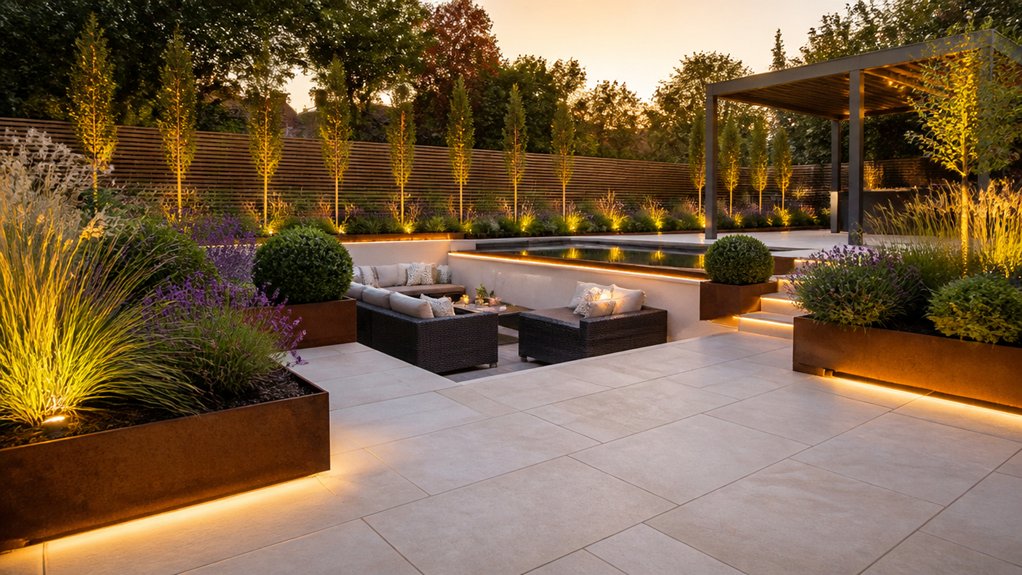
You’re likely redesigning your garden as a set of working zones: dining, lounging, storage, and planting, each sized to your plot and sun path. You’ll specify UK-proof paving with low-slip finishes, pair it with timber or stone textures, and integrate seating into raised beds to cut clutter. You can keep upkeep low with native, drought-tolerant planting and rainwater capture, then extend use with layered, low-glare lighting—but the key detail most British gardens get wrong is…
Key Takeaways
- Gardens are planned in zones—dining, cooking, lounging—positioned for microclimates, privacy, and convenient access from the house.
- Contemporary minimalist styling dominates, using clean lines, geometric layouts, monochrome palettes, and sleek furniture for modern outdoor living rooms.
- UK-proof paving trends favour slip-rated porcelain or flamed stone, correct falls, and permeable sub-bases to handle rain and meet SuDS needs.
- Low-maintenance, climate-appropriate planting is rising, with evergreen structure, drought-tolerant perennials, and shade-tolerant groundcovers reducing watering and weeding.
- Smart, wildlife-aware tech is growing, including efficient irrigation, layered low-glare lighting with timers/sensors, and biodiversity features like native corridors and gravel margins.
Zone Your Modern Garden for Dining and Lounging
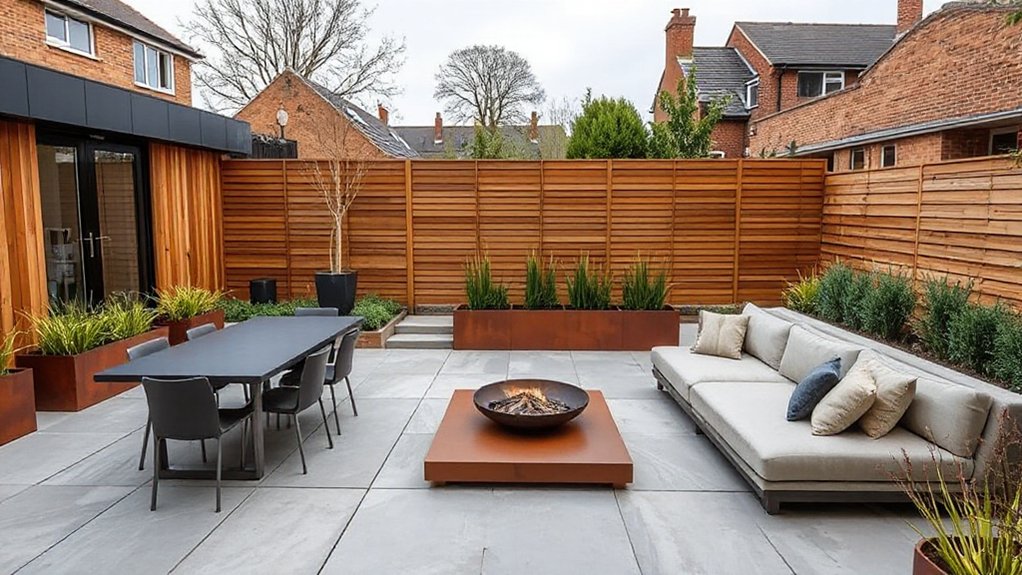
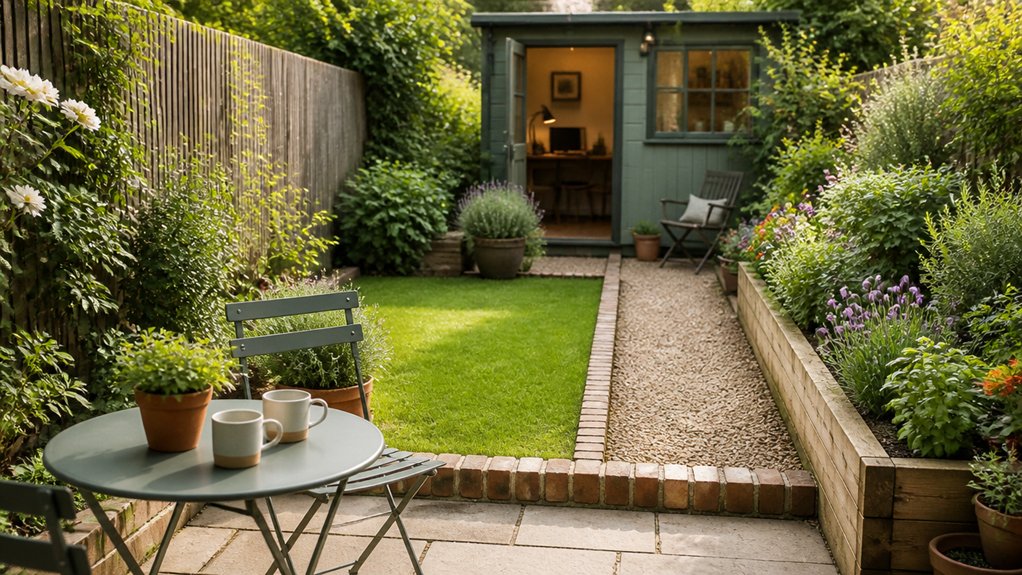
If you treat your outdoor space like a floor plan, you’ll get a cleaner, more functional modern garden with fewer hardscape mistakes. Set a dining zone close to the house for short service runs, then position an Outdoor kitchen on a stable, well-drained base with clearances for doors, bins, and gas bottle access. Align utilities to existing runs to cut trenching and embodied carbon.
Create a lounging zone where wind and overlooking are worst, then correct microclimate with layered planting and Privacy screens set to block sightlines, not light. Use permeable planting beds and rain-fed containers to intercept roof runoff before it hits the combined sewer.
Keep circulation routes direct and barrier-free, and specify low-energy lighting only where task levels demand it.
Choose Modern Paving and Natural Textures (UK-Proof)
Although minimalist detailing still defines modern gardens, UK weather demands paving and textures that grip when wet, shed water fast, and tolerate freeze–thaw without spalling. Specify slip-rated porcelain (R11+) for patios, or flamed natural stone for textured pathways where moss and leaf litter build up.
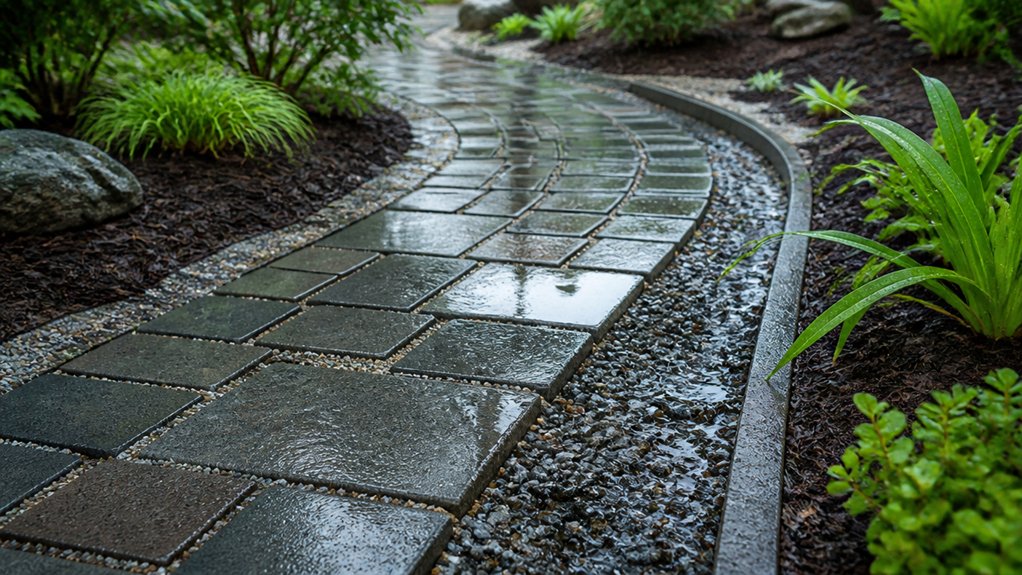
Set falls at 1:60 away from thresholds and use a permeable sub-base (Type 3 or open-graded) to reduce runoff and comply with SuDS expectations. You’ll cut ponding by choosing narrower joints with polymeric jointing, or go permeable with 6–8 mm grit-filled joints over a geotextile.
Pick locally sourced stone to lower embodied carbon, and seal only where staining risk is high. Guarantee edges are restrained to prevent creep.
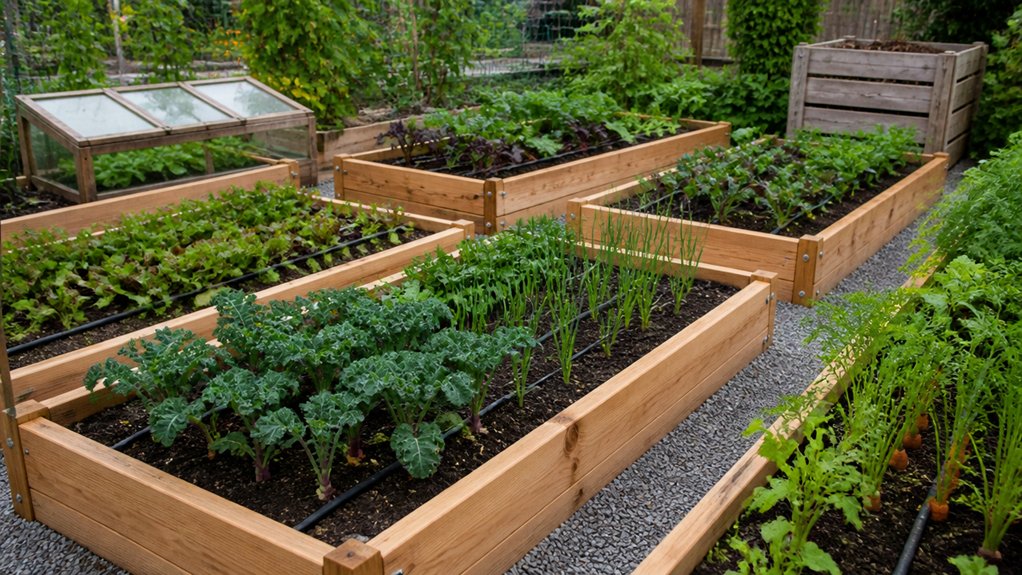
Build Raised Beds and Integrated Seating
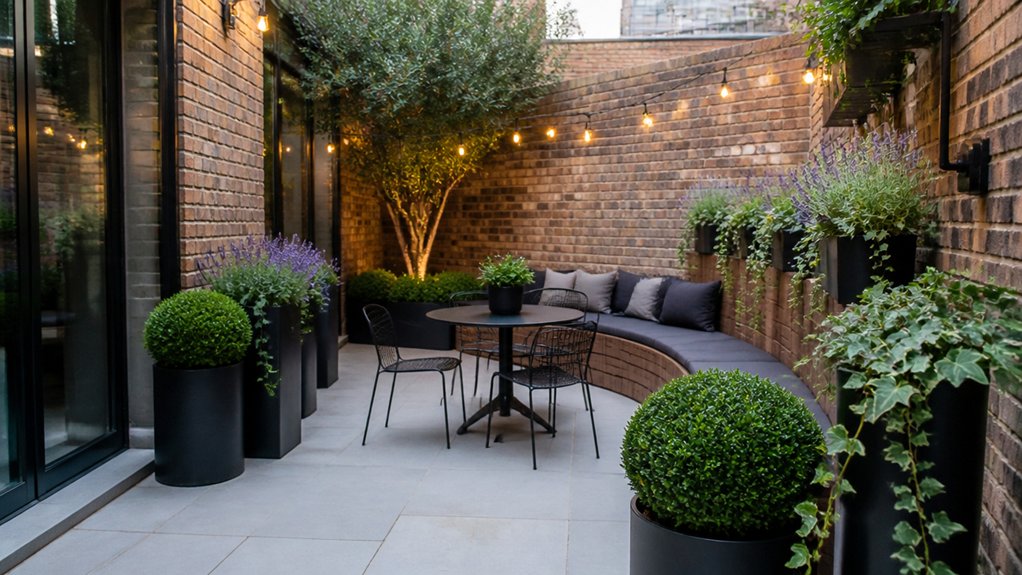
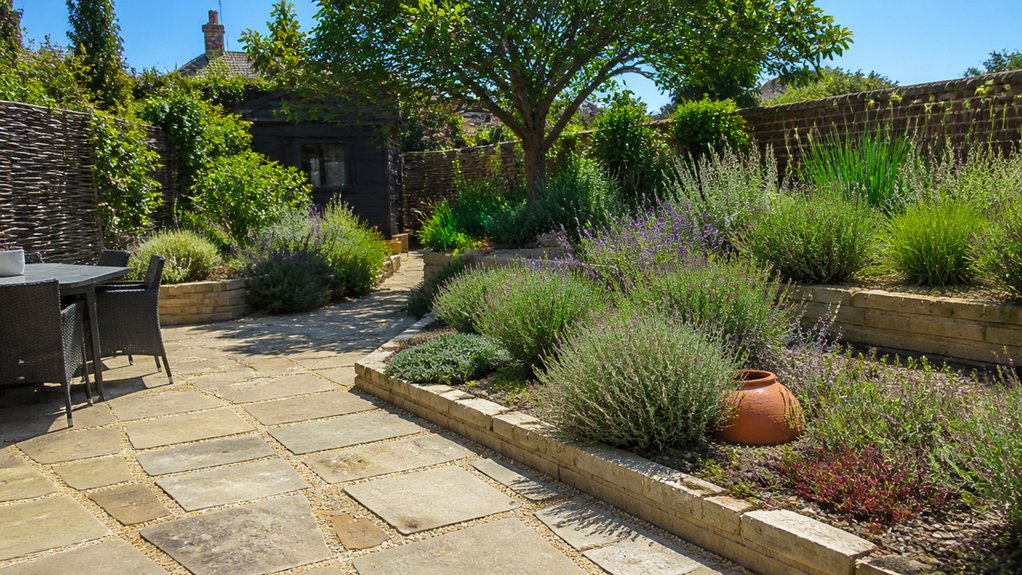
Once you’ve locked in slip-safe, free-draining paving, use that hardscape to frame raised beds and built-in seating that add structure, storage, and thermal mass without stealing circulation space.
Set bed walls to 450–600mm for comfortable perch height, and cap them with FSC hardwood or recycled composite to reduce maintenance.
Specify permeable block sub-bases and weep vents so water pressure can’t crack masonry during frost.
On clay sites, build a geotextile-lined, free-draining core with 20–40mm aggregate to prevent winter saturation.
Integrate a concealed soakaway run or slot drain behind the beds to intercept roof runoff.
For integrated seating, cantilever lids over dry storage for tools and cushions, and detail stainless fixings to resist coastal air.
Pick Low-Maintenance Plants That Look Lush in Britain
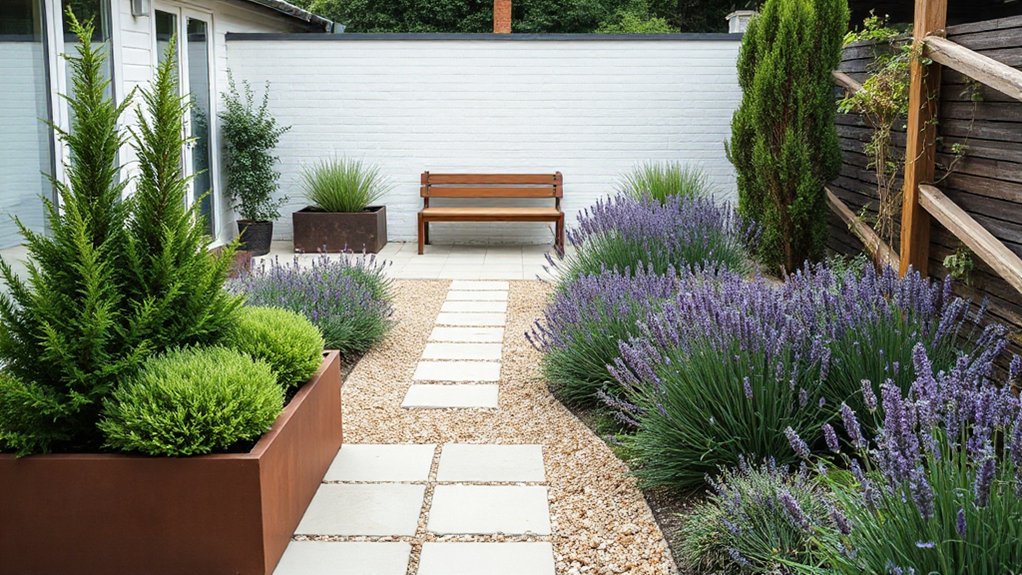
To keep a UK garden looking dense with minimal inputs, you’ll match plant physiology to site conditions—especially light levels under north-facing walls and trees.
You can lock in year-round structure with shade-tolerant evergreens like Sarcococca, Skimmia, and Polystichum ferns that cope with cool, damp shade while reducing seasonal replanting.
On hotter, free-draining spots, you’ll switch to drought-resistant perennials such as Geranium, Nepeta, and Achillea to cut irrigation demand without sacrificing coverage.
Shade-Tolerant Evergreen Picks
If your border sits under a north-facing wall or beneath a dense tree canopy, you can still build a year-round structure with shade-tolerant evergreens that won’t demand heavy watering or constant clipping in Britain’s cool, damp conditions.
Start with shade-tolerant plants like Sarcococca confusa for winter scent, then layer evergreen options such as Skimmia japonica and Mahonia ‘Soft Caress’ for reliable leaf mass and spring nectar.
For tight urban beds, use compact yew (Taxus baccata) or Ilex crenata to define edges without frequent shearing.
Under trees, add hardy ferns and Vinca minor as living mulch to suppress weeds and stabilise moisture.
Improve establishment with leafmould, keep crowns clear, and let fallen leaves cycle nutrients.
Choose peat-free composts.
Drought-Resistant Perennial Choices
Although Britain’s rainfall looks generous on paper, free‑draining borders, gravel gardens, south‑facing walls, and rain‑shadow strips under eaves still bake out in summer, so you’ll get the best results from drought‑resistant perennials that keep leaf mass without daily watering.
Start with drought tolerant plant selection matched to aspect and soil: Geranium ‘Rozanne’ for sun/part shade, nepeta, salvias, and Achillea for lean beds, and Stachys byzantina for reflected heat.
Use xeriscaping techniques: add 50–70mm gravel mulch to cut evaporation, plant into slight basins to capture storm pulses, and underplant with thyme to shade soil.
Improve resilience by incorporating compost only in pockets, not whole borders, so you don’t overfeed and weaken root depth. Water deeply, then stop.
Layer Modern Garden Lighting for Year-Round Evenings
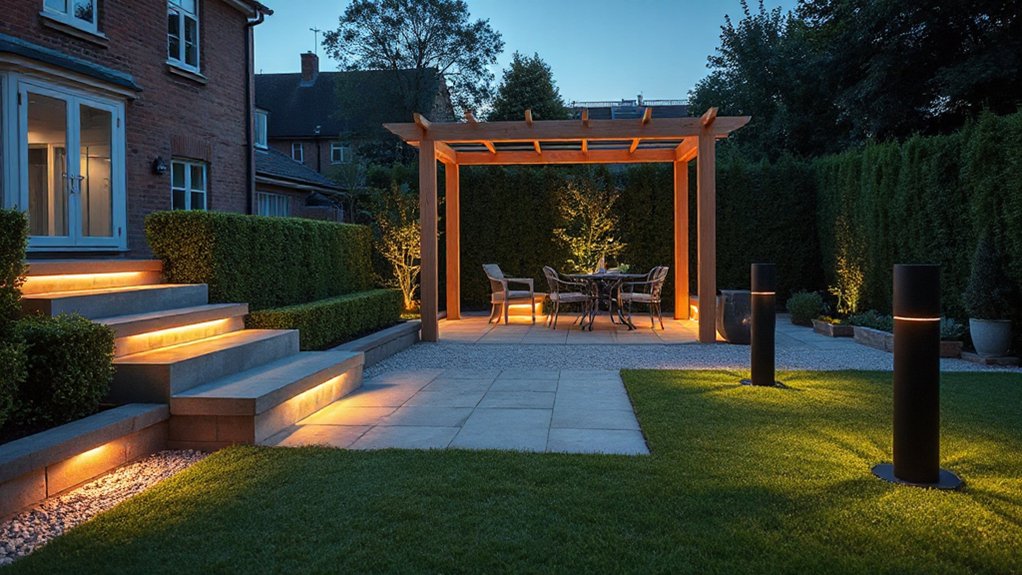
For year-round evenings in a British garden, you’ll layer ambient path and patio lighting with task beams at the barbecue or potting bench.
Then, add accent uplights to pick out specimen trees and textured walls.
You’ll specify smart controls (dimming, timers, motion and lux sensors) so light output matches use and cuts wasted energy.
You’ll choose IP65+ weatherproof, low-glare LED fixtures with marine-grade fittings and replaceable drivers, positioned to protect wildlife corridors and reduce skyglow.
Ambient, Task, Accent Layers
Once you treat garden lighting as a layered system—ambient for safe circulation, task for work zones, and accent for focal points—you can extend outdoor use through winter without wasting watts or washing out planting.
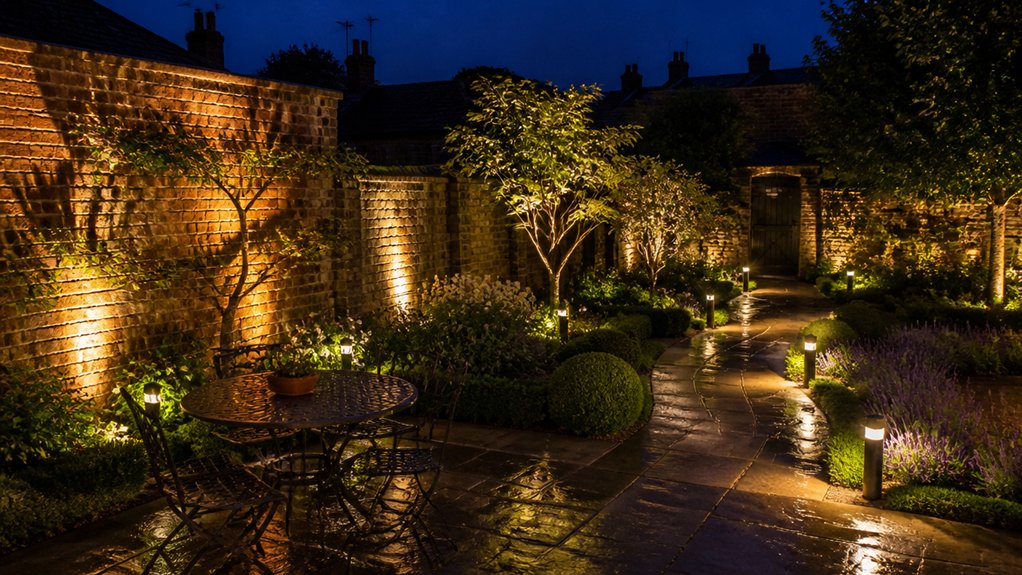
Map ambient light to routes: low, uniform spill along paving edges, steps, and gate latches, aimed down to protect neighbours’ sightlines and reduce skyglow.
Place task light where you actually work—BBQ prep shelf, potting bench, bin store—so you can cut output elsewhere.
Use accent light sparingly to model structure: graze a brick wall, uplight a multi-stem birch, or backlight grasses for texture.
Tune lighting ambiance to your furniture arrangement, keeping glare off seating and maintaining dark refuge for wildlife.
Smart, Weatherproof Fixtures
If you want layered lighting that still performs in frost, driving rain, and summer heat, specify smart, weatherproof fixtures from the start. Choose IP65+ bollards for paths, IP67 spikes for borders, and marine-grade downlights for pergolas near the coast.
Specify weatherproof materials like anodised aluminium, 316 stainless, UV-stable polycarbonate, and sealed silicone gaskets to stop water ingress and corrosion.
You’ll cut energy use by pairing low-glare LEDs with smart drivers, dusk-to-dawn sensors, and zoning via app control, so you can dim ambient circuits while keeping task lighting crisp.
In south-facing beds, use solar powered fixtures with replaceable batteries and tilt-adjustable panels; in shaded courtyards, wire mains with RCD protection.
Position fixtures to avoid uplighting trees into bedroom windows.
Make a Modern UK Garden Wildlife-Friendly (Without Mess)
Although modern UK gardens often prioritise crisp lines and low maintenance, you can still build serious habitat value without inviting clutter or constant tidying.
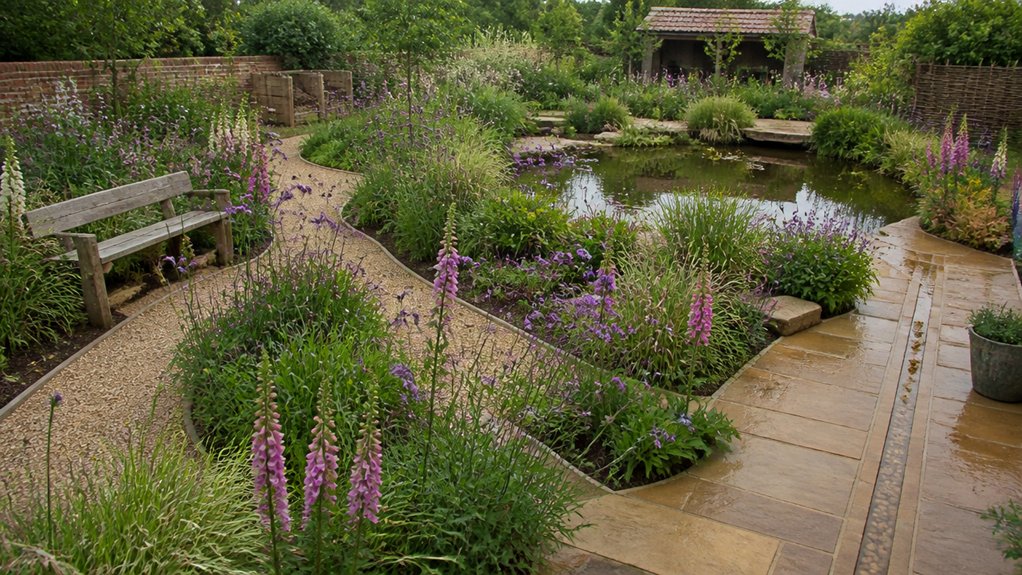
Start by mapping wildlife corridors: align a hedged boundary gap, climbers on a fence, and a narrow planting strip so species can move between neighbouring plots. Use native plant integration in modular beds—hawthorn, dogwood, field maple, and shade-tolerant ferns—so you match local soil pH and reduce irrigation.
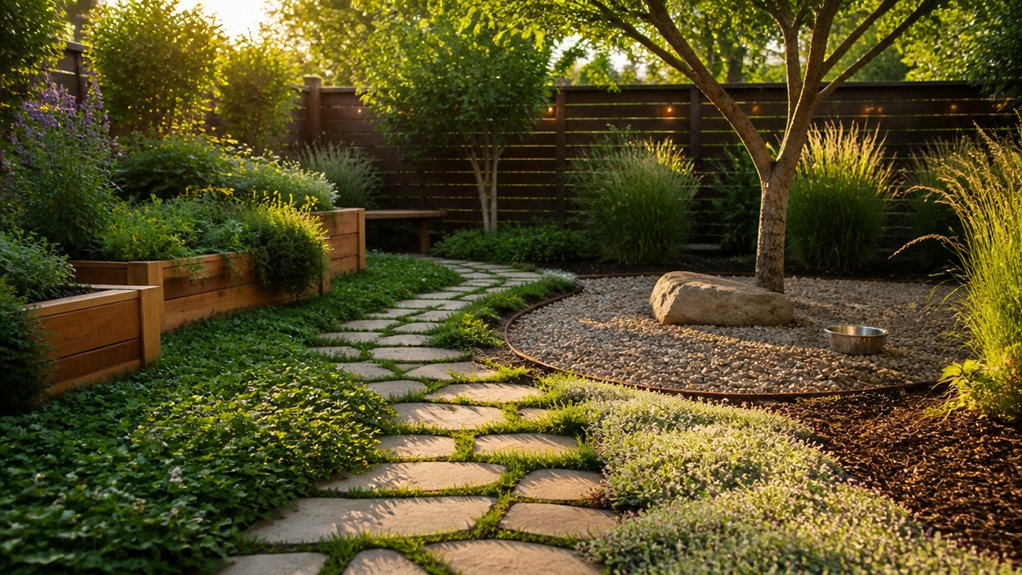
Keep it tidy with gravel margins, mown paths, and root barriers. Add a lidded log box or vertical deadwood tower instead of scattered piles.
Specify a shallow, raked wildlife bowl with overflow to a soakaway, not a stagnant pond. Limit night lighting and leave seedheads until late February.
Frequently Asked Questions
What Is the Average Cost of a Modern Garden Redesign in the UK?
You’ll typically pay £5,000–£25,000 for a modern UK garden redesign, depending on site levels, drainage, access, and hardscape area. Choose sustainable planting and minimalist furniture to cut irrigation demand, materials impact, and maintenance.
Do I Need Planning Permission for Pergolas, Decking, or Garden Rooms?
Often, you don’t need planning permission: pergolas and decking usually fall under permitted development if height, boundary, and impermeable-surface limits comply with Pergola regulations. Garden rooms need Garden room permits if oversized, insulated, or utility-connected.
Which Modern Garden Trends Will Most Increase UK Property Value?
You’ll boost UK property value most with Sustainable planting, permeable paving, rainwater harvesting, and well-insulated garden rooms with low-energy lighting. Specify Minimalist furniture, durable hardwoods, and integrated drainage to suit your site’s soil, aspect, and runoff.
How Long Does a Full Modern Garden Makeover Usually Take?
You’ll usually need 3–8 weeks for a full modern garden makeover. UK projects can cut water use 30% with smart irrigation. You’ll install Garden lighting and Water features after drainage, electrics, and soil improvement for durability.
Can I Create a Modern Garden Design Suitable for Renters or Leaseholds?
Yes, you can design a modern garden for rentals by using container gardening and temporary landscaping. You’ll deploy modular planters, reclaimed substrates, and drip irrigation, keeping surfaces permeable. You won’t alter soil profiles.


Leave a Reply